Addition Practice Adding up to 1000 Misc Worksheets for Ages 3-9
5 filtered results
-
From - To
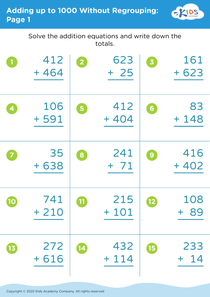
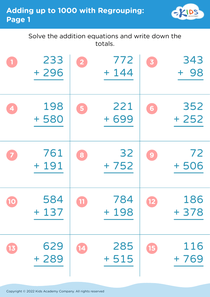
Welcome to our "Addition Practice: Adding up to 1000 Misc Worksheets" designed for children aged 3-9! These engaging and colorful worksheets are perfect for learners at various levels, helping them to strengthen their addition skills through enjoyable activities. Your child will explore a range of addition problems, gain confidence, and improve their problem-solving abilities. Tailored for diverse learning styles, our resources encourage both independent practice and guided learning. Dive into a world of math fun, and watch your child become a confident math whiz! Explore our collection today and lay the foundation for a love of learning in mathematics.
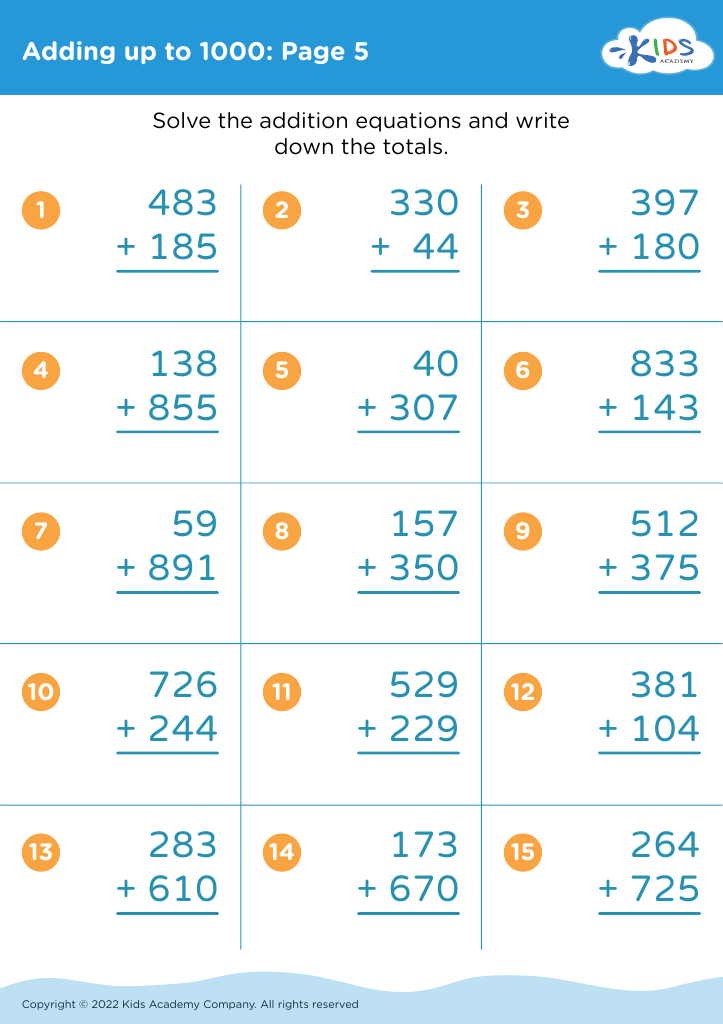
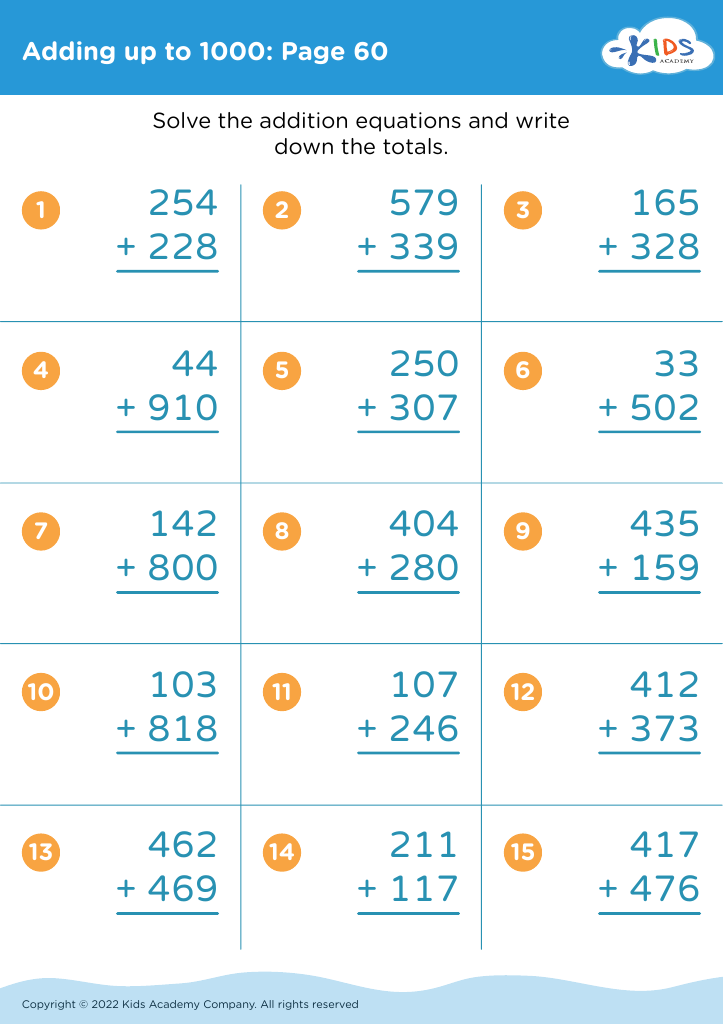
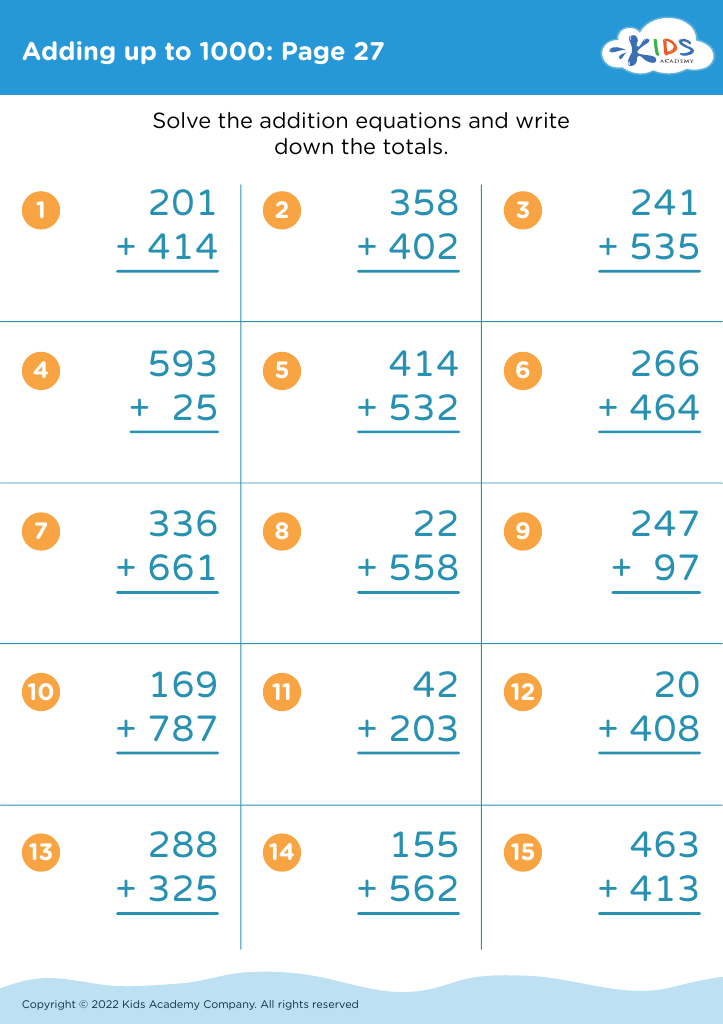
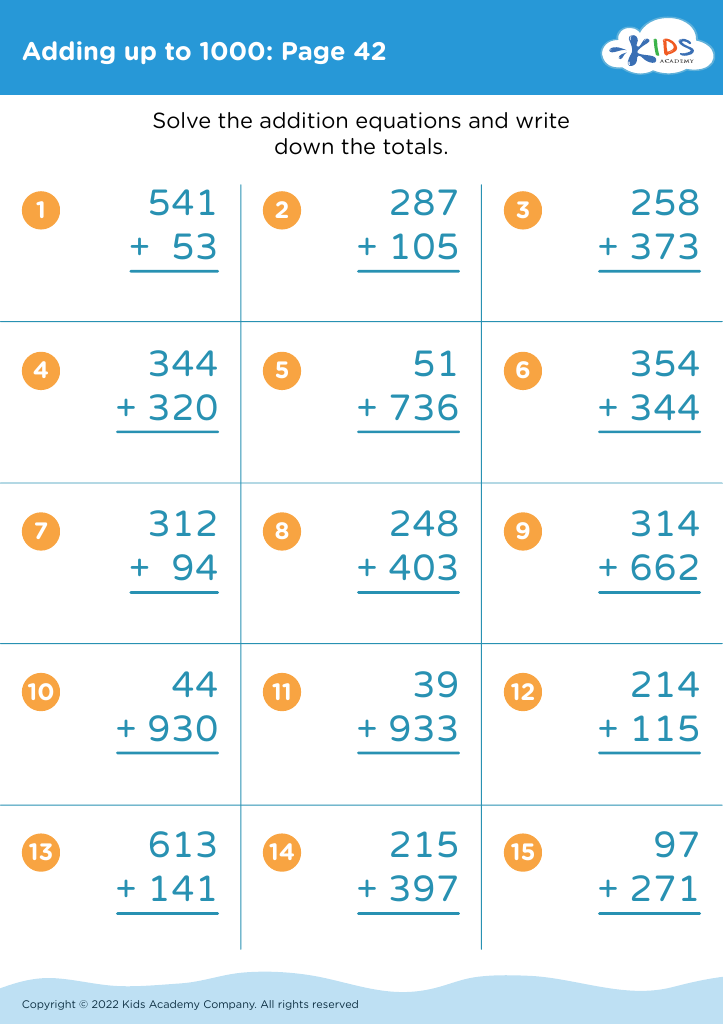
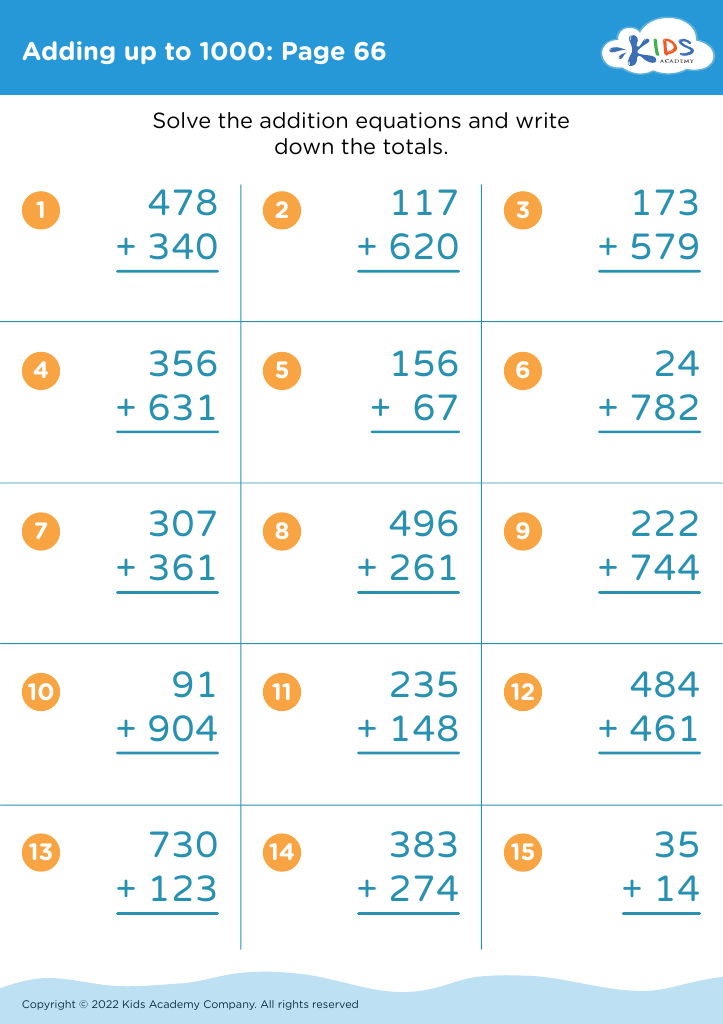


Addition practice, especially for the age group of 3-9, plays a crucial role in a child's cognitive development and foundational understanding of mathematics. Engaging in "Addition Practice Adding up to 1000 Misc" helps children develop mental math skills and number sense, which form the building blocks for more complex mathematical concepts.
For parents and teachers, focusing on addition skills fosters critical thinking and problem-solving abilities. As children learn to add numbers, they improve their understanding of patterns and relationships between quantities—key elements in early numerical comprehension. This essential skill not only enhances academic performance but also boosts confidence, enabling children to tackle more challenging math as they progress in their education.
Furthermore, early practice with addition involves fun and interactive methods, making learning enjoyable. This can include games, hands-on activities, and real-life applications, helping children to view math as a useful and approachable subject.
Lastly, early addition skills assist in everyday scenarios, laying a foundation for financial literacy and analytical reasoning needed in adult life. Thus, parents and teachers should prioritize this practice to secure a comprehensive educational experience for young learners.