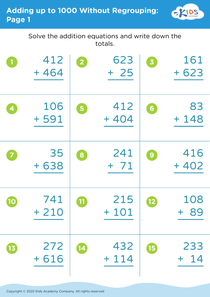
Fraction comparison Adding up to 1000 Misc Worksheets for Ages 3-9
6 filtered results
-
From - To
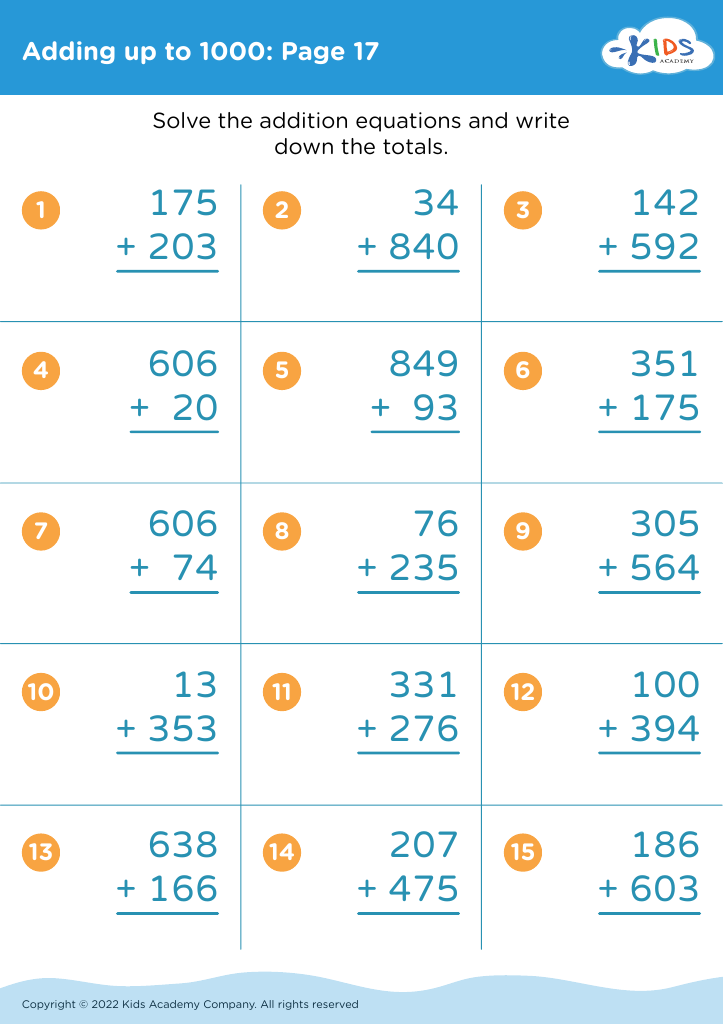
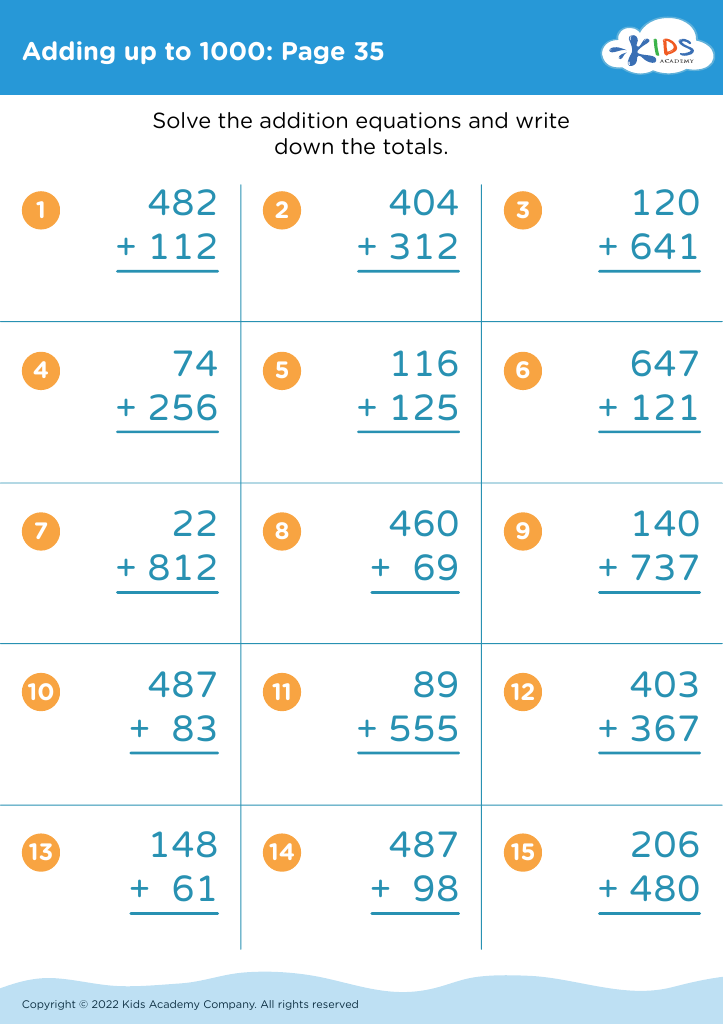
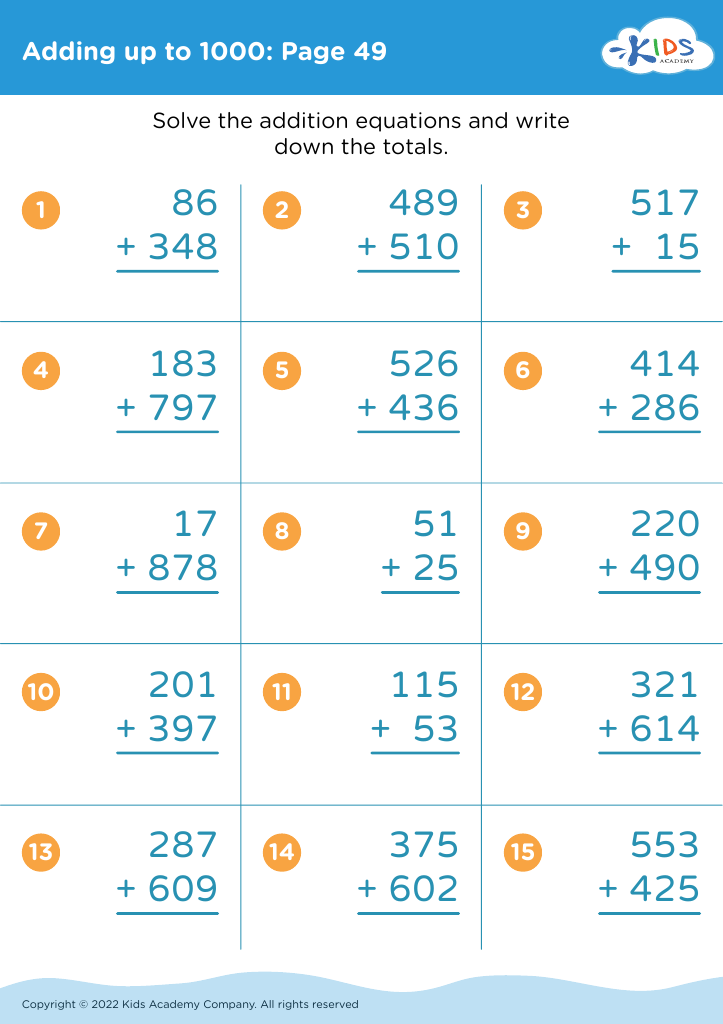
Explore our engaging "Fraction Comparison - Adding Up to 1000 Misc Worksheets" designed for children ages 3 to 9! These interactive worksheets help young learners develop essential skills in comparing fractions while introducing the concept of addition up to 1000. With a wide variety of exercises, our resource encourages children to practice identifying greater, lesser, and equal fractions, fostering a solid foundation in mathematics. Each worksheet is tailored to be fun and age-appropriate, making learning a delightful experience. Ideal for classroom activities or at-home practice, our fraction comparison worksheets will enhance your child's math proficiency, all while keeping them engaged and excited about learning!
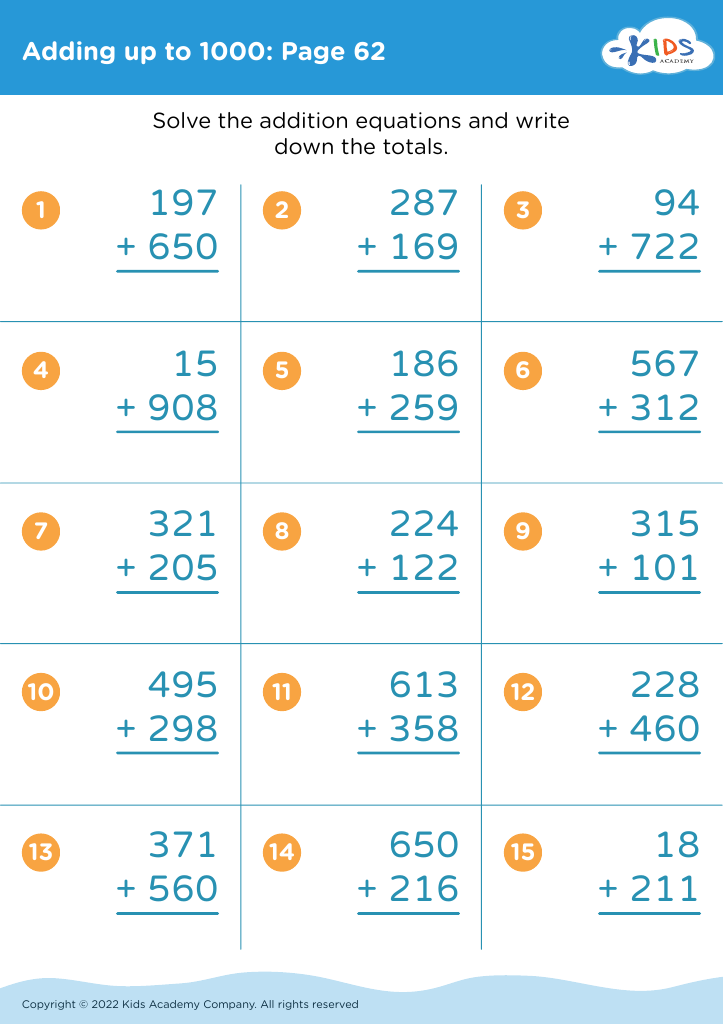
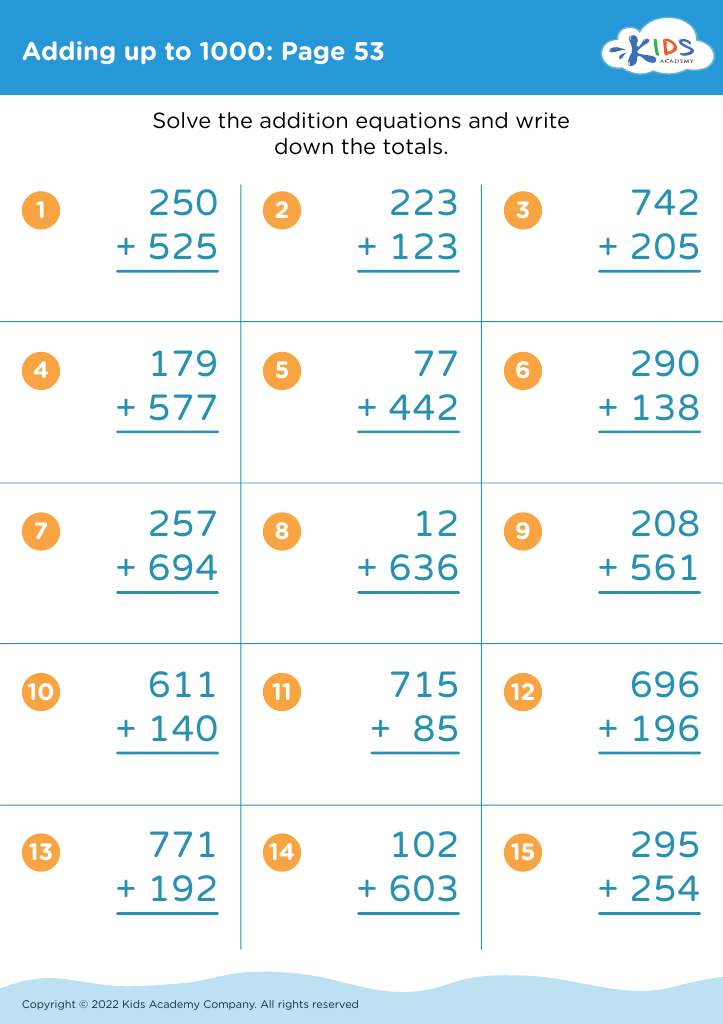
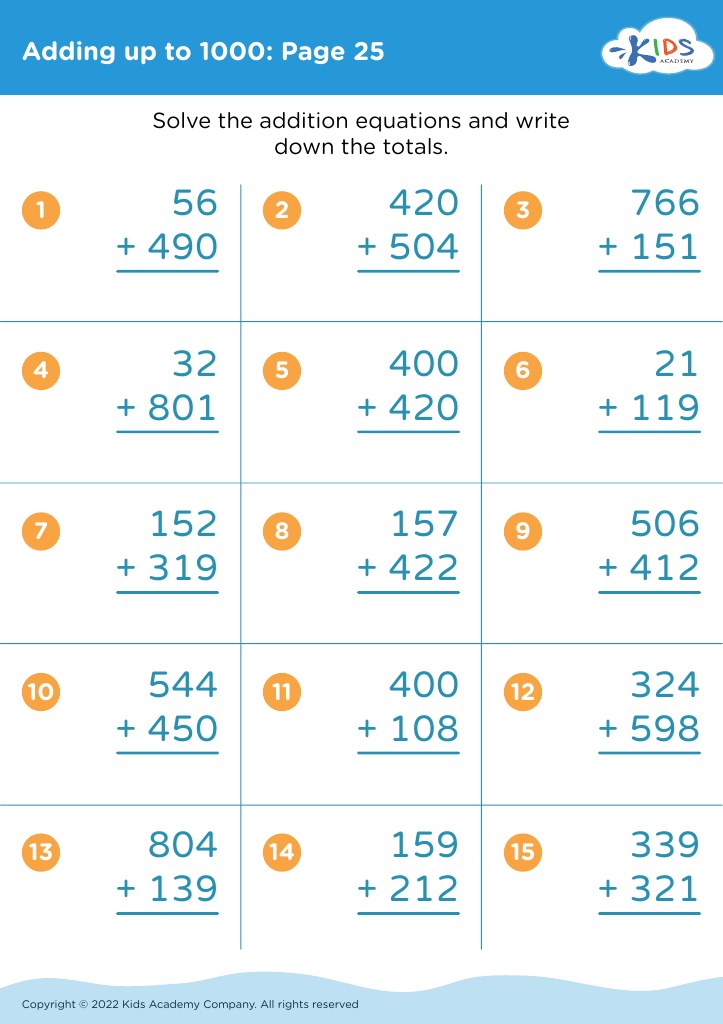


Fraction comparison and addition are essential foundational skills in mathematics for young learners aged 3-9. Understanding fractions helps children develop critical thinking and problem-solving abilities, as they learn to compare quantities and recognize relationships between parts and wholes.
For parents and teachers, fostering a solid grasp of fraction comparison enhances children's mathematical literacy, paving the way for more advanced topics later, including ratios, percentages, and algebra. Being able to compare fractions is not just an academic exercise; it is a real-world skill with practical applications (e.g., cooking measurements, sharing resources, or understanding statistics).
Engaging children with activities that involve adding up fractions—like combining ingredients in recipes or creating art fractions for crafts—adds a fun, relatable aspect to learning, keeping them motivated. Likewise, using visual aids such as fraction circles or number lines effectively helps children understand concepts, catering to diverse learning styles.
Ultimately, supporting children in grasping these concepts lays the groundwork for confident and competent mathematicians. These early skills benefit their overall academic development, improving performance across subjects and encouraging a lifelong appreciation for learning. Parents and educators play a crucial role in nurturing this curiosity and understanding.