Understand fractions Adding up to 1000 Misc Worksheets for Ages 3-9
3 filtered results
-
From - To
Unlock your child's understanding of fractions with our engaging "Understanding Fractions" worksheets, tailored for ages 3-9. These resources help young learners grasp essential concepts while adding up to 1000. Each colorful worksheet features fun exercises designed to promote fraction recognition, equivalence, and comparison. By using visual aids and age-appropriate activities, children will develop a solid foundation in math while enjoying hands-on learning experiences. Our misc worksheets ensure variety, making math enjoyable and less intimidating. Ideal for classrooms or at-home practice, these resources empower students to build confidence in their abilities, laying the groundwork for future math success. Start learning today!
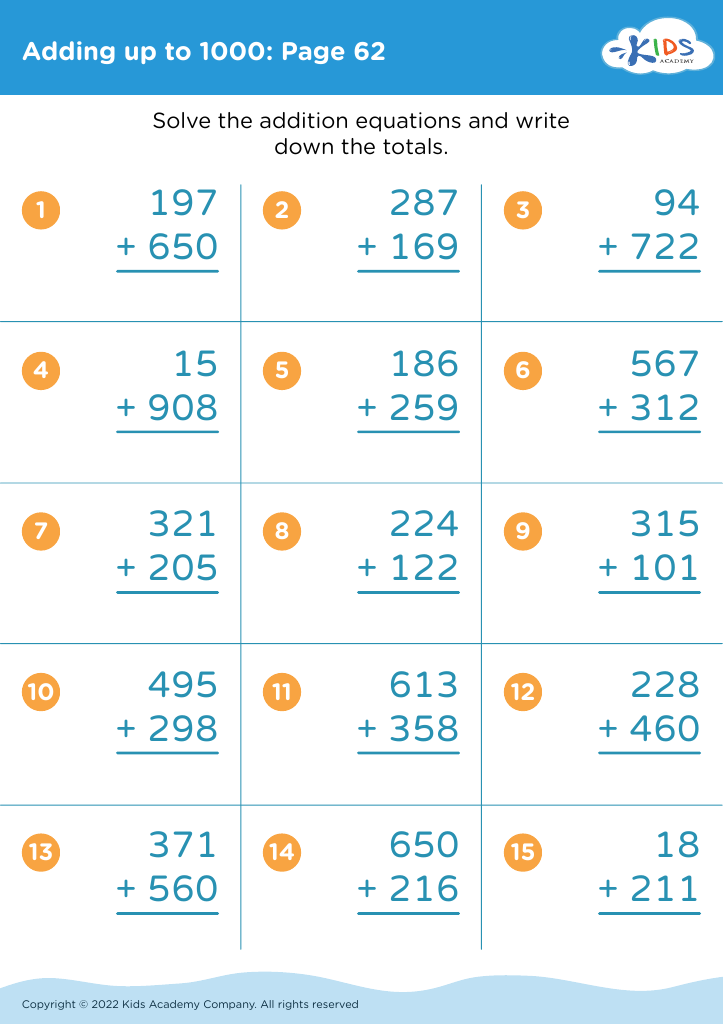
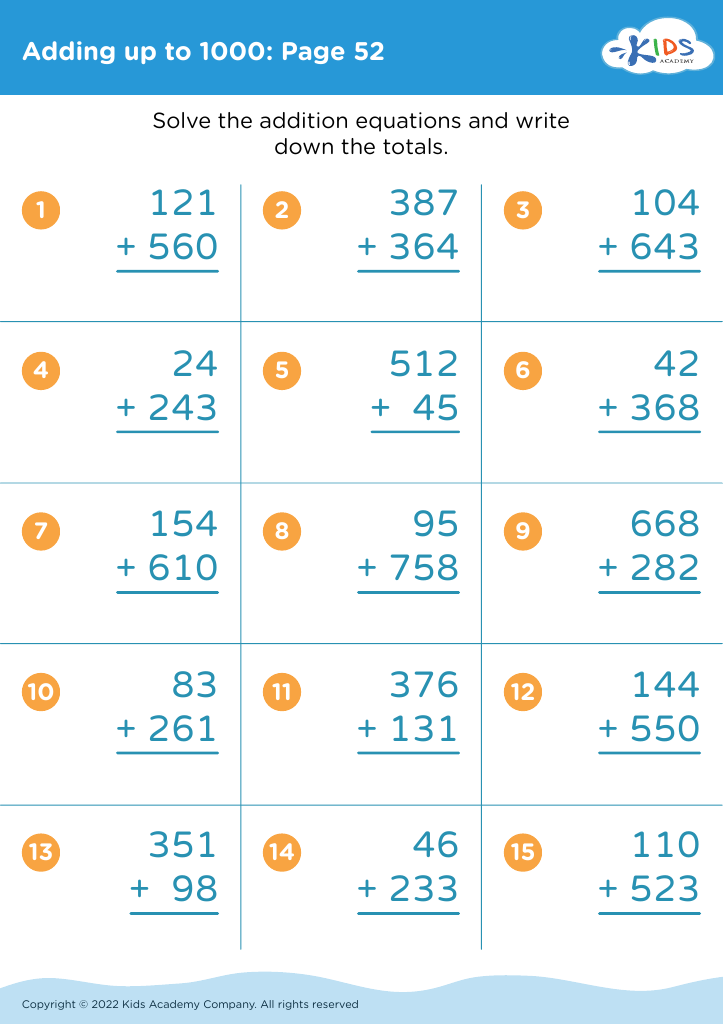
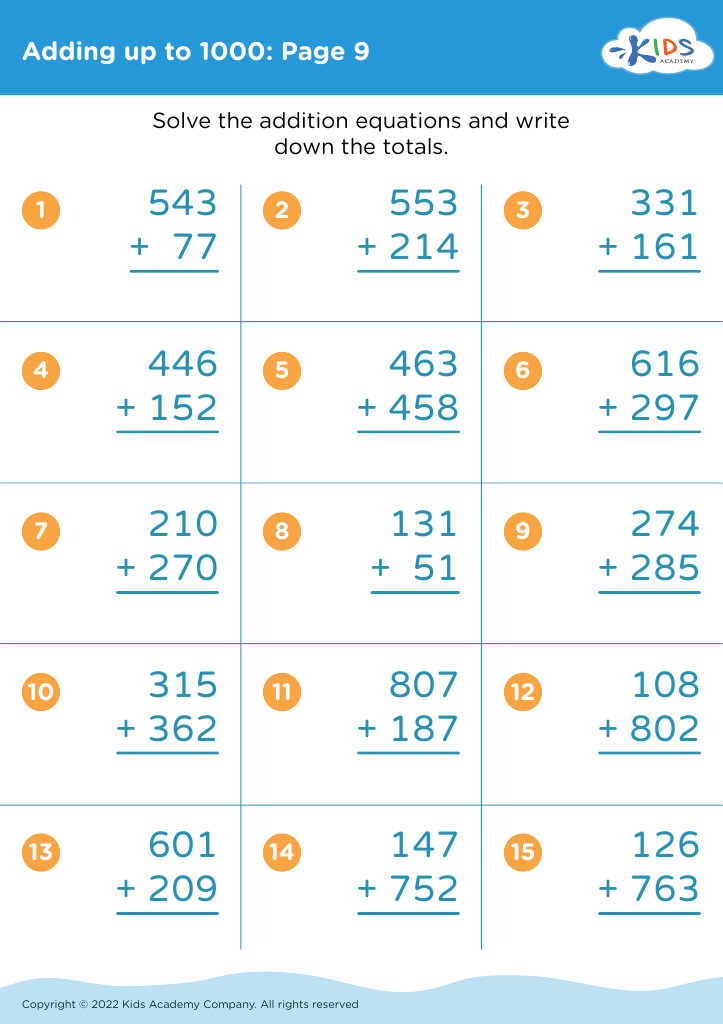


Understanding fractions and the concept of adding up to 1000 are foundational skills that play a critical role in early childhood education for ages 3-9. Mastering these concepts not only nurtures a child’s mathematical skills but also enhances their problem-solving abilities and critical thinking.
At an early age, children begin to develop an understanding of portions, sharing, and distribution through practical examples, such as slicing a pizza or dividing toys. Familiarizing children with fractions teaches them important ideas about parts of a whole, setting the groundwork for more complex mathematical concepts later on.
Moreover, when children learn to add up to 1000, they enhance their number sense and understanding of place value. Engaging with larger numbers gears them towards more advanced arithmetic and helps develop their confidence in handling math challenges.
Parents and teachers have the unique opportunity to make these abstract concepts tangible and enjoyable, using games, hands-on activities, and real-life applications. By doing so, they foster a positive attitude toward math, ensuring children view it as a useful, integral part of life rather than a chore. Ultimately, strong foundational skills contribute to better academic performance and lifelong academic enthusiasm.