Recognizing shapes Adding up to 1000 with Regrouping Worksheets for Ages 3-9
4 filtered results
-
From - To
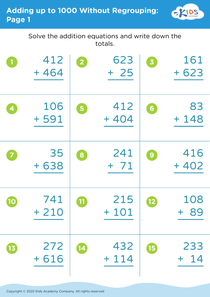
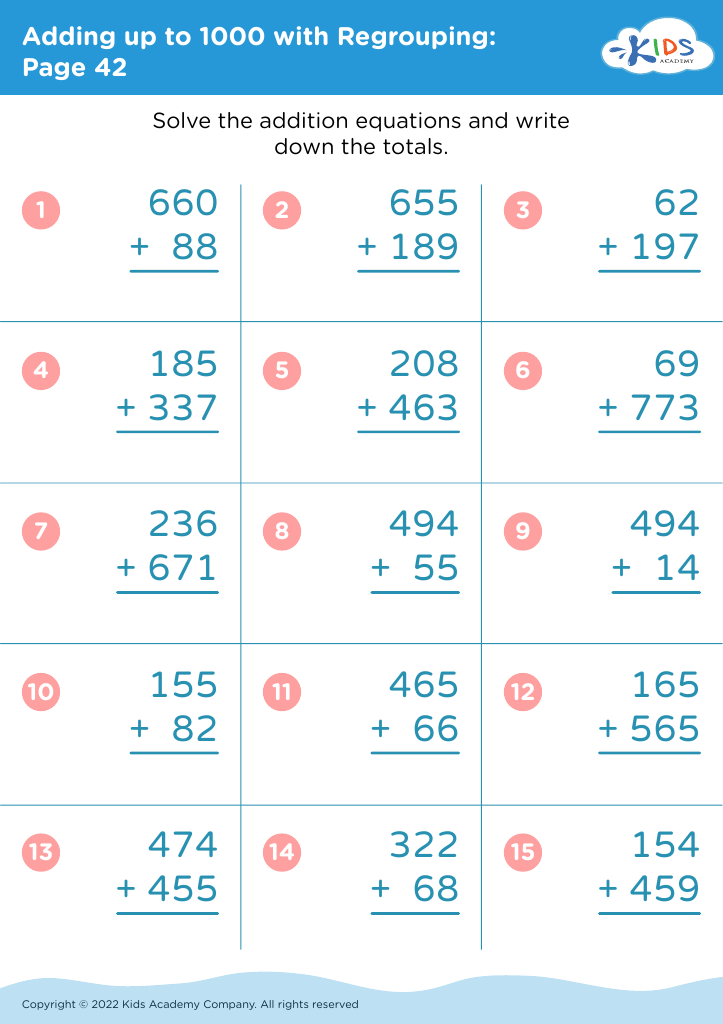
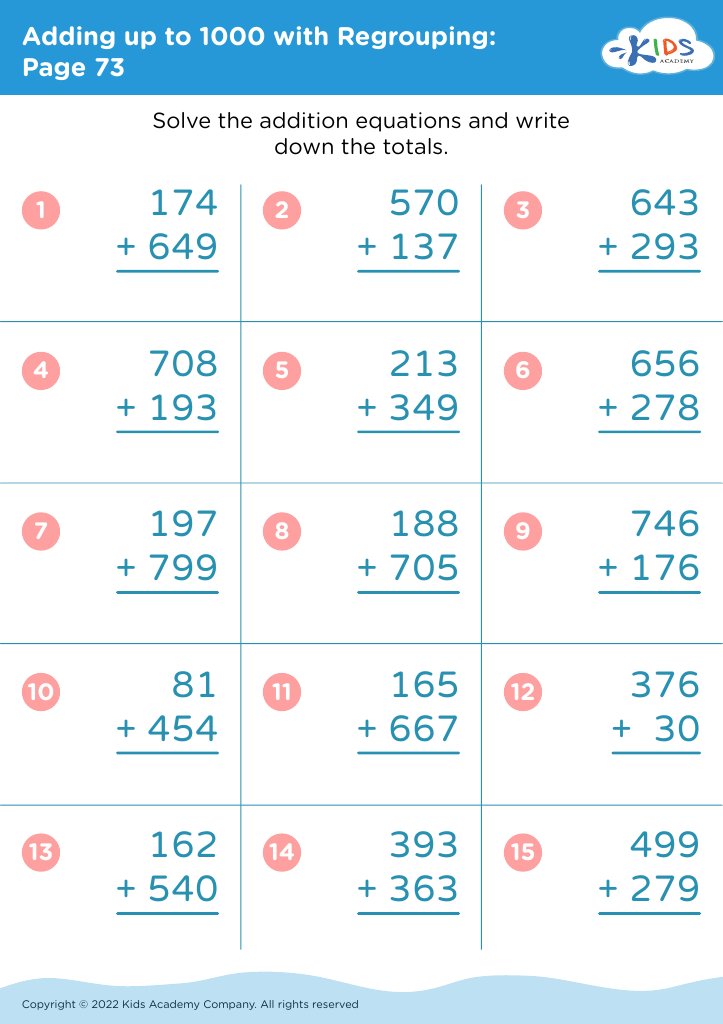
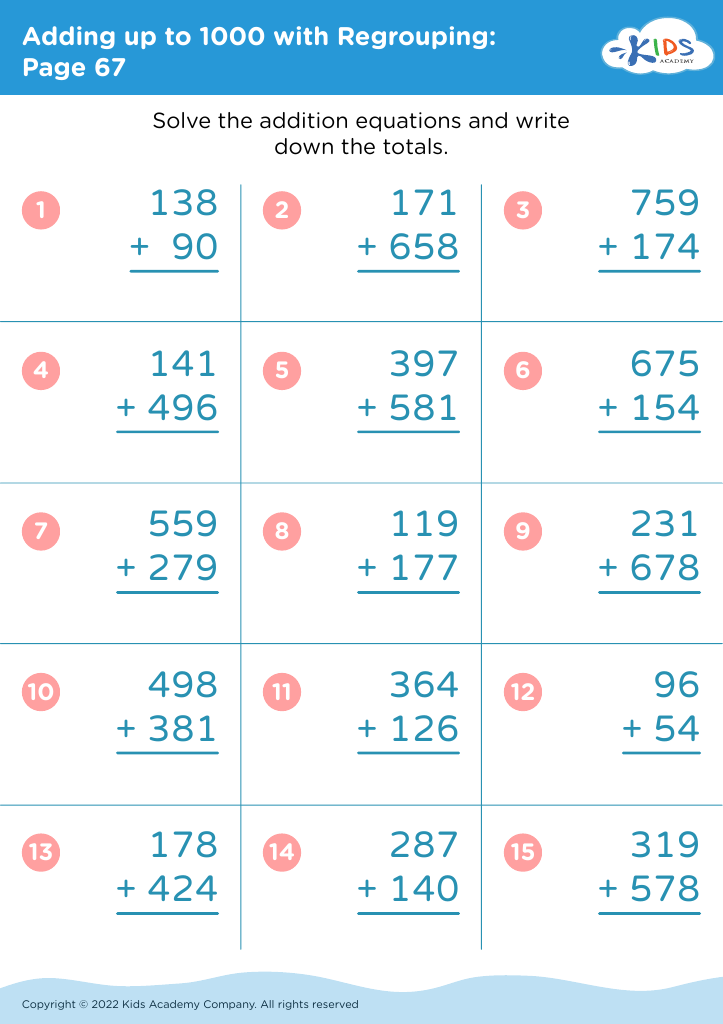
Explore our "Recognizing Shapes: Adding Up to 1000 with Regrouping Worksheets" designed for children ages 3-9! These engaging worksheets help young learners develop essential math skills while familiarizing them with various shapes. Each interactive activity challenges kids to add numbers up to 1000, incorporating regrouping techniques to strengthen their problem-solving abilities. Designed with bright visuals and child-friendly prompts, these worksheets make math fun and accessible. Perfect for classroom or home learning, our resources encourage cognitive development and enhance shape recognition. Start building a strong mathematical foundation in your child today with our thoughtfully crafted worksheets!
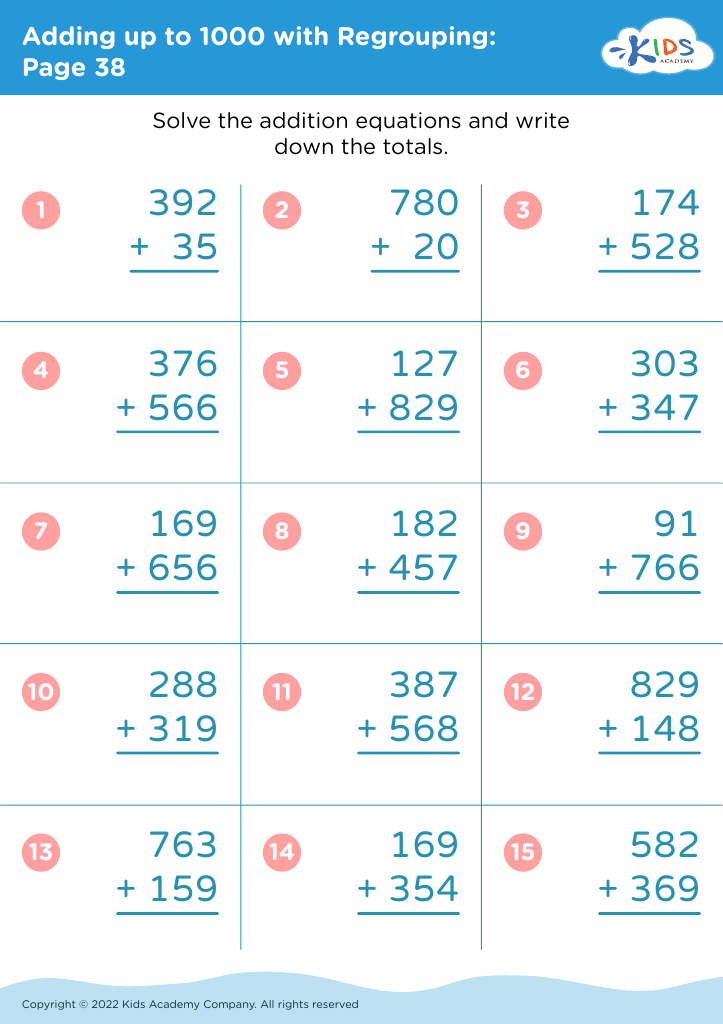


Recognizing shapes and mastering addition with regrouping are foundational skills for children ages 3-9 that significantly contribute to their overall cognitive development and mathematical understanding. Parents and teachers should care about these concepts for several reasons.
Firstly, recognizing shapes helps children build spatial awareness, a skill essential for everyday tasks, from navigating their environment to understanding more complex subjects like geometry later in life. Engaging with different shapes also promotes fine motor skills and creativity, as children learn to categorize and classify their surroundings.
On the other hand, addition with regrouping teaches children the concept of carrying over numbers for greater arithmetic fluency. This skill is vital as they progress to more complex math topics. It fosters problem-solving abilities and logical thinking, which are crucial for academic success. Additionally, mastering addition at an early age builds confidence in their mathematical abilities, making them more likely to embrace learning challenges in the future.
In summary, focusing on recognizing shapes and rehearsing addition up to 1000 with regrouping lays the groundwork for critical thinking, creativity, and a positive attitude toward learning. By supporting these skills, parents and teachers can greatly influence a child's academic trajectory and lifelong love for learning.