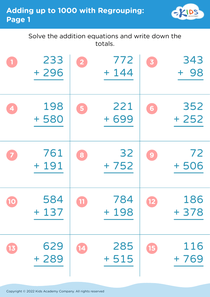
Improve counting skills Adding up to 1000 Without Regrouping Worksheets for Ages 3-9
4 filtered results
-
From - To
Enhance your child's counting abilities with our "Improve Counting Skills: Adding Up to 1000 Without Regrouping Worksheets." Tailored for children ages 3-9, these engaging worksheets provide a fun way for young learners to practice and master basic addition skills. Focusing on simple addition problems, these activities help students gain confidence in their counting and number recognition, laying a strong foundation for future math success. Each worksheet is designed to be visually appealing and age-appropriate, ensuring that children remain engaged while developing critical thinking skills. Help your child excel in math with these invaluable resources that promote early numeracy and problem-solving!
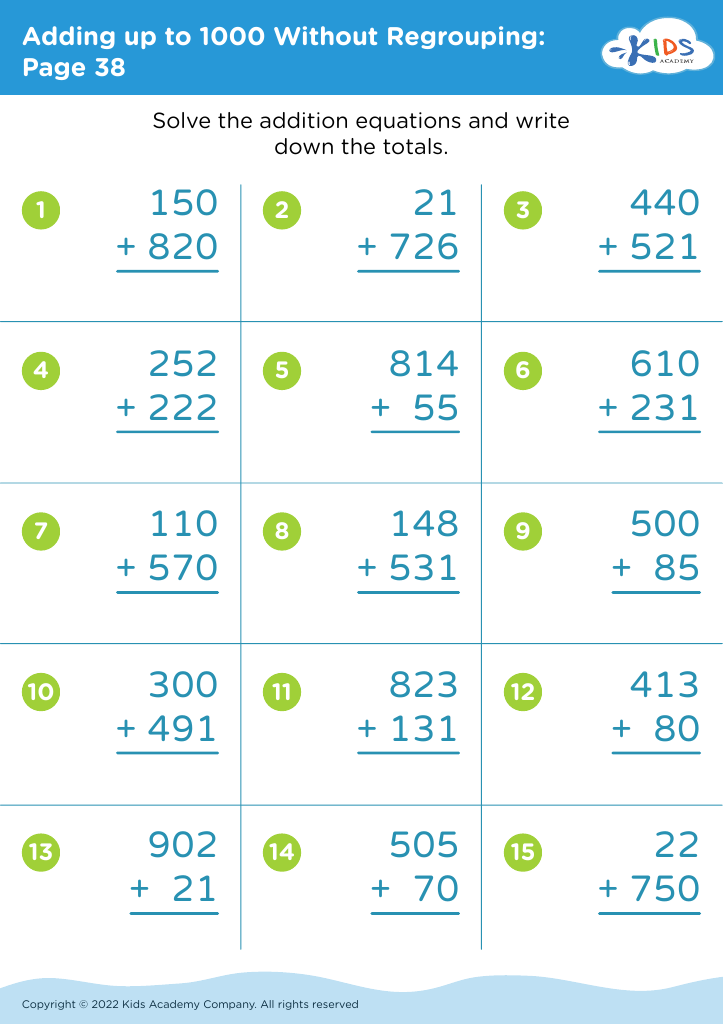
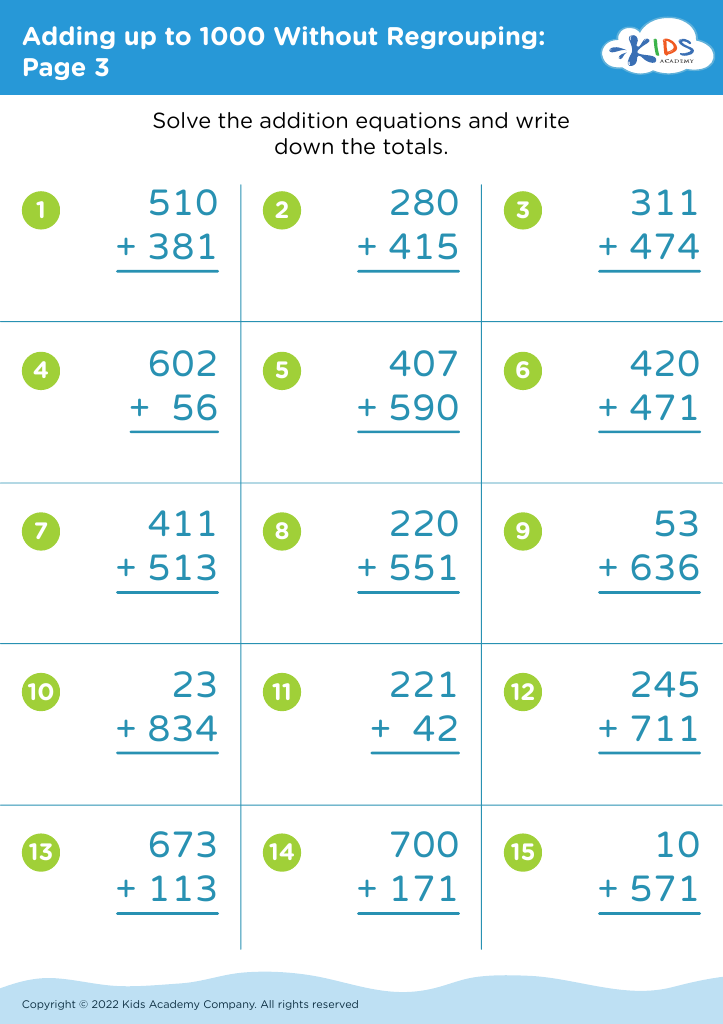
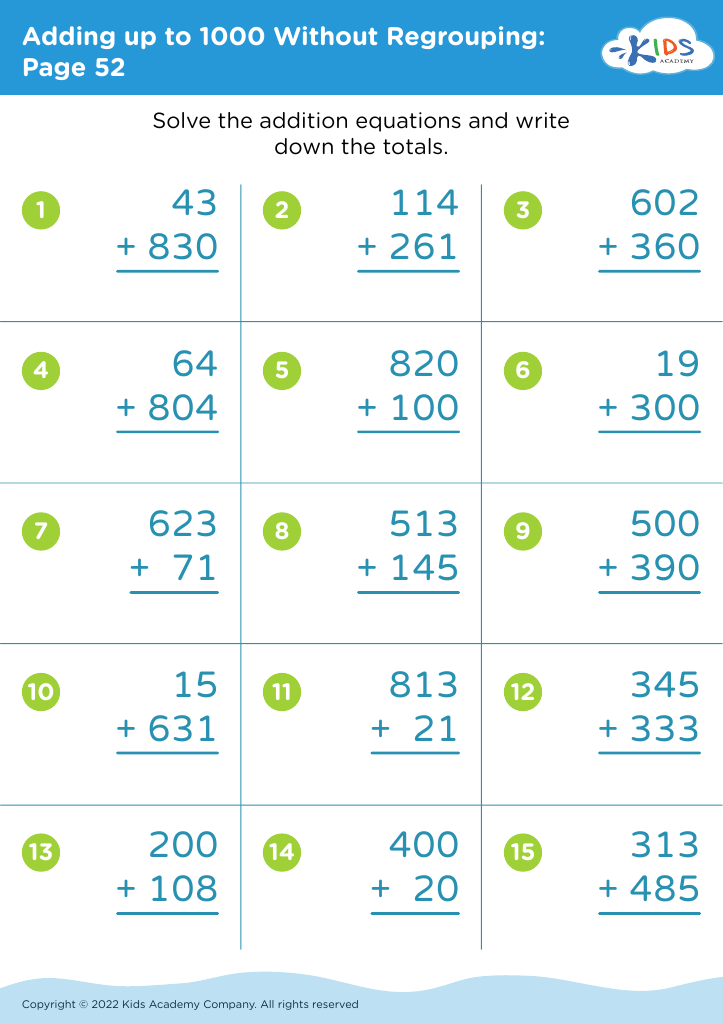
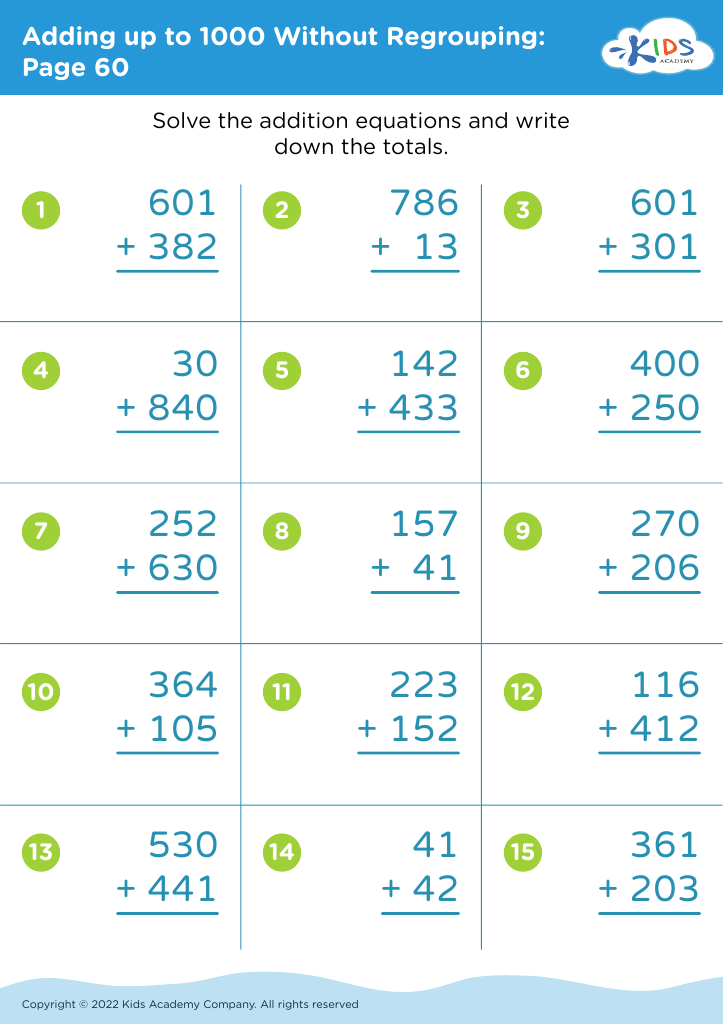


Improving counting skills, particularly adding numbers up to 1000 without regrouping, is crucial for children aged 3-9. During these formative years, children are laying the foundation for their mathematical understanding, which will influence their future academic success. Mastery of counting and addition helps children develop a sense of number sense, enhance problem-solving abilities, and boosts confidence in math-related activities.
When students can accurately count and perform addition up to 1000 without regrouping, they begin to grasp essential concepts such as place value, patterns in numbers, and the idea of combining quantities. These skills not only are fundamental for advanced math topics, such as subtraction and multiplication, but they also occur in real-life scenarios, such as dealing with money, measuring, and estimating.
For parents and teachers, fostering strong counting skills paves the way for a more positive attitude towards learning. Engaging children in fun, hands-on activities can enhance their interest and motivation. Additionally, early math competencies can pave the way for success in standardized testing and limit future math anxiety, allowing children to navigate their educational journeys with confidence. Investing effort in early counting skills ensures children develop a strong mathematical foundation crucial for lifelong learning.