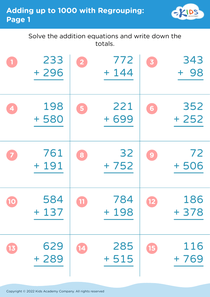
Number Recognition Adding up to 1000 Without Regrouping Worksheets for Ages 3-9
7 filtered results
-
From - To
Discover our engaging "Number Recognition Adding Up to 1000 Without Regrouping" worksheets, designed for children ages 3 to 9. These printable resources will help young learners develop crucial number recognition and addition skills while ensuring they reinforce their understanding without the complexities of regrouping. Featuring colorful illustrations and interactive exercises, each worksheet aims to make learning fun and accessible. Ideal for classroom use or at-home practice, our worksheets promote confidence in mathematical foundations, preparing children for more advanced concepts in the future. Boost your child's mathematical journey with our comprehensive, easy-to-use materials that support their growth and learning in a playful way!
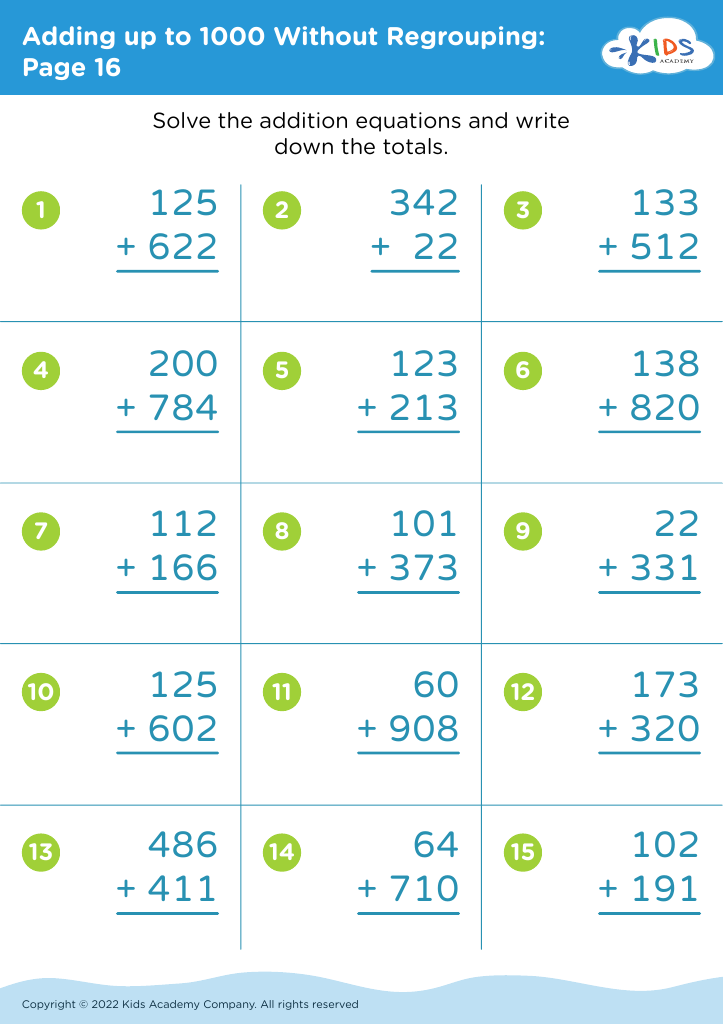
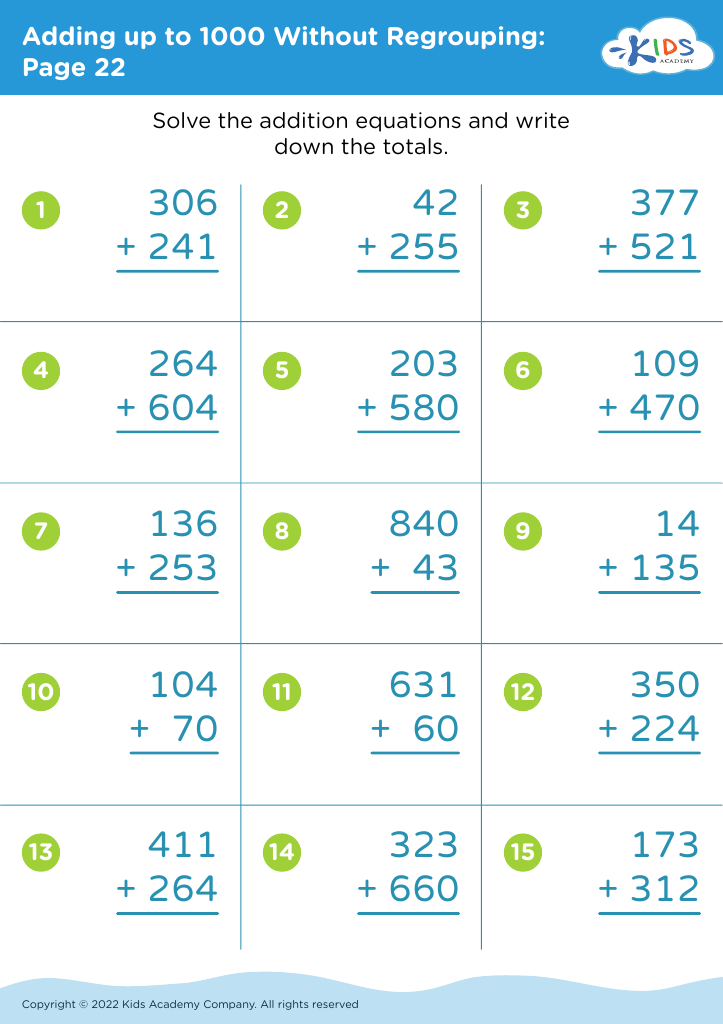
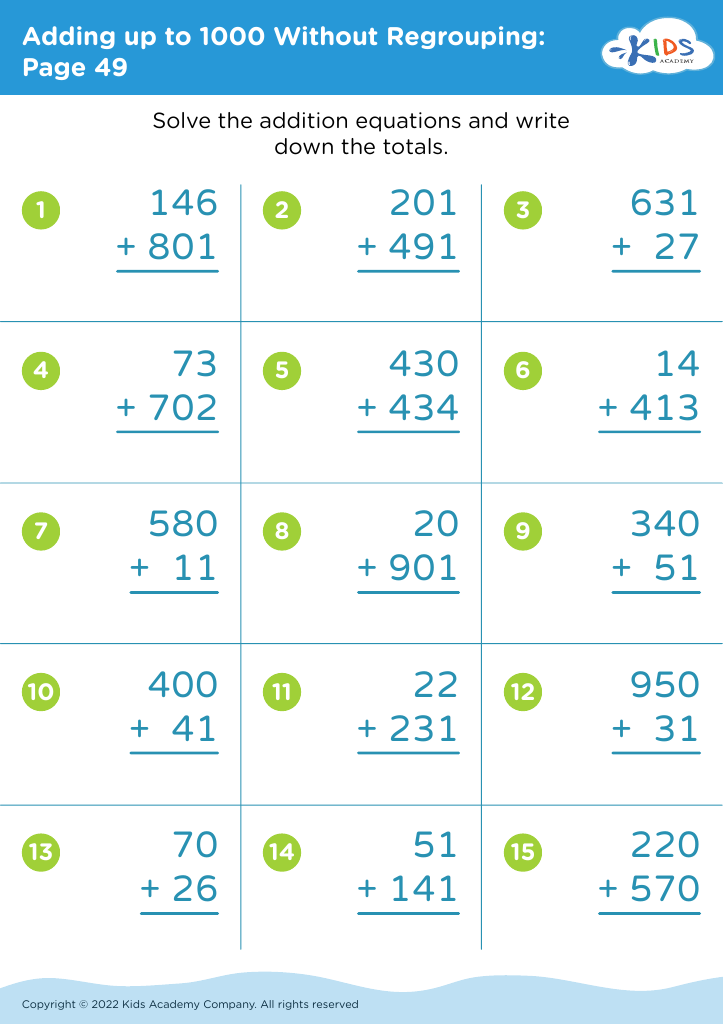
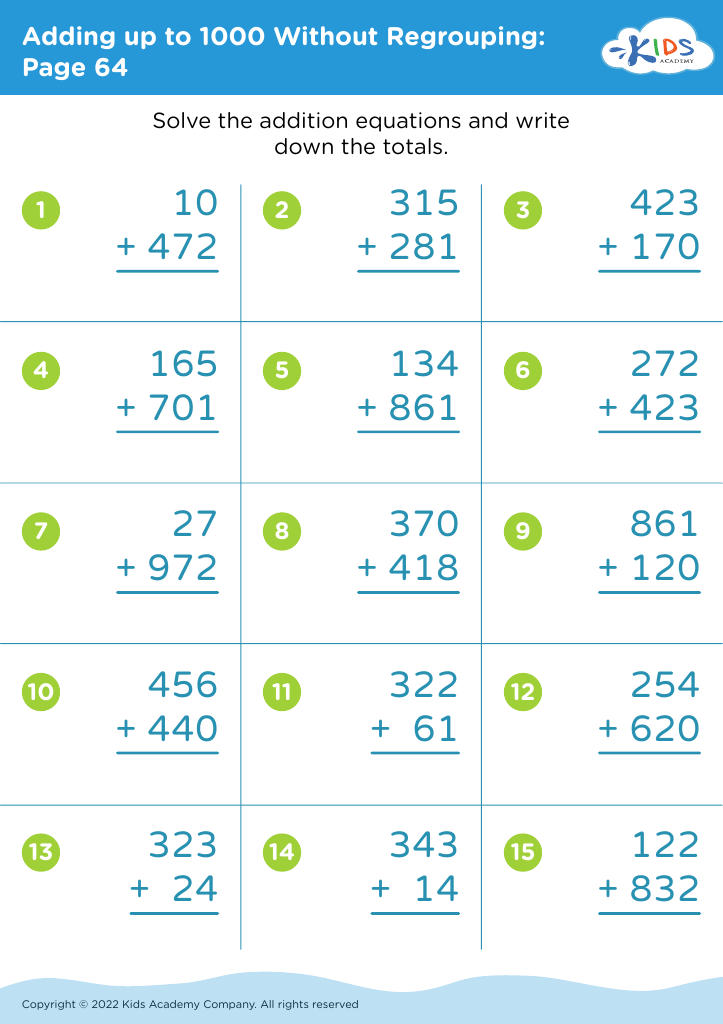
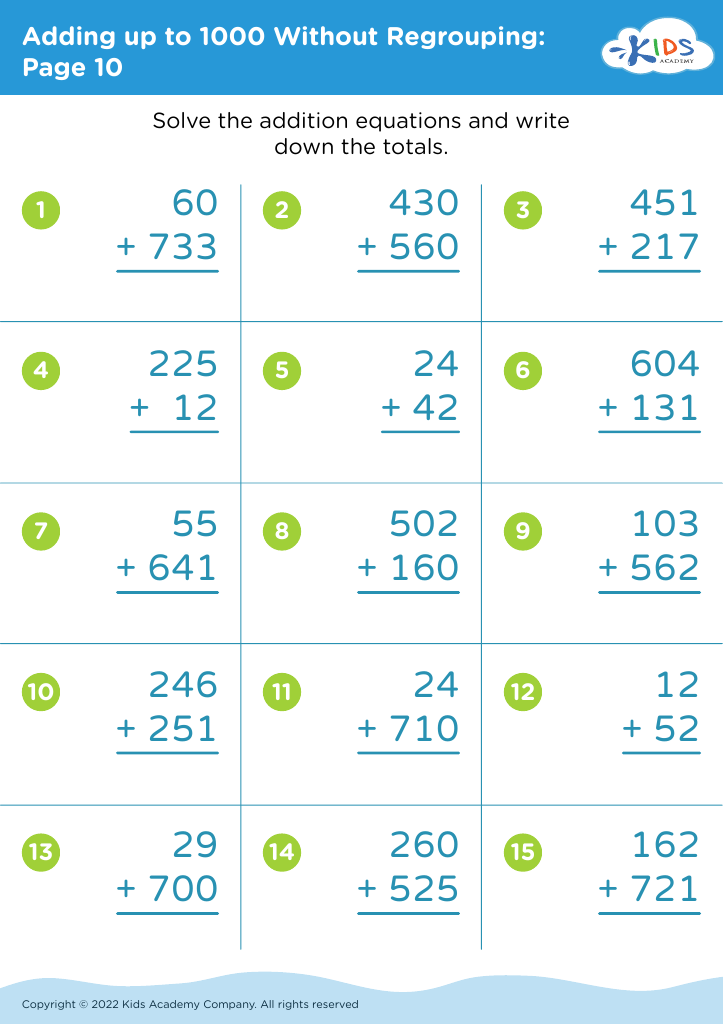
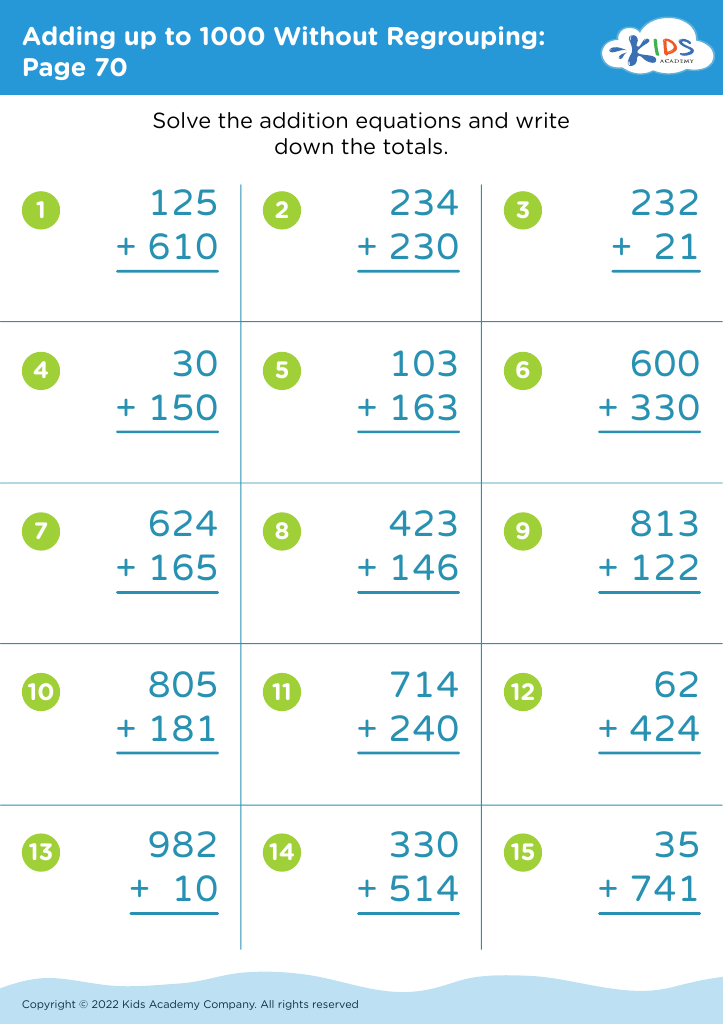
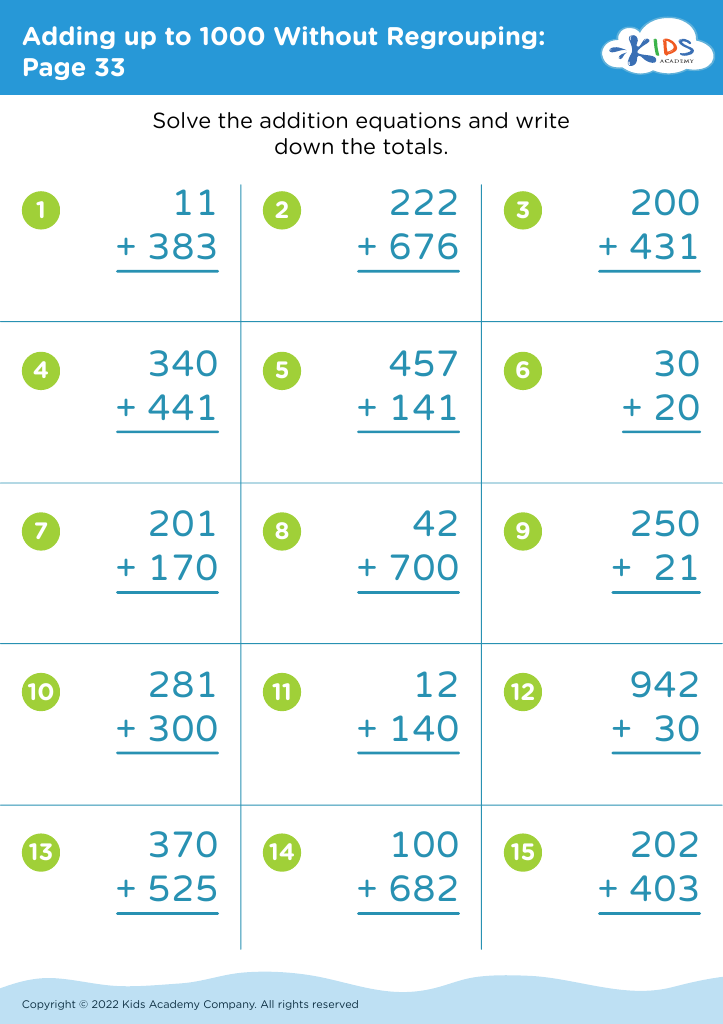


Number recognition, especially for tasks like adding up to 1000 without regrouping, is crucial for children aged 3-9 as it lays a foundational understanding of mathematics. Early development of these skills instills confidence and fosters a positive attitude toward math. This age group is highly impressionable, and mastering number recognition helps them make sense of the world around them, recognizing numbers in everyday contexts, such as prices, phone numbers, and addresses.
For parents and teachers, focusing on number recognition encourages critical cognitive development. Children learn to categorize and group numbers, enhancing their problem-solving abilities. Additionally, recognizing numbers helps build communication skills when discussing math concepts. This skill is not only essential for basic arithmetic but also prepares children for higher-level math concepts in later years.
Furthermore, strong number recognition in young learners can significantly impact their academic performance. Children who struggle with numbers may face challenges that hinder their overall educational experience, leading to frustration and a dislike for learning. By fostering number recognition and working on addition up to 1000 without regrouping, parents and teachers can create supportive environments that promote long-term success in both math and other subjects.