Understanding fractions Adding up to 1000 Without Regrouping Worksheets for Ages 3-9

Filters

13 filtered results

Clear all filters
Favorites
With answer key
Interactive

13 filtered results

Difficulty Level

Grade


Discover engaging "Understanding Fractions Adding Up to 1000 Without Regrouping Worksheets" designed for children ages 3-9. These worksheets provide a fun and effective way to introduce young learners to the concept of fractions while building their addition skills. Each worksheet encourages kids to visualize and comprehend fractions, fostering a strong foundation in math. With clear instructions and colorful illustrations, children will find joy in mastering the art of adding fractions without regrouping. Perfect for home or classroom use, these resources will enhance critical thinking and promote a love for math. Download now and support your child's mathematical journey!
Check out this FREE Trial Lesson on Adding up to 1000 Without Regrouping for age 3-9!

D

Favorites
With answer key
Interactive
  • 3-9
  • Understanding fractions
  • Adding up to 1000 Without Regrouping
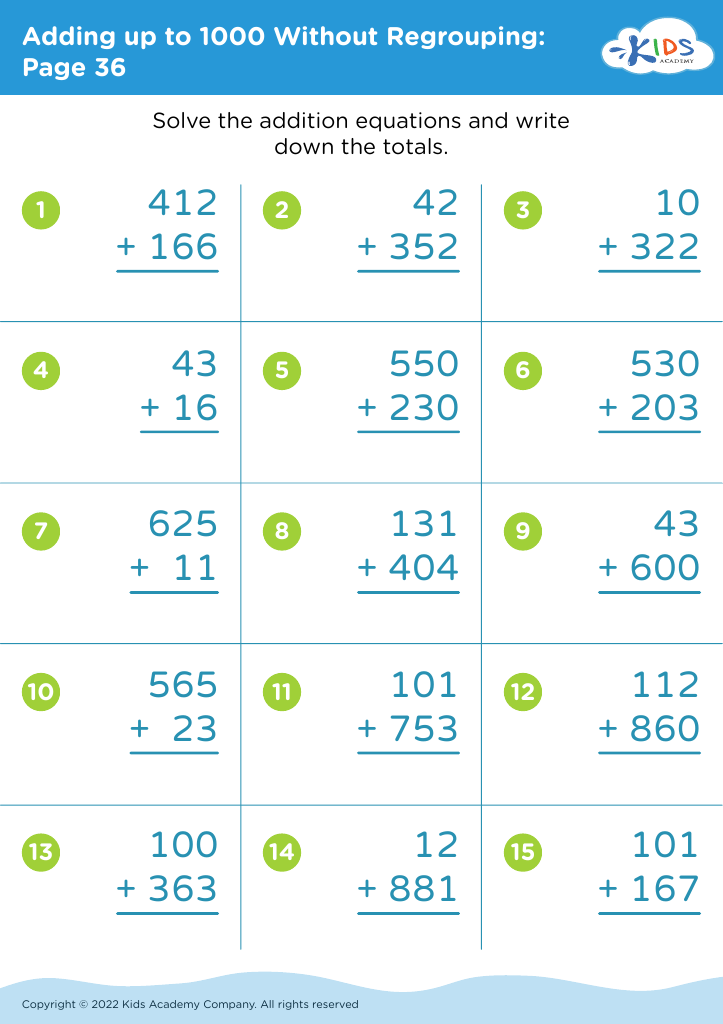
Adding up to 1000 Without Regrouping: Page 36
Worksheet
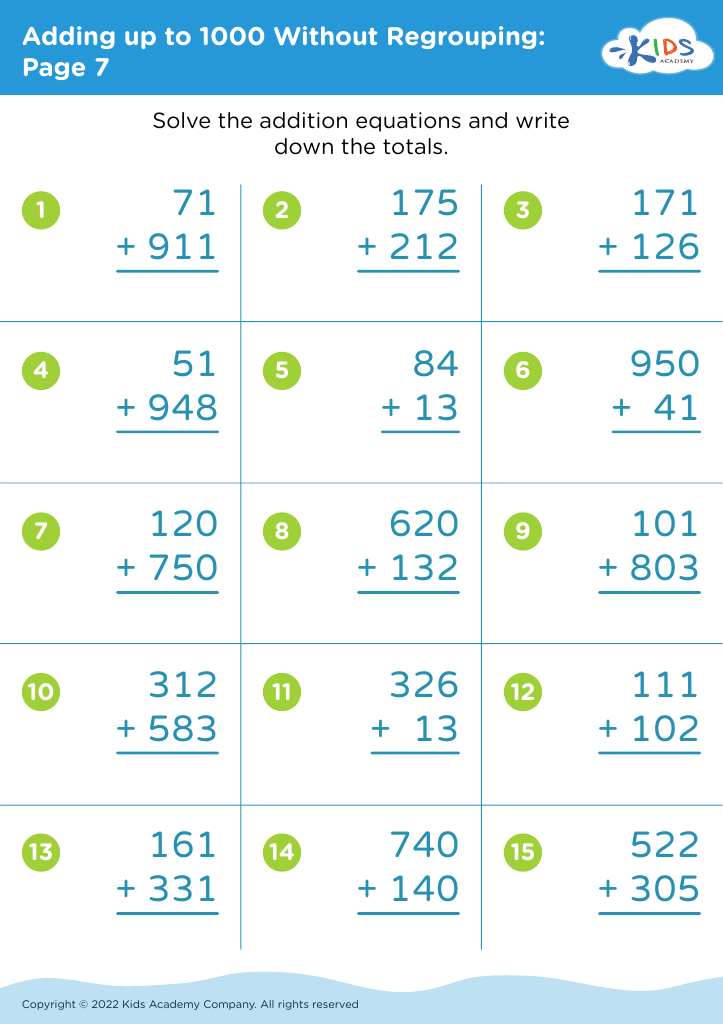
Adding up to 1000 Without Regrouping: Page 7
Worksheet
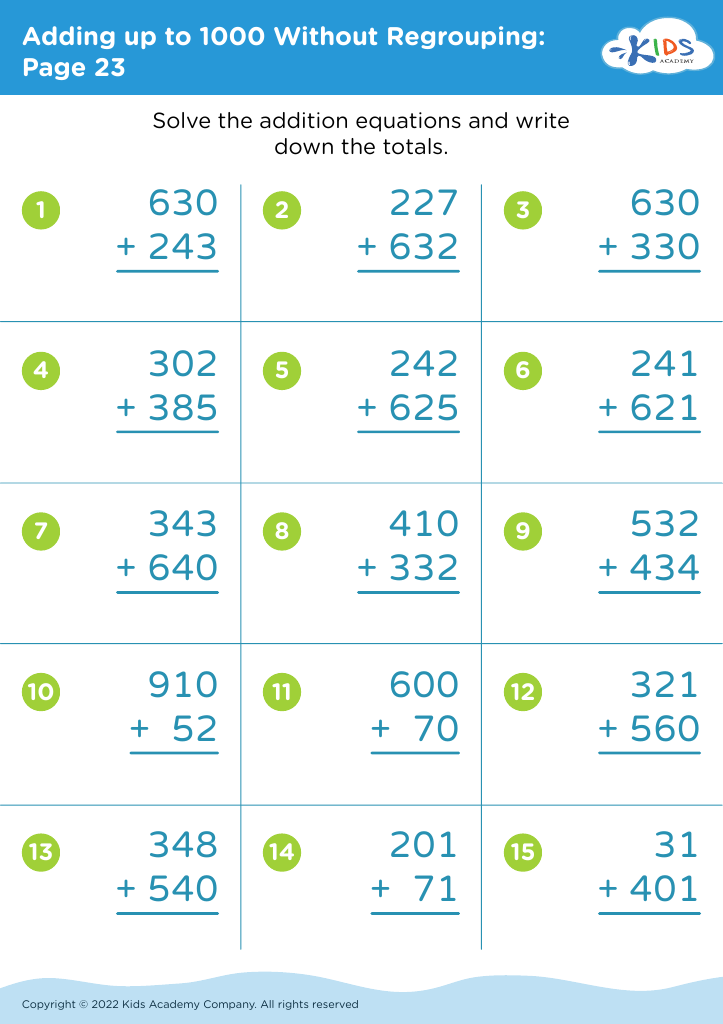
Adding up to 1000 Without Regrouping: Page 23
Worksheet
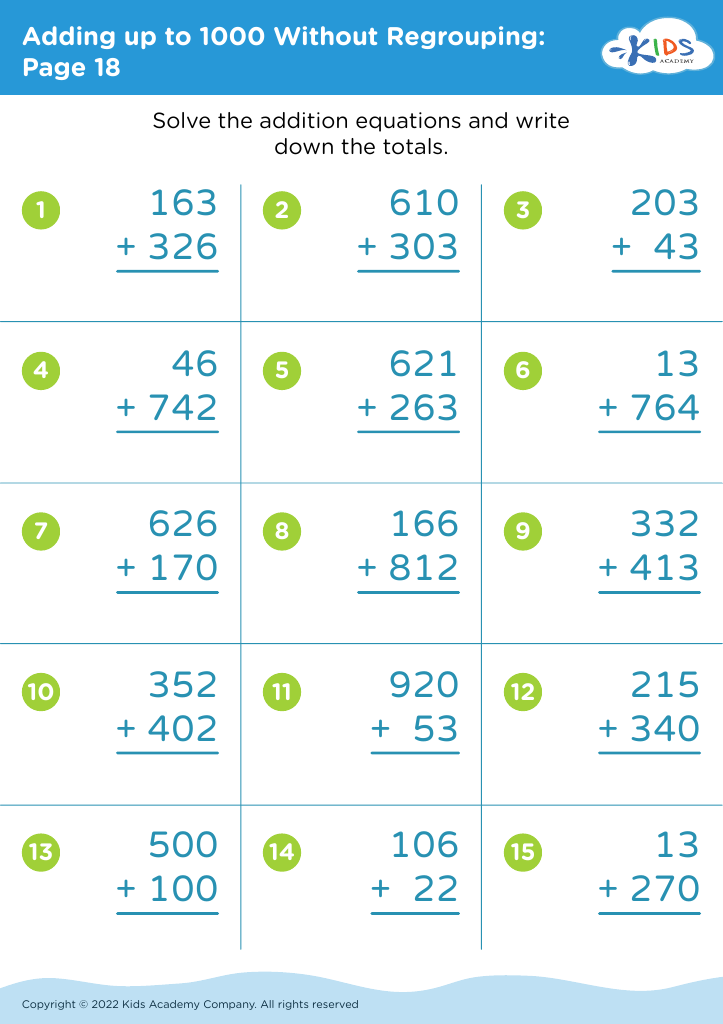
Adding up to 1000 Without Regrouping: Page 18
Worksheet
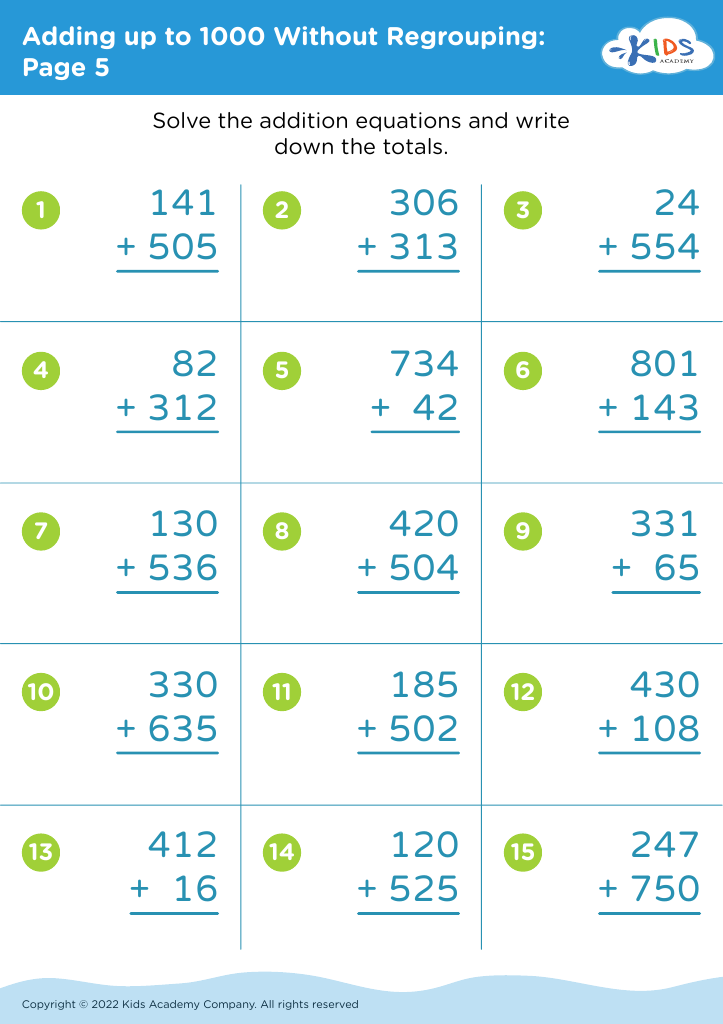
Adding up to 1000 Without Regrouping: Page 5
Worksheet
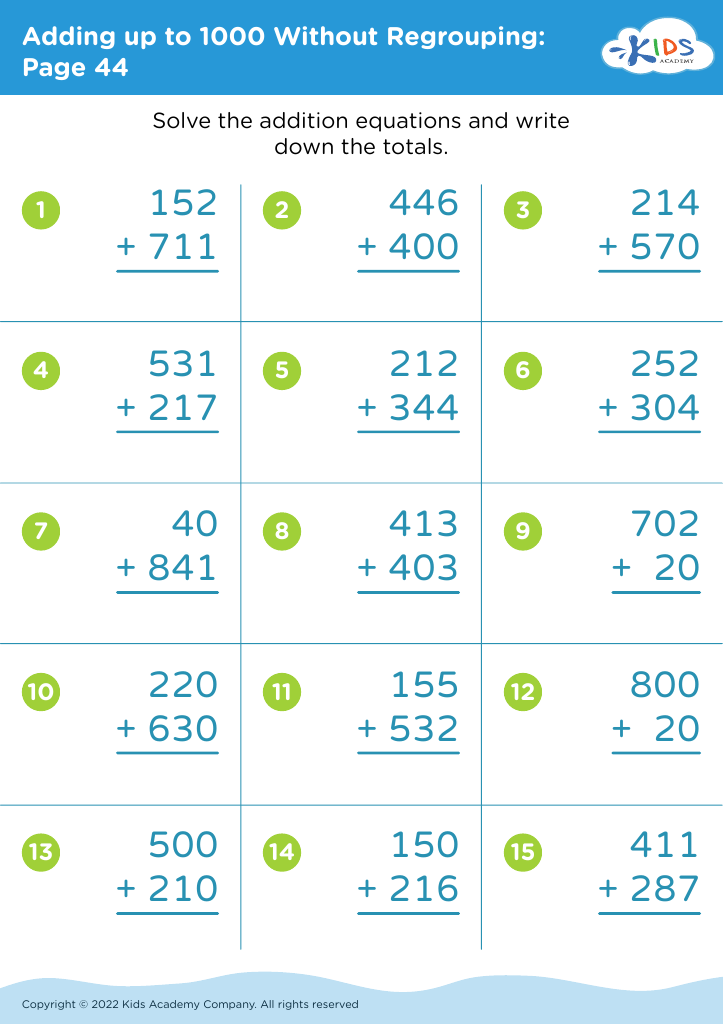
Adding up to 1000 Without Regrouping: Page 44
Worksheet
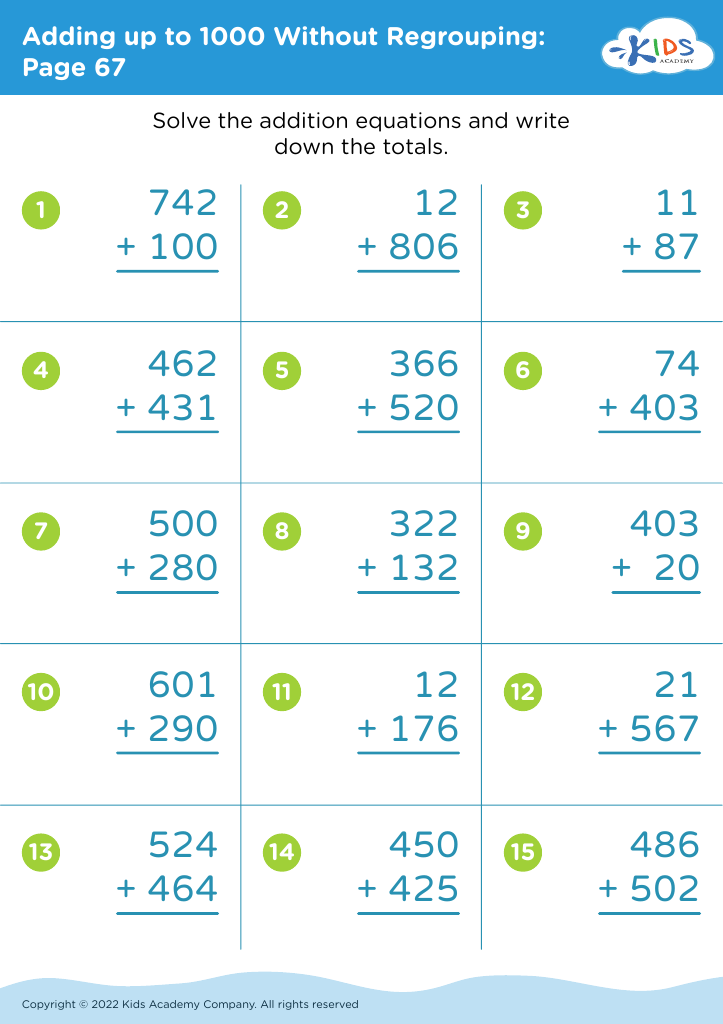
Adding up to 1000 Without Regrouping: Page 67
Worksheet
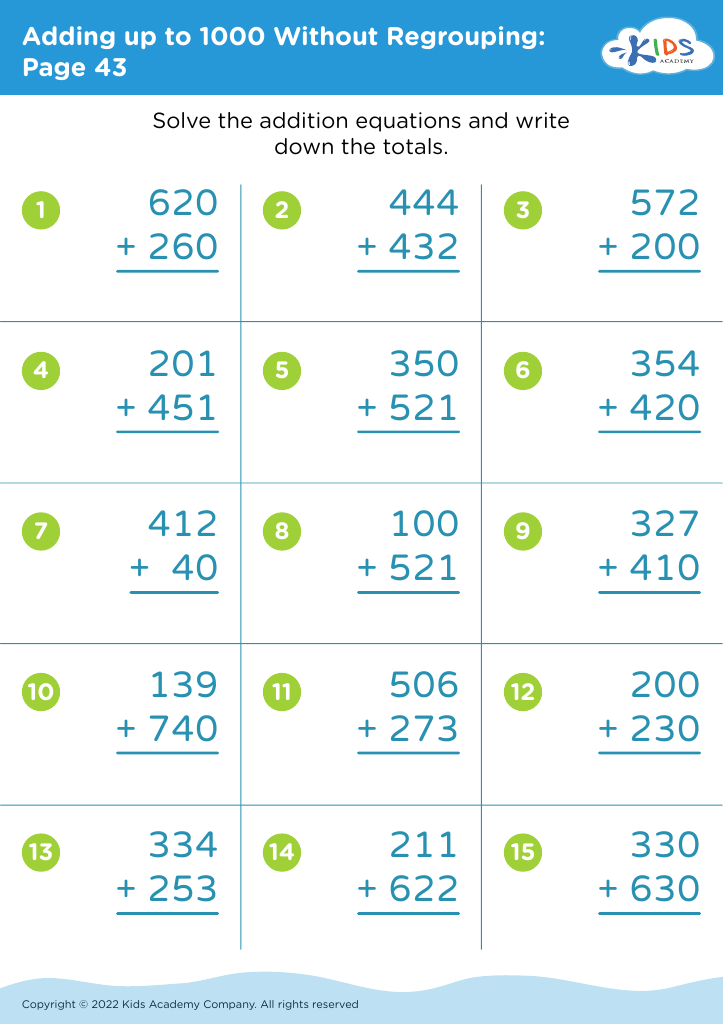
Adding up to 1000 Without Regrouping: Page 43
Worksheet
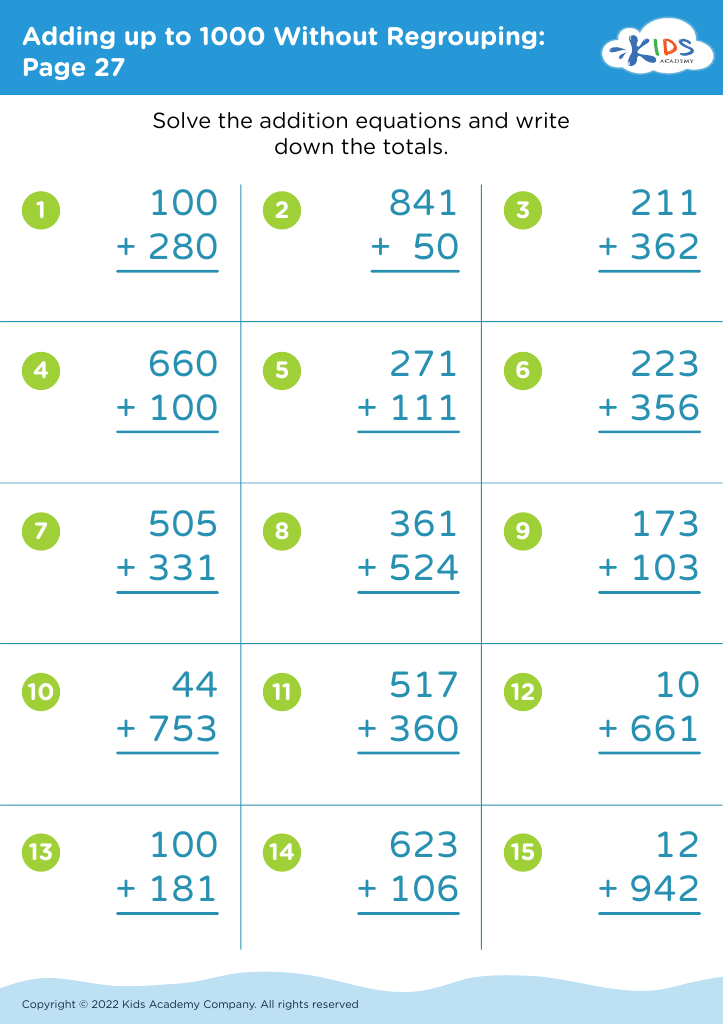
Adding up to 1000 Without Regrouping: Page 27
Worksheet
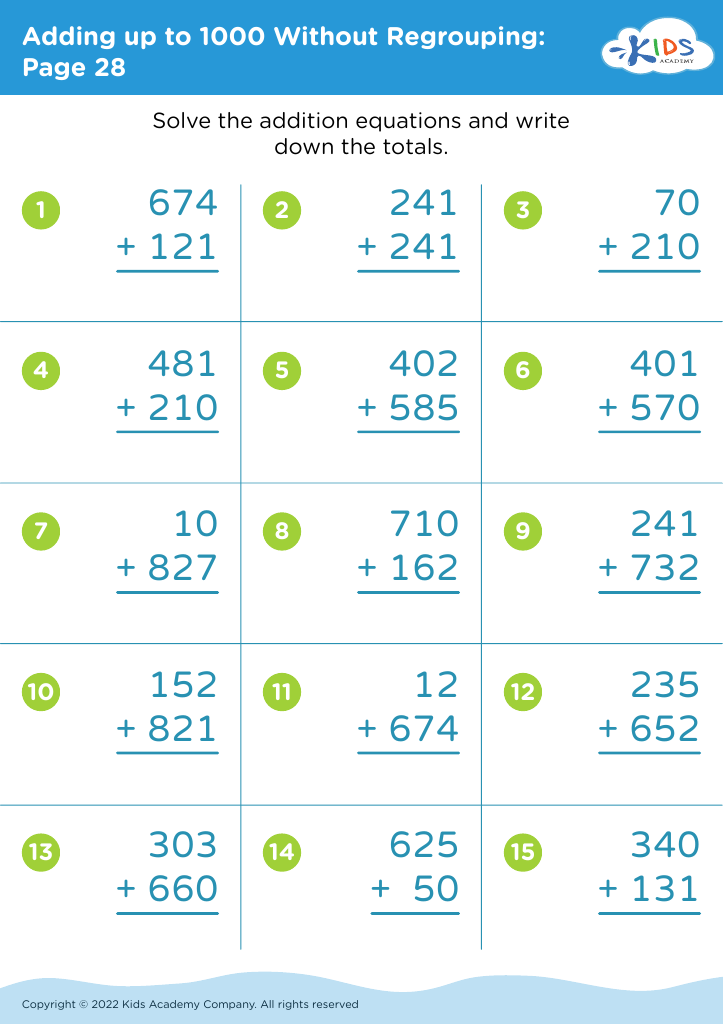
Adding up to 1000 Without Regrouping: Page 28
Worksheet
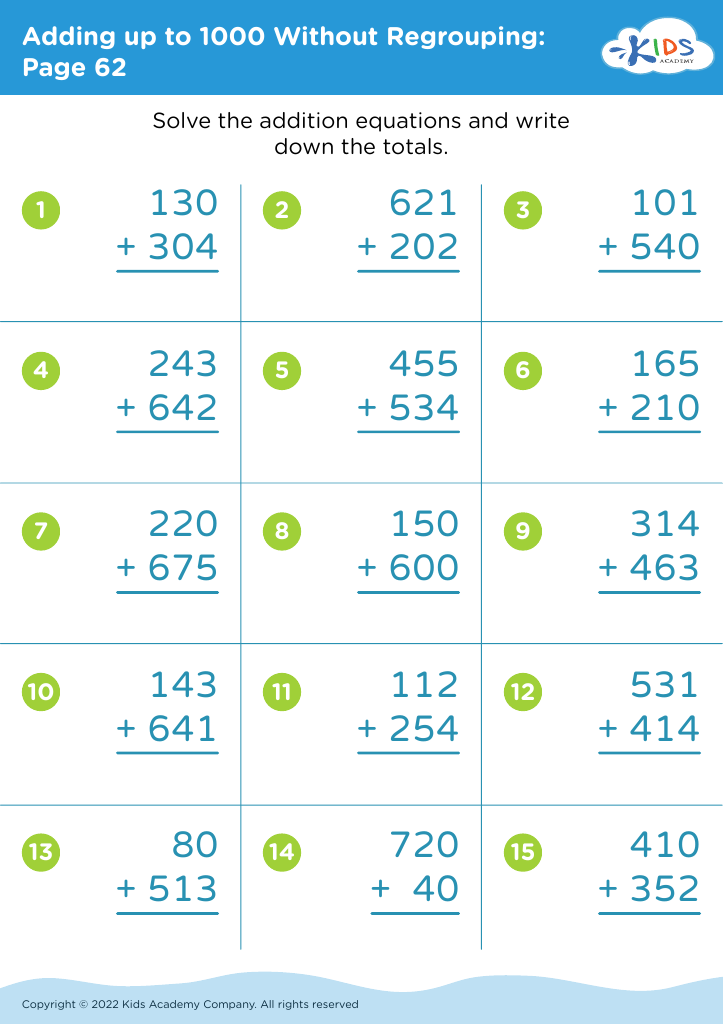
Adding up to 1000 Without Regrouping: Page 62
Worksheet
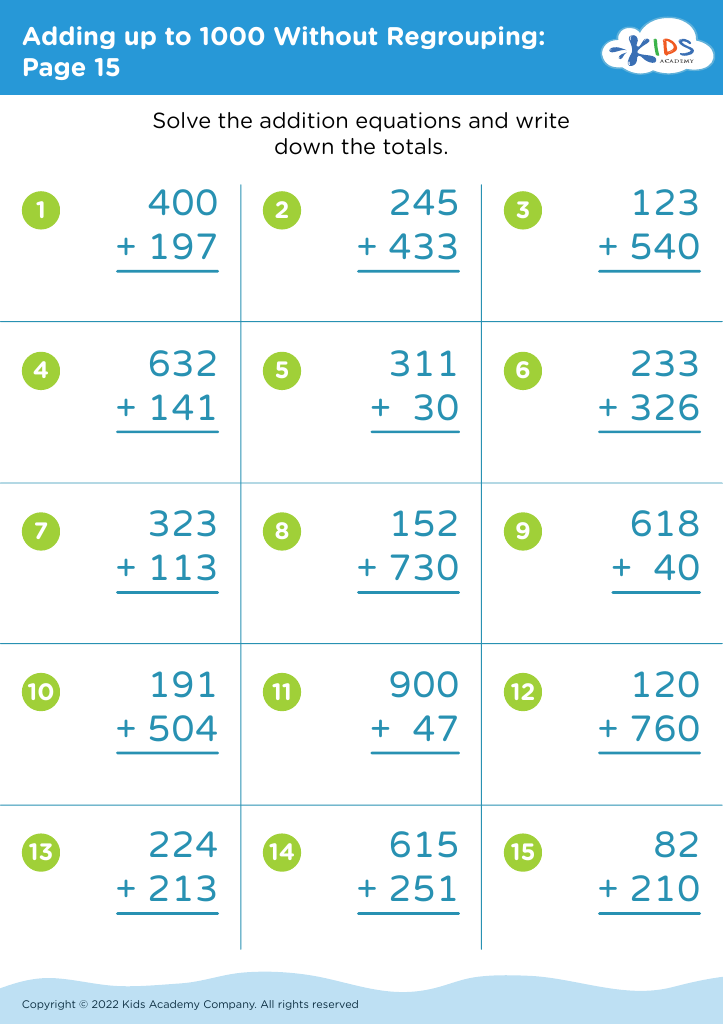
Adding up to 1000 Without Regrouping: Page 15
Worksheet
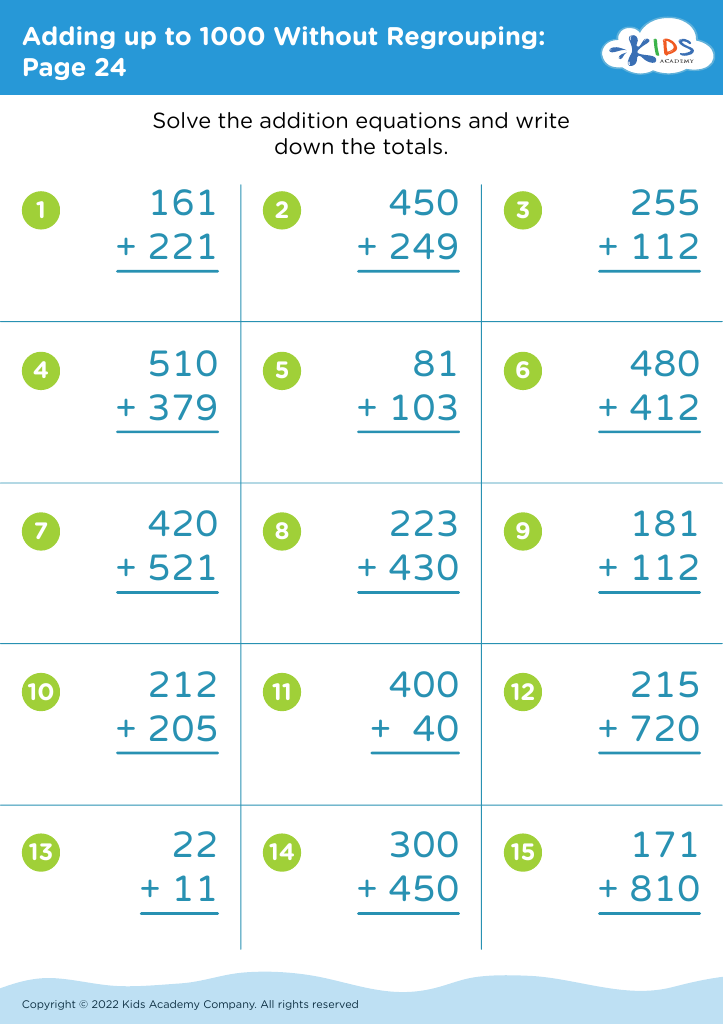
Adding up to 1000 Without Regrouping: Page 24
Worksheet


Understanding fractions and adding up to 1000 without regrouping is essential for children aged 3-9 as it lays the foundation for advanced mathematical concepts and everyday problem-solving skills. For young learners, grasping the concept of fractions allows them to comprehend portions of a whole, enhancing their ability to divide resources equally—important for sharing, cooking, and comprehending time. By building this skill early, children develop a positive attitude towards math, which fosters a lifelong love for learning.

Moreover, the ability to add numbers up to 1000 without regrouping helps children boost their number sense, reinforces place value understanding, and sharpens their mental math skills. This level of number manipulation encourages confidence in students, making them more adept in tackling larger math problems later on.

Parents and teachers play a critical role by nurturing these skills through engaging activities and real-world applications. By focusing on these fundamental concepts from a young age, they ensure children are better prepared for school curricula, math exams, and practical scenarios in everyday life, ultimately supporting their academic success and personal growth. Investing time in this foundational math understanding is beneficial for both immediate learning and future academic achievements.