Identifying shapes Adding up to 1000 Worksheets for Ages 3-9
3 filtered results
-
From - To
Discover a delightful collection of "Identifying Shapes Adding up to 1000 Worksheets for Ages 3-9" at Kids Academy! These engaging worksheets are specifically designed to help young learners master the basics of addition and shape recognition. Ideal for kids aged 3 to 9, our printable resources combine fun exercises with educational content, ensuring your child enjoys learning math concepts. Through vibrant illustrations and interactive activities, children will practice adding up to 1000, while also identifying various shapes. Empower your child’s mathematical journey and develop their problem-solving skills with our expertly crafted worksheets. Visit Kids Academy today!
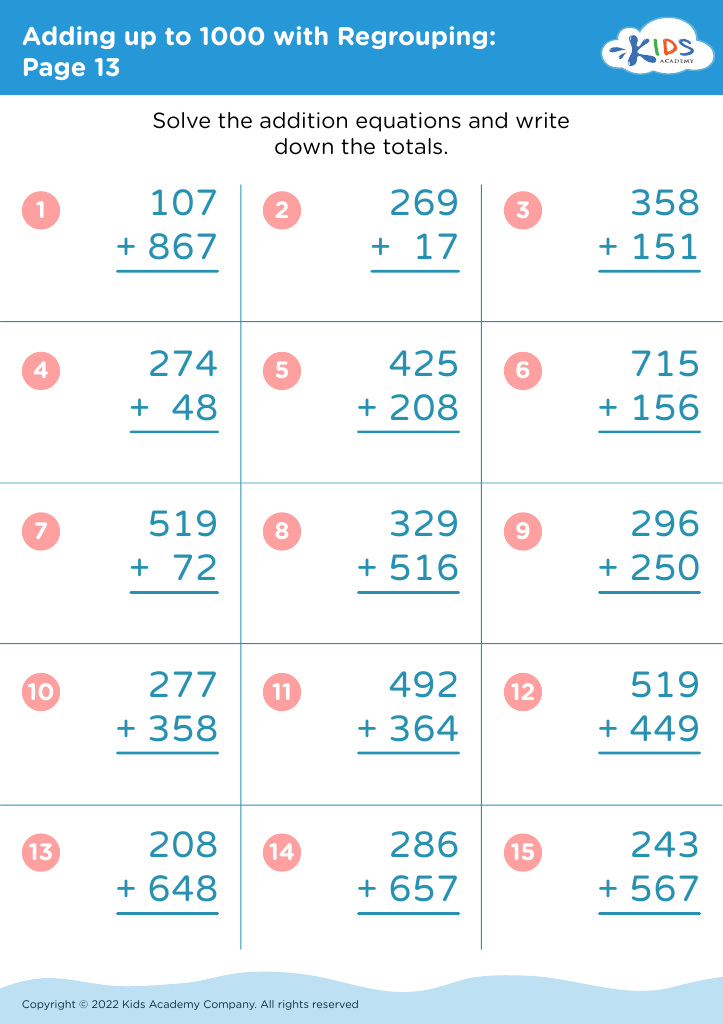
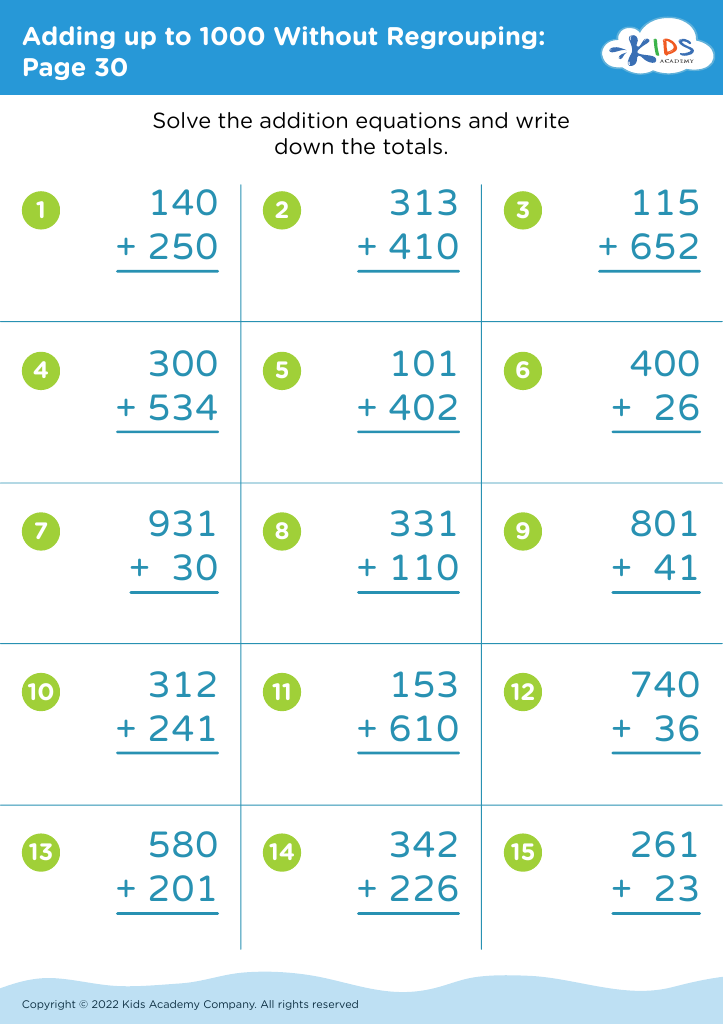
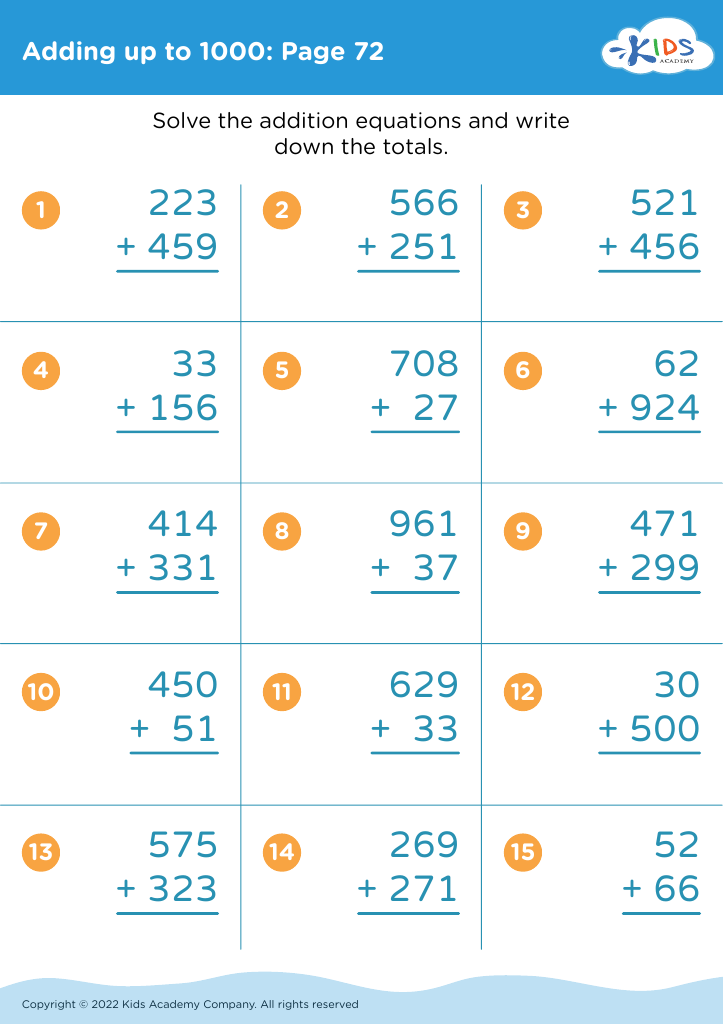



Identifying shapes and basic arithmetic skills, such as adding up to 1000, are fundamental components of early childhood education that can significantly impact cognitive development in children aged 3-9. Understanding shapes helps children recognize patterns and form a basis for spatial reasoning, which is crucial for subjects like geometry, science, and even everyday problem-solving. Recognizing diverse shapes also improves fine motor skills through drawing and building activities.
Simultaneously, introducing arithmetic skills, including addition up to 1000, forms a foundational understanding crucial for advanced math. This lays the groundwork for future complex calculations and quantitative reasoning. Children who grasp arithmetic are more likely to excel in various academic subjects and are better prepared for real-life situations that require math, such as handling money or measuring objects.
Moreover, achieving proficiency in these areas can boost a child's confidence and foster a love for learning. Educators and parents who actively engage children in identifying shapes and practicing basic math support the development of a positive, curious mindset. This early intervention facilitates not just academic success but also cultivates abilities like logical thinking, attention to detail, and creative problem-solving, all essential for overall brain development.








