Number Recognition Adding up to 1000 Worksheets for Ages 3-9 - Page 2
31 filtered results
-
From - To
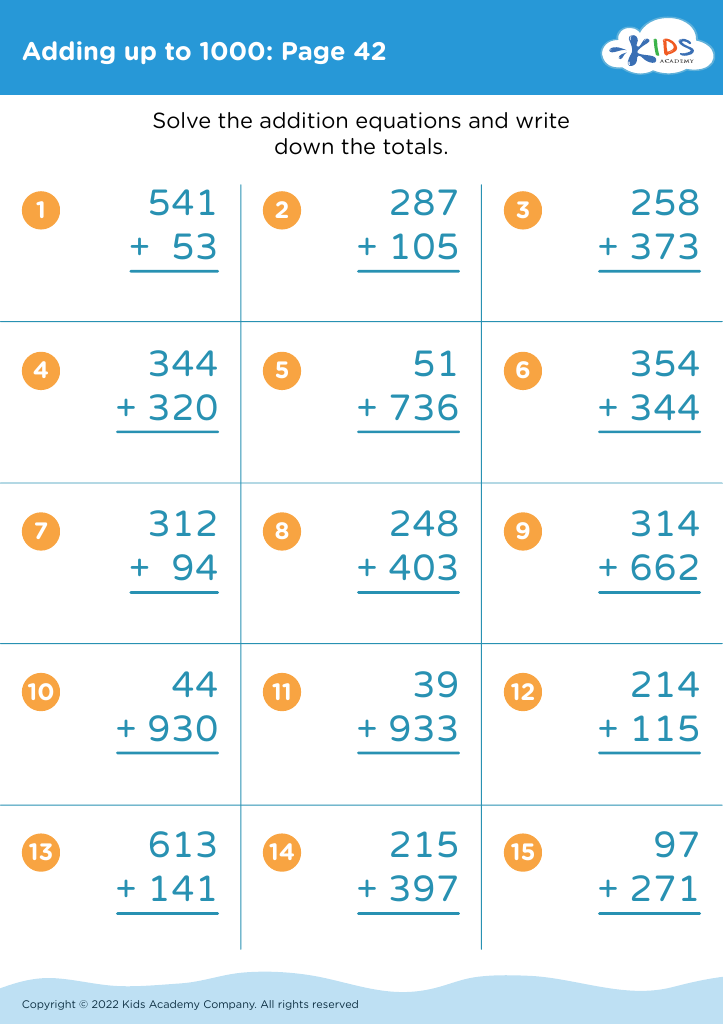
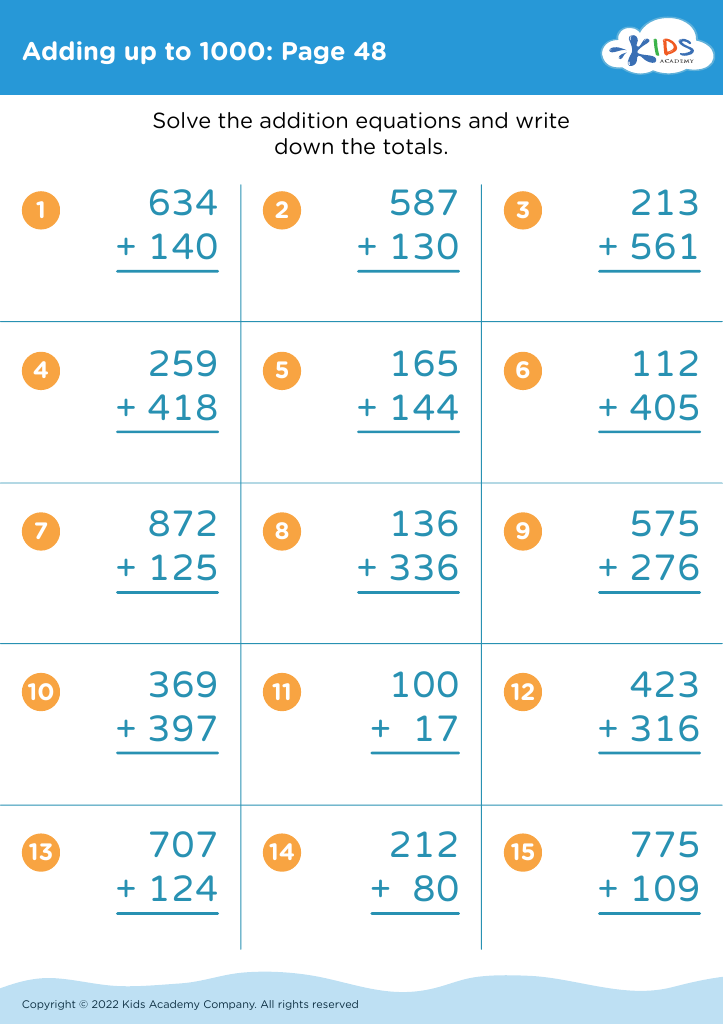
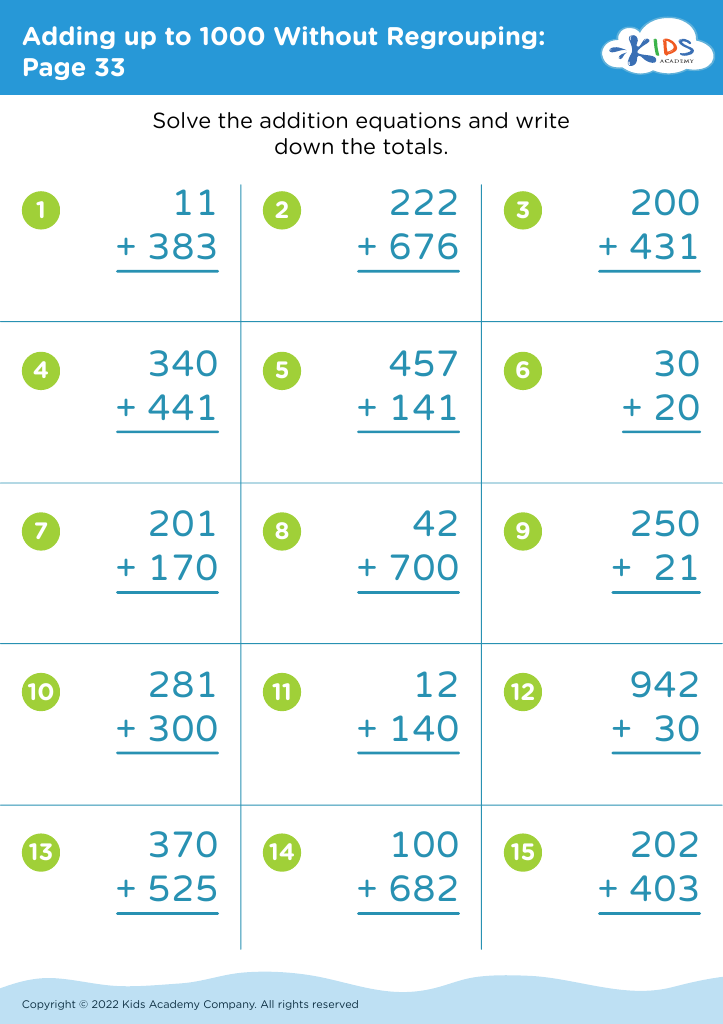




Number recognition and the ability to add up to 1000 are foundational skills for young children aged 3-9, and both parents and teachers should prioritize their development. At this age, children are in a critical period of cognitive development where they form the basic building blocks for future mathematical understanding. Recognizing numbers and understanding their value prepares children for more complex operations like addition, subtraction, multiplication, and division.
Mastering these skills early reduces math anxiety and builds confidence. It encourages logical thinking, problem-solving, and the ability to follow sequential steps — skills crucial not just in math, but across all areas of education and daily life. Engaging with numbers also enhances a child's ability to grasp concepts in science and technology, supporting STEM learning from a young age.
For parents, fostering number recognition can be integrated into everyday practices, like counting objects during play or reading number-centric stories, making learning relatable and fun. Teachers can build on this foundation in the classroom through interactive activities and games that promote hands-on learning.
Altogether, focusing on number recognition and early arithmetic abilities sets children on a path to academic success, equipping them with essential life skills and laying a robust foundation for future learning and real-world problem-solving.








