Recognizing Patterns Adding up to 1000 Worksheets for Ages 3-9
6 filtered results
-
From - To
Enhance your child's math skills with our "Recognizing Patterns Adding up to 1000" worksheets, perfect for ages 3-9! These engaging and colorful worksheets are designed to make learning fun and interactive. By identifying and recognizing patterns while performing addition up to 1000, children sharpen their problem-solving abilities and boost their confidence in math. The activities cater to various skill levels, gradually increasing in complexity to foster progress. Ideal for both classroom and home use, our worksheets are an excellent resource for reinforcing key math concepts and setting young learners on a path to success in mathematics.
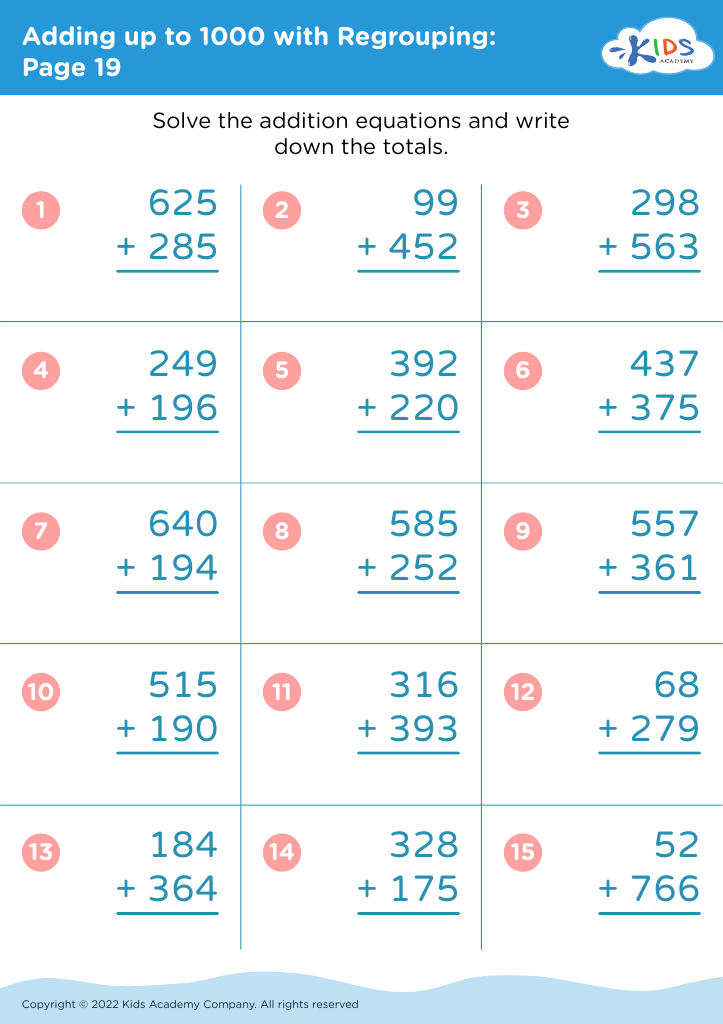
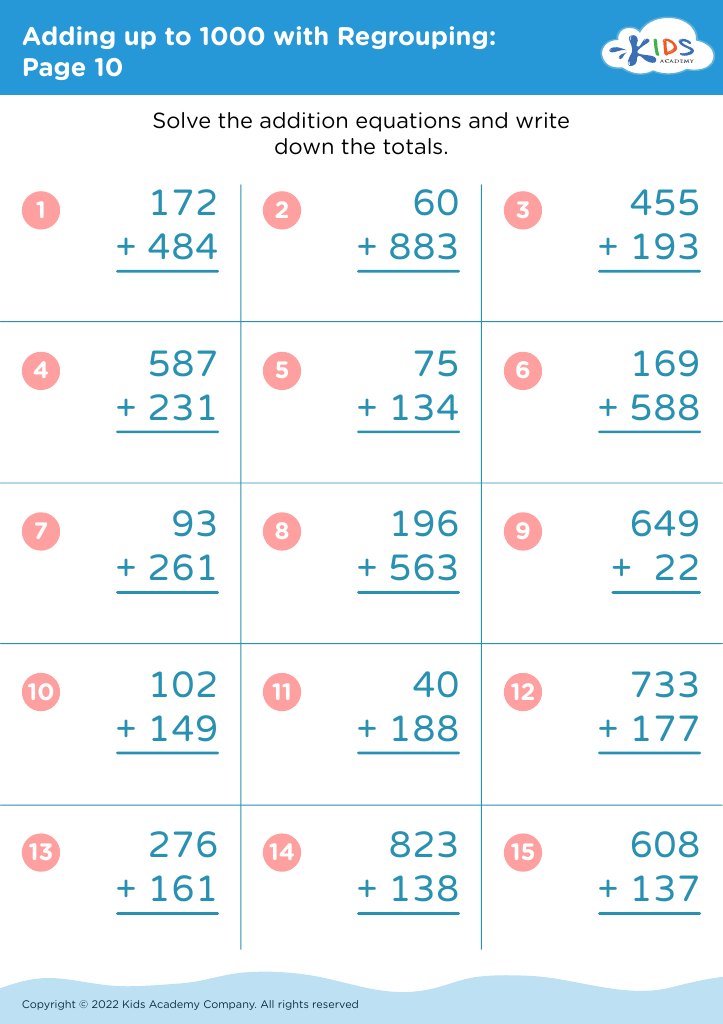
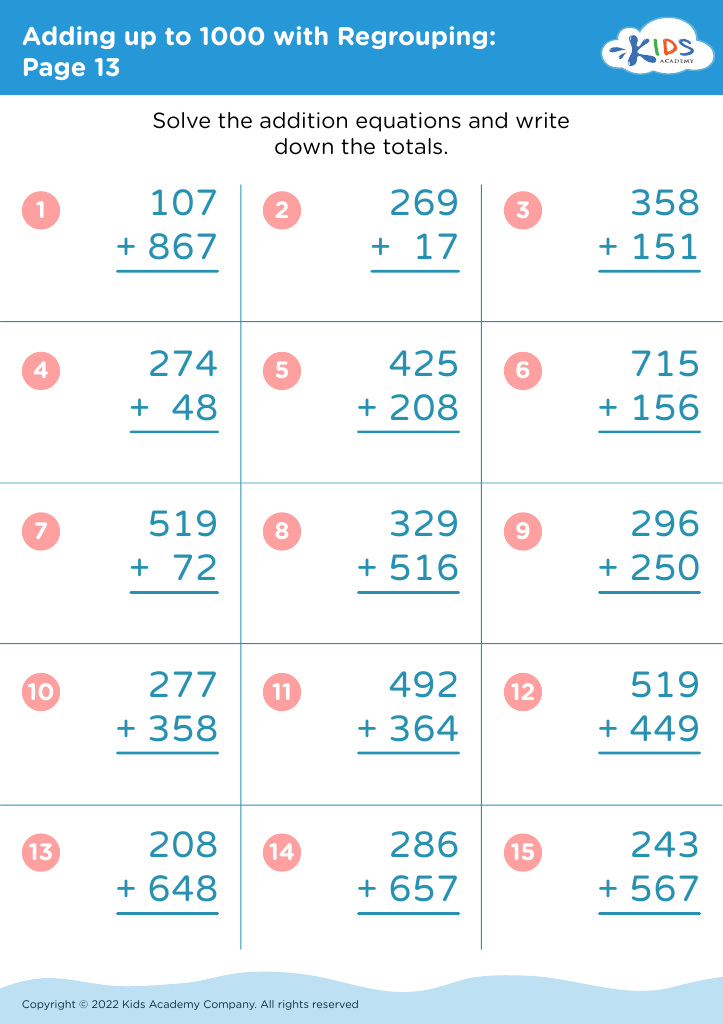
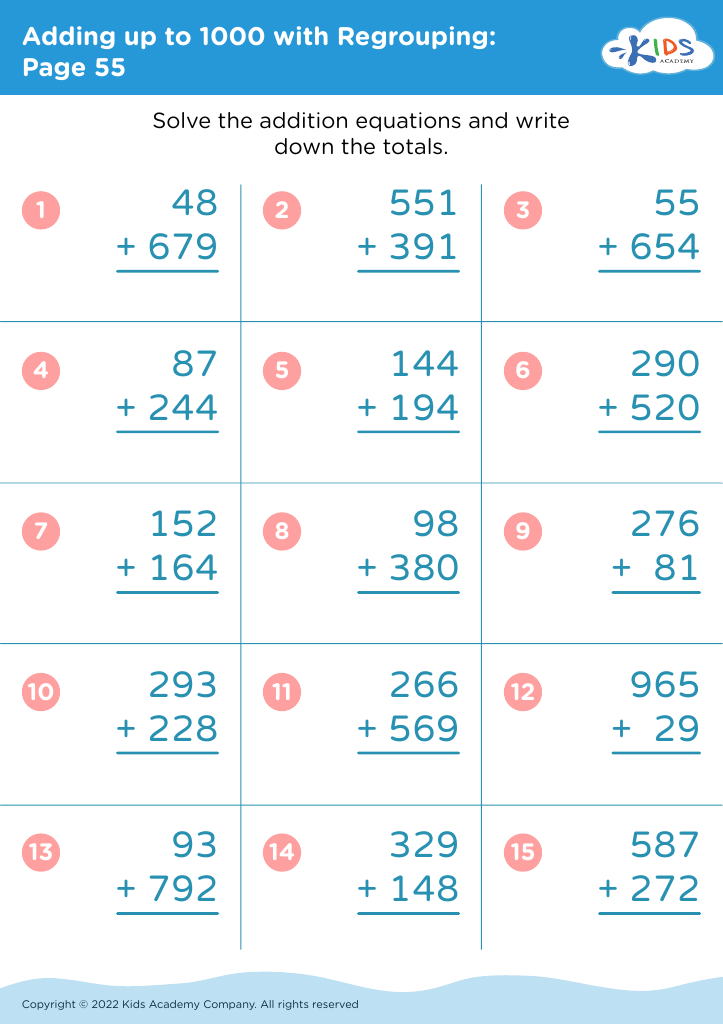
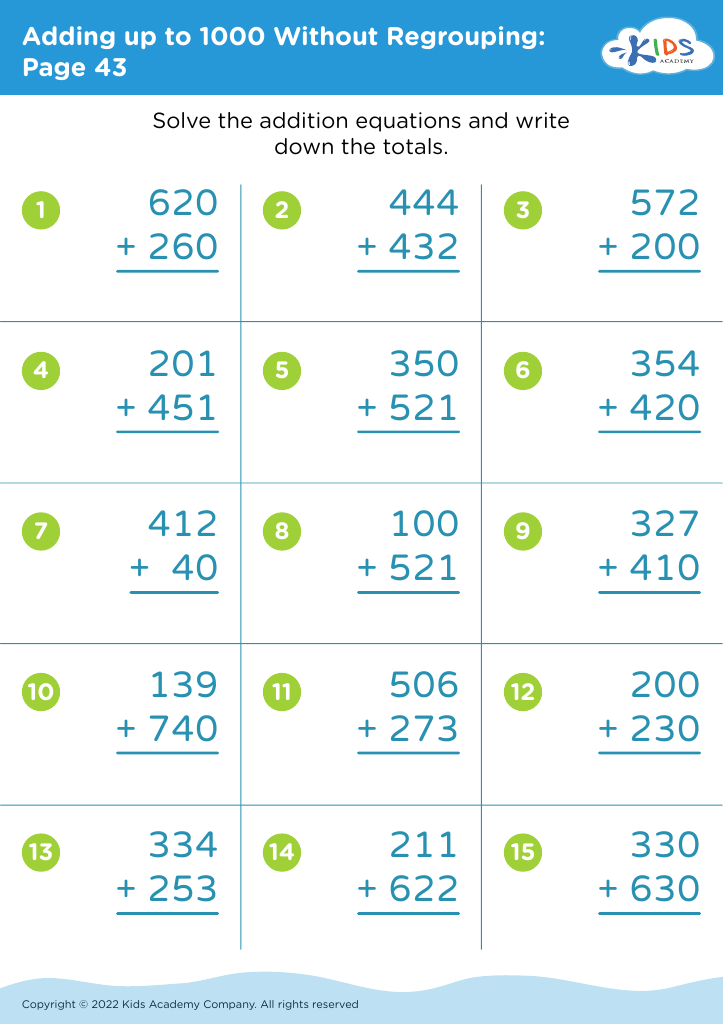
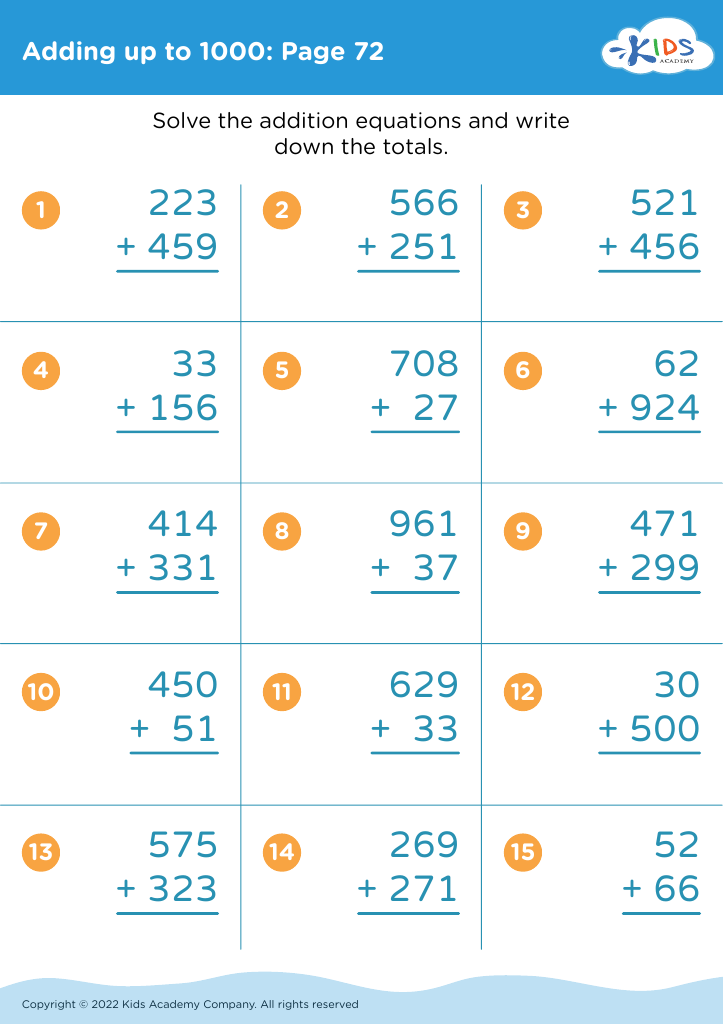



Recognizing patterns and working with numbers that add up to 1000 is an essential skill for children aged 3-9 because it lays a strong foundation for future mathematical understanding and problem-solving abilities. At this developmental stage, children are developing their cognitive faculties and the ability to recognize patterns, which is crucial for logical reasoning and critical thinking. By understanding numerical patterns and sums, children enhance their grasp of basic arithmetic, which is foundational for more complex math concepts they will encounter later.
Additionally, learning about numbers and patterns in a fun and engaging way helps children develop a positive attitude towards math. Activities like counting exercises, pattern games, or interactive math challenges related to adding up to 1000 keep children interested and invested in their learning process. This positive early interaction with mathematics builds confidence and cultivates a growth mindset.
From a practical perspective, early exposure to these concepts helps children understand real-world applications of math, such as budgeting, measuring, and problem-solving. As our world becomes increasingly data-oriented and mathematically driven, ensuring that children have a strong ability to recognize and work with numbers prepares them not just for academic success, but for everyday life and future career opportunities. Therefore, parents and teachers should prioritize recognizing patterns and adding up to 1000 to set children on a path of success and achievement.








