Recognizing shapes Adding up to 1000 Worksheets for Ages 3-9
8 filtered results
-
From - To
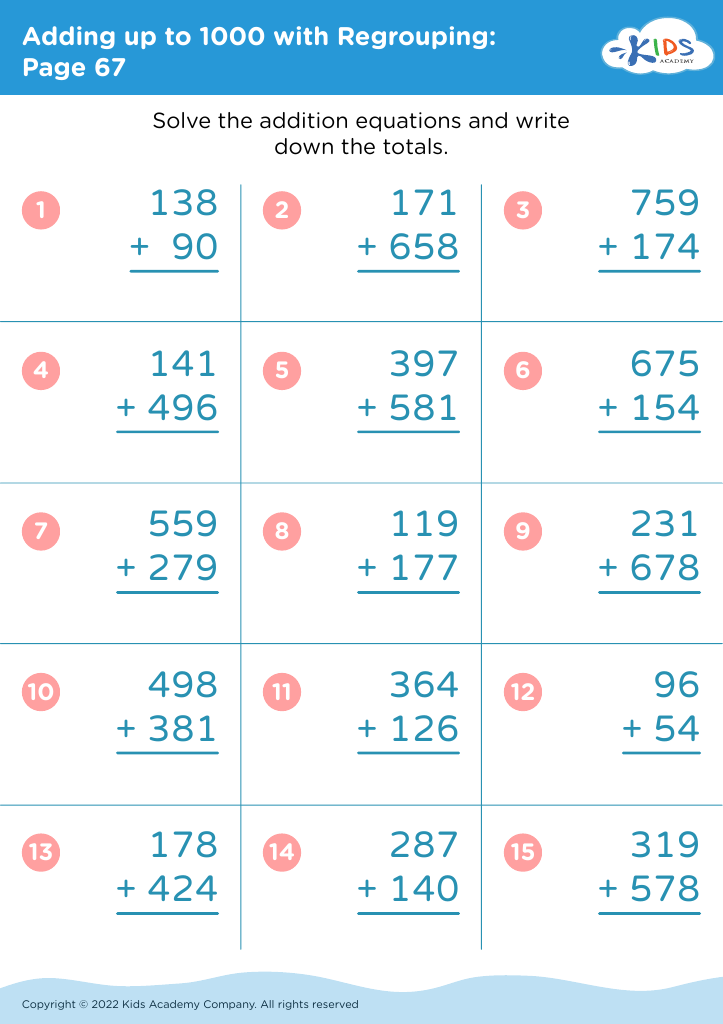
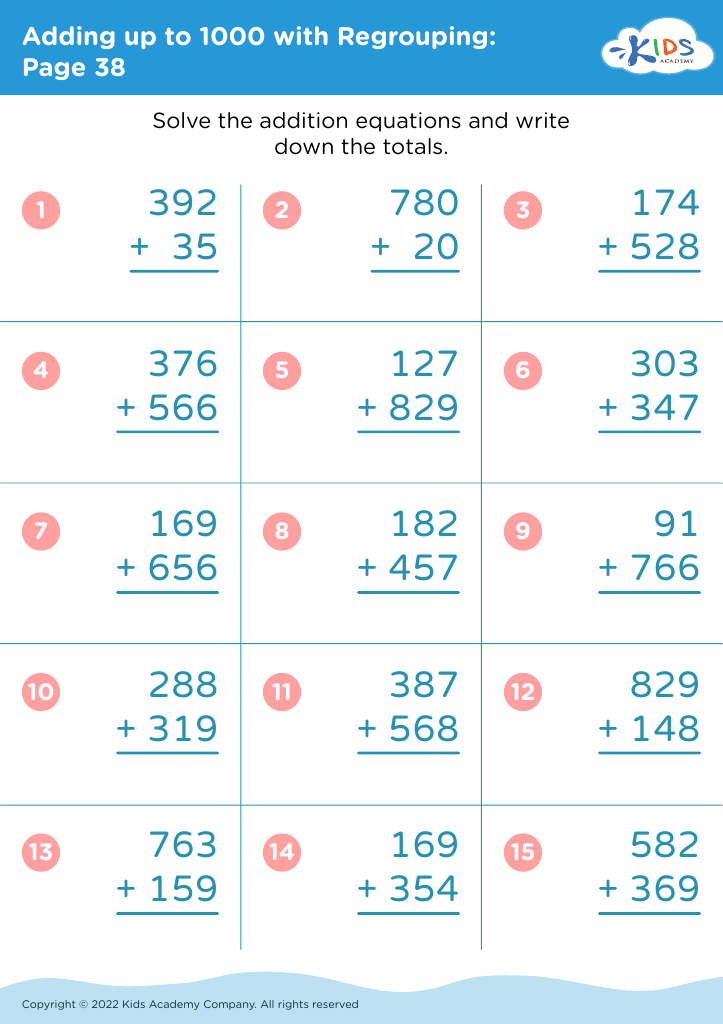
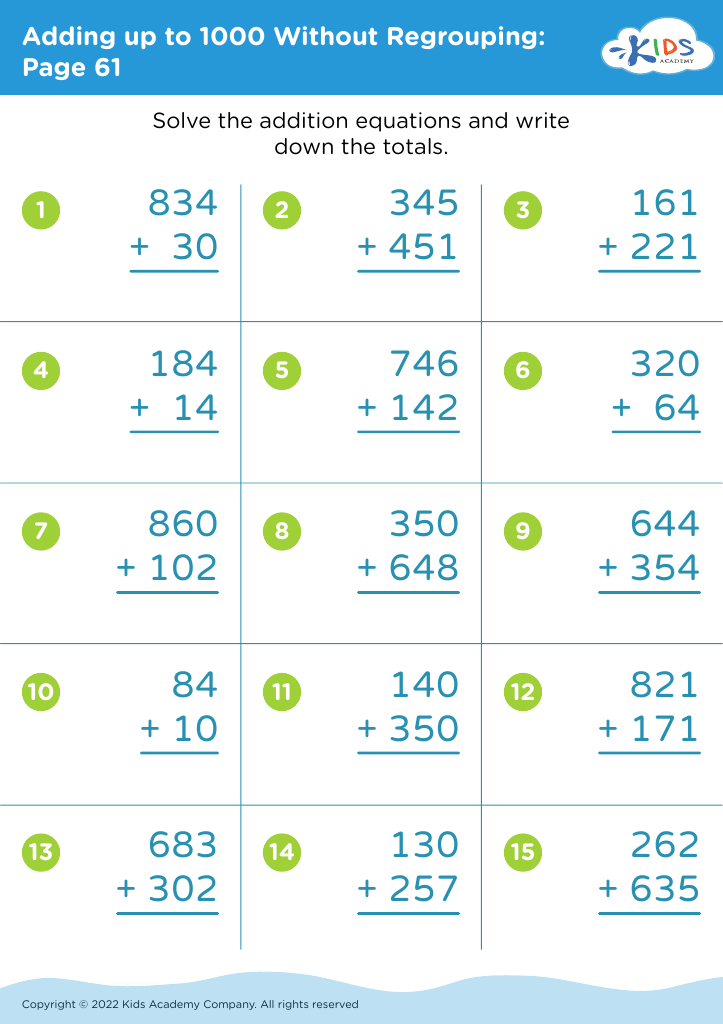
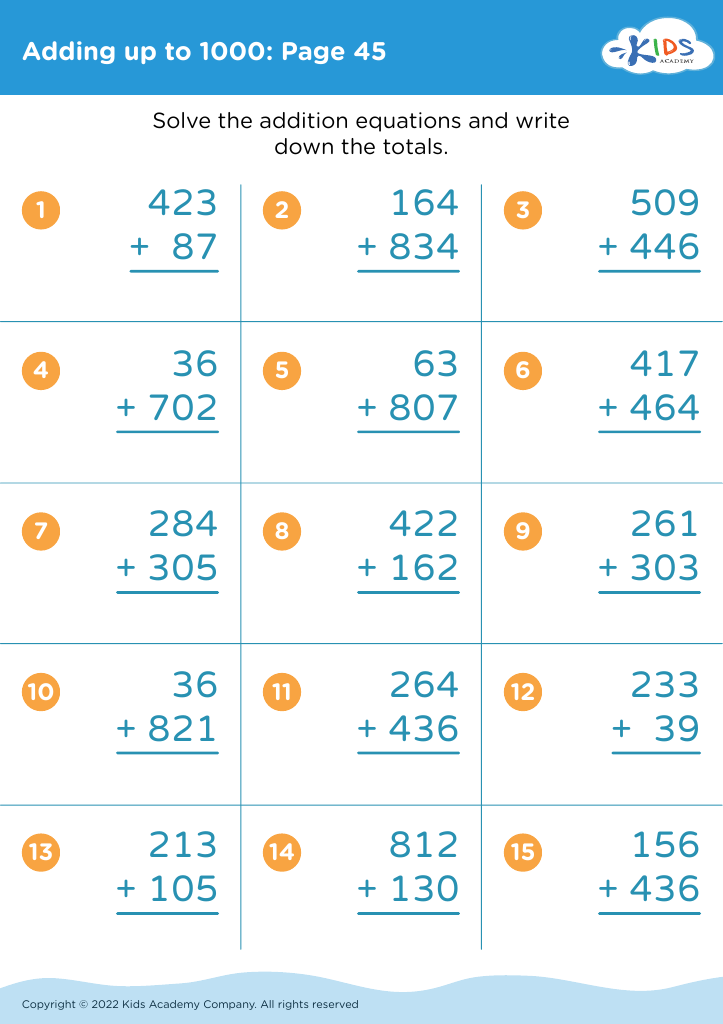
Explore our "Recognizing Shapes Adding up to 1000 Worksheets for Ages 3-9" designed to make learning math and geometry fun and engaging! Tailored for young learners, these worksheets seamlessly blend shape recognition with arithmetic skills, guiding children through solving problems up to 1000. Perfectly suited for home or classroom activities, our resources foster confidence in number operations while enhancing spatial awareness. Enjoy interactive exercises, colorful visuals, and age-appropriate challenges that turn math practice into an enjoyable adventure. Help your students develop crucial math foundations with our expertly crafted worksheets, ensuring a well-rounded, exciting educational experience!
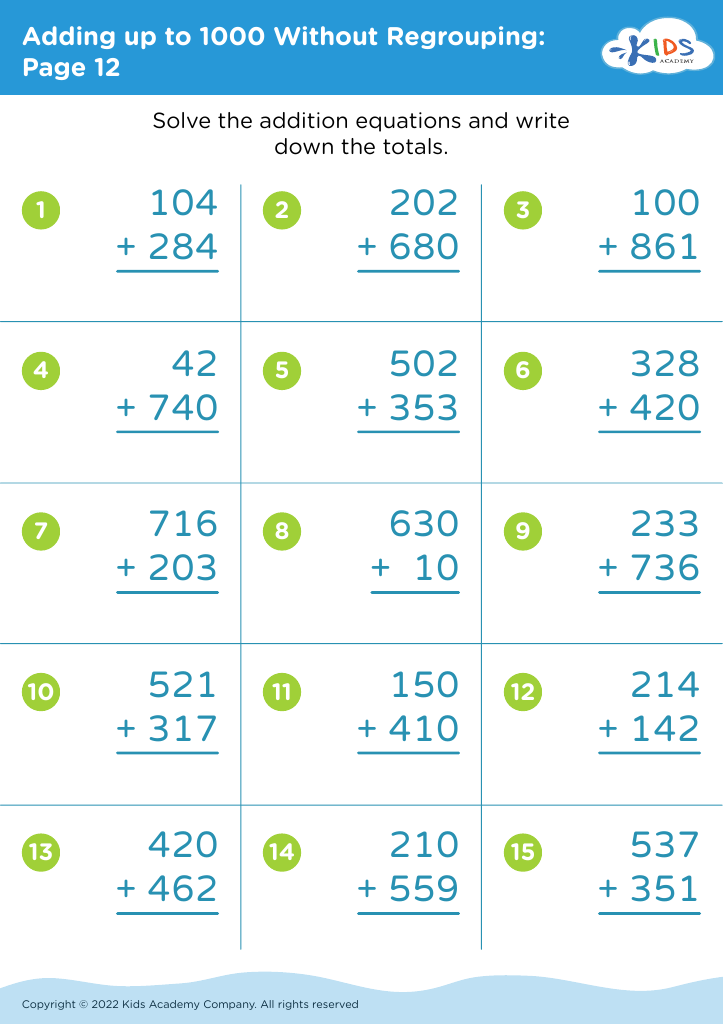
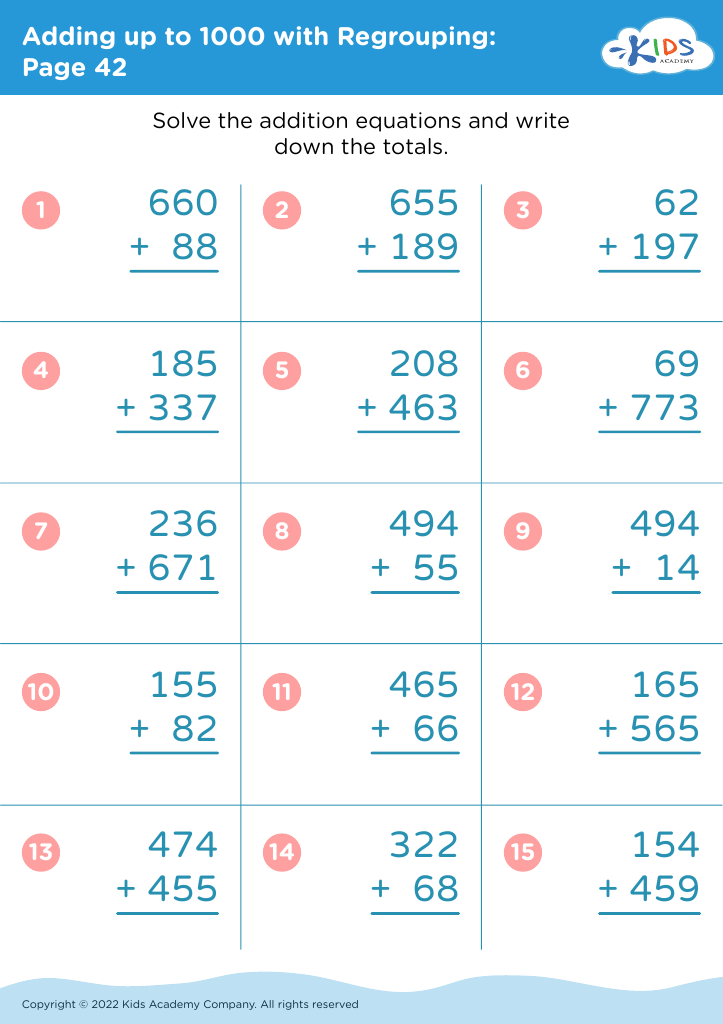
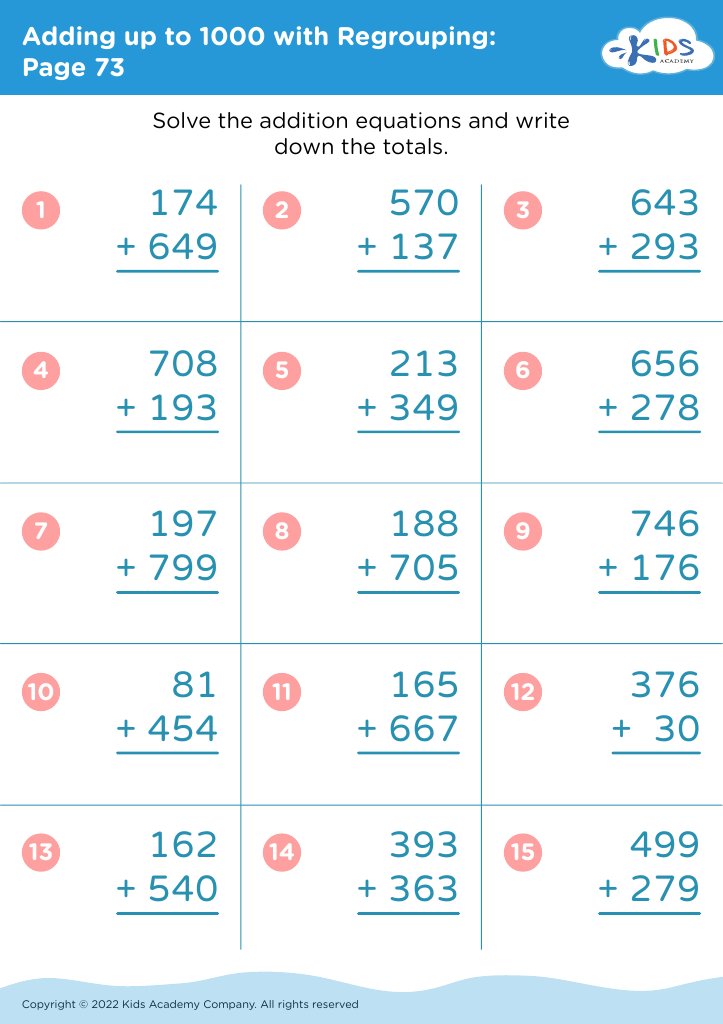
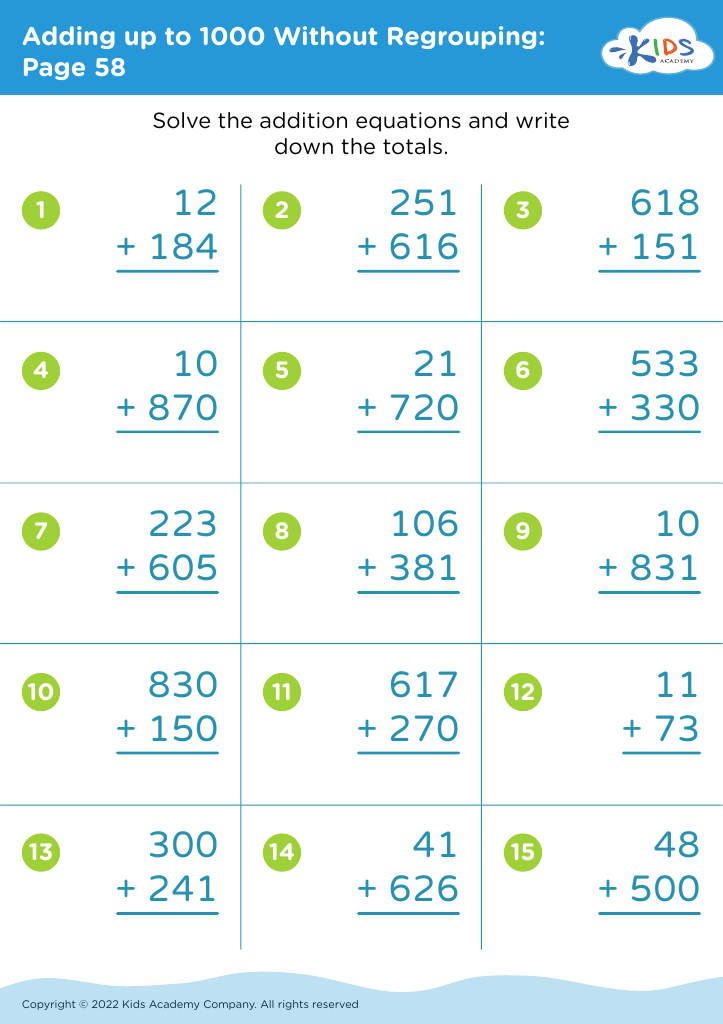



Recognizing shapes and practicing addition up to 1000 are crucial skills for young children aged 3-9 as they build foundational mathematics understanding and cognitive development. Shapes recognition helps children distinguish between different forms and patterns, fostering spatial awareness and geometry skills. It aids in developing critical thinking, categorization, and problem-solving abilities. This visual discrimination also supports reading and writing, as recognizing letter shapes is fundamental to literacy.
On the other side, addition up to 1000 lays the groundwork for arithmetic fluency and number sense, crucial for more complex mathematical concepts. Early experiences with addition help reinforce counting skills, introduce place value understanding, and nurture logical thinking and procedural methodologies. Working with numbers up to 1000 maintains cognitive development, boosts memory, and enhances the ability to make numerical connections in everyday situations.
Moreover, engaging with shapes and numbers at an early age promotes confidence in using these skills, encouraging a positive attitude towards learning overall. It sets the educational stage for future academic and personal success, equipping children with essential life skills such as navigation, measuring, and analytical thinking. Therefore, parents and teachers should emphasize these aspects in early education to ensure holistic cognitive growth and preparedness for advanced education.








