Simplifying Fractions Adding up to 1000 Worksheets for Ages 3-9
6 filtered results
-
From - To
Explore our Simplifying Fractions Adding up to 1000 worksheets, designed for children ages 3-9! These engaging, interactive worksheets provide a fun way to help young learners understand and simplify fractions while building their math skills. Each worksheet is tailored to gradually increase in complexity, ensuring that children develop confidence as they work through various challenges. With vibrant illustrations and age-appropriate exercises, our resources keep kids motivated and excited about learning. Perfect for the classroom or home, these worksheets support a strong foundation in mathematics and encourage critical thinking. Start simplifying fractions today and watch your child excel in math!
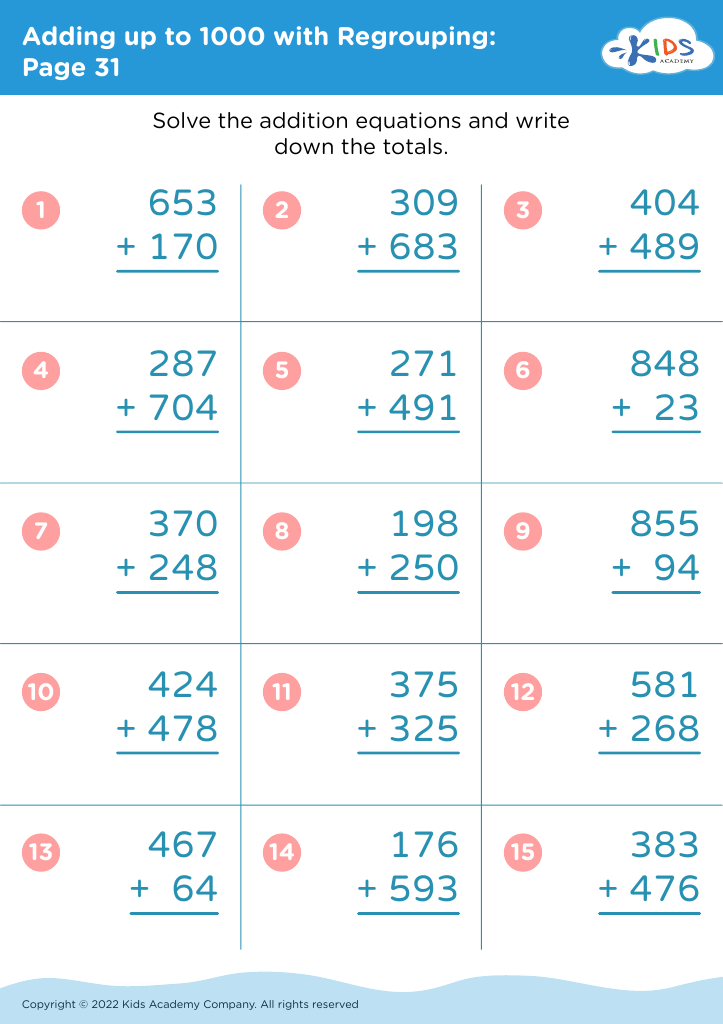
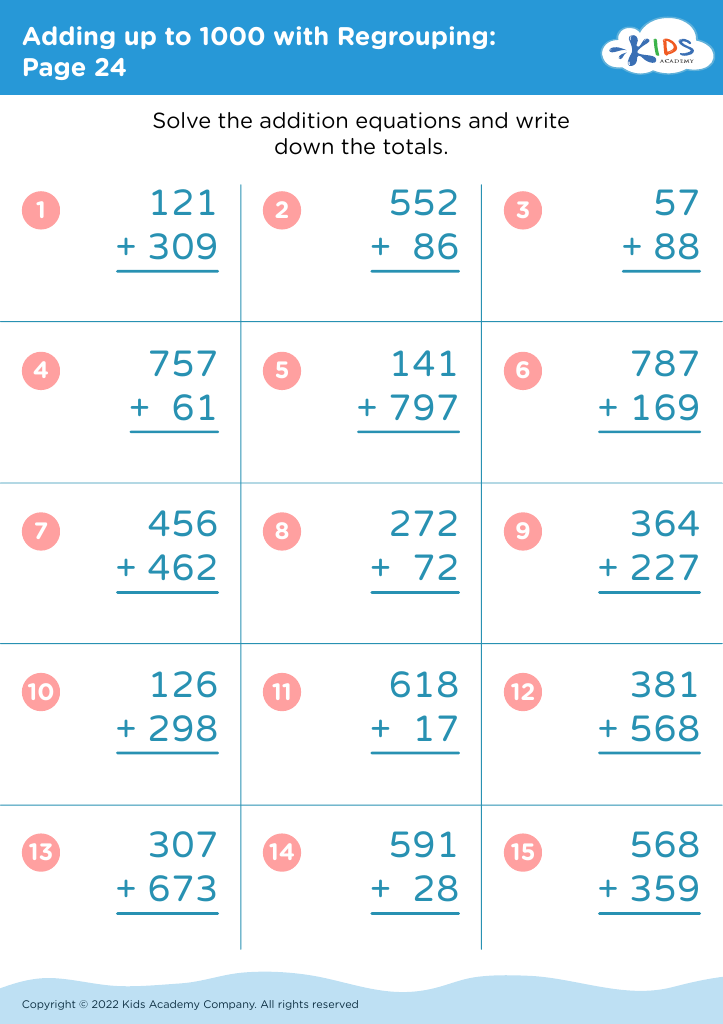
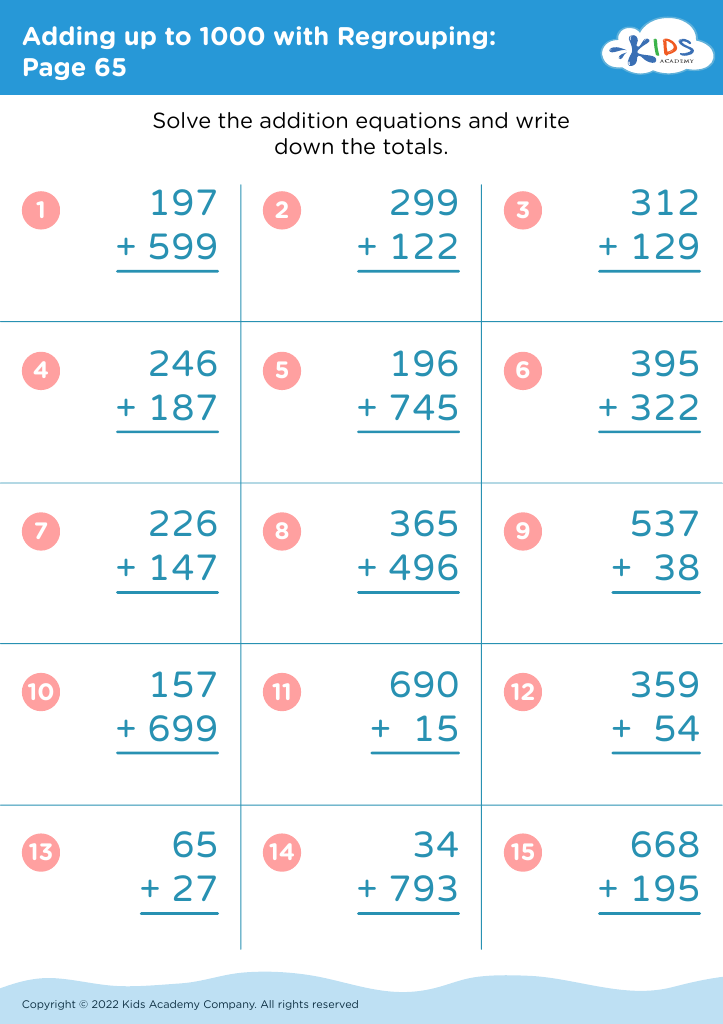
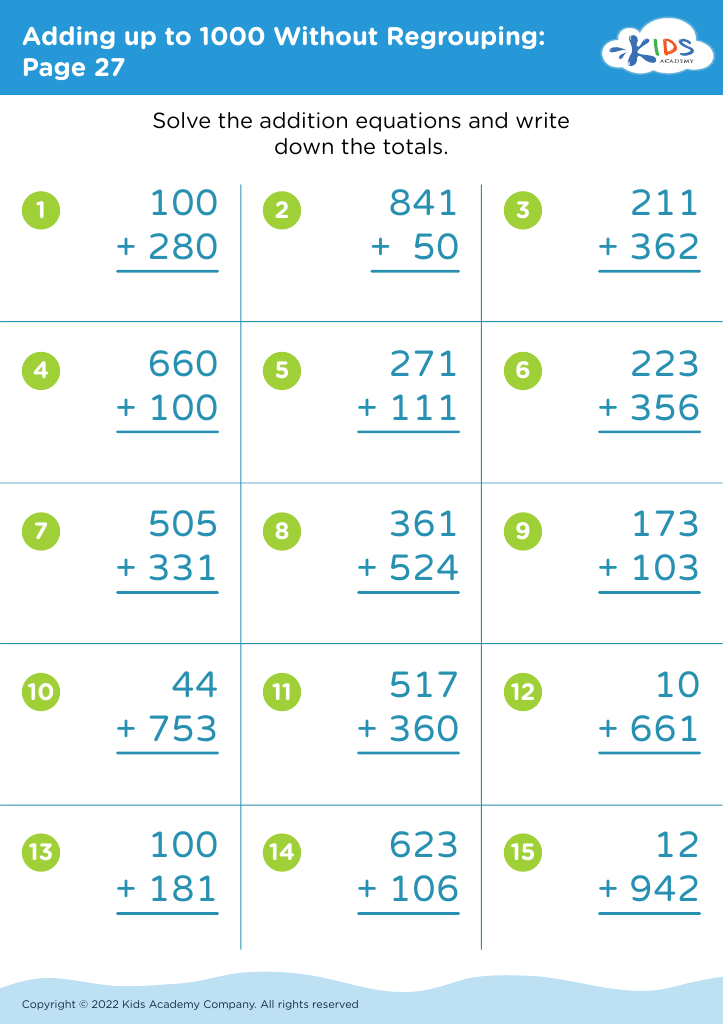
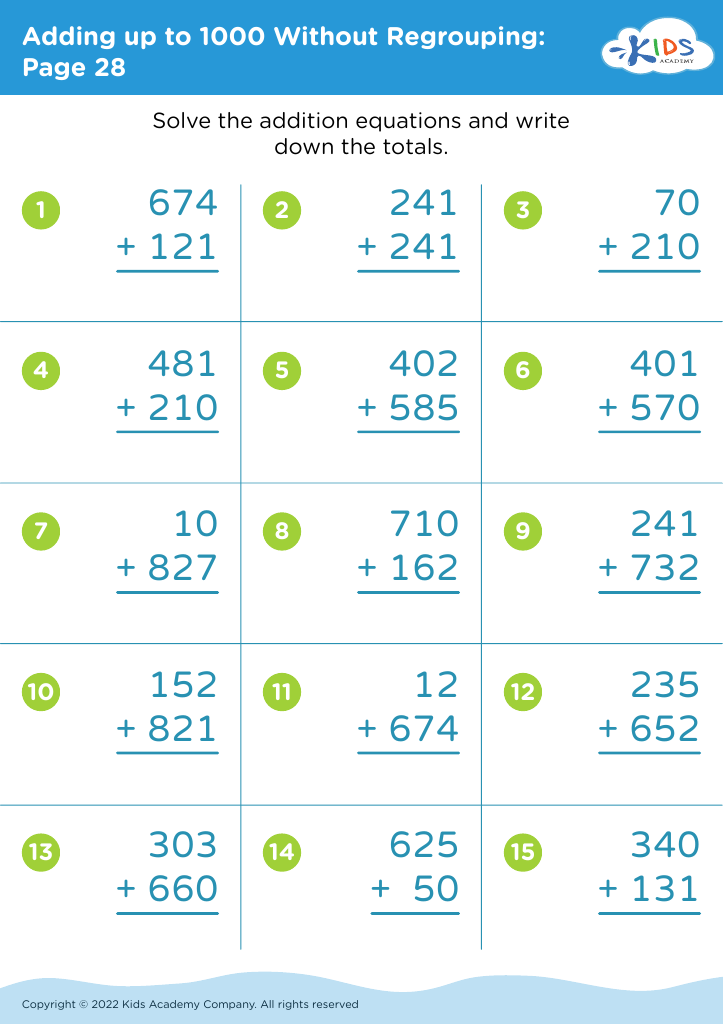
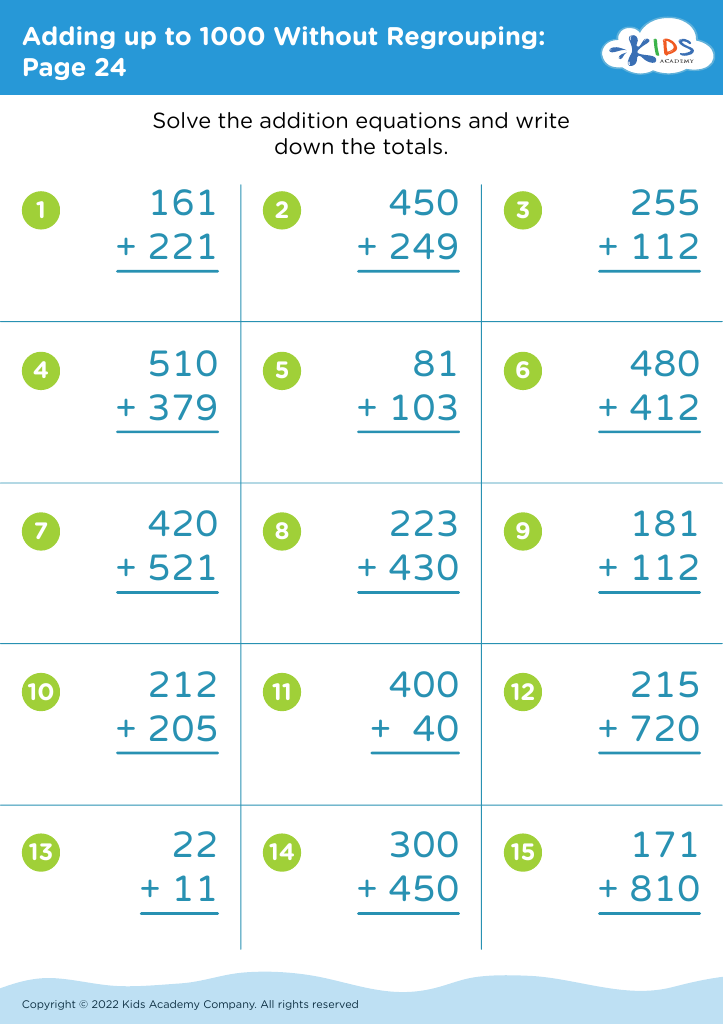



Simplifying fractions, particularly when adding up to 1000, is a key foundational skill that lays the groundwork for more complex mathematical concepts. Parents and teachers of children aged 3-9 should care about this topic for several reasons.
Firstly, understanding fractions promotes a grasp of division and proportionality, aiding in everyday situations like cooking or sharing. By introducing children to the concept of simplifying, they learn to recognize equivalent fractions, developing critical thinking and problem-solving skills.
Moreover, mathematics is not isolated; it enhances a child's overall cognitive development. Engaging in activities focused on fractions encourages reasoning and helps foster perseverance when faced with challenging problems.
Establishing a strong understanding of fractions early on enables children to approach higher-grade mathematics with confidence, reducing anxiety around secondary concepts, such as ratios and percentages.
Finally, this knowledge can enhance a child's self-esteem and foster a positive attitude toward learning. When children experience success with simplifying fractions, they gain a sense of accomplishment that motivates them in other areas of study. Therefore, involving children in such exercises not only enriches their mathematical capabilities but also cultivates a lifelong love for learning.








