Filters

44 filtered results

Clear all filters
Favorites
With answer key
Interactive

44 filtered results

Difficulty Level

Grade


Check out this FREE Trial Lesson on Adding up to 1000 for age 3-9!

Match Objects that Fit Together

Favorites
With answer key
Interactive
  • 3-9
  • Understanding fractions
  • Adding up to 1000
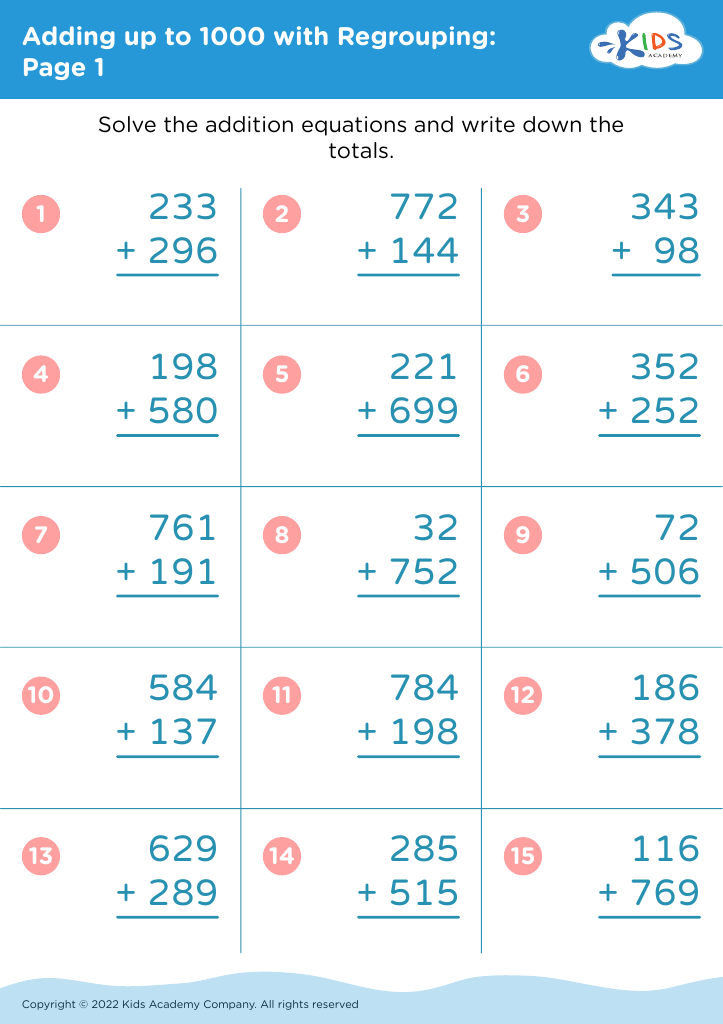
Adding up to 1000 with Regrouping: Page 1
Worksheet
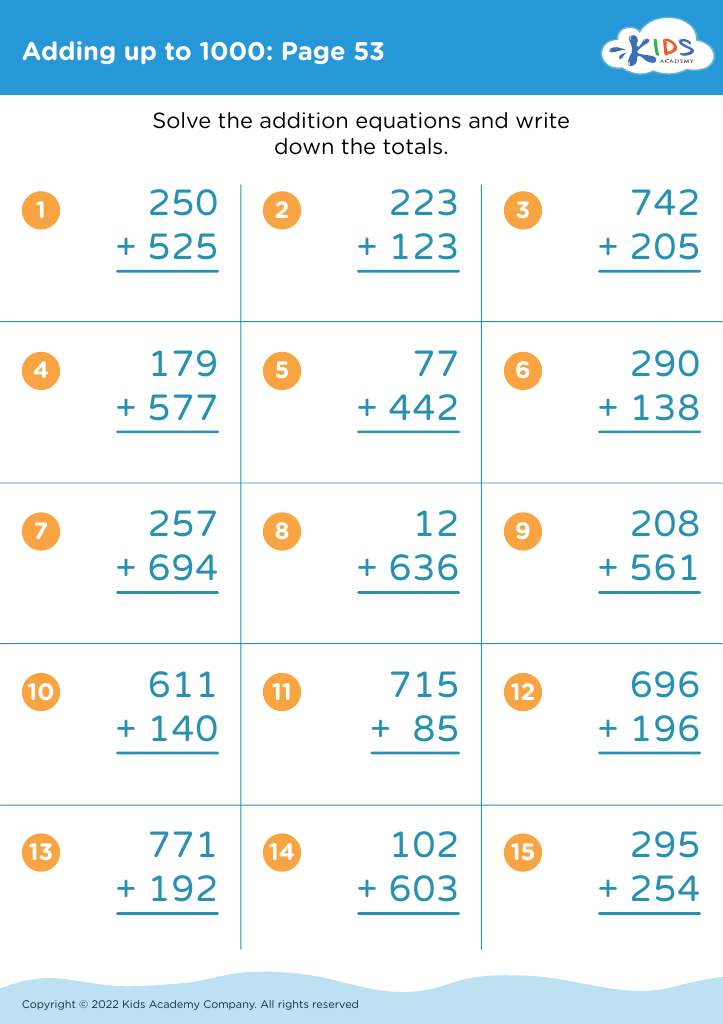
Adding up to 1000: Page 53

Adding up to 1000: Page 53

Adding up to 1000: Page 53
Worksheet
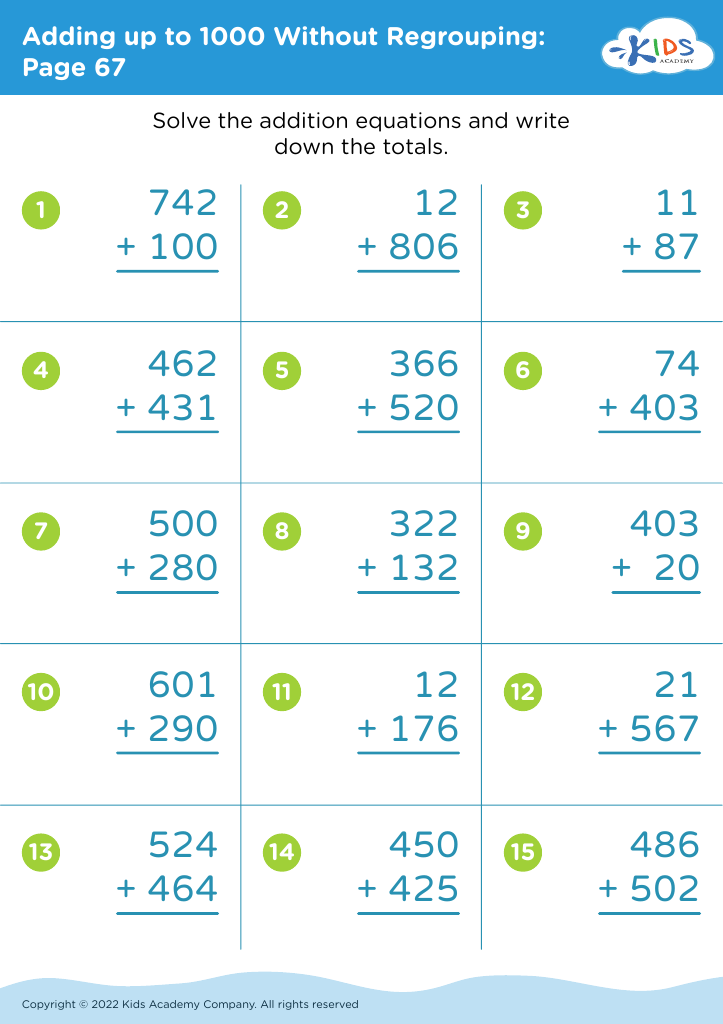
Adding up to 1000 Without Regrouping: Page 67
Worksheet
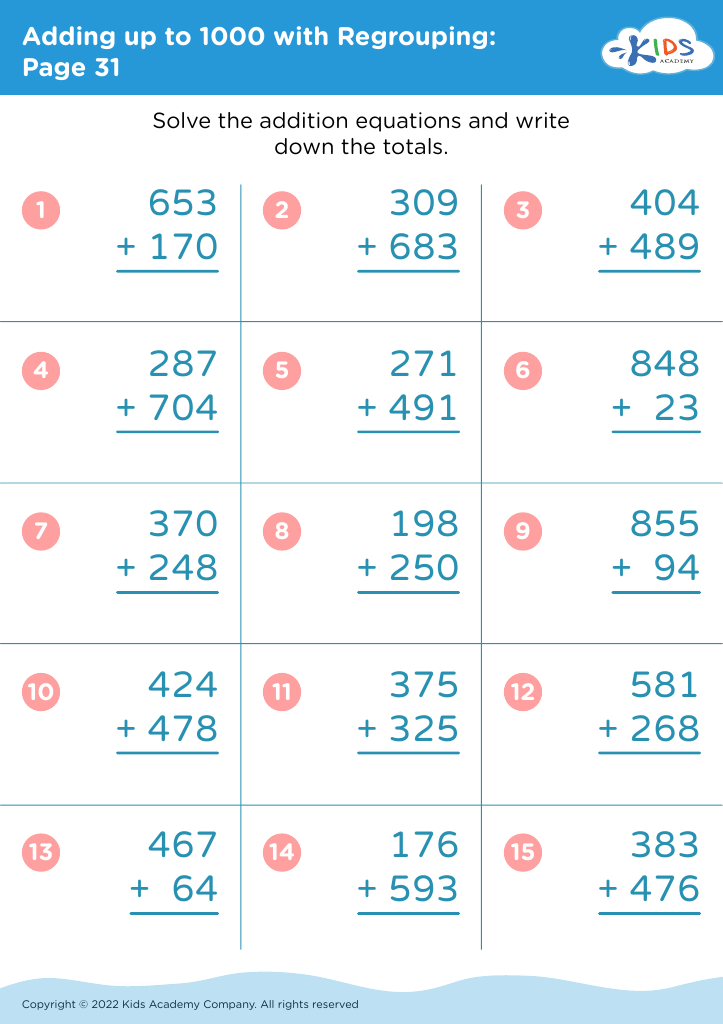
Adding up to 1000 with Regrouping: Page 31
Worksheet
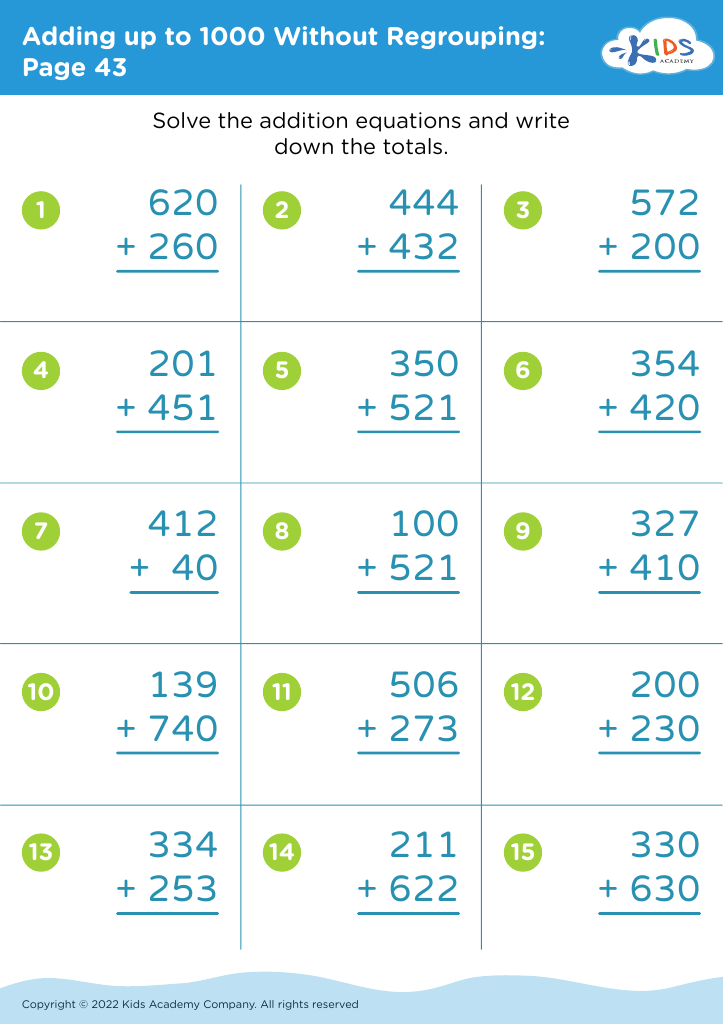
Adding up to 1000 Without Regrouping: Page 43
Worksheet
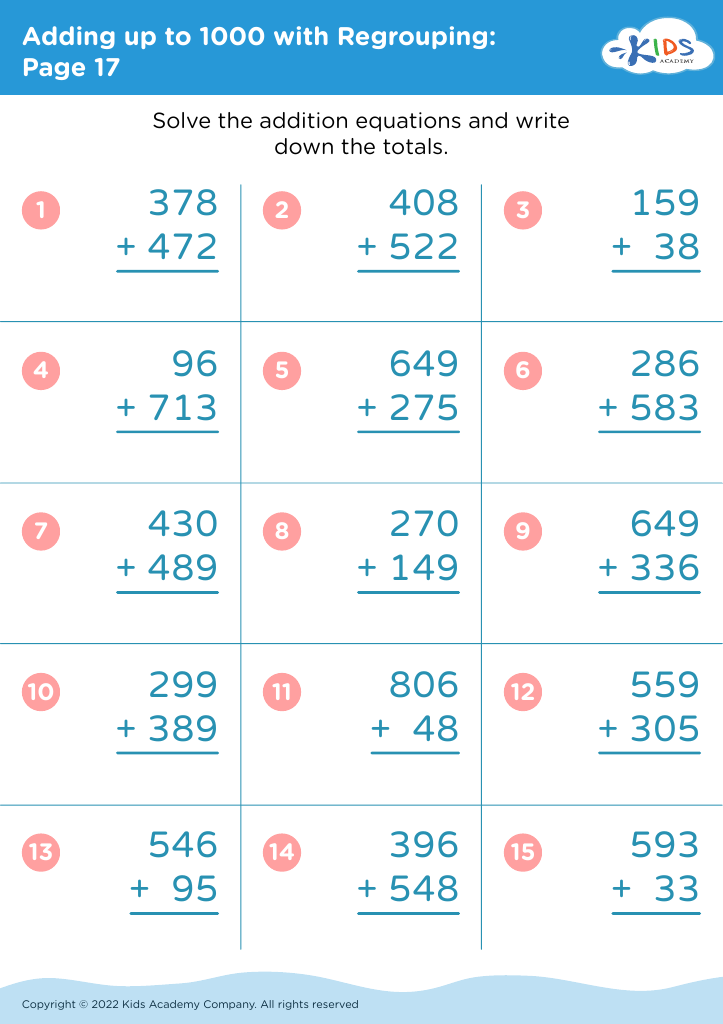
Adding up to 1000 with Regrouping: Page 17
Worksheet
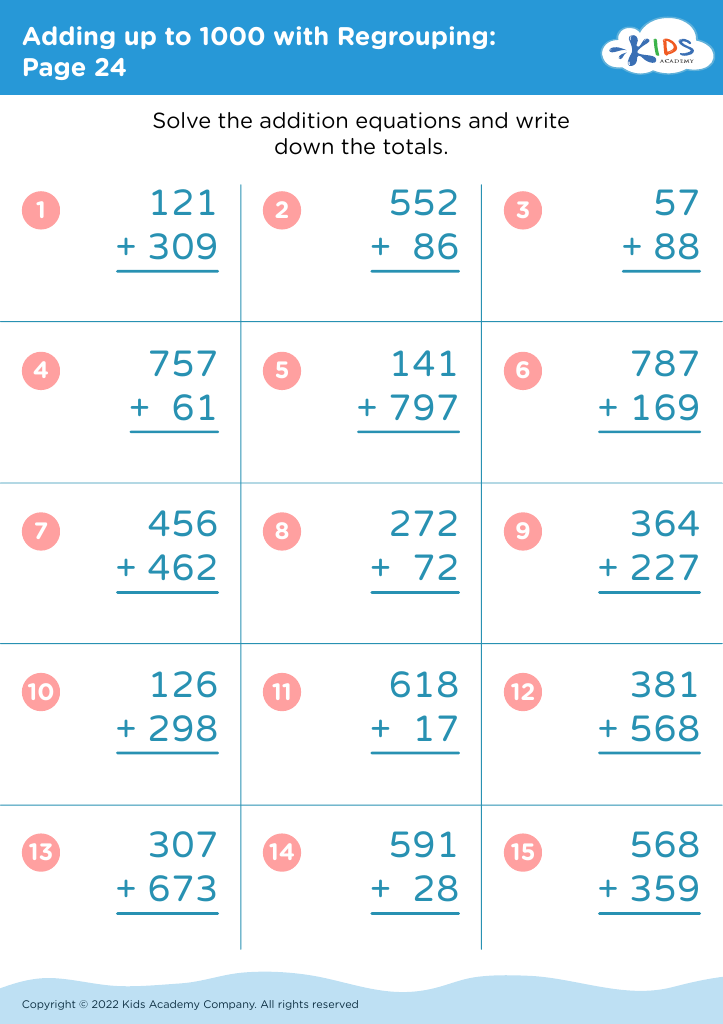
Adding up to 1000 with Regrouping: Page 24
Worksheet
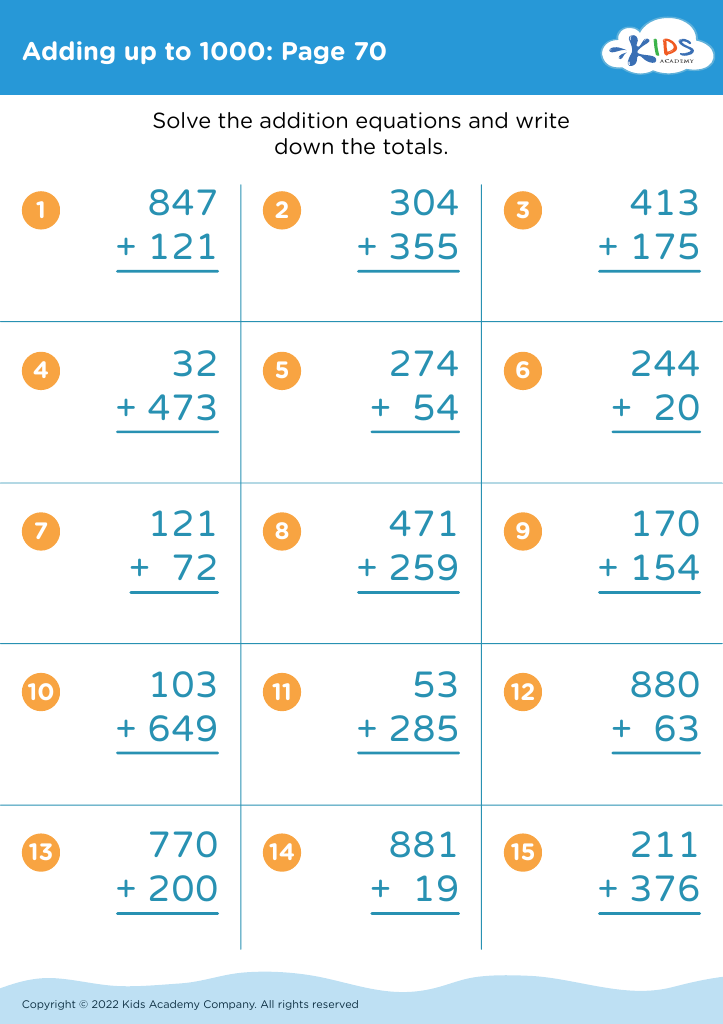
Adding up to 1000: Page 70

Adding up to 1000: Page 70

Adding up to 1000: Page 70
Worksheet
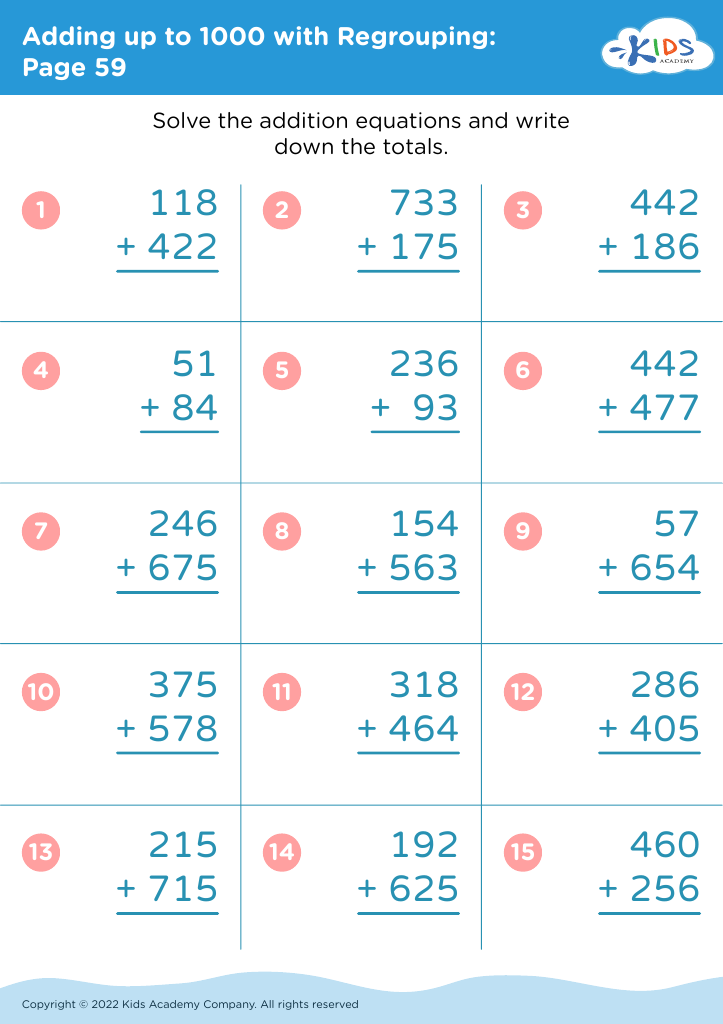
Adding up to 1000 with Regrouping: Page 59
Worksheet
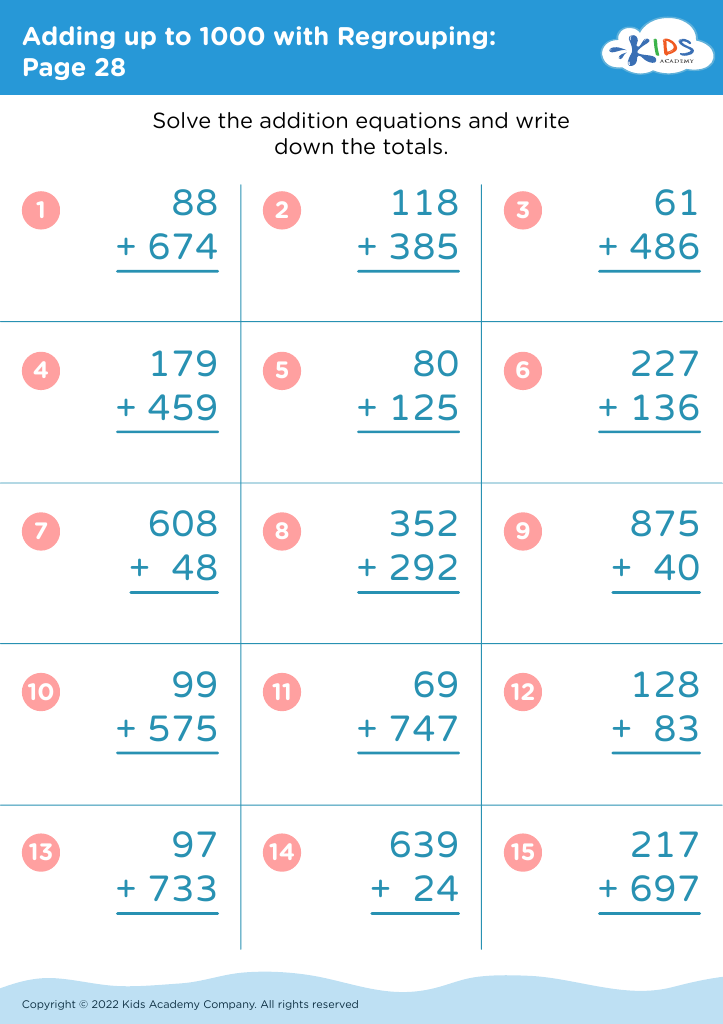
Adding up to 1000 with Regrouping: Page 28
Worksheet
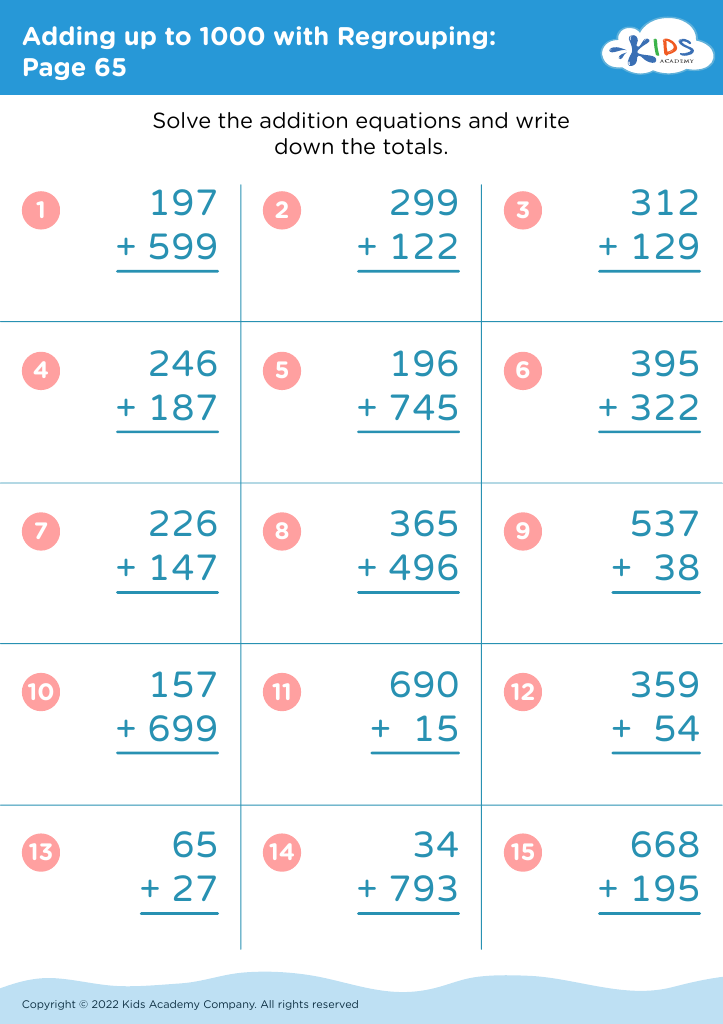
Adding up to 1000 with Regrouping: Page 65
Worksheet
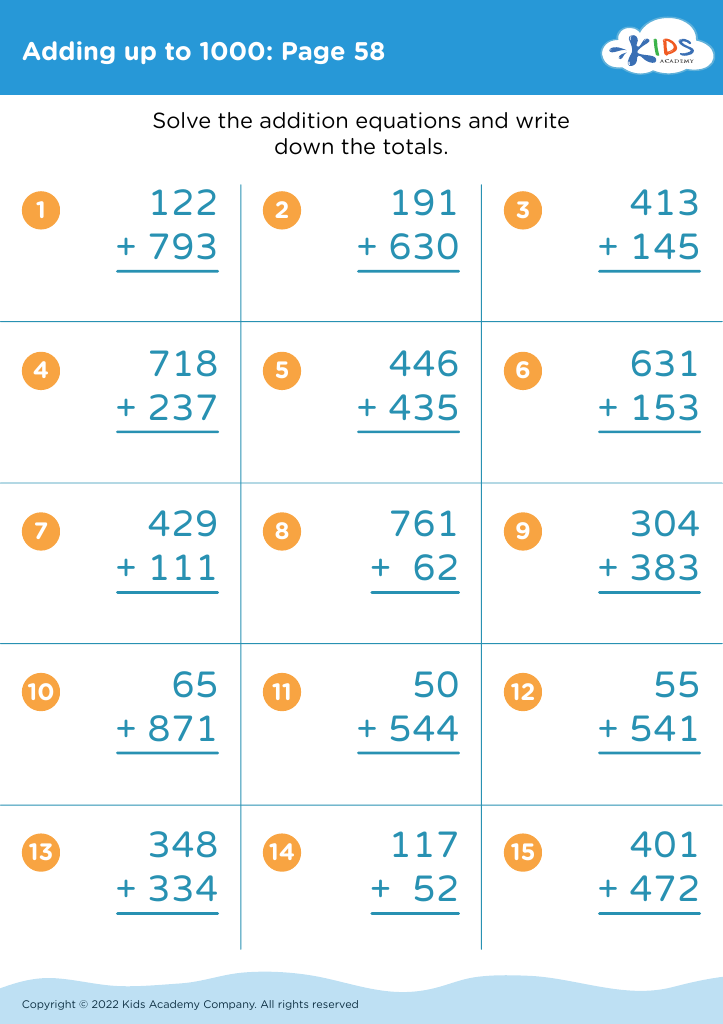
Adding up to 1000: Page 58

Adding up to 1000: Page 58

Adding up to 1000: Page 58
Worksheet
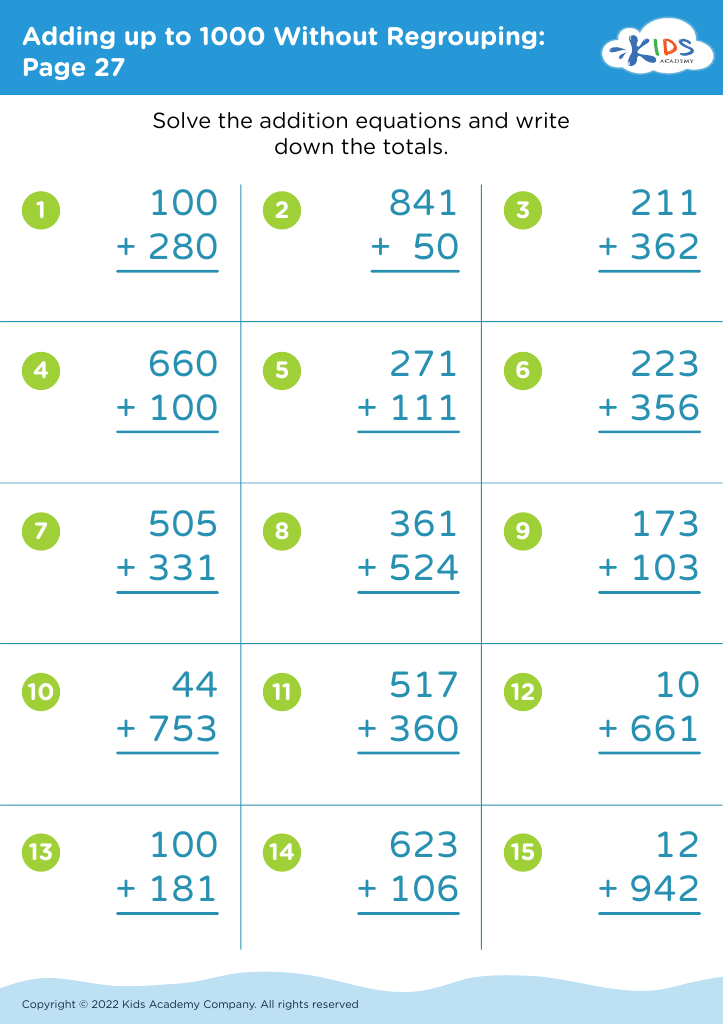
Adding up to 1000 Without Regrouping: Page 27
Worksheet
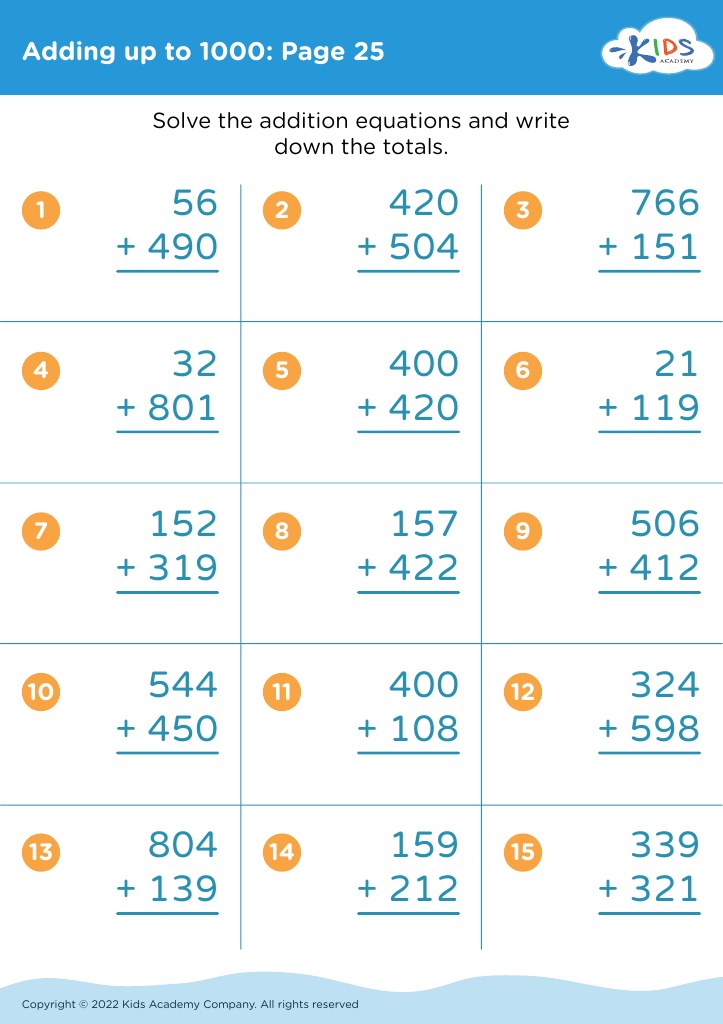
Adding up to 1000: Page 25

Adding up to 1000: Page 25

Adding up to 1000: Page 25
Worksheet
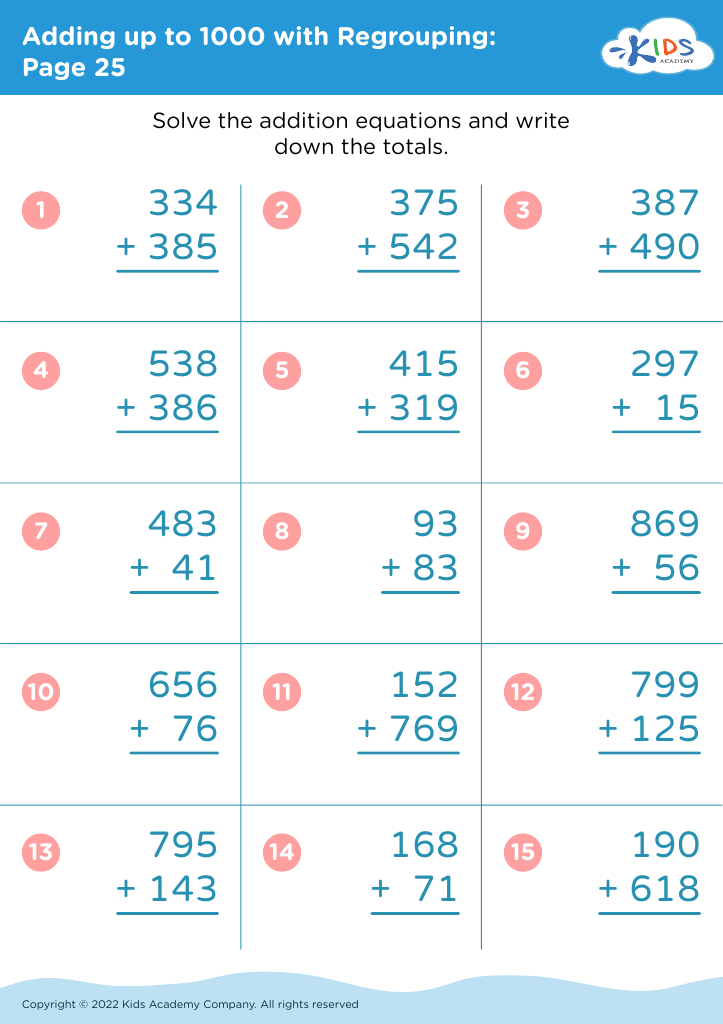
Adding up to 1000 with Regrouping: Page 25
Worksheet
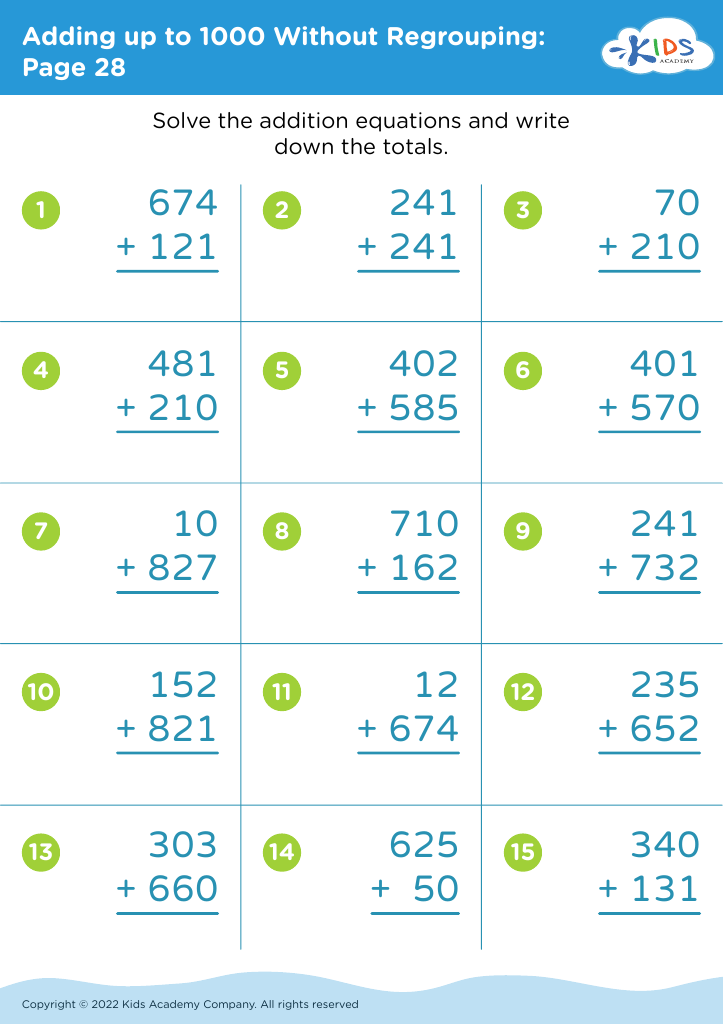
Adding up to 1000 Without Regrouping: Page 28
Worksheet
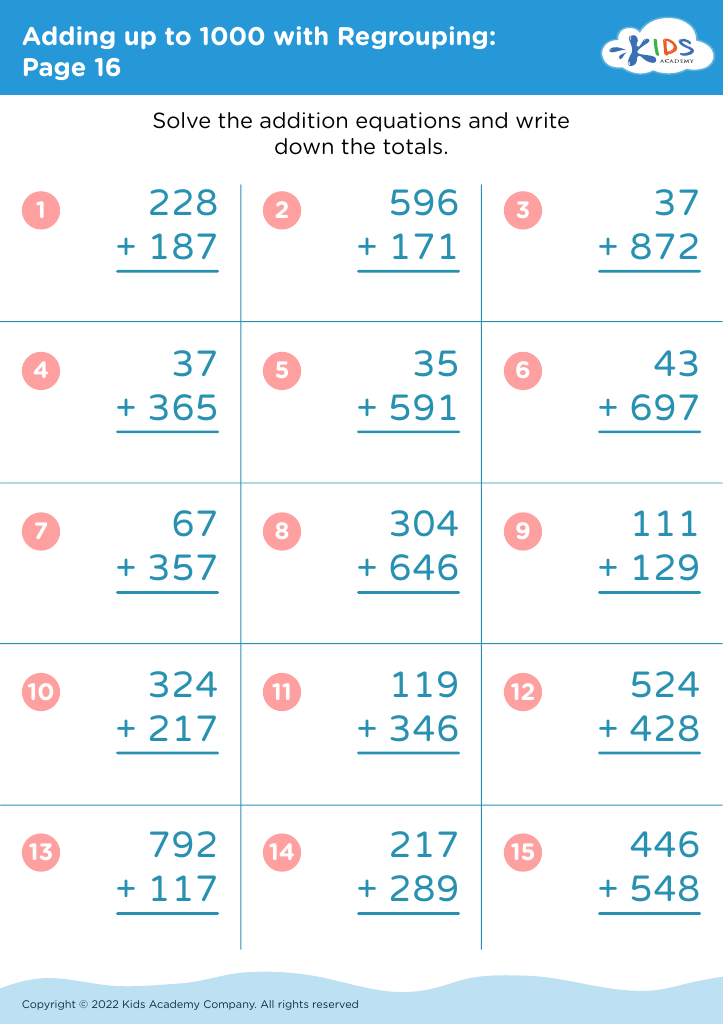
Adding up to 1000 with Regrouping: Page 16
Worksheet
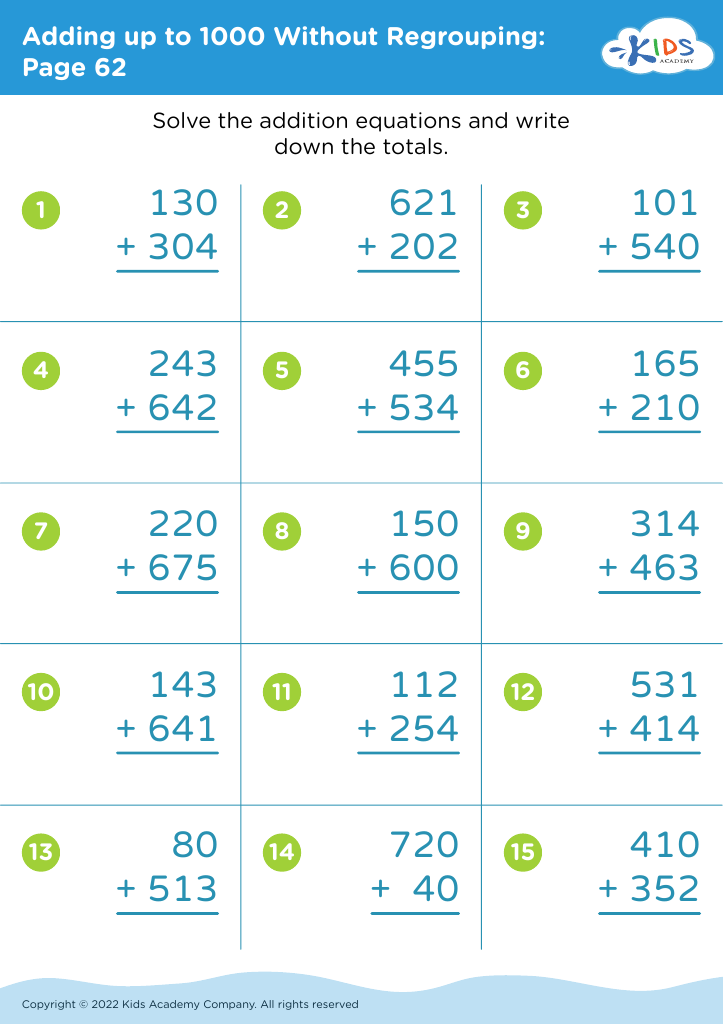
Adding up to 1000 Without Regrouping: Page 62
Worksheet
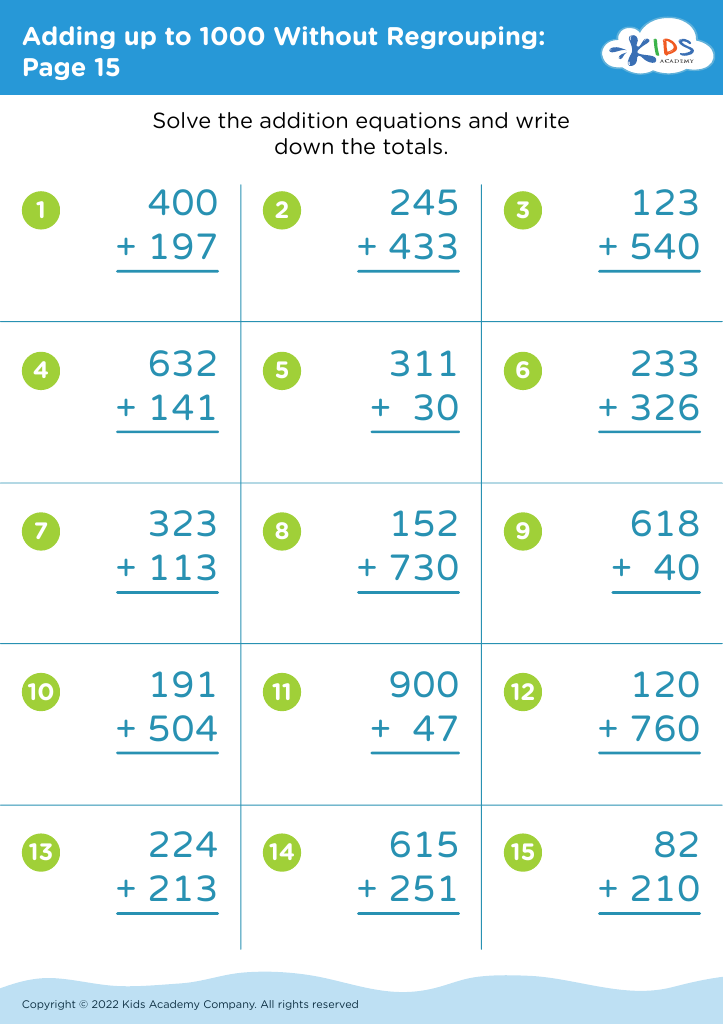
Adding up to 1000 Without Regrouping: Page 15
Worksheet
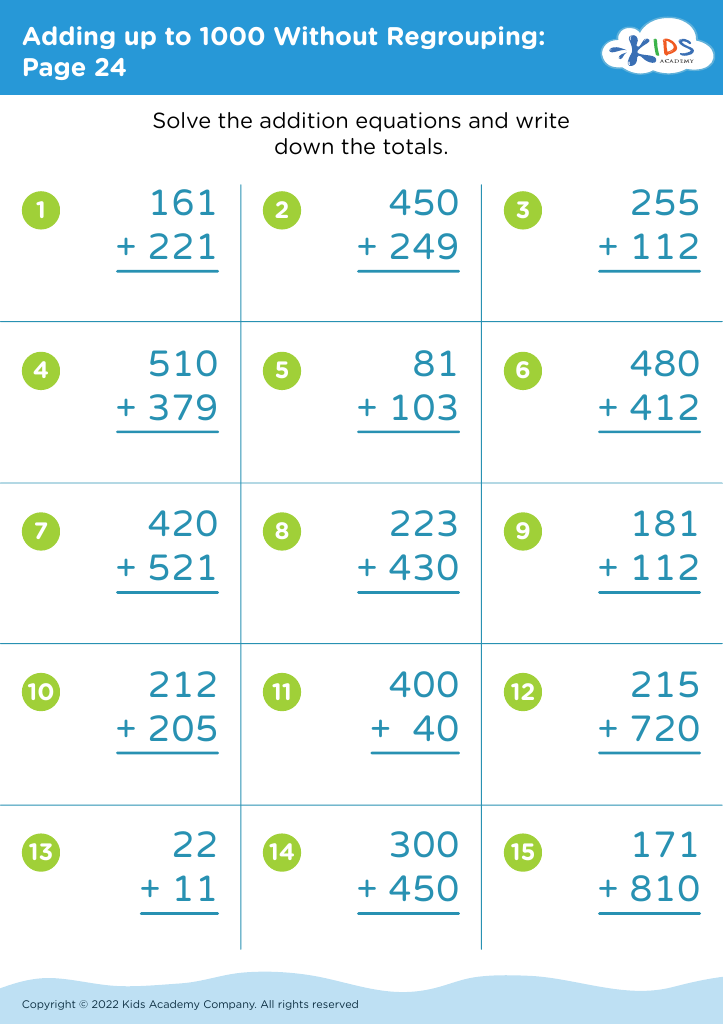
Adding up to 1000 Without Regrouping: Page 24
Worksheet


Understanding fractions and their relationship to whole numbers is crucial for children aged 3-9 because it lays the foundation for more advanced mathematical concepts. At this early stage, children develop essential cognitive skills that support their future learning. Mastering fractions helps them make sense of parts and whole relationships, a concept that appears frequently in everyday life.

When children grasp that fractions represent portions of whole objects, they enhance their problem-solving skills and critical thinking. It promotes their ability to compare sizes, make decisions, and understand percentages, which are vital skills not only for academics but also for personal finance, cooking, and other real-life situations.

Teaching children to add fractions that can total up to 1000 encourages them to practice basic addition with increasing complexity. It fosters early numeracy skills and enhances their confidence in mathematics. Furthermore, engaging them in fun and practical activities, such as cooking or building projects, provides hands-on experiences that deepen their understanding.

Ultimately, parents and teachers who prioritize a solid comprehension of fractions set the stage for lifelong learning. It inspires curiosity, nurtures a love for math, and supports students as they train to become capable and financially savvy adults.