Filters

34 filtered results

Clear all filters
Favorites
With answer key
Interactive

34 filtered results

Difficulty Level

Grade


Check out this FREE Trial Lesson on Adding Up to 5 for age 3-9!

D

Favorites
With answer key
Interactive
  • 3-9
  • Basic Arithmetic
  • Adding Up to 5
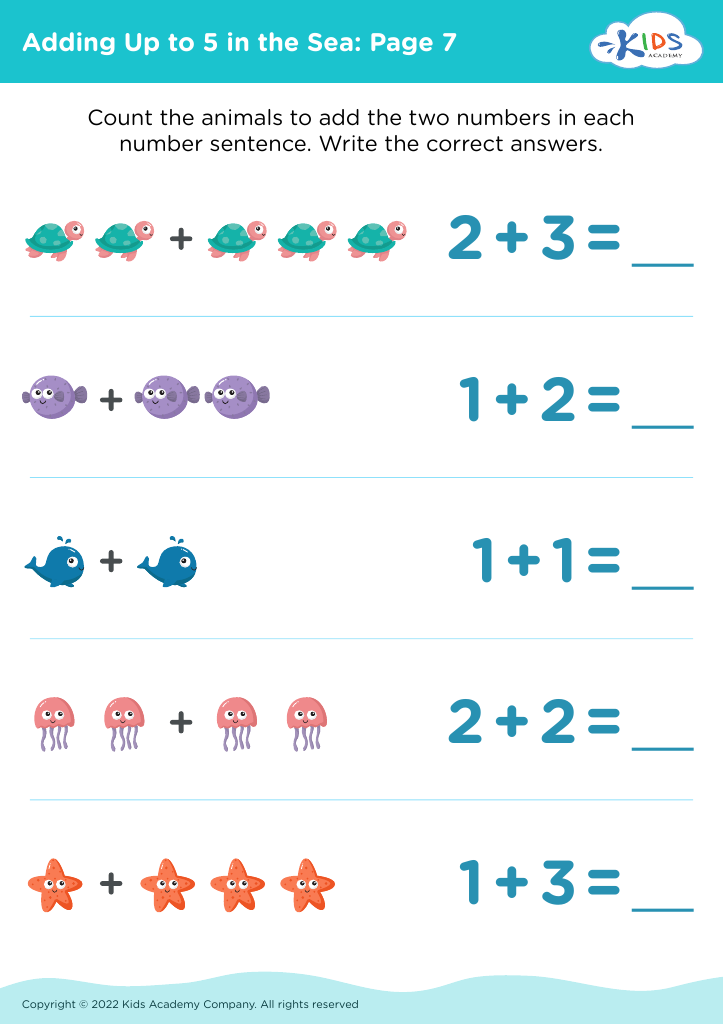
Adding Up to 5 in the Sea: Page 7

Adding Up to 5 in the Sea: Page 7

Adding Up to 5 in the Sea: Page 7
Worksheet
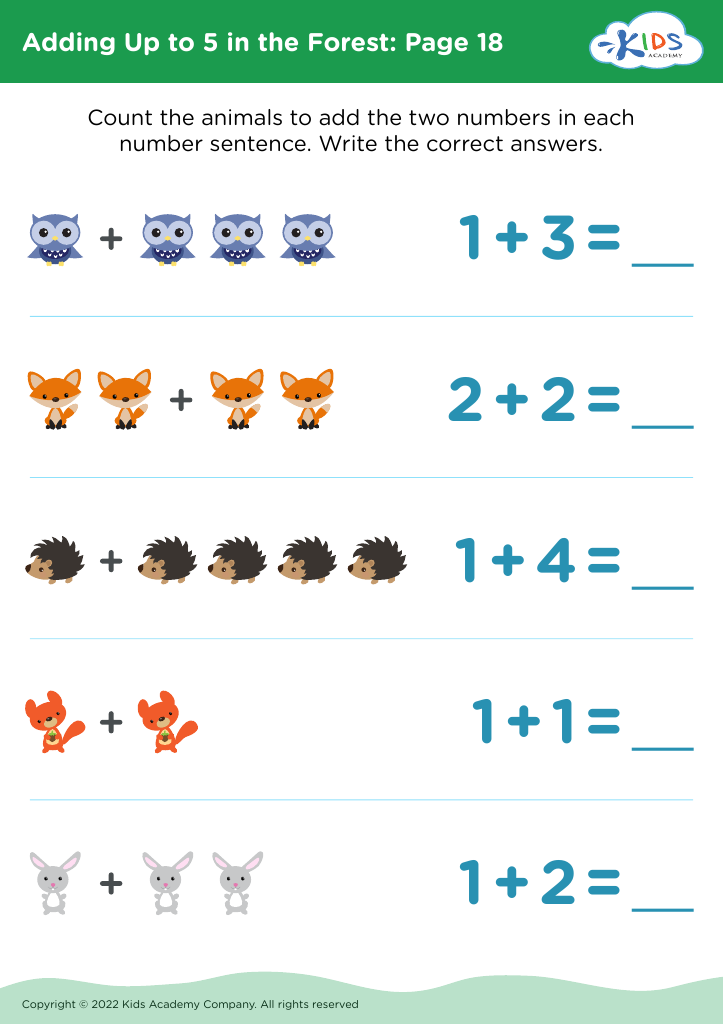
Adding Up to 5 in the Forest: Page 18
Worksheet
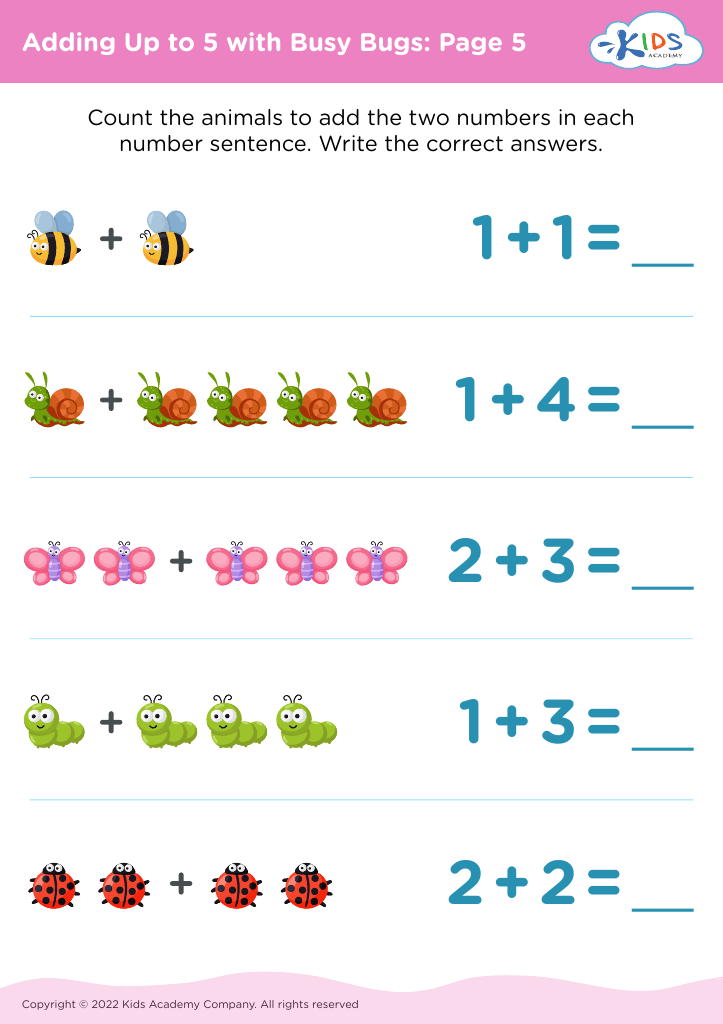
Adding Up to 5 with Busy Bugs: Page 5
Worksheet
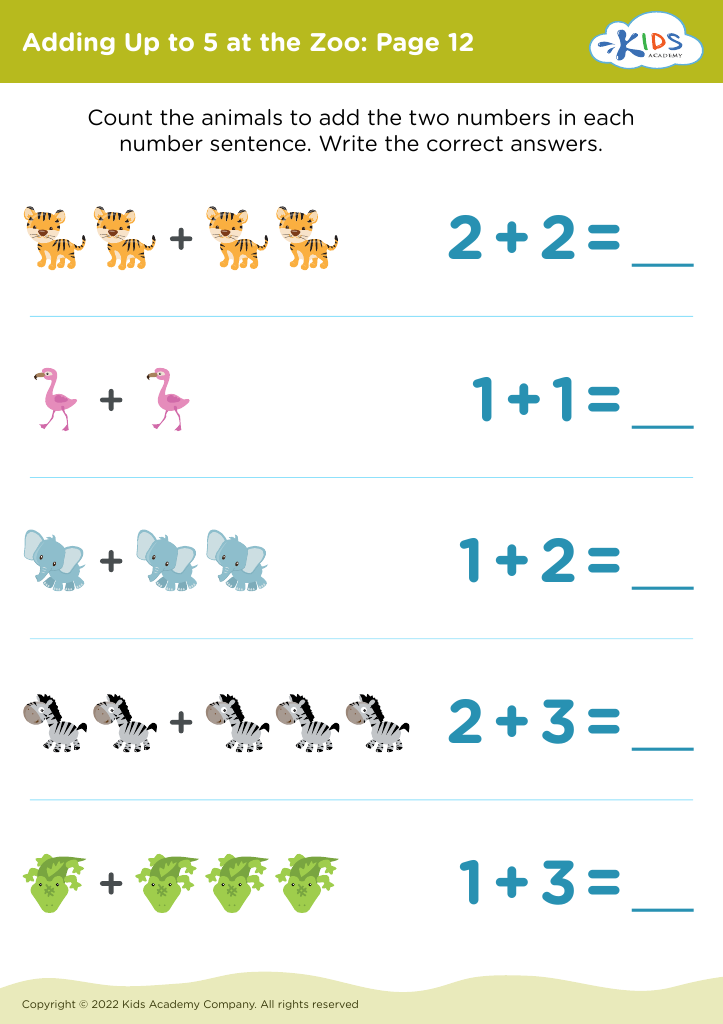
Adding Up to 5 at the Zoo: Page 12
Worksheet
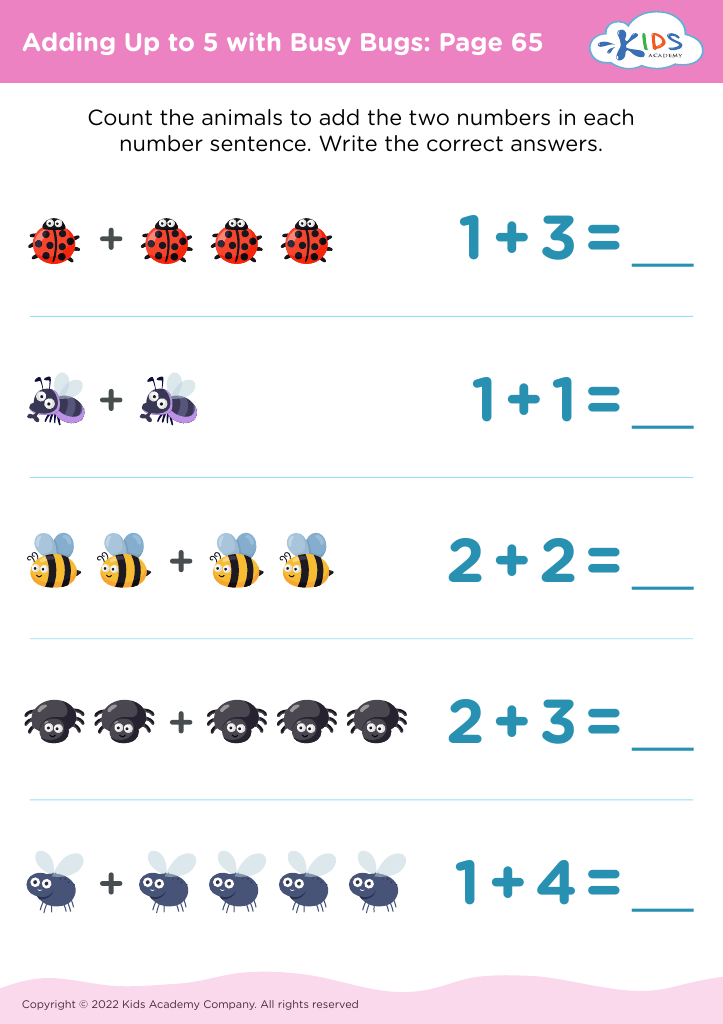
Adding Up to 5 with Busy Bugs: Page 65
Worksheet
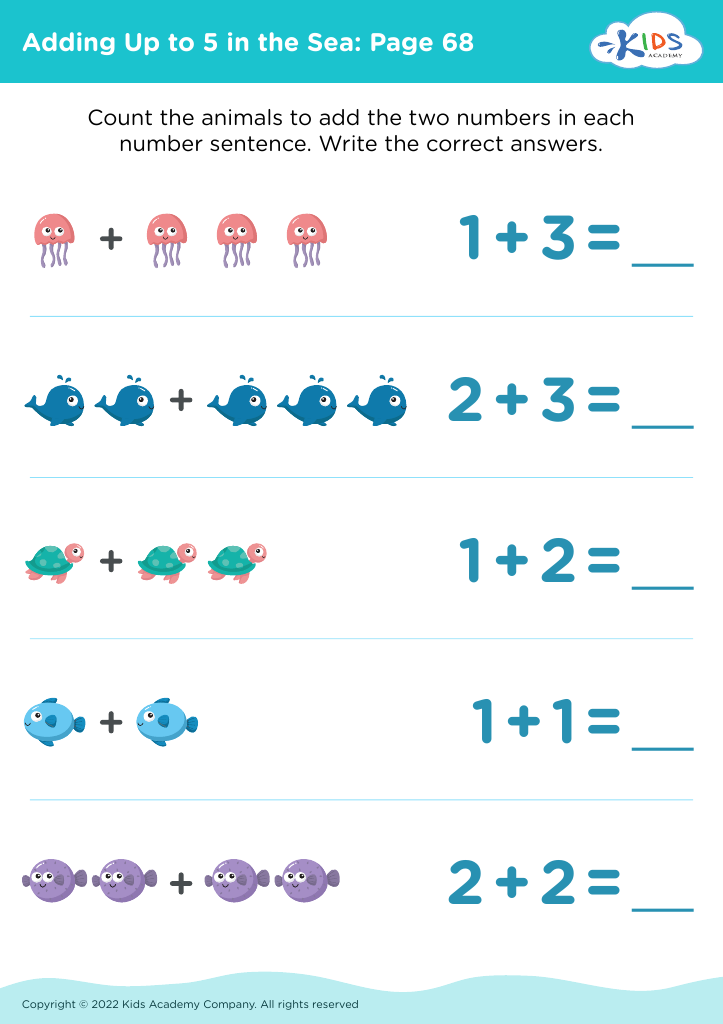
Adding Up to 5 in the Sea: Page 68
Worksheet
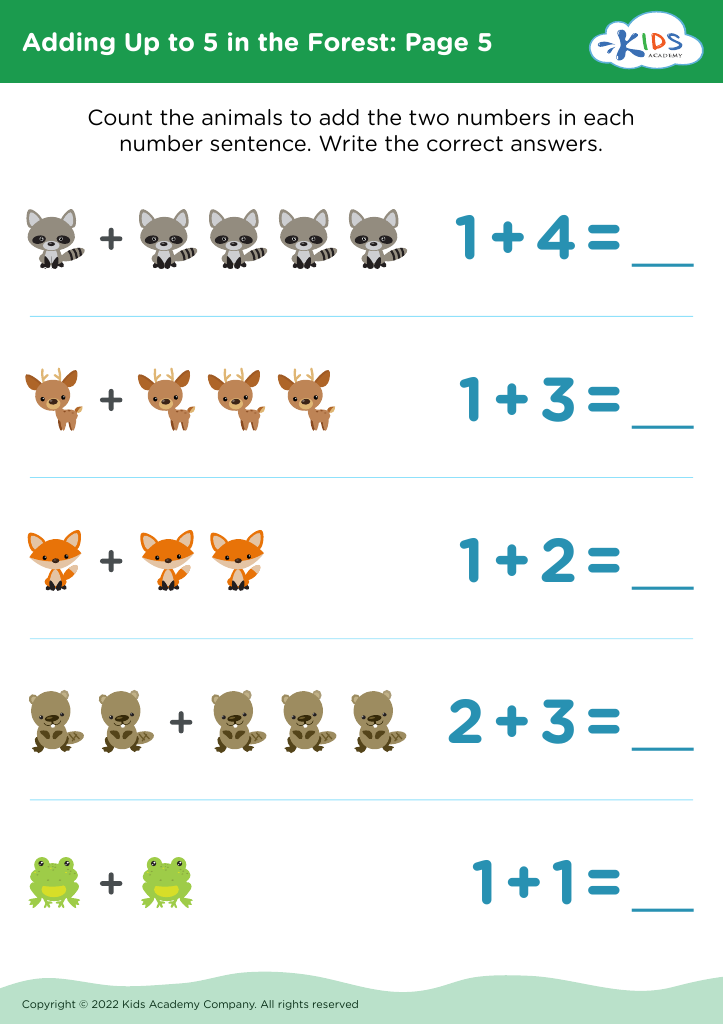
Adding Up to 5 in the Forest: Page 5
Worksheet
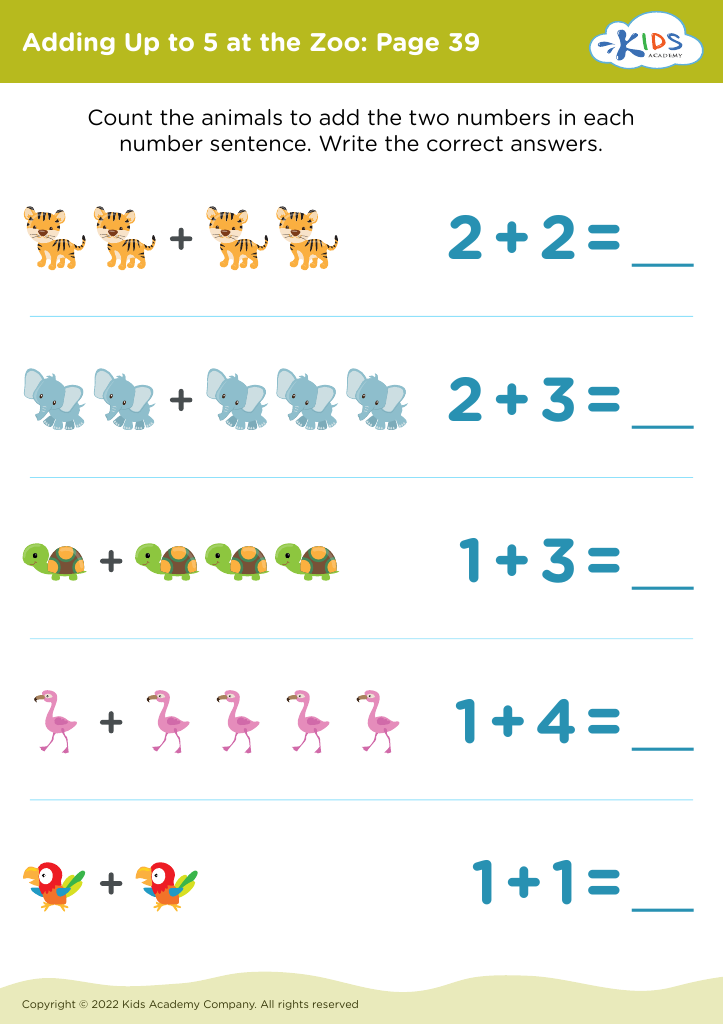
Adding Up to 5 at the Zoo: Page 39
Worksheet
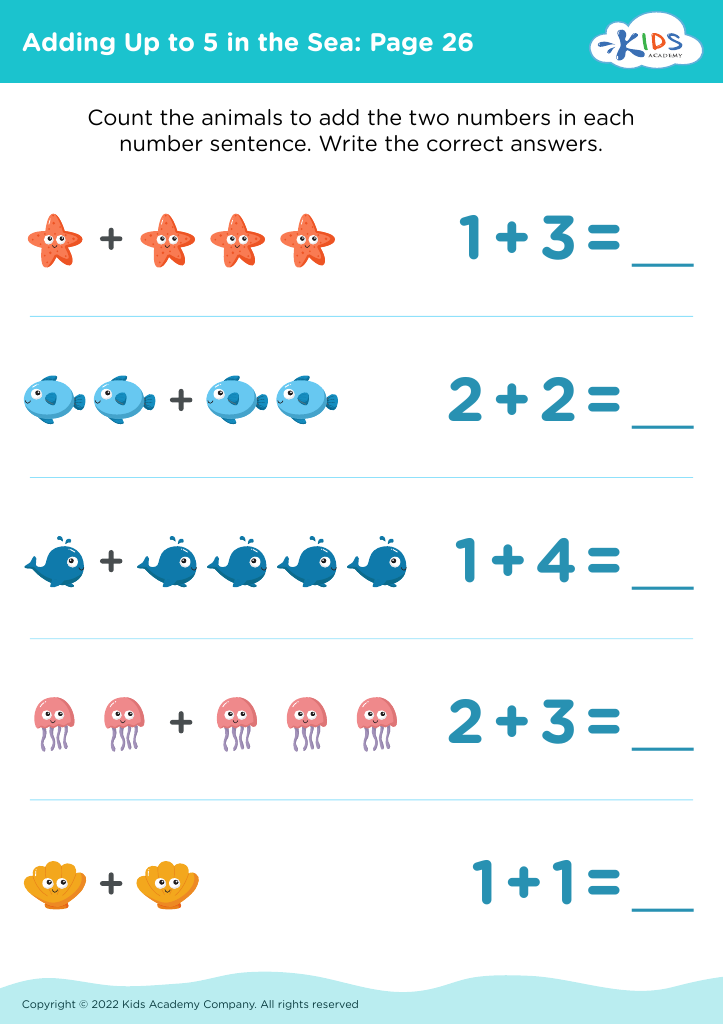
Adding Up to 5 in the Sea: Page 26
Worksheet
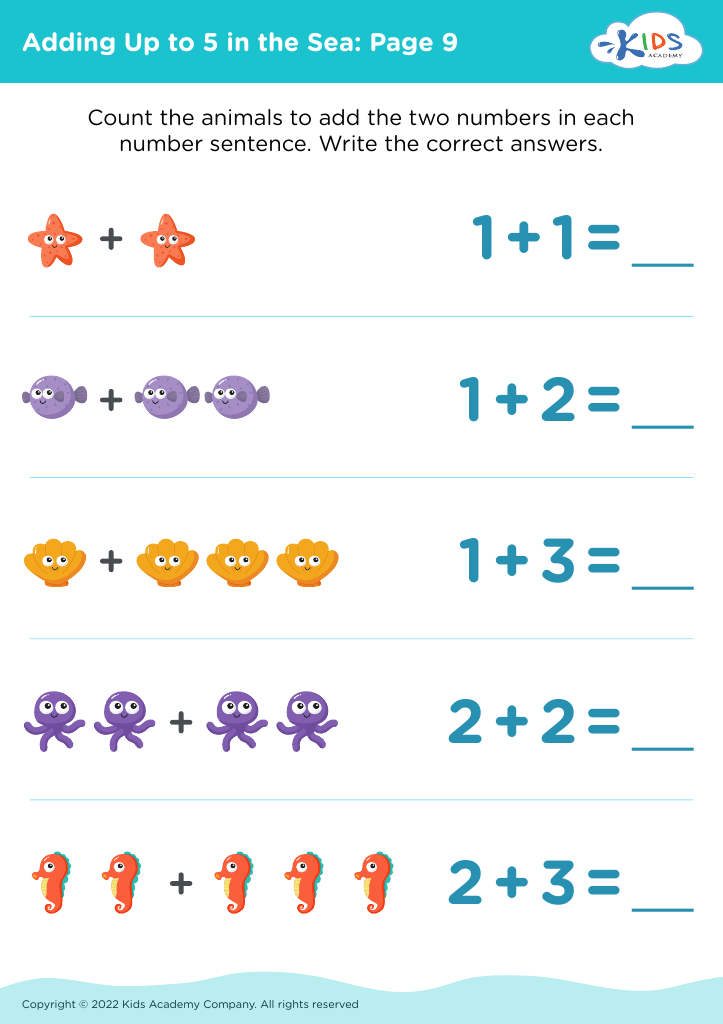
Adding Up to 5 in the Sea: Page 9

Adding Up to 5 in the Sea: Page 9

Adding Up to 5 in the Sea: Page 9
Worksheet


Parents and teachers should care about basic arithmetic, especially adding up to 5, for children ages 3 to 9 because mastering these foundational skills fosters a strong mathematical base essential for future learning. At this early stage, children are developing critical thinking and problem-solving abilities, and arithmetic lays the groundwork for understanding more complex concepts later on.

Learning to add up to 5 helps children recognize numbers, understand quantity, and build confidence in math. It is often a child’s first formal introduction to math, making it crucial for them to develop a positive relationship with the subject. Engaging with these skills through fun activities and games can enhance their interest and motivation.

Additionally, skill in basic arithmetic supports overall cognitive development, improving children's logical reasoning and analytical skills. It instills in them the importance of diligence and perseverance as they navigate challenges. Moreover, a solid understanding of basic arithmetic promotes readiness for advanced math topics in school, which are vital for academic success.

By prioritizing basic addition skills, parents and teachers equip children with essential tools for navigating everyday life and instill a lifelong love for learning in mathematics.