Basic Math understanding Adding Up to 5 Worksheets for Ages 3-9
7 filtered results
-
From - To
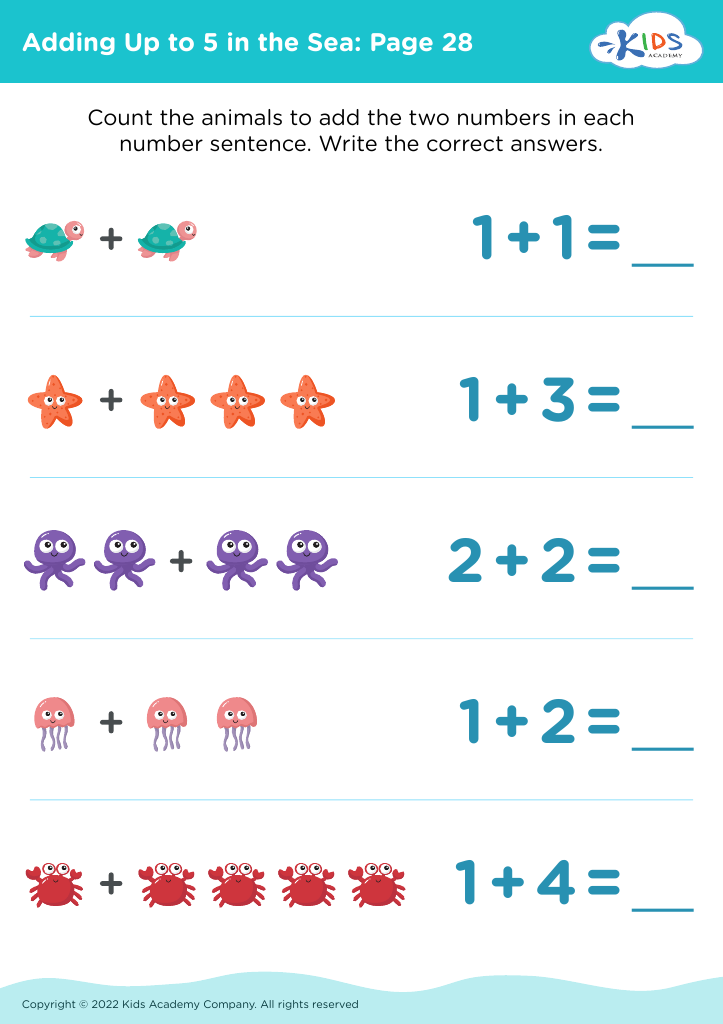
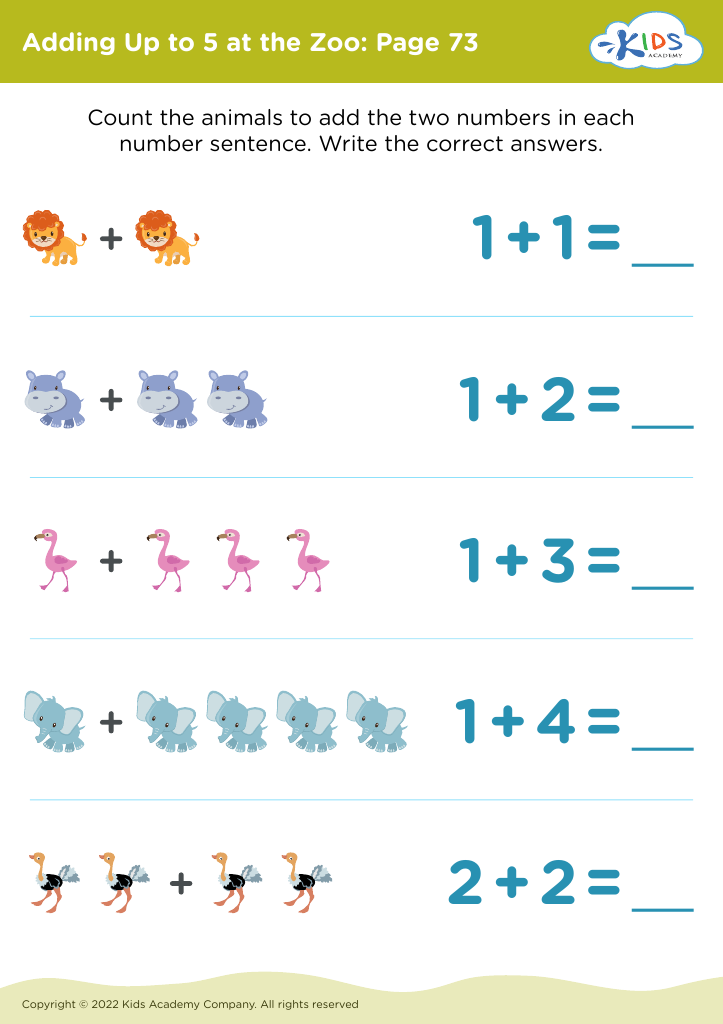
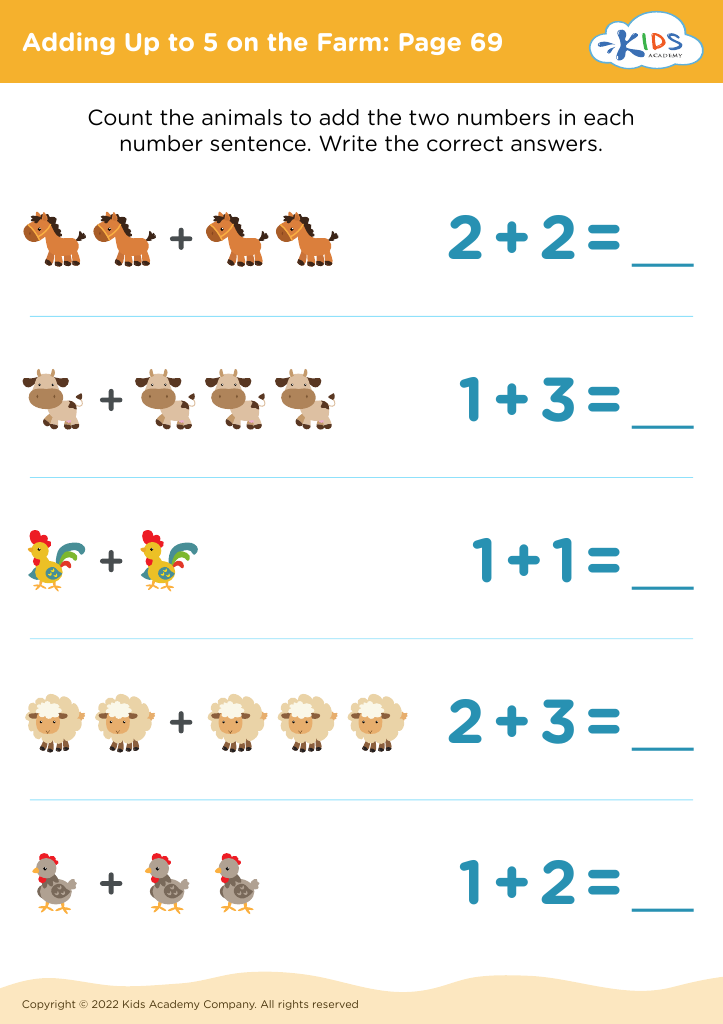
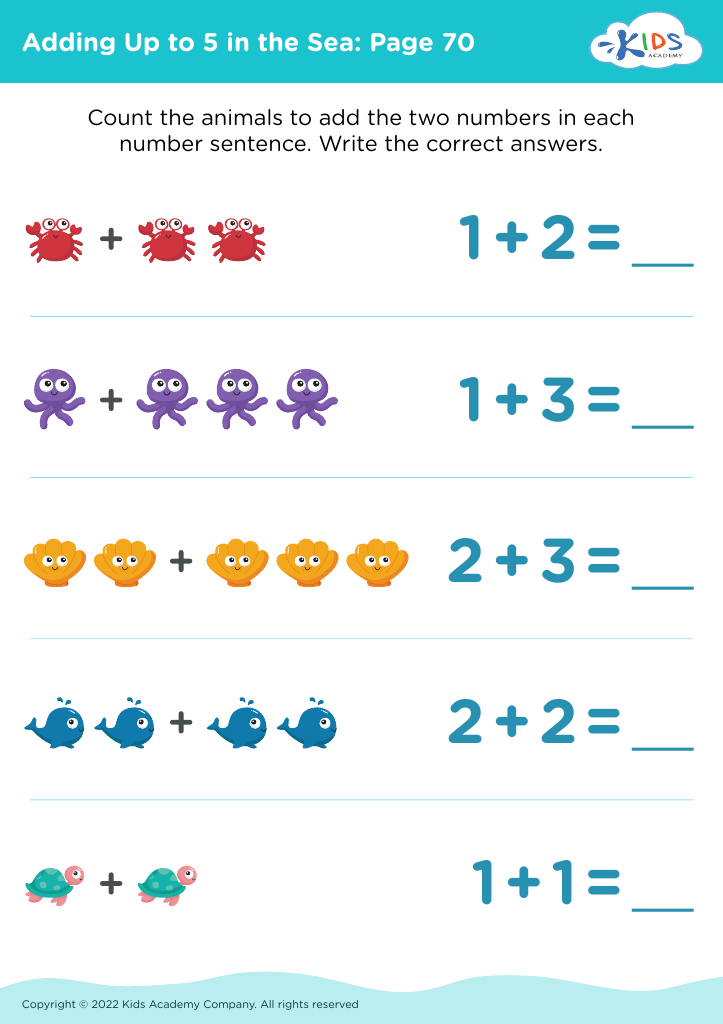
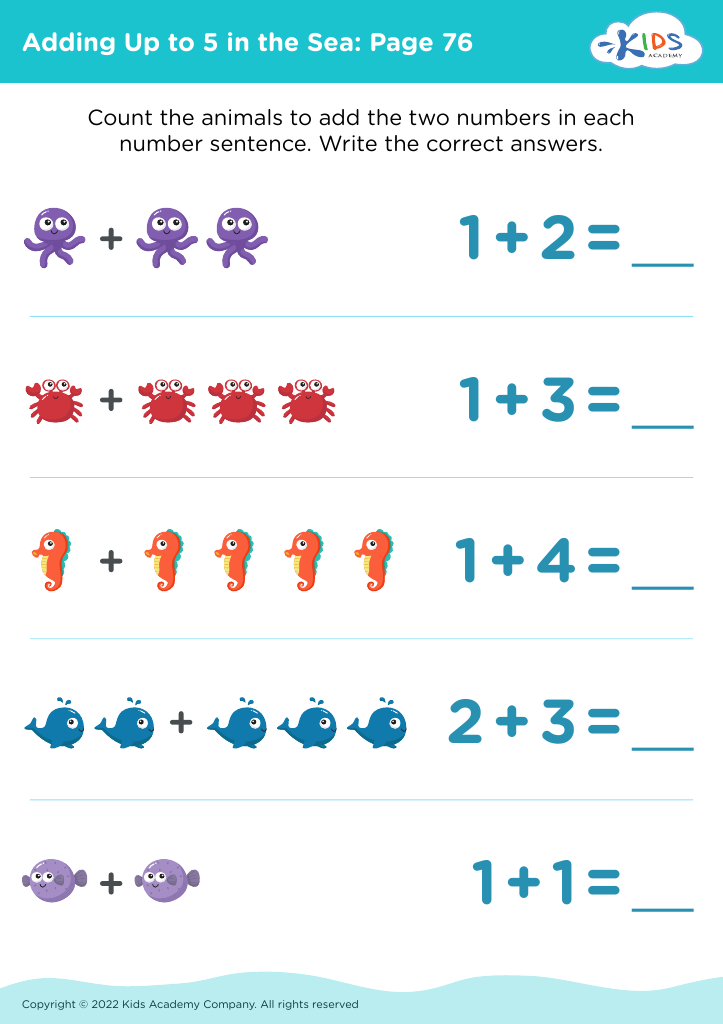
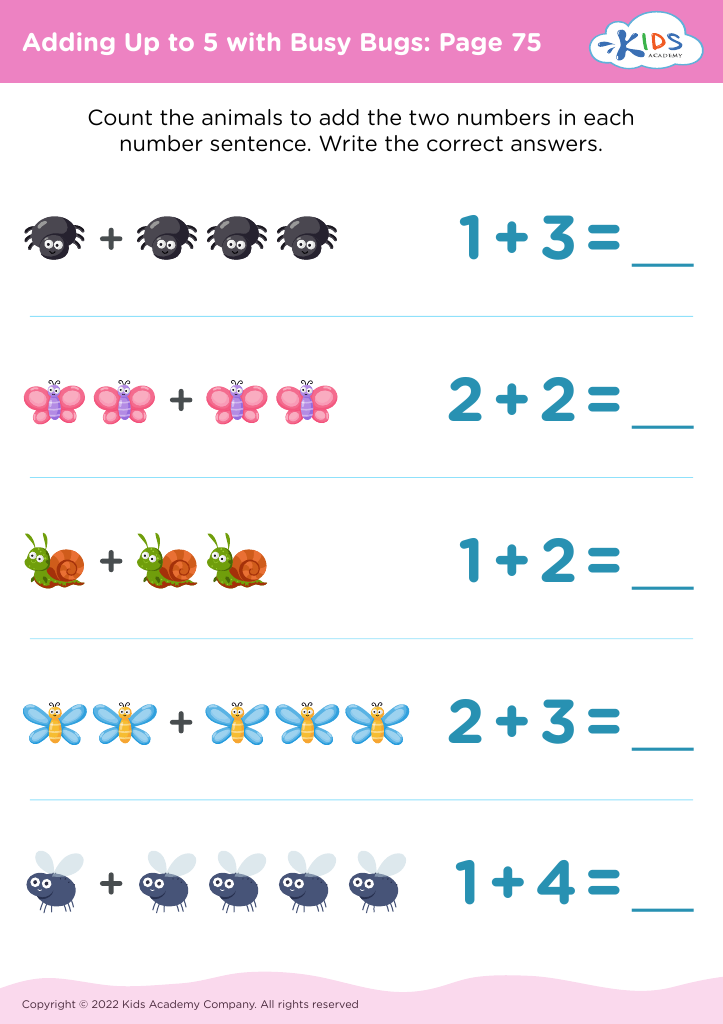
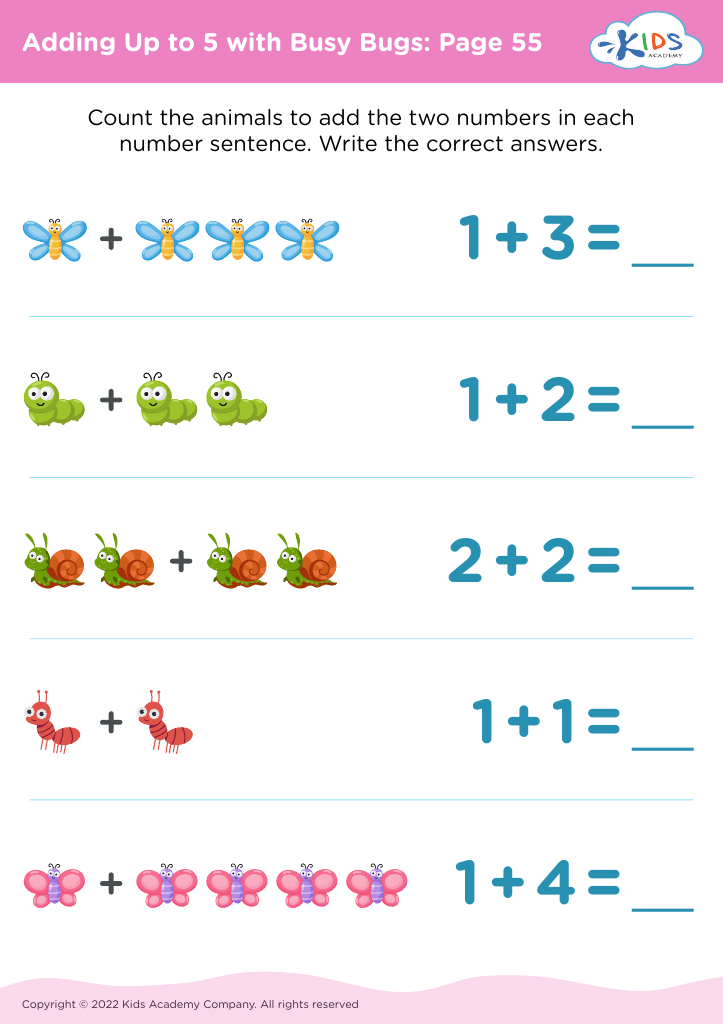
Explore our "Basic Math Understanding: Adding Up to 5 Worksheets" designed for children ages 3-9. These engaging and interactive worksheets make learning addition fun and accessible, laying the foundation for essential math skills. Each sheet features colorful illustrations and user-friendly layouts to capture young learners' attention, encouraging them to practice counting, recognizing numbers, and solving simple addition problems. Perfect for parents and educators, these printable resources provide valuable practice to help kids develop confidence in their math abilities. Whether at home or in the classroom, our worksheets support early math education and promote cognitive development. Start building strong math skills today!







%20(1).jpg)
Understanding basic math concepts, particularly adding up to 5, is crucial for children aged 3 to 9 as it lays the foundation for their future learning. At this age, children are developing cognitive skills that allow them to understand numbers and basic operations. Mastering simple addition enhances their numerical fluency, boosts confidence, and fosters a positive attitude towards math.
Parents and teachers should care about this foundational skill because it transcends academic benefits. Children who grasp basic addition tend to develop critical thinking and problem-solving abilities, which are essential skills in everyday life. Moreover, these early math skills correlate with later academic achievements in more complex math topics, indicating that a strong start leads to successful outcomes.
Adding up to 5 can also be an engaging and interactive experience for young learners, incorporating everyday objects like toys or snacks to make learning fun and relatable. This hands-on approach nurtures a child’s curiosity and desire to explore mathematical concepts further. In contrast, a lack of foundational math skills can lead to frustration and disengagement with the subject as they progress through their education, making it all the more vital for parents and educators to prioritize early mathematical understanding.








