Counting skills Adding Up to 5 Worksheets for Ages 3-9 - Page 5
102 filtered results
-
From - To
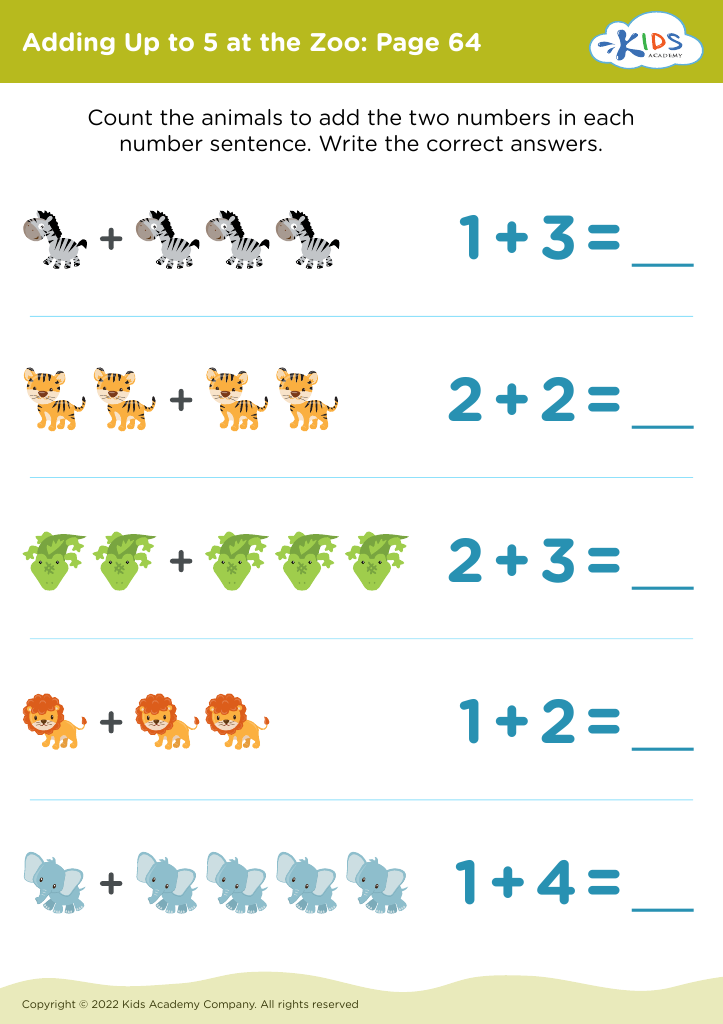
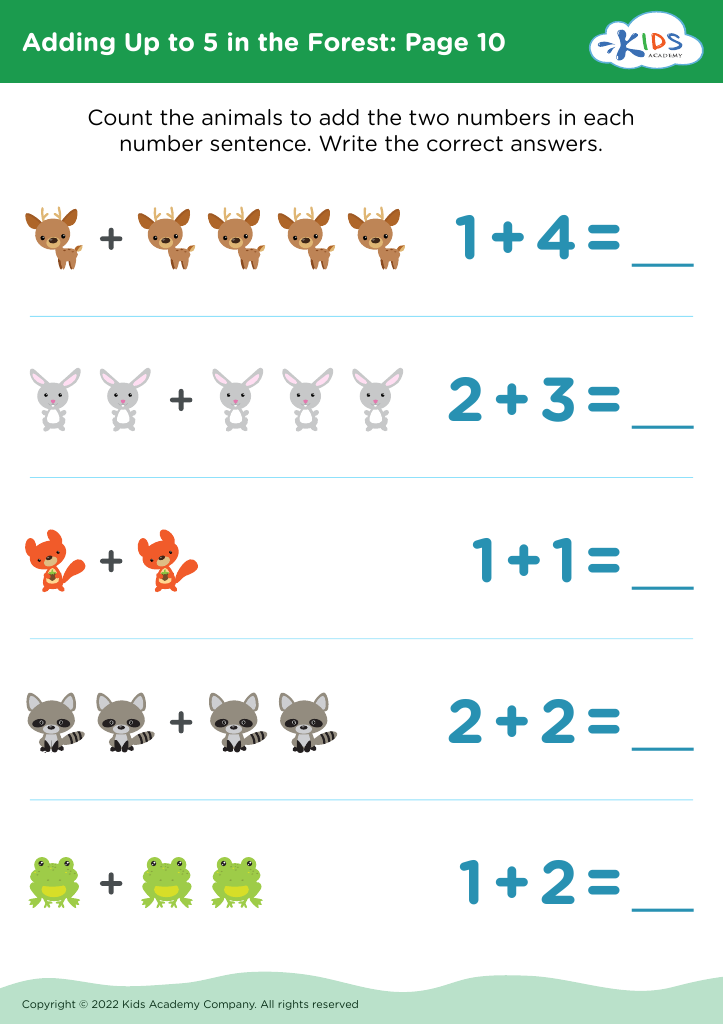
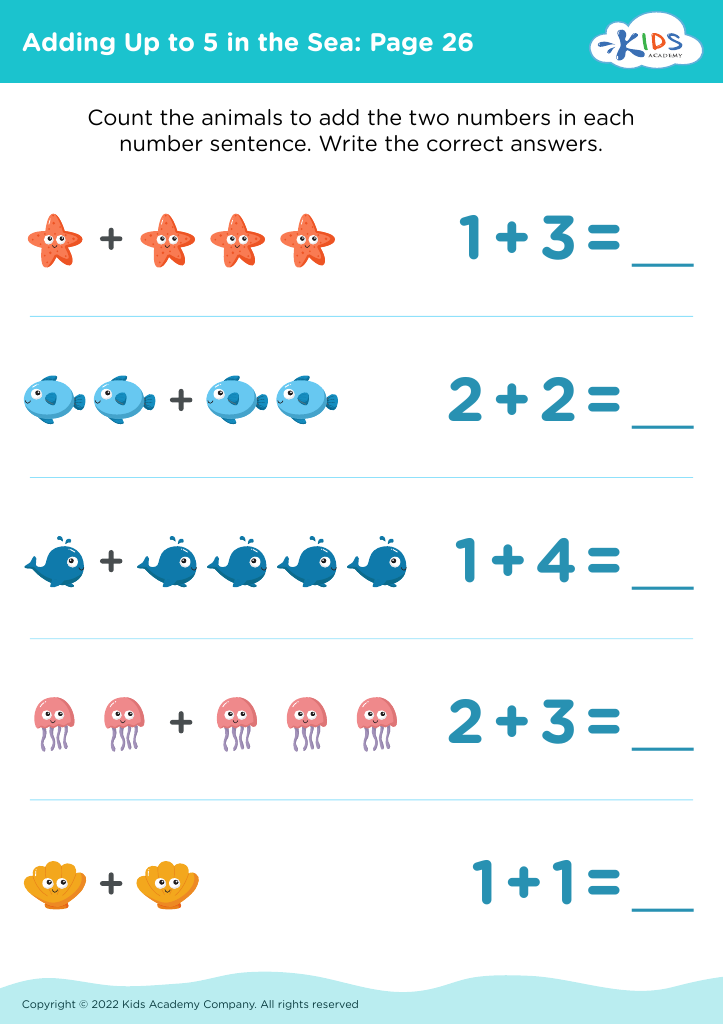
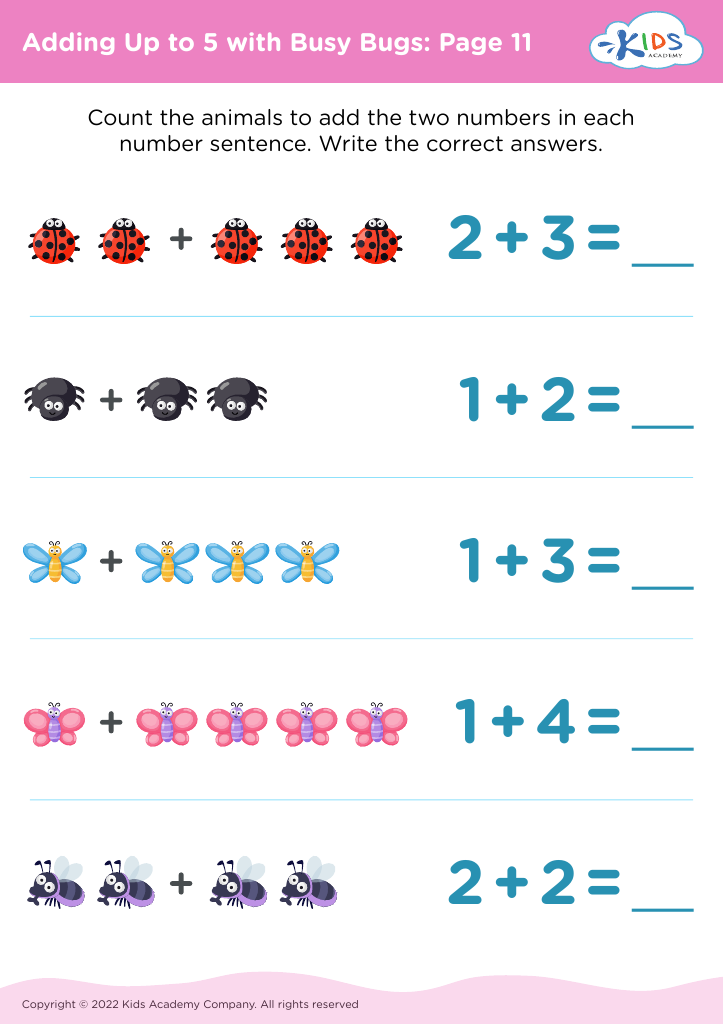
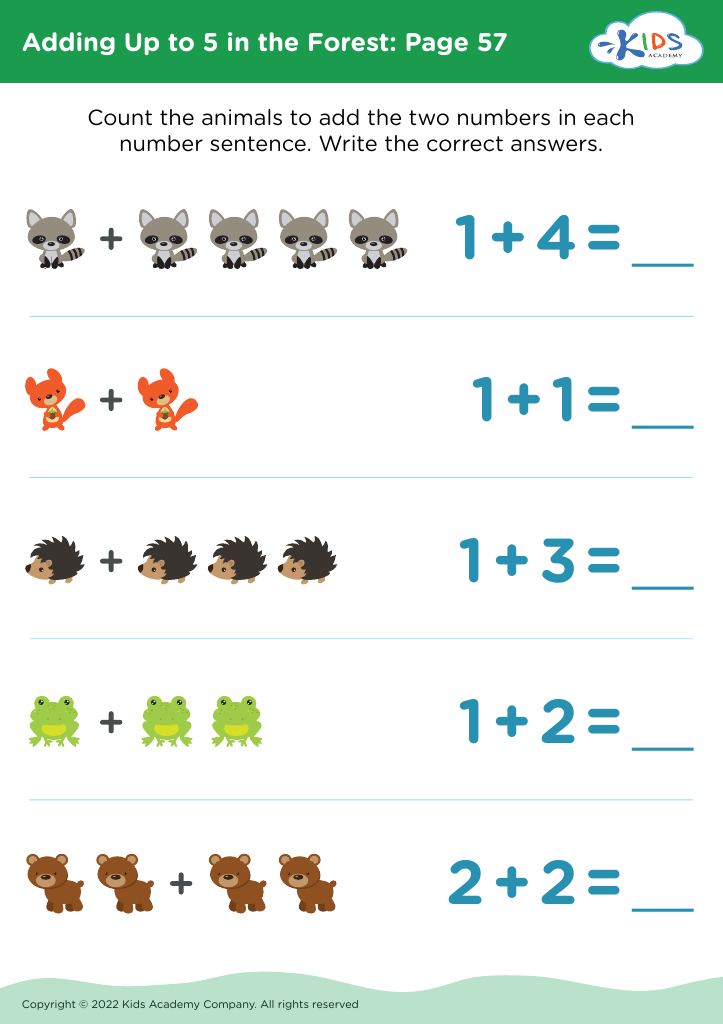
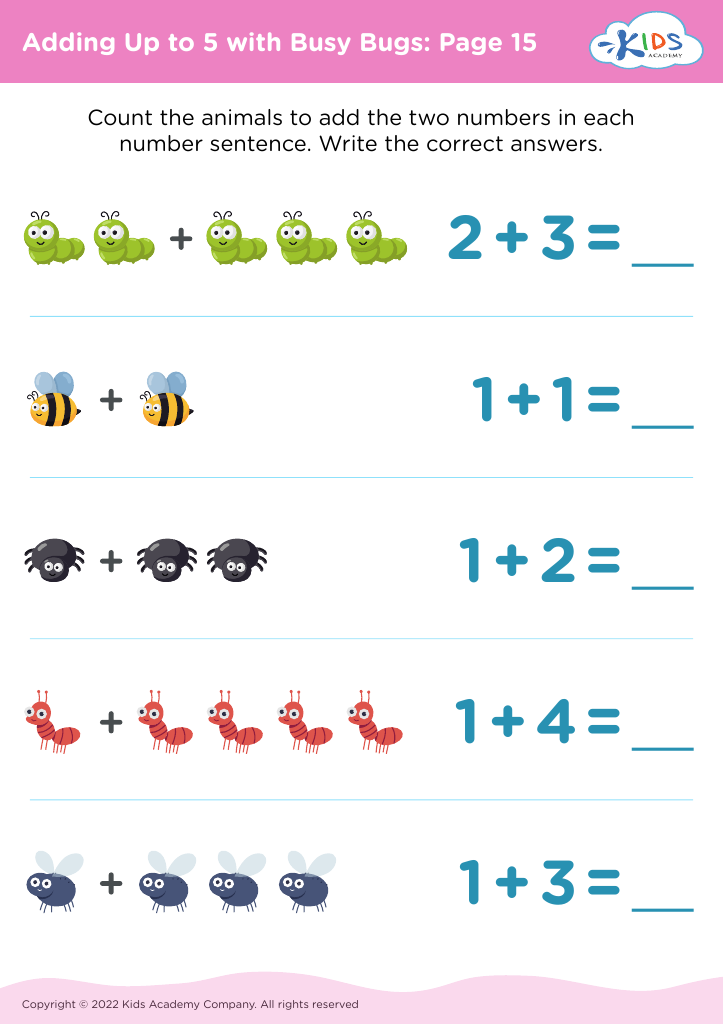








Counting skills and the ability to add up to five serve as critical building blocks for early mathematics learning, and they encompass essential components of cognitive development in children aged 3-9. For parents and teachers, fostering these skills is of paramount importance.
First, these foundational counting skills cultivate number recognition and a deeper understanding of numerical concepts, which are essential for more complex math tasks later on. For instance, recognizing that the number "5" represents a set amount of items paves the way for grasping addition, subtraction, and even multiplication.
Secondly, early confidence in handling small numbers translates to better problem-solving abilities. It can promote a child's confidence in tackling mathematics by making math feel more approachable and less intimidating, which is vital during those crucial developmental years.
Furthermore, engaging with counting activities and exercises enhances children's fine motor skills, spatial awareness, and memory functions. These activities can be as simple as counting fingers, toys, or food items, making learning interactive and enjoyable. Counting linguistically strengthens language skills, as children learn the words for numbers and understand their sequential order.
Importantly, early counting proficiency helps identify any learning difficulties, such as dyscalculia, allowing for timely interventions and support. Therefore, investing time and effort in nurturing counting skills and simple addition up to five offers a significant payoff by laying a robust mathematical foundation while also contributing to overall cognitive and motor development in young children.








