Fine motor skills (writing) Adding Up to 5 Worksheets for Ages 3-9 - Page 2
32 filtered results
-
From - To
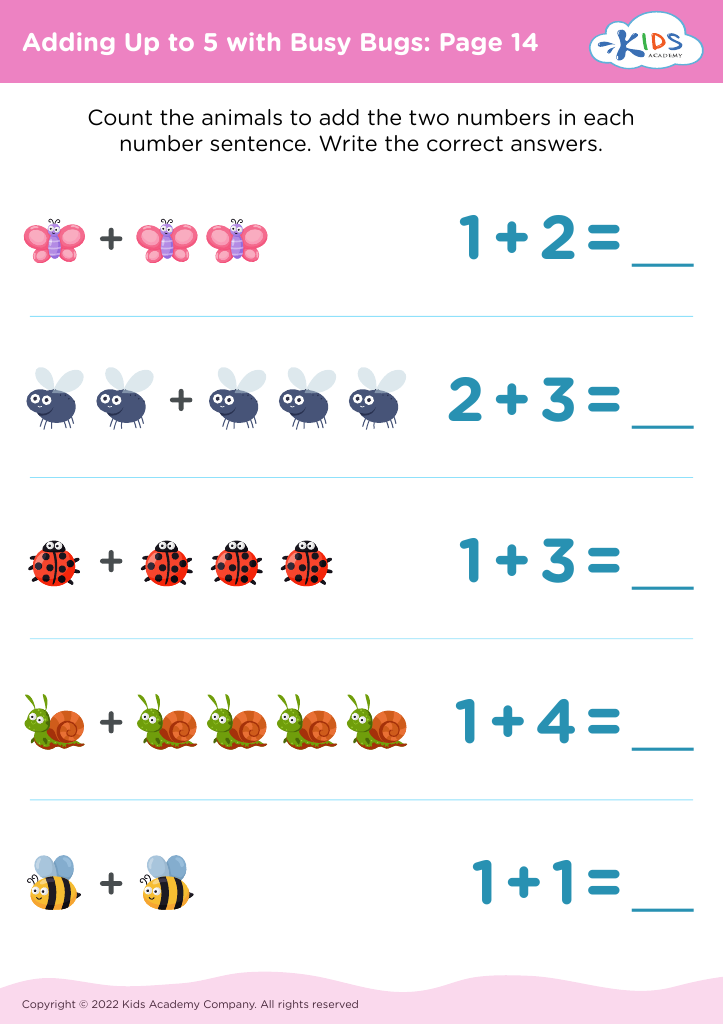
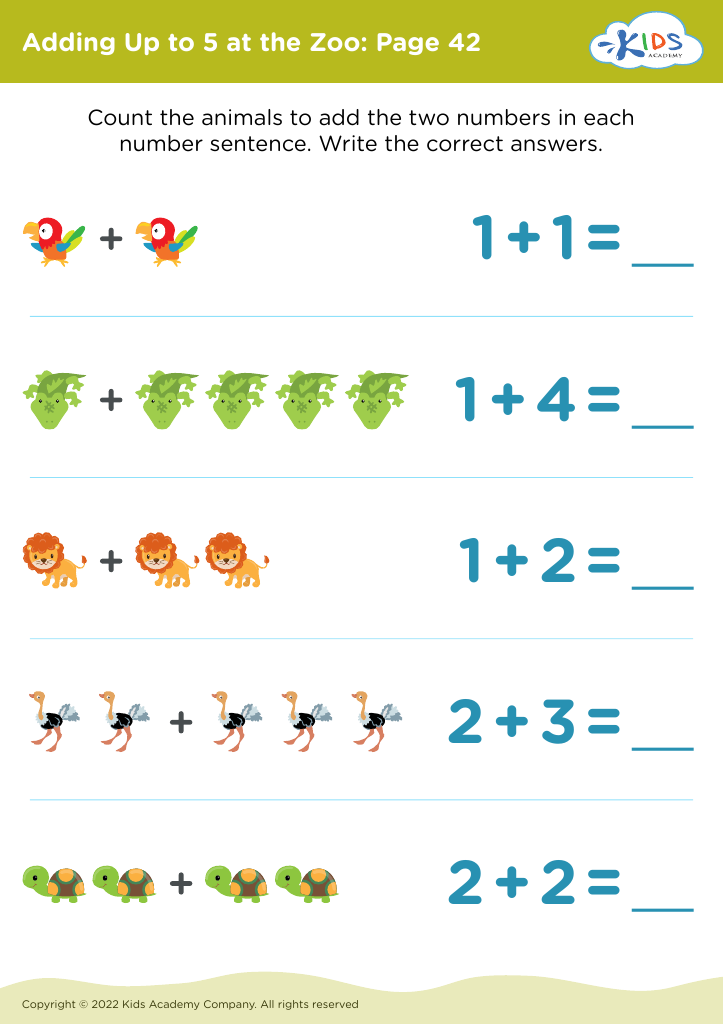
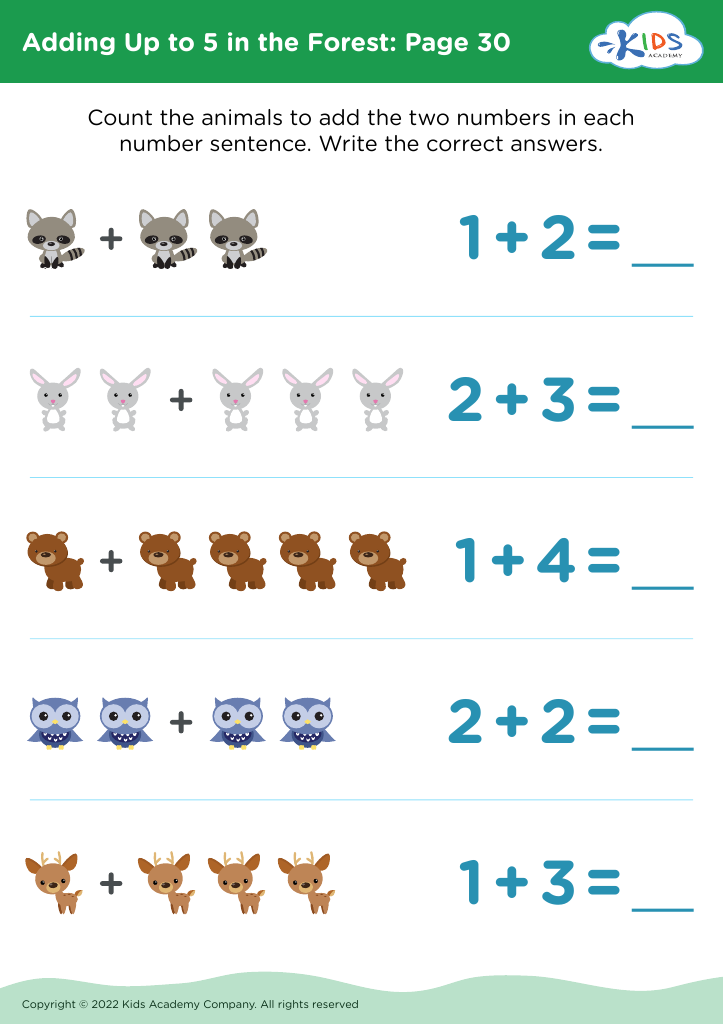
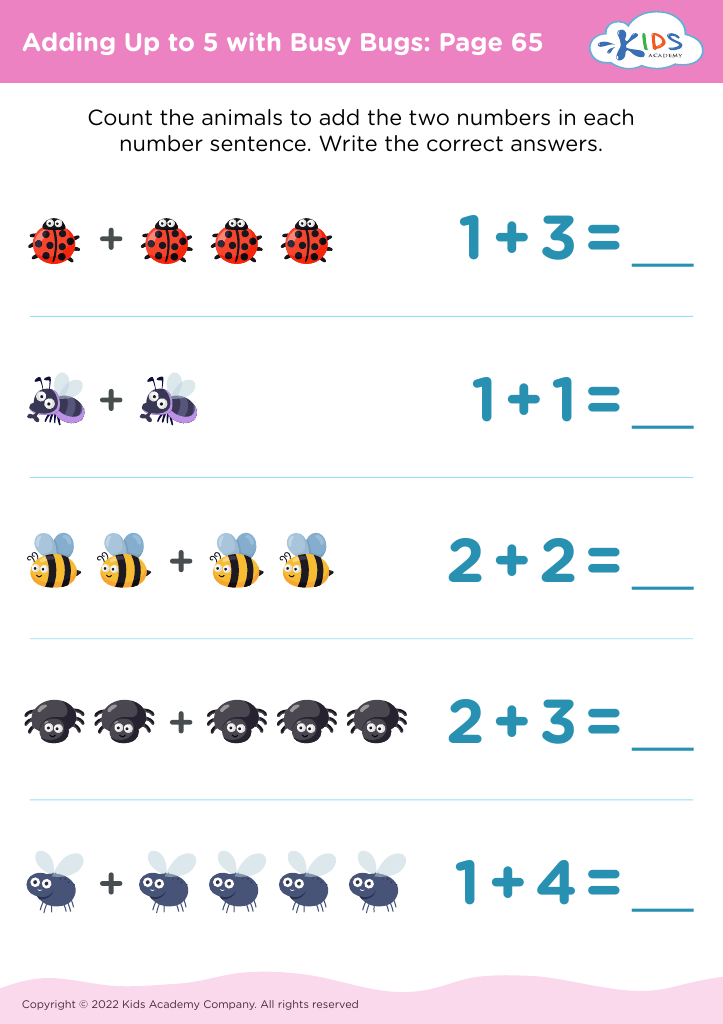


.jpg)





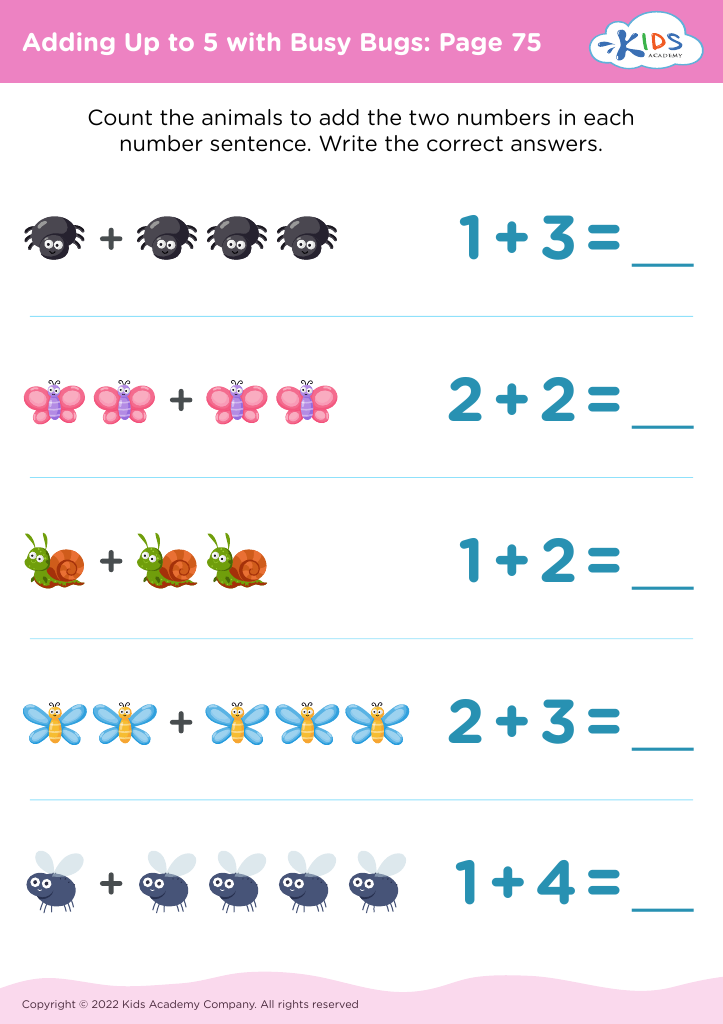
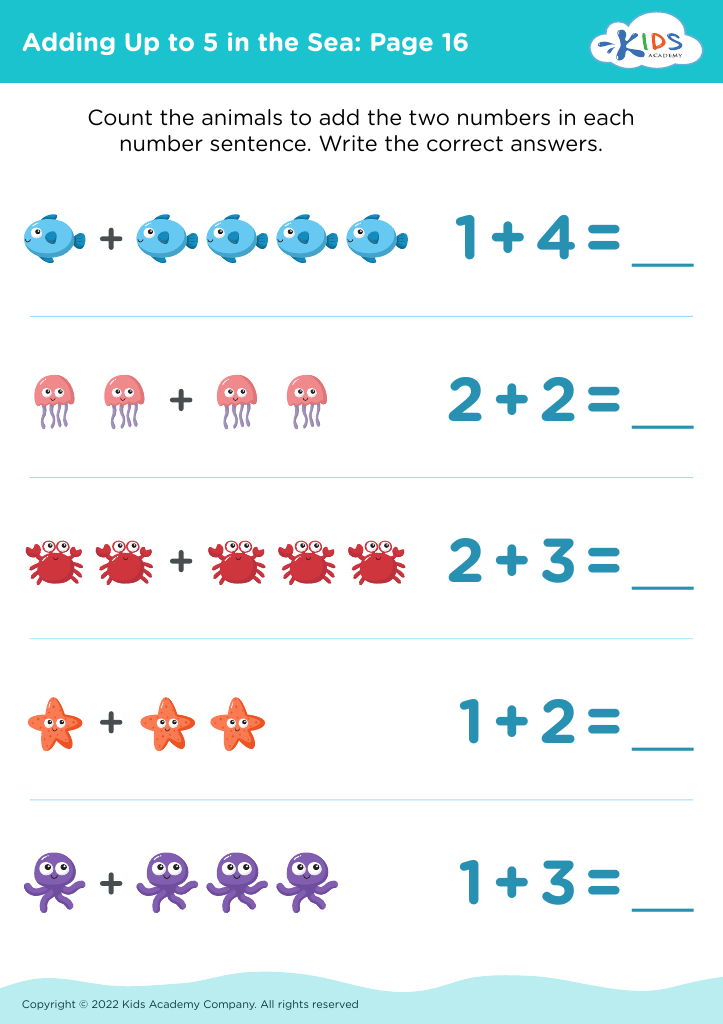
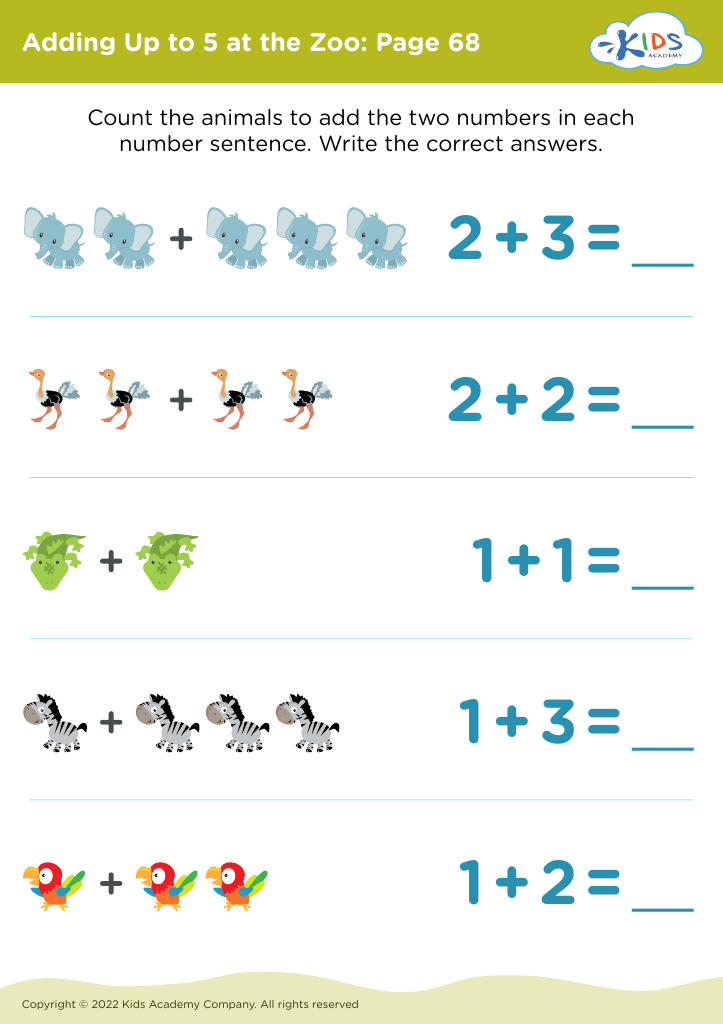
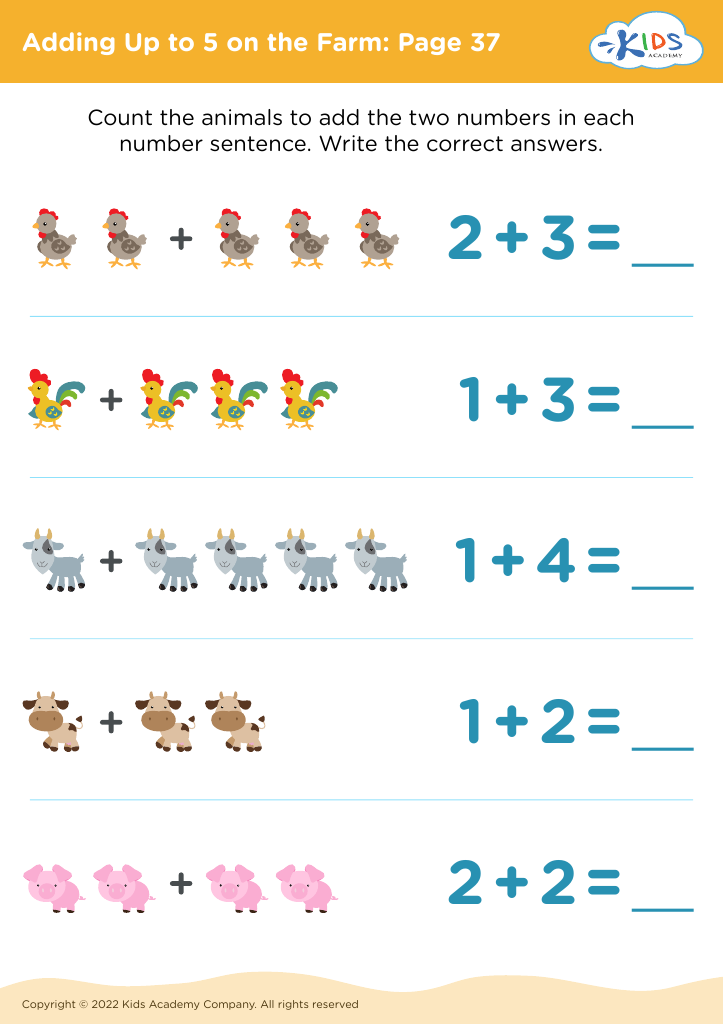
Fine motor skills play a crucial role in a child's development, especially in early education. Parents and teachers should pay attention to these skills because they form the foundation for essential academic tasks, particularly writing and basic arithmetic. Children aged 3-9 are in a key developmental window where they are honing their hand strength, coordination, and dexterity.
Developing fine motor skills through writing and other activities helps children perform everyday tasks more independently and efficiently. It boosts their confidence and allows them to engage more fully in classroom activities. For example, learning to write numbers neatly at an early age aids in performing basic arithmetic operations, such as adding up to 5. This fosters not only mathematical understanding but also cognitive skills, including concentration and organizational abilities.
Moreover, strong fine motor skills are associated with better academic performance because they facilitate precise control and manipulation, essential for tasks from using a pen to operating a computer. In essence, the mastery of fine motor skills represents a stepping stone to greater academic and personal achievements, making it a significant area of focus for both parents and teachers in ensuring a child's all-round development.








