Hand-eye Coordination Adding Up to 5 Worksheets for Ages 3-9
15 filtered results
-
From - To
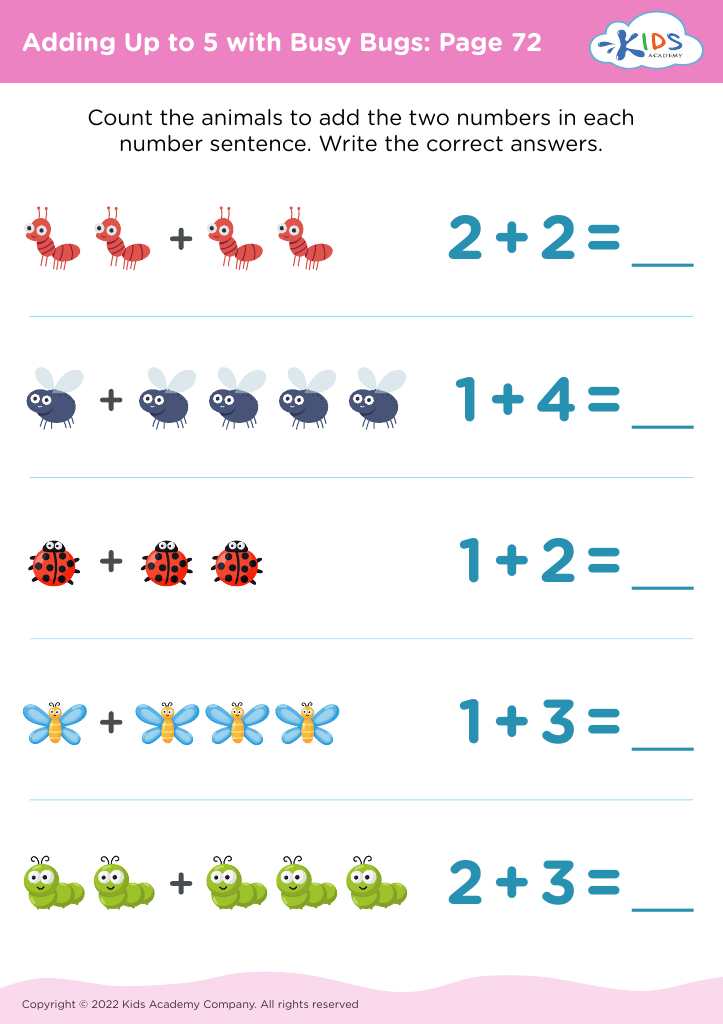
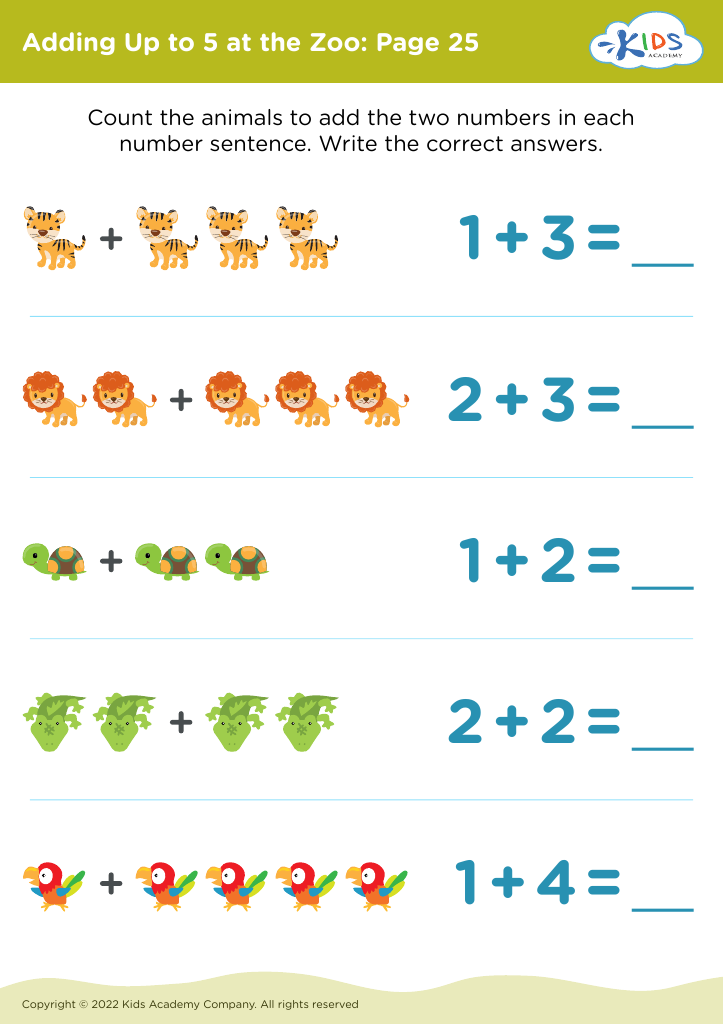
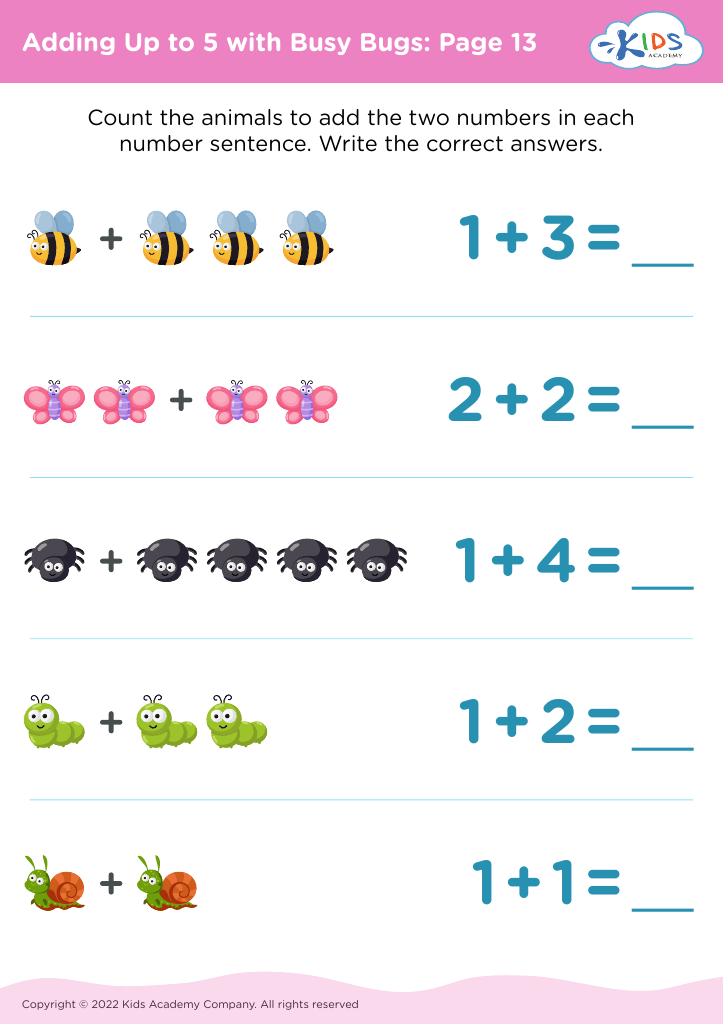
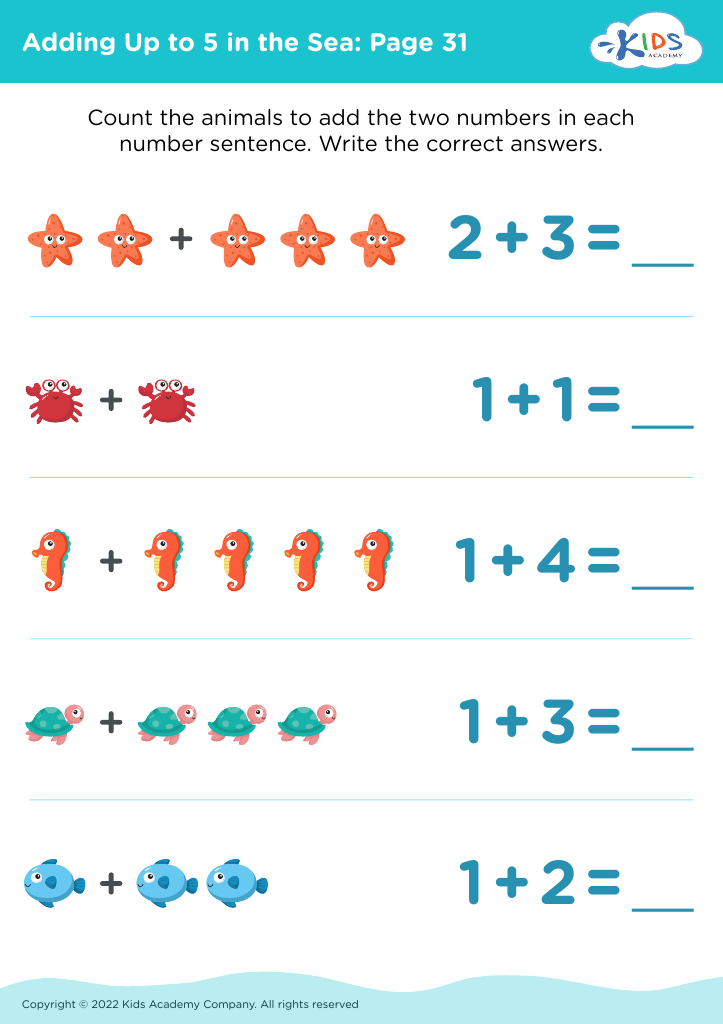
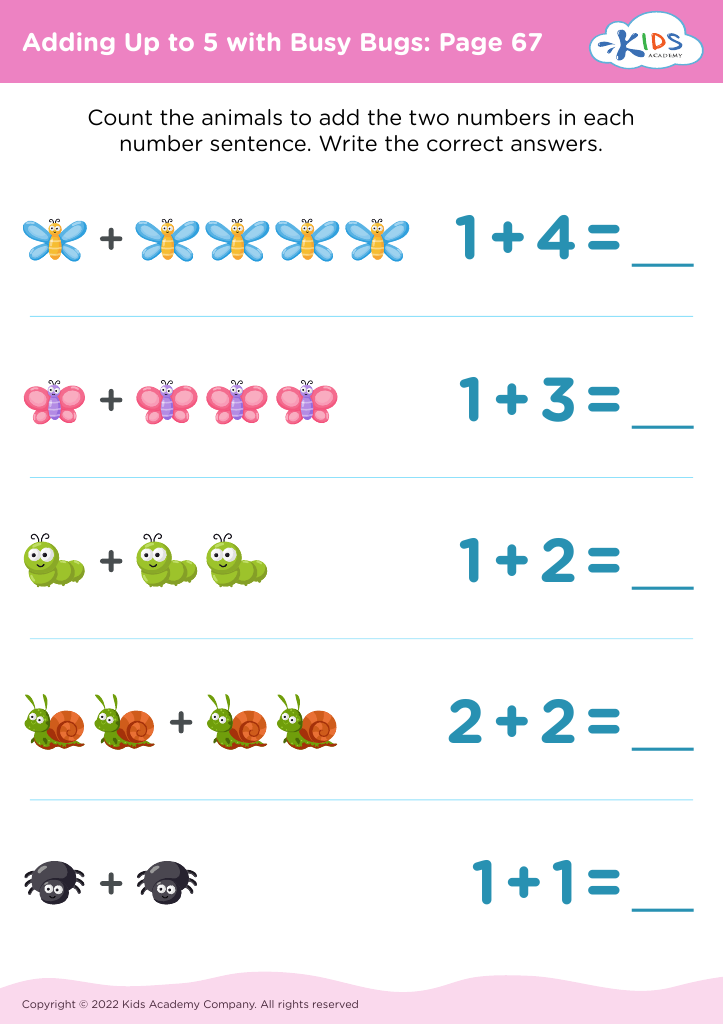
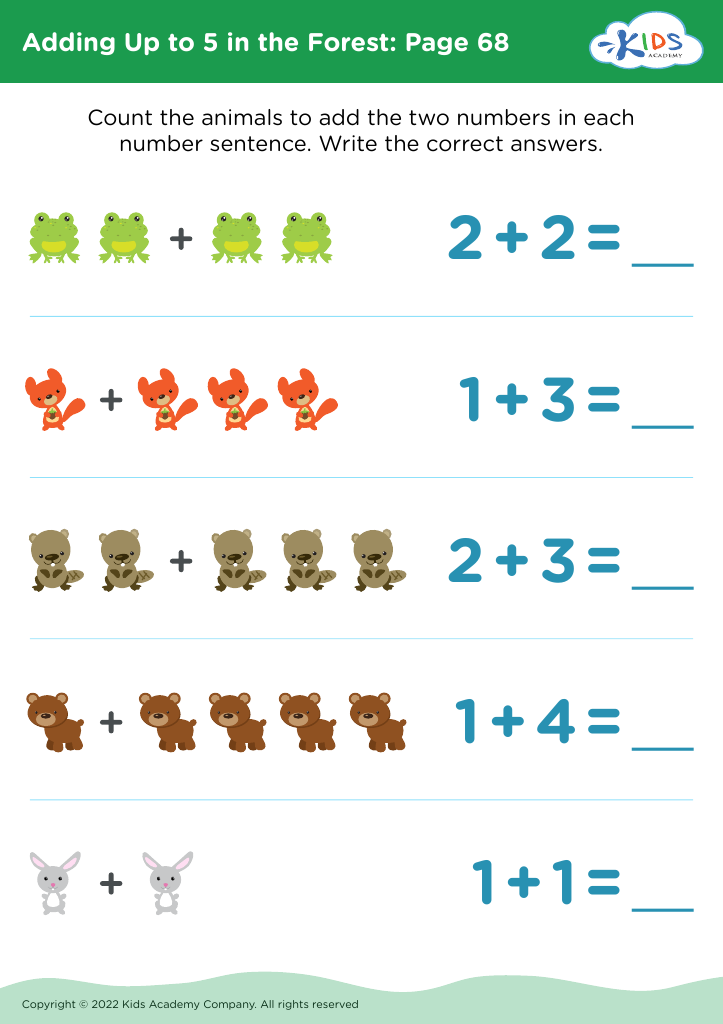
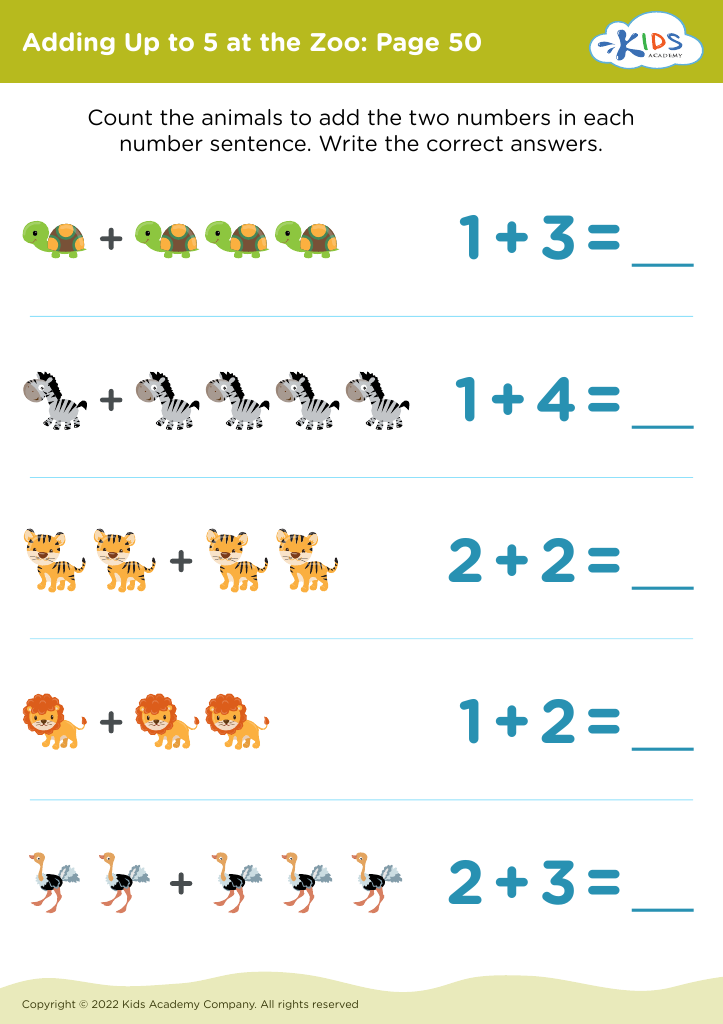
Boost your child's mathematical journey with our "Hand-eye Coordination Adding Up to 5 Worksheets for Ages 3-9". Designed to make early math learning engaging and effective, these worksheets enhance hand-eye coordination while teaching the foundational skill of addition up to 5. Perfect for young learners, they offer fun and interactive ways to practice addition, making arithmetic enjoyable. Tailored for children aged 3-9, these worksheets support various developmental stages, ensuring a solid math foundation. Let's make math fun and educational with our expertly crafted worksheets. Visit the Kids Academy website today to explore and download!
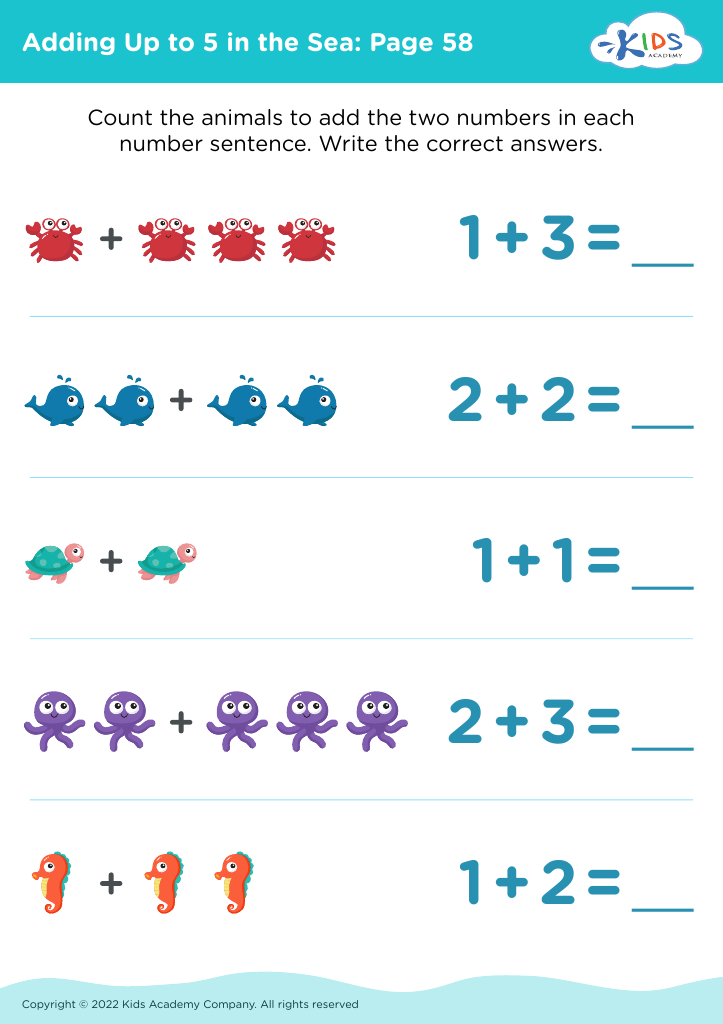
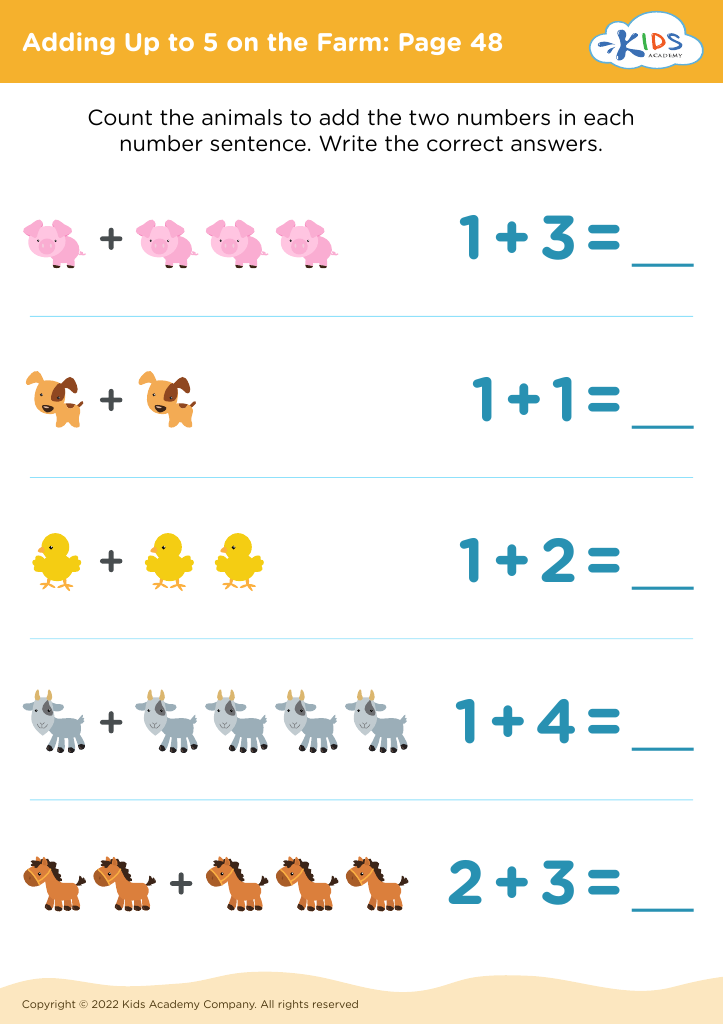
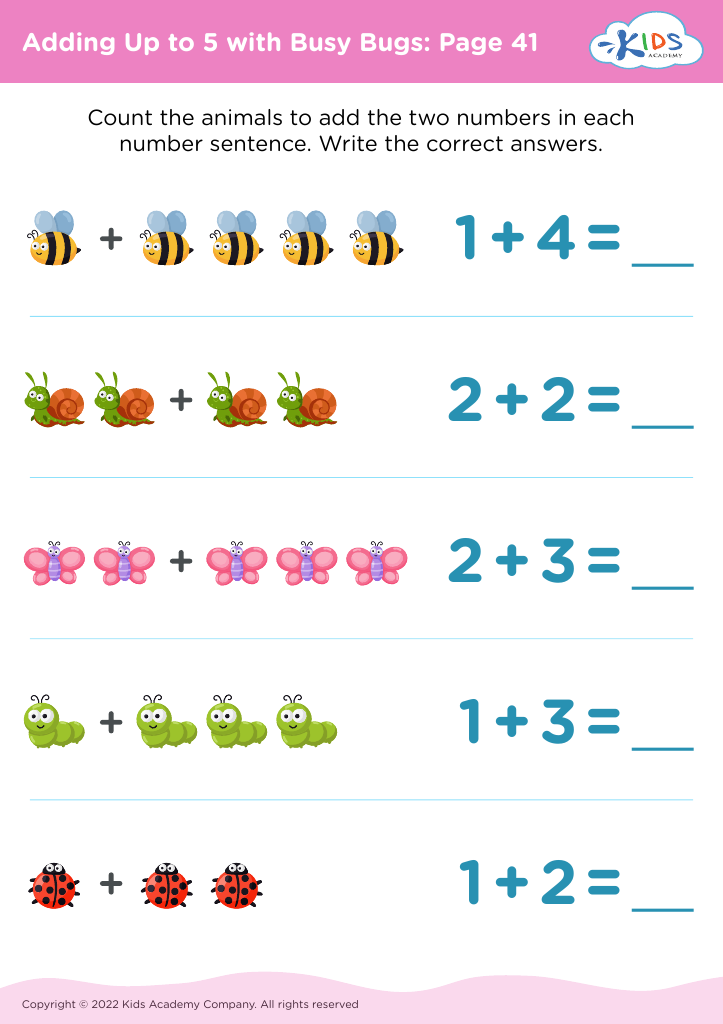
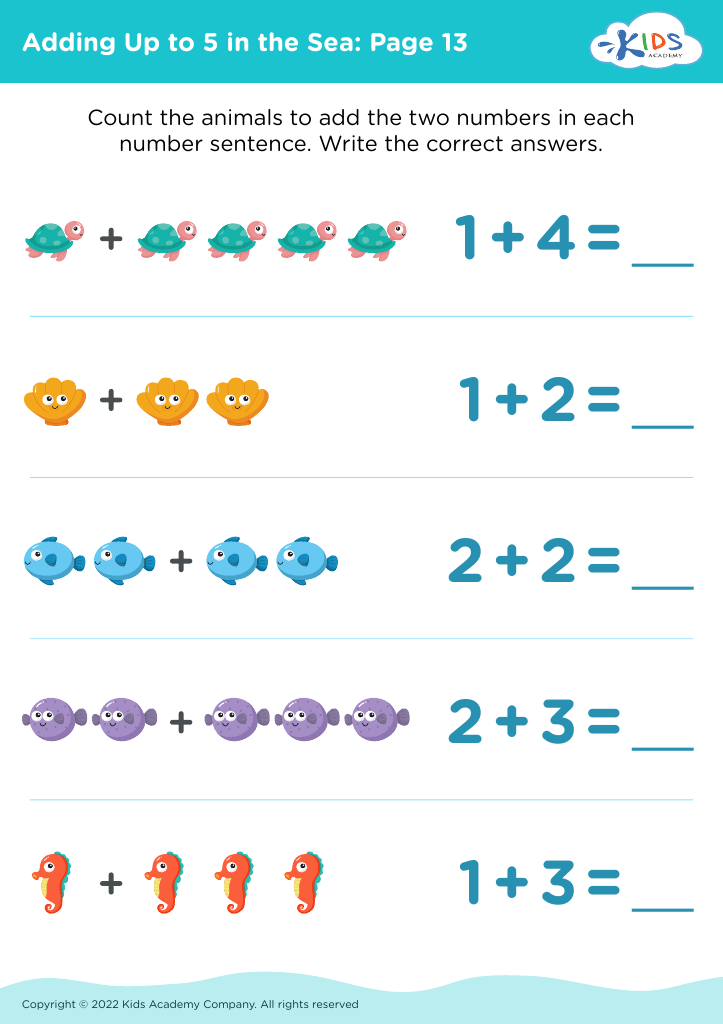
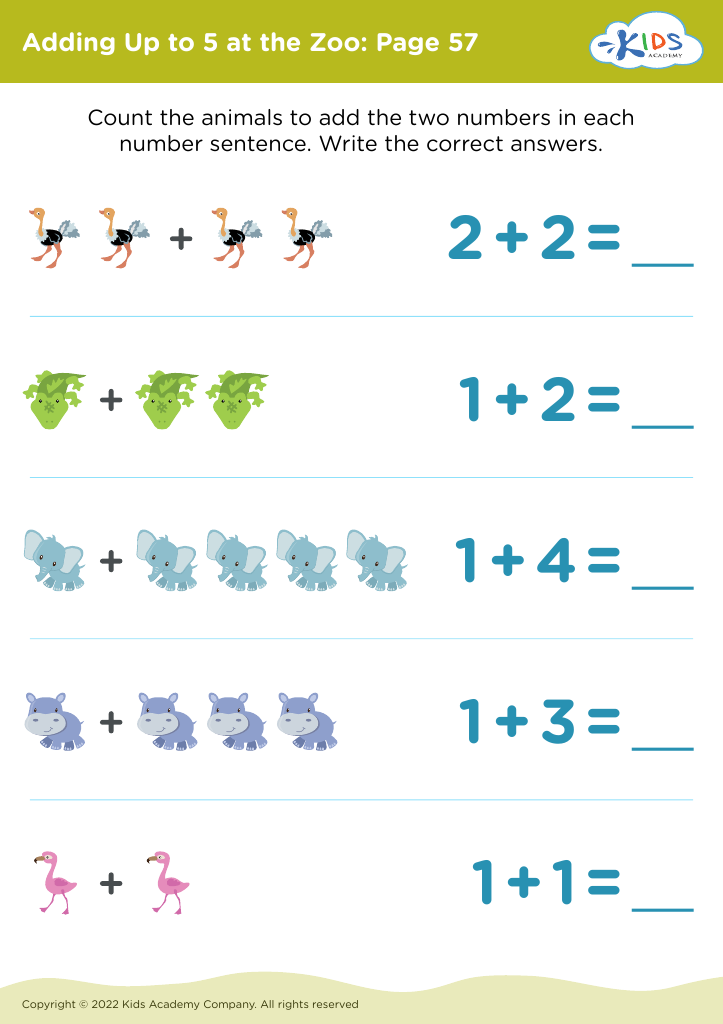
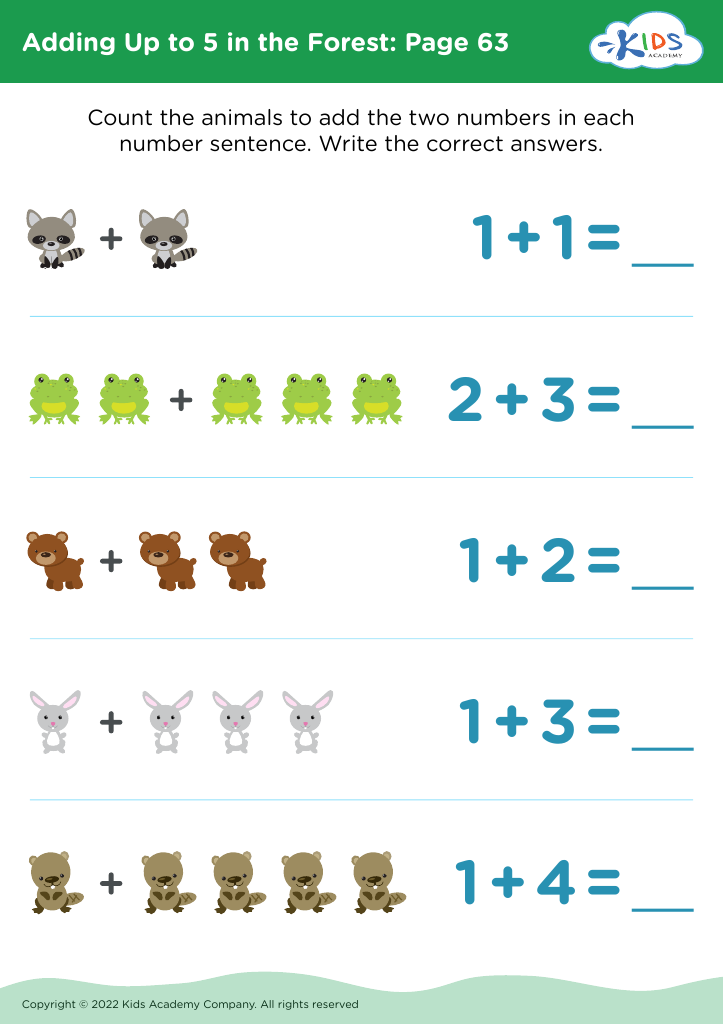
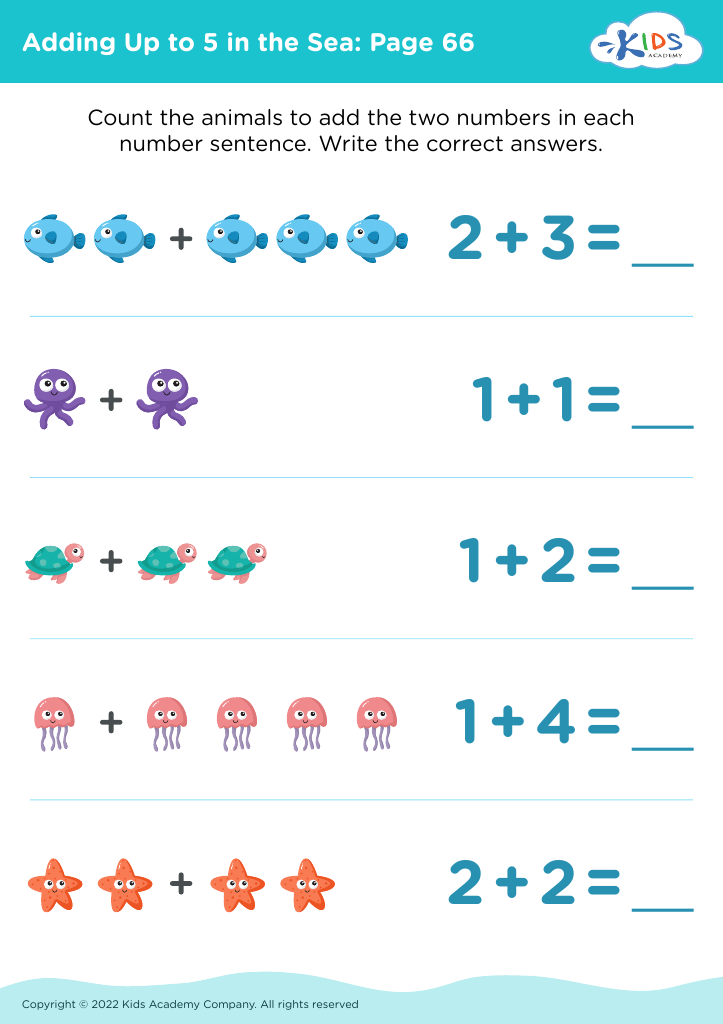
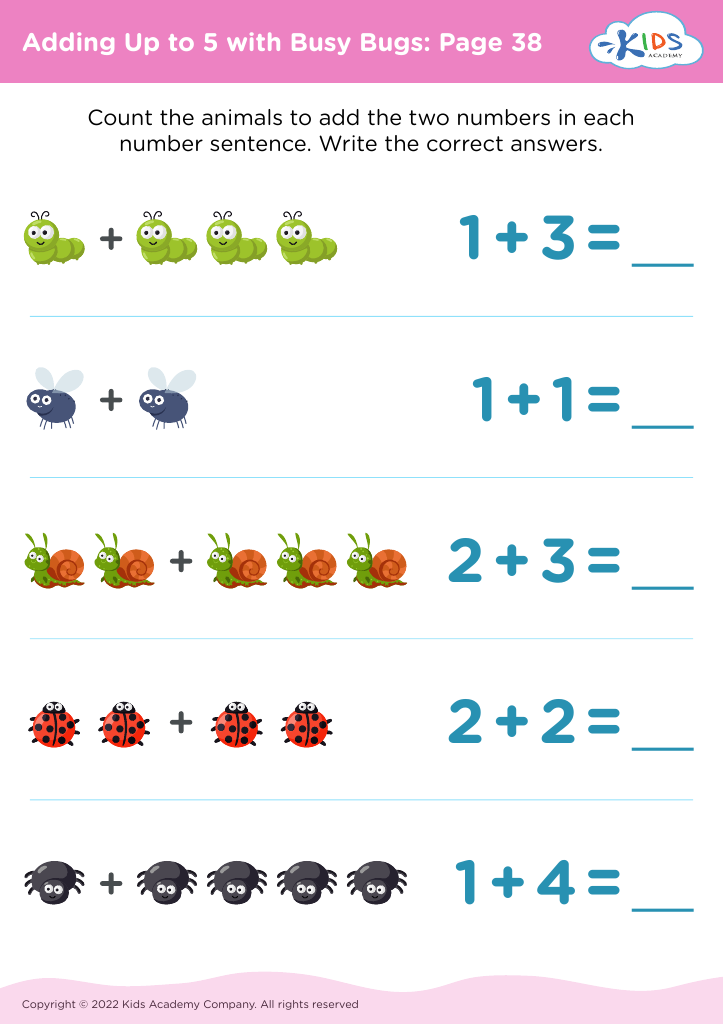


%20(1).jpg)
.jpg)




Hand-eye coordination is a critical developmental skill in young children, particularly between the ages of 3 and 9. For parents and teachers, fostering this ability through activities like adding up to 5 is crucial for several reasons:
-
Cognitive Development: Engaging in tasks that involve simple arithmetic helps young brains develop problem-solving skills and logical thinking. This adds to the foundational knowledge that will benefit them in more complex subjects later.
-
Motor Skills: Hand-eye coordination activities improve fine motor skills, such as writing, cutting, and even tying shoe-laces. These foundational skills are essential for daily tasks and independent functioning.
-
Focus and Attention: Doing simple tasks like adding numbers while coordinating their hand movements teaches children to focus and sustain attention. This concentration is vital for academic success and other areas of life.
-
Confidence Boost: Successfully performing these tasks builds self-esteem. Children learn through manageable steps, celebrating small achievements, which encourages a positive attitude towards learning.
-
Future Proficiency: Early practice with fundamental skills can ease future academic challenges. Mastery of basic tasks like counting and writing sets a firm foundation for advanced learning in math, science, and other disciplines.
By investing in activities that develop hand-eye coordination and basic arithmetic, parents and teachers can provide children with the tools they need for holistic growth, not just academically but also in their everyday lives.








