Problem-solving abilities Adding Up to 5 Worksheets for Ages 3-9
13 filtered results
-
From - To
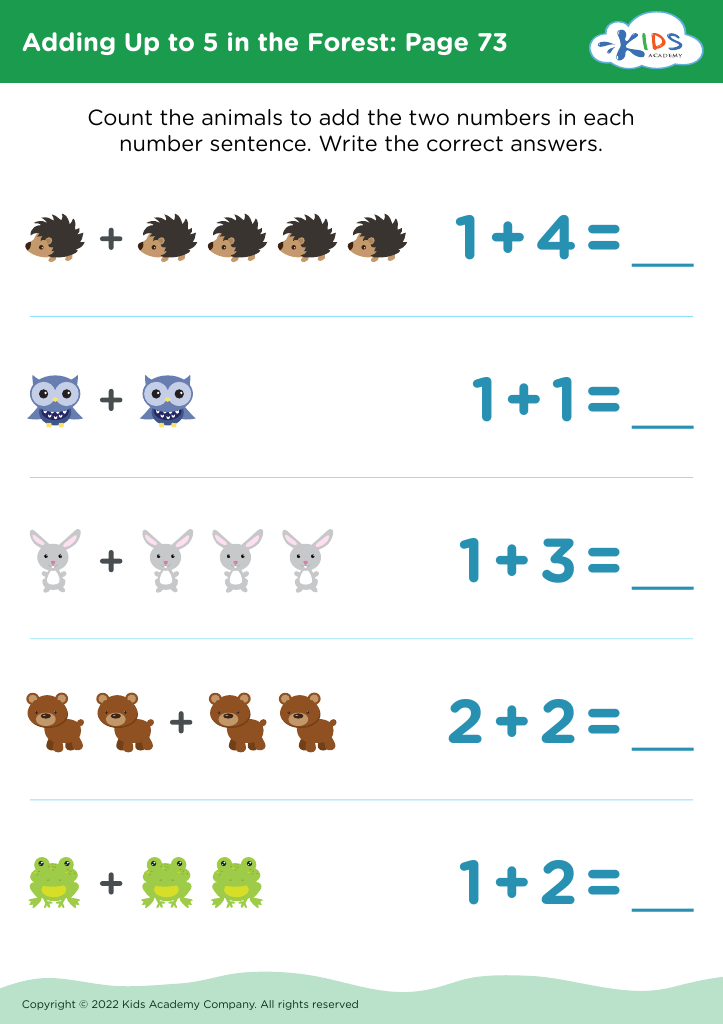
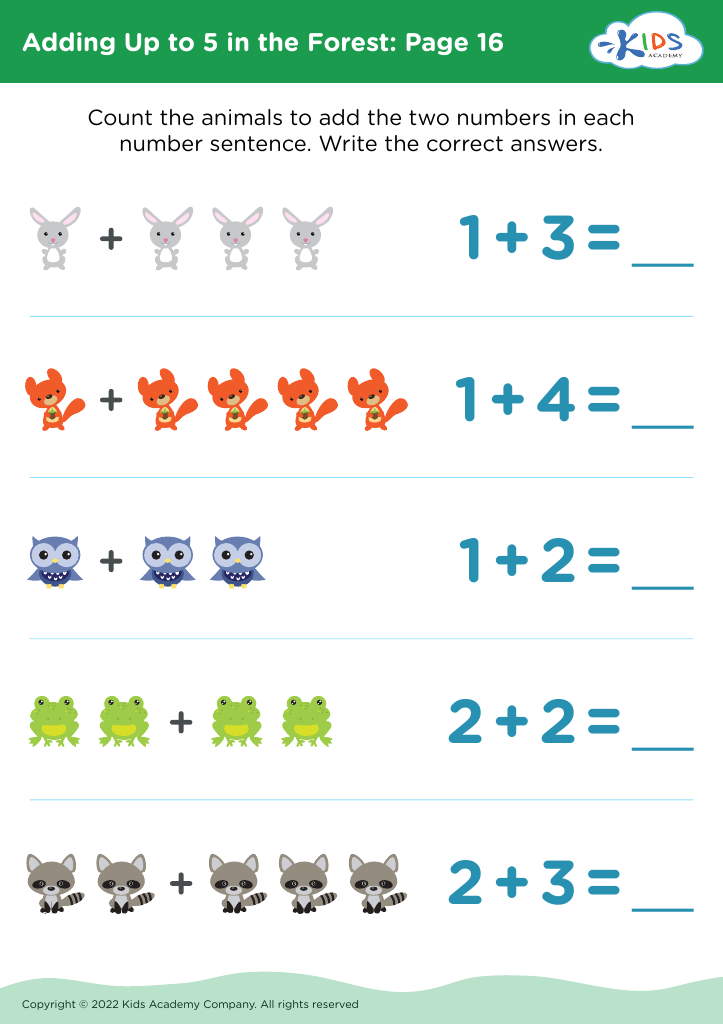
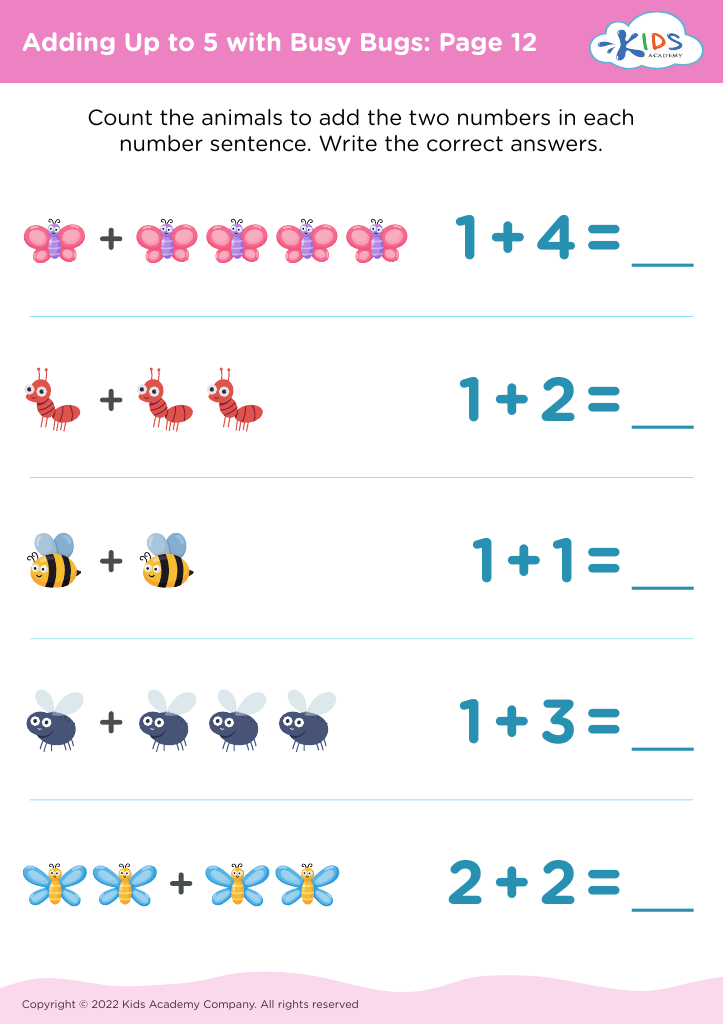
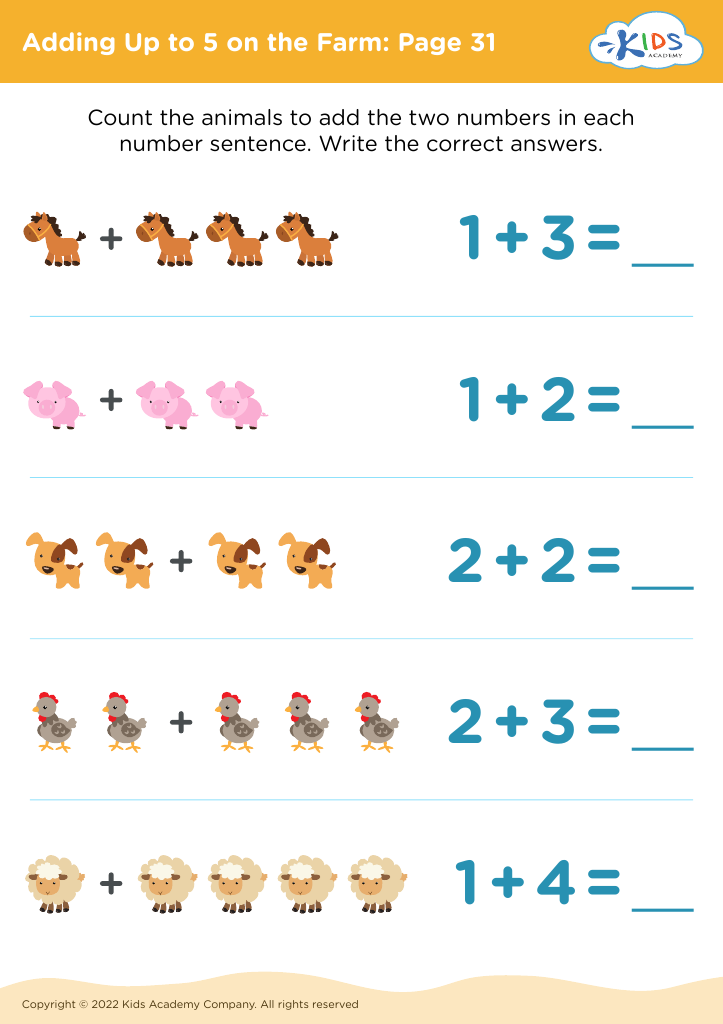
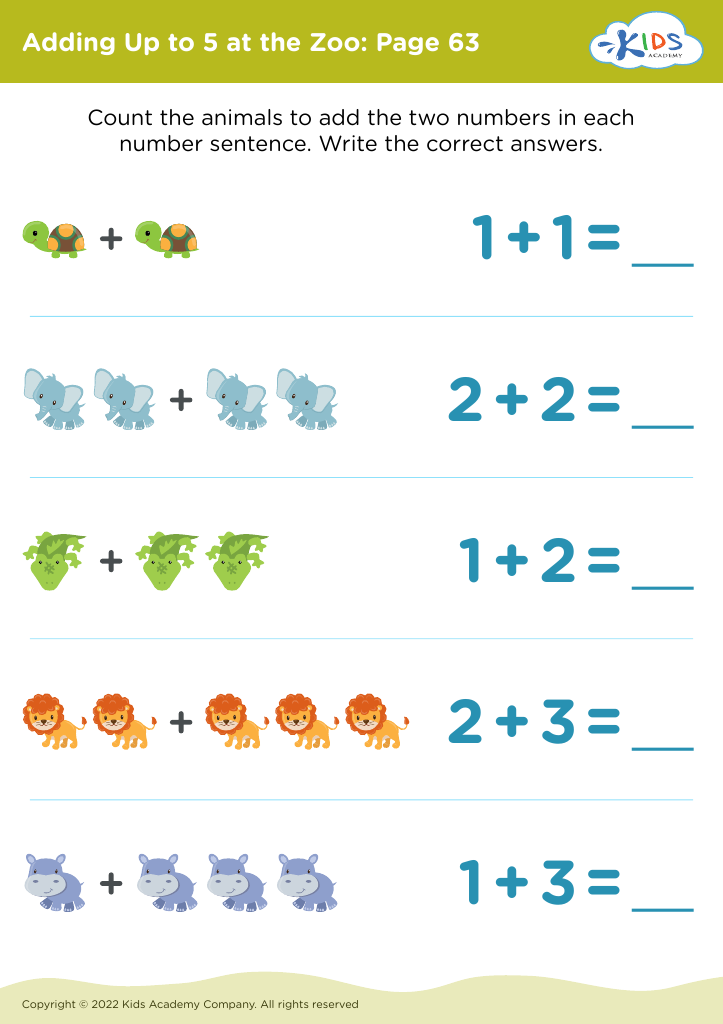
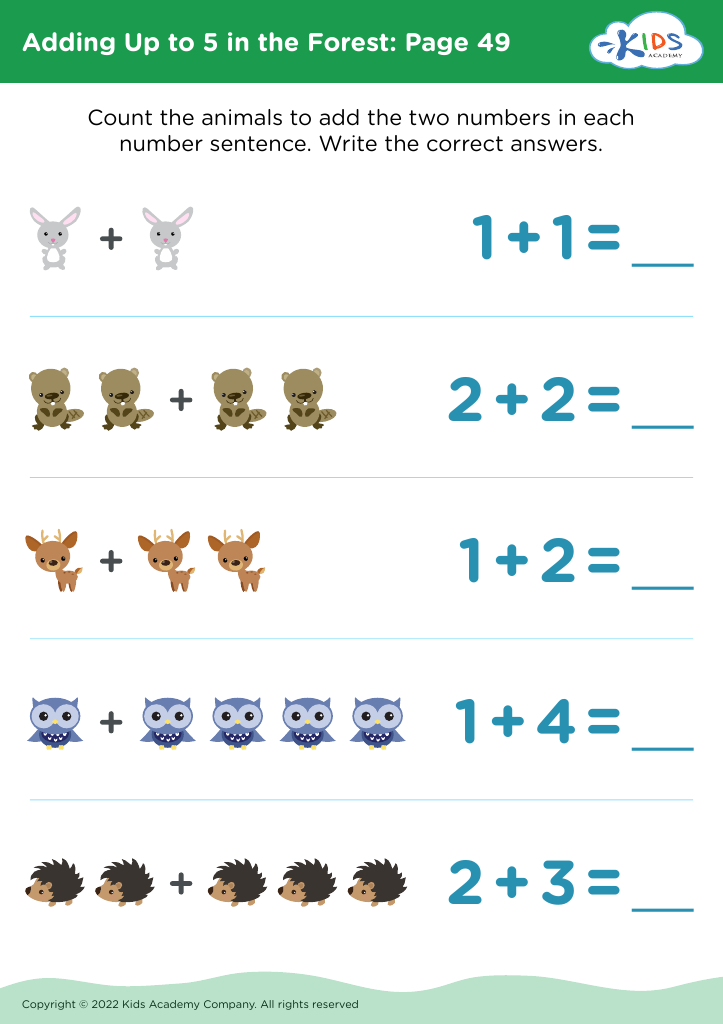
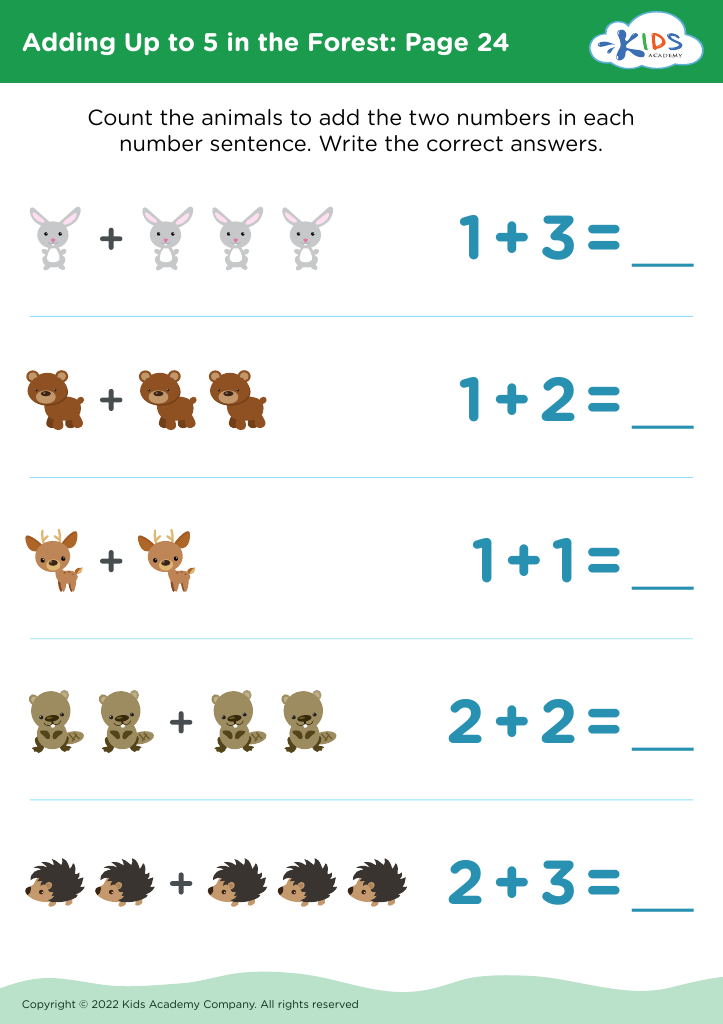
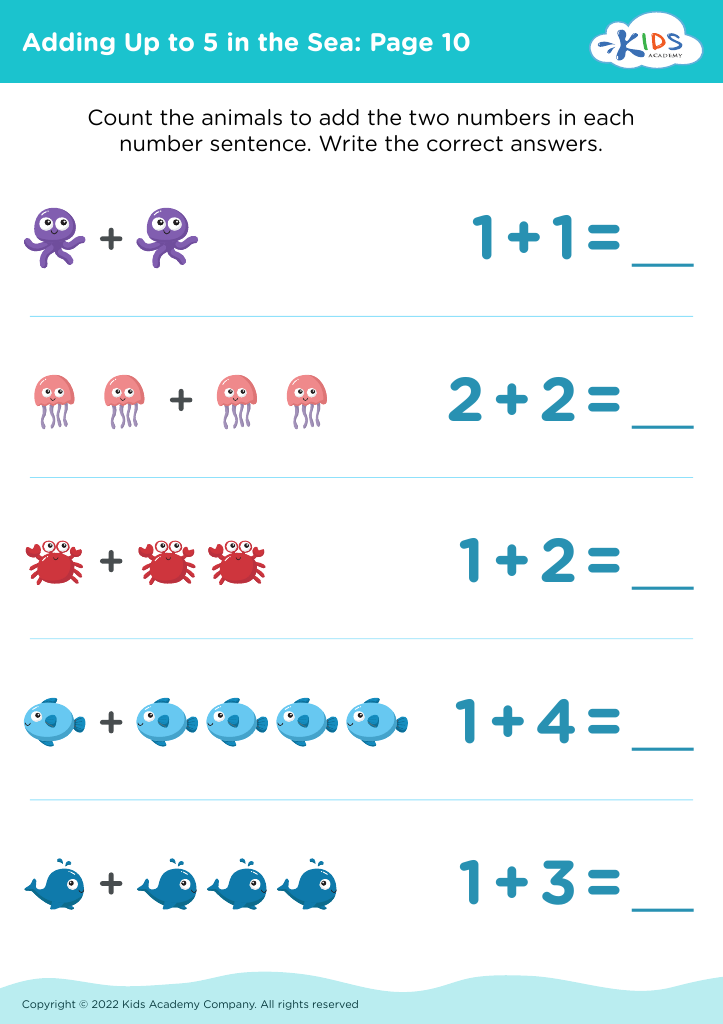
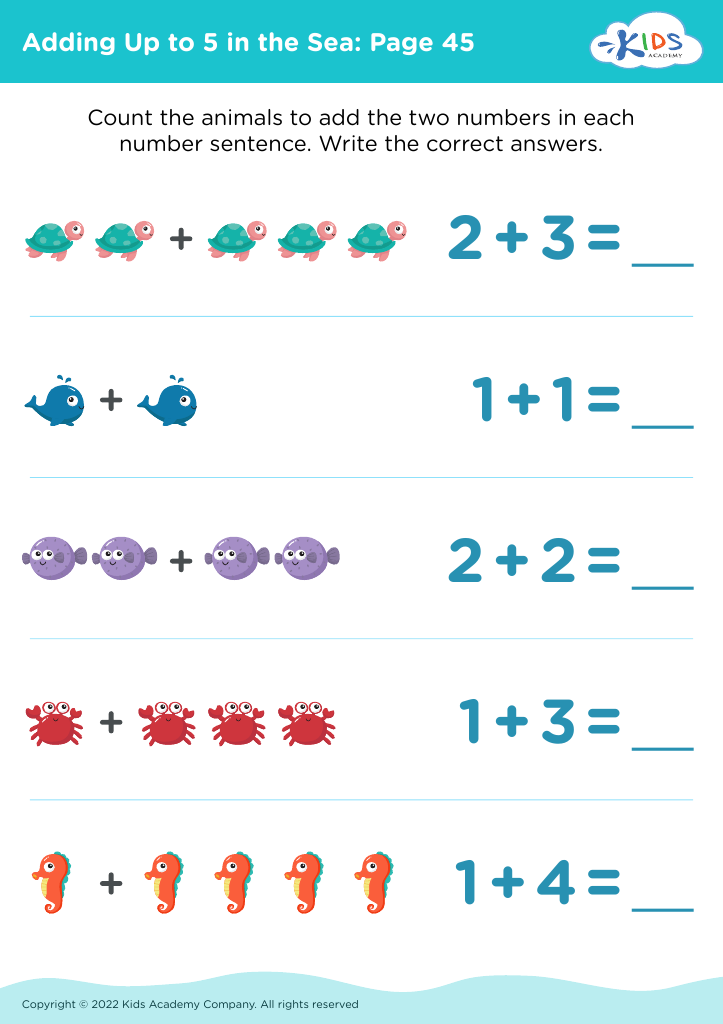
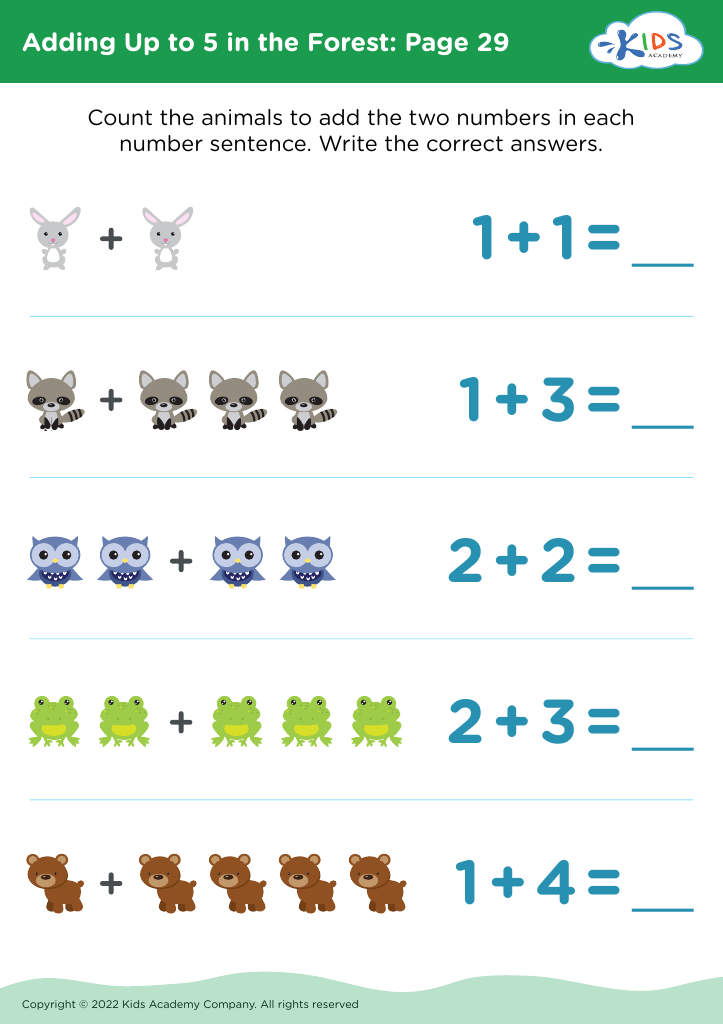
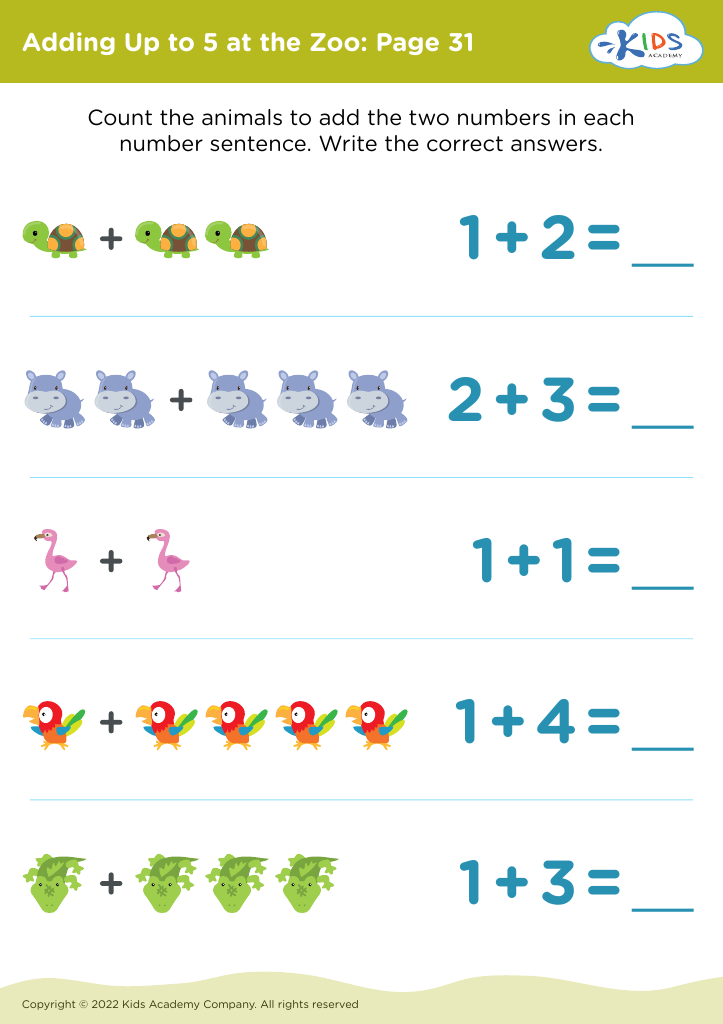
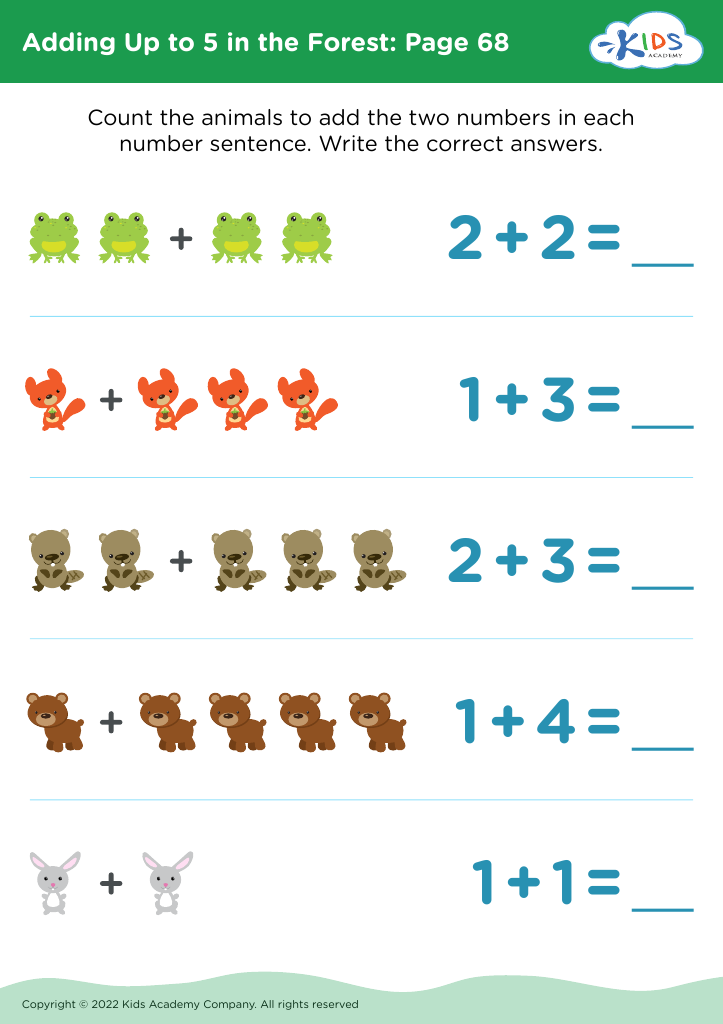
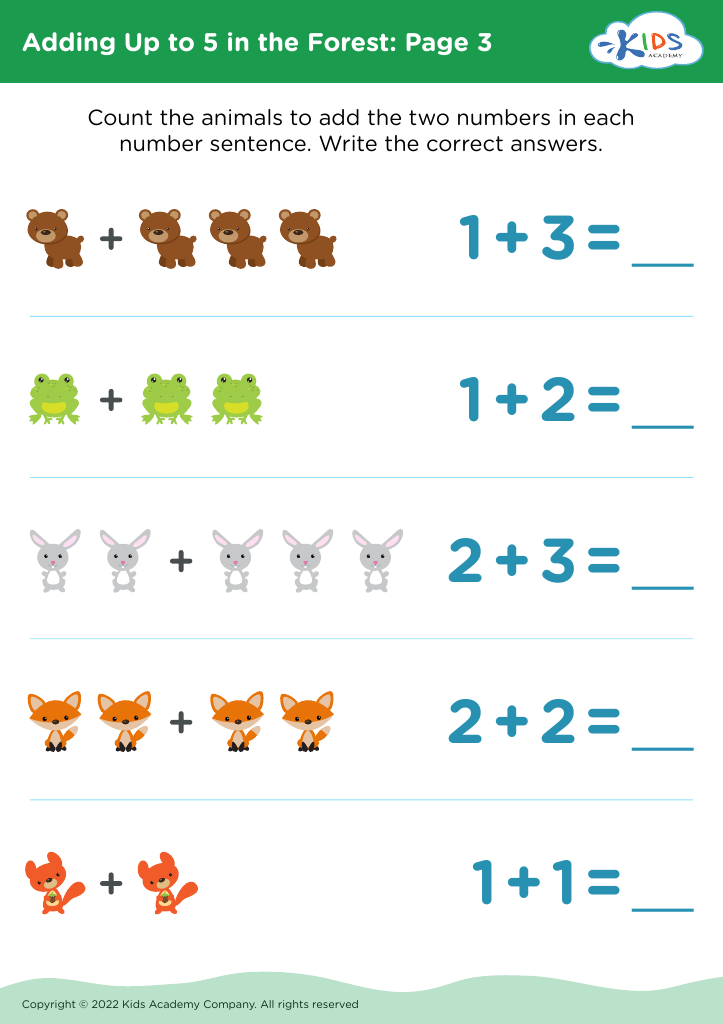
Discover our engaging "Problem-Solving Abilities Adding Up to 5 Worksheets" designed specifically for children aged 3-9. These worksheets enhance early math skills by encouraging critical thinking and reasoning as kids tackle addition problems that sum up to 5. With vibrant illustrations and interactive activities, children will enjoy practicing math concepts while developing essential problem-solving abilities. Our resources cater to diverse learning styles, making them perfect for classrooms and at-home learning. Watch your little ones build confidence and mastery in addition through fun and interactive exercises that promote cognitive growth. Start their math journey today with our thoughtfully crafted worksheets!


%20(1).jpg)





Problem-solving skills are foundational for children's cognitive development, particularly in early education. Understanding how to add numbers effectively lays the groundwork for more complex mathematical concepts. For children ages 3 to 9, mastering addition up to 5 promotes critical thinking and enhances their ability to approach challenges methodically.
Parents and teachers should prioritize these skills as they encourage logical reasoning and boost confidence in mathematical abilities. Engaging in addition exercises allows children to explore relationships between numbers, fostering a deeper understanding of mathematics as a coherent and interconnected subject.
Moreover, building strong problem-solving skills at this early age impacts children's overall learning approach. Children learn to tackle not just math problems, but also everyday challenges, improving their resilience and adaptability.
As they interact with numerical problems, children also enhance their language skills and social interactions when they discuss their thought processes and collaborate with peers.
In essence, early emphasis on problem-solving abilities in addition contributes to a child's academic success and resilience, equipping them with necessary skills for future learning in all subjects. Encouraging these abilities can influence their outlook on education and empower them in their own learning journeys.








