Problem-Solving Skills Adding Up to 5 Worksheets for Ages 3-9 - Page 2
37 filtered results
-
From - To


.jpg)





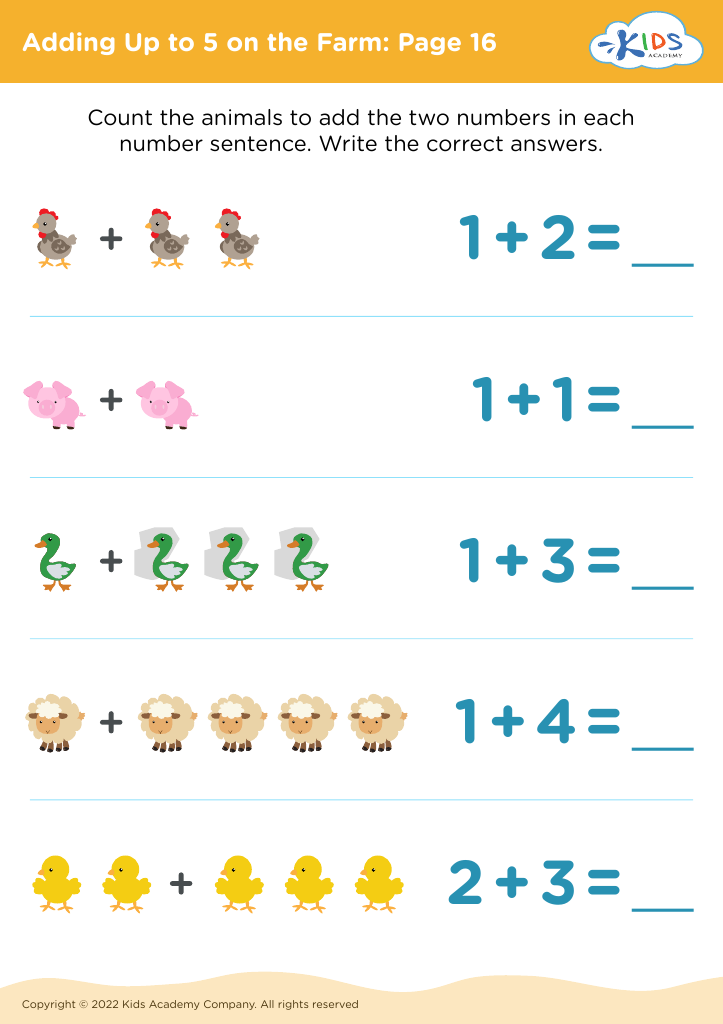
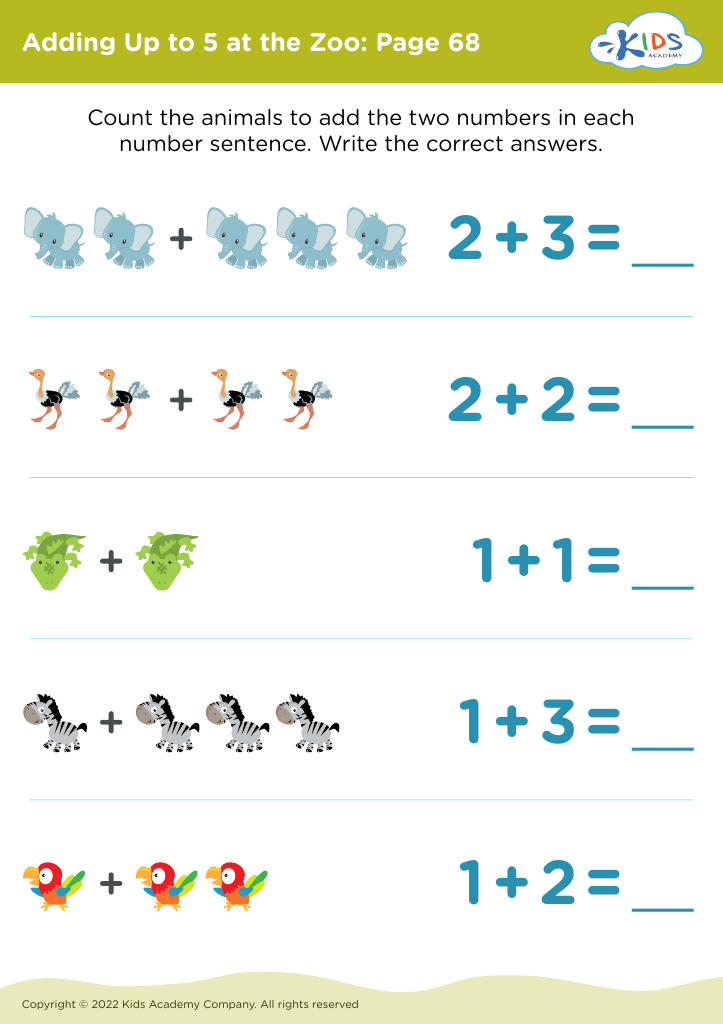
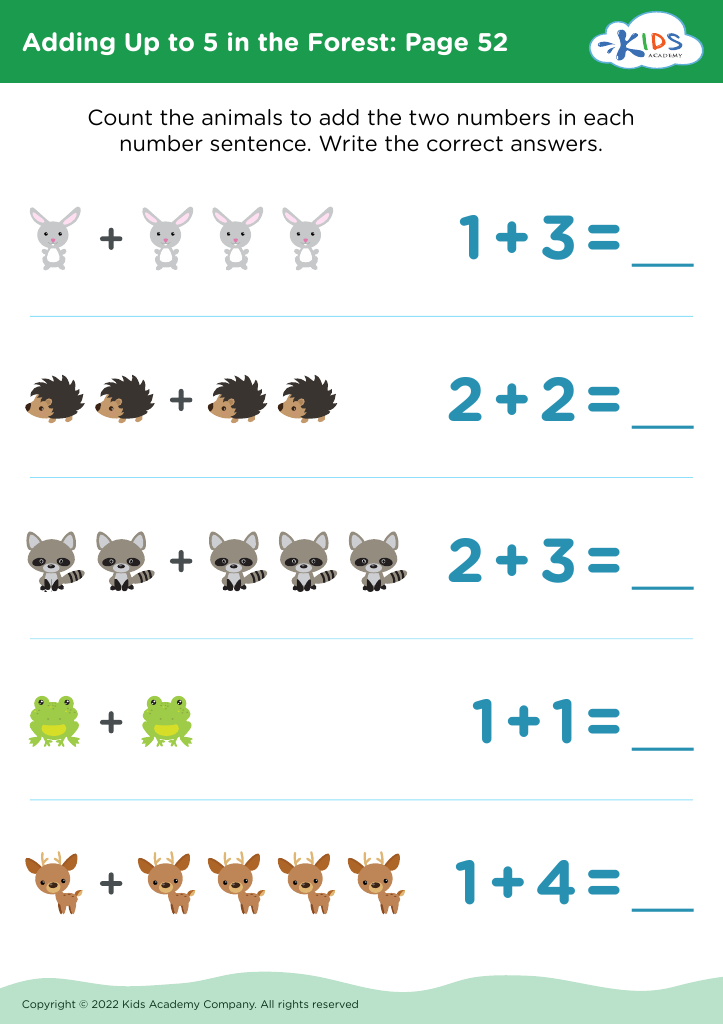
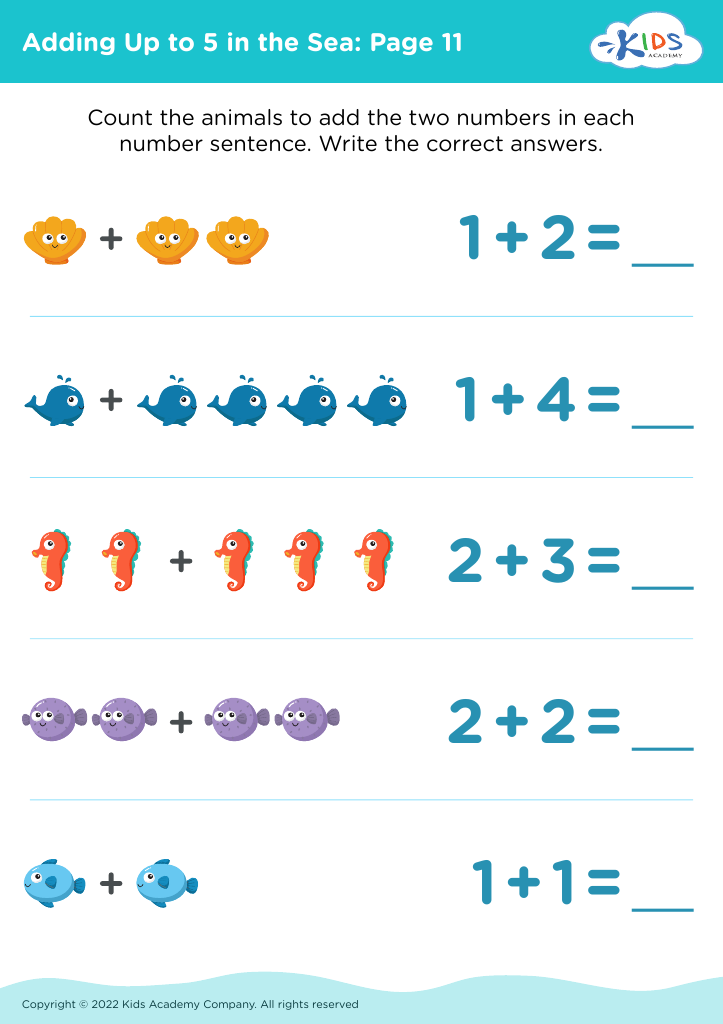
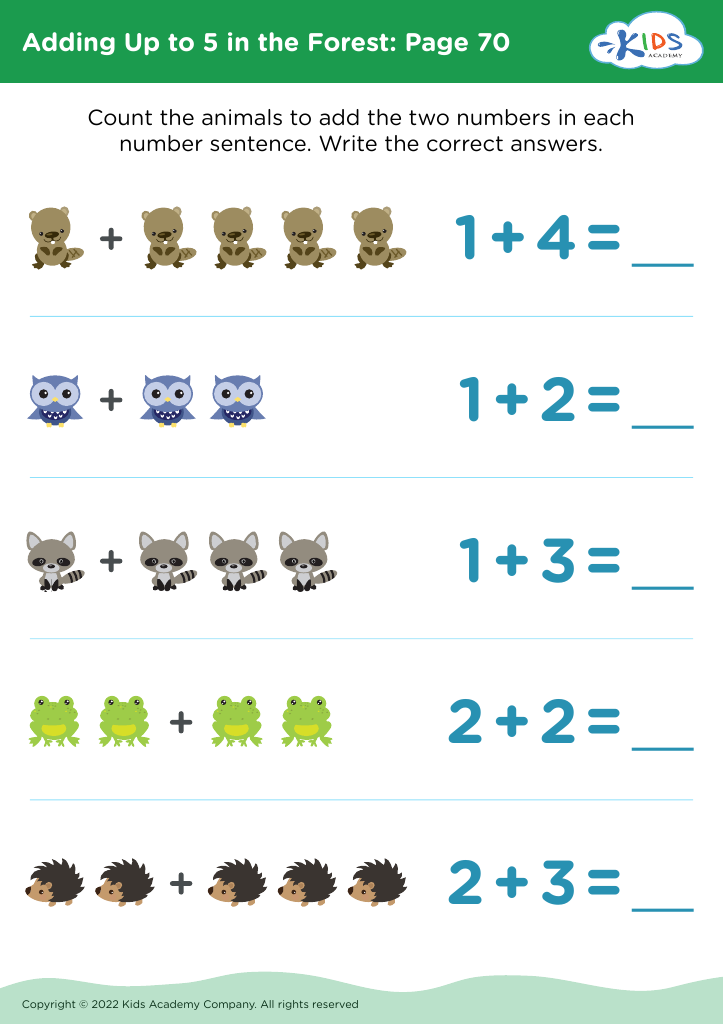
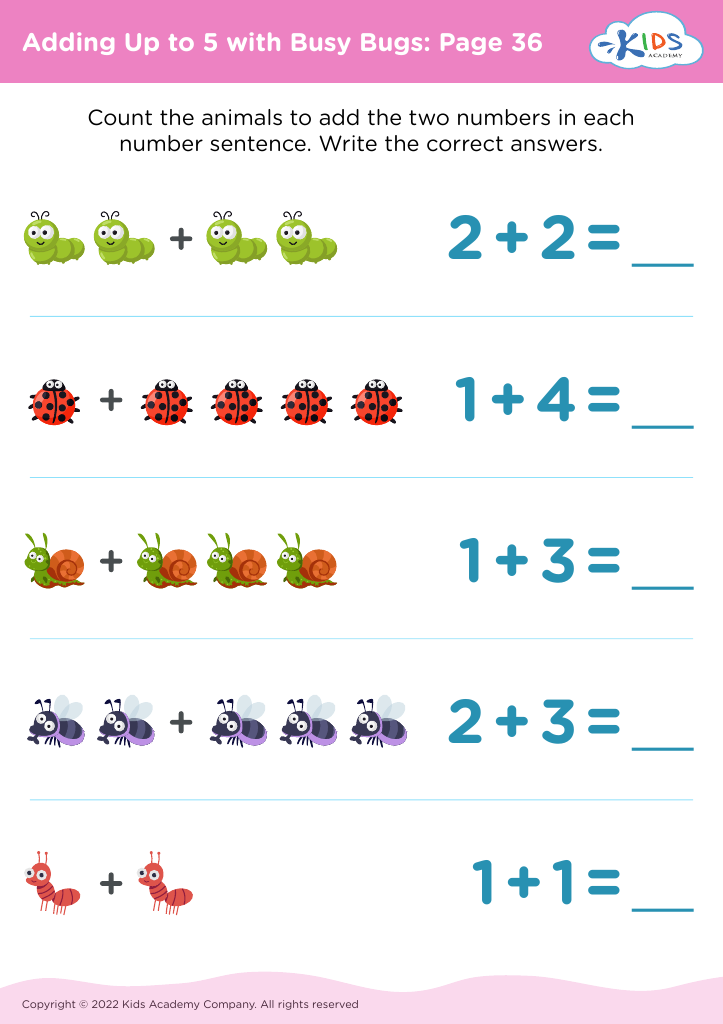
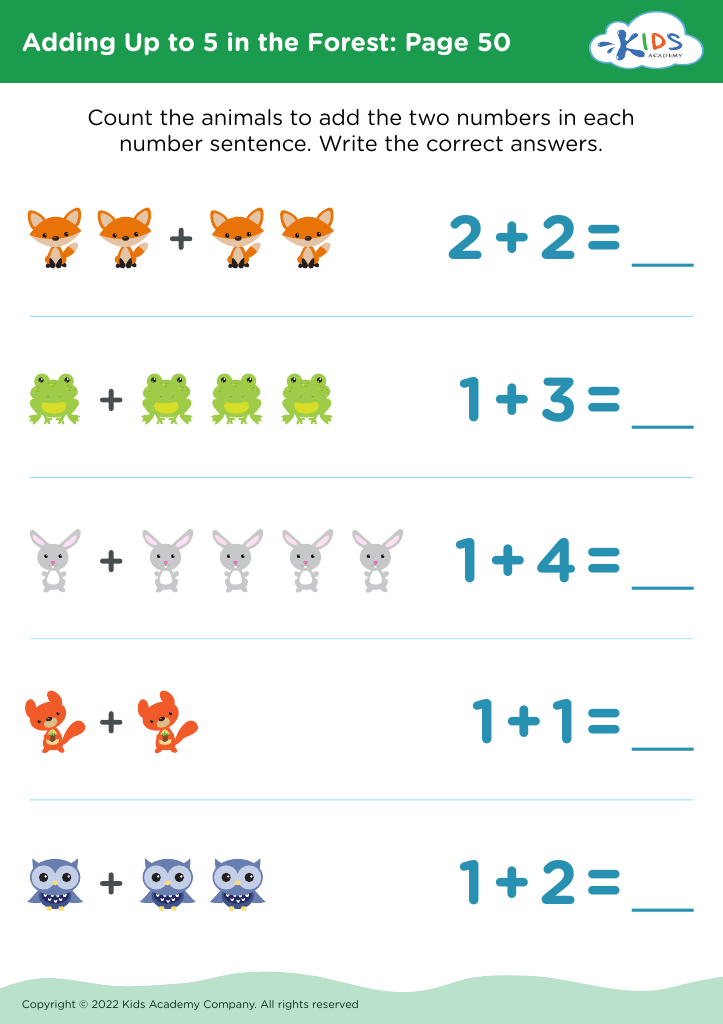
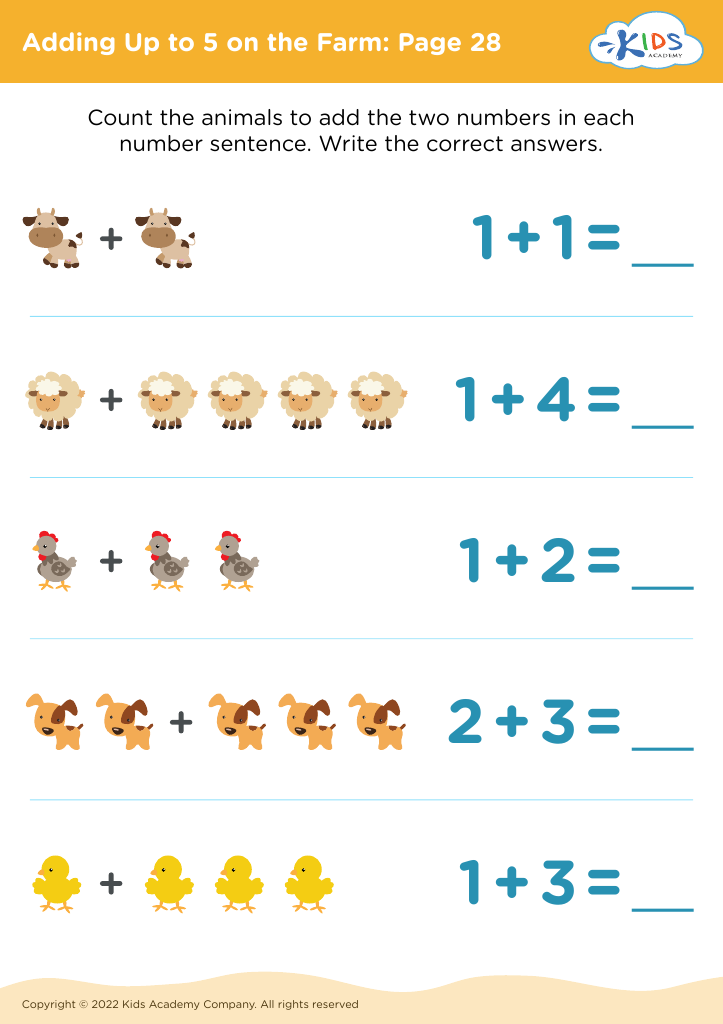
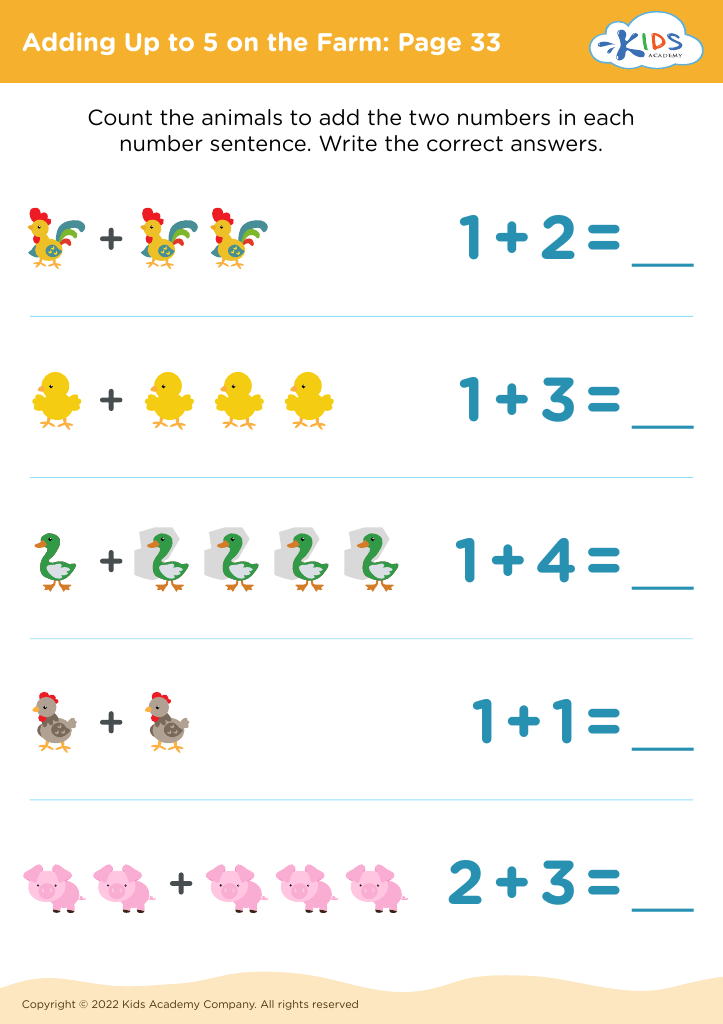
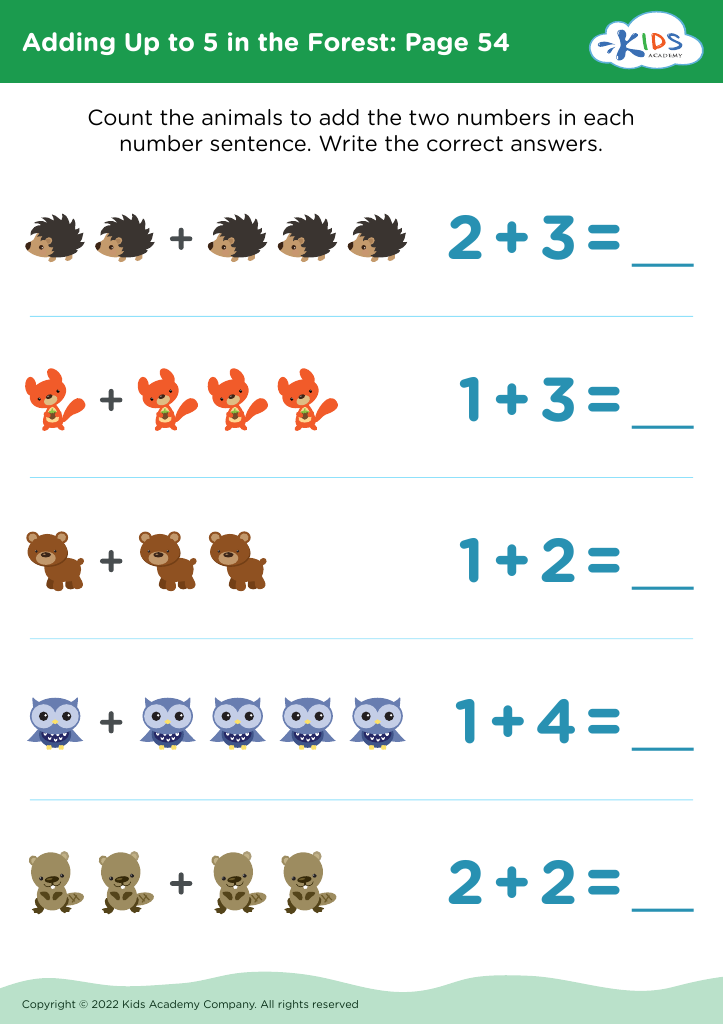
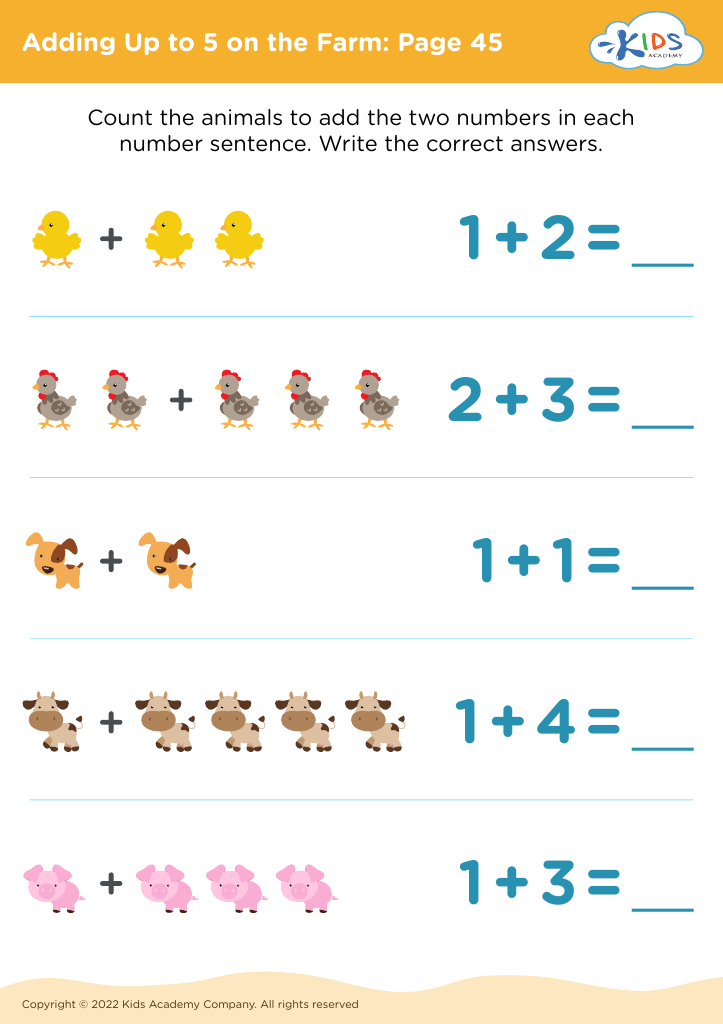
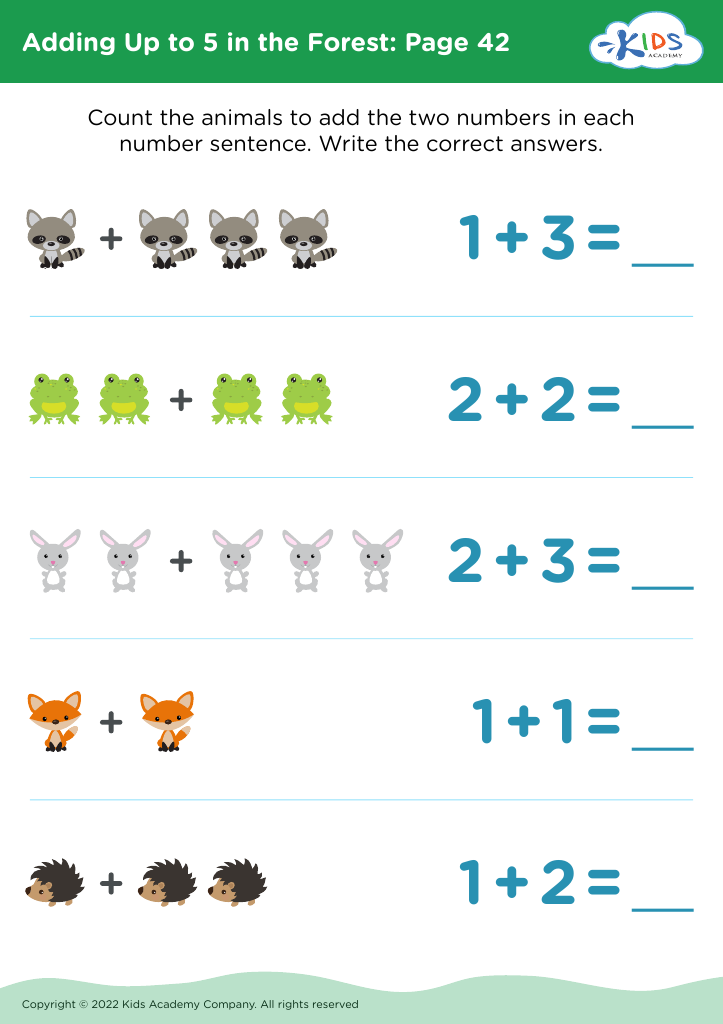
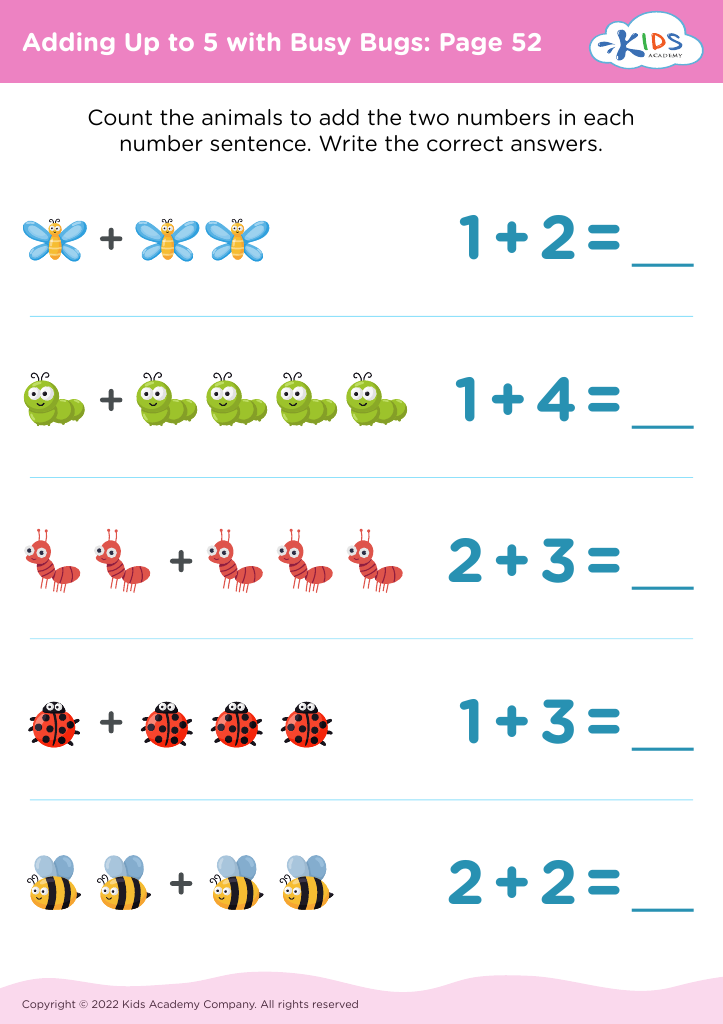
Problem-solving skills are fundamental for children ages 3-9 as they lay the foundation for cognitive development and analytical thinking. Learning to solve problems, particularly with basic math concepts like adding up to 5, fosters critical thinking and enhances a child's ability to approach challenges confidently. When children engage in these early math skills, they develop a strong understanding of numbers, quantities, and relationships, which are essential for future mathematical concepts.
Additionally, problem-solving activities can facilitate collaborative learning experiences. Children learn to work together, share ideas, and navigate challenges, building social skills and emotional intelligence. Encouraging parents and teachers to focus on these skills promotes a growth mindset, teaching children that persistence in solving problems can lead to success.
Moreover, developing early problem-solving skills correlates with academic achievement later on. Research indicates that strong foundational skills in mathematics can lead to better performance in subjects that rely on logic and reasoning. By investing in problem-solving education for young children, parents and teachers equip them with tools for lifelong learning, preparing them for academic and real-world scenarios. Fostering these skills during this crucial developmental period is essential for holistic child growth, laying the groundwork for flourishing in personal and academic pursuits.








