Underwater animal identification Adding Up to 5 Worksheets for Ages 3-9
3 filtered results
-
From - To
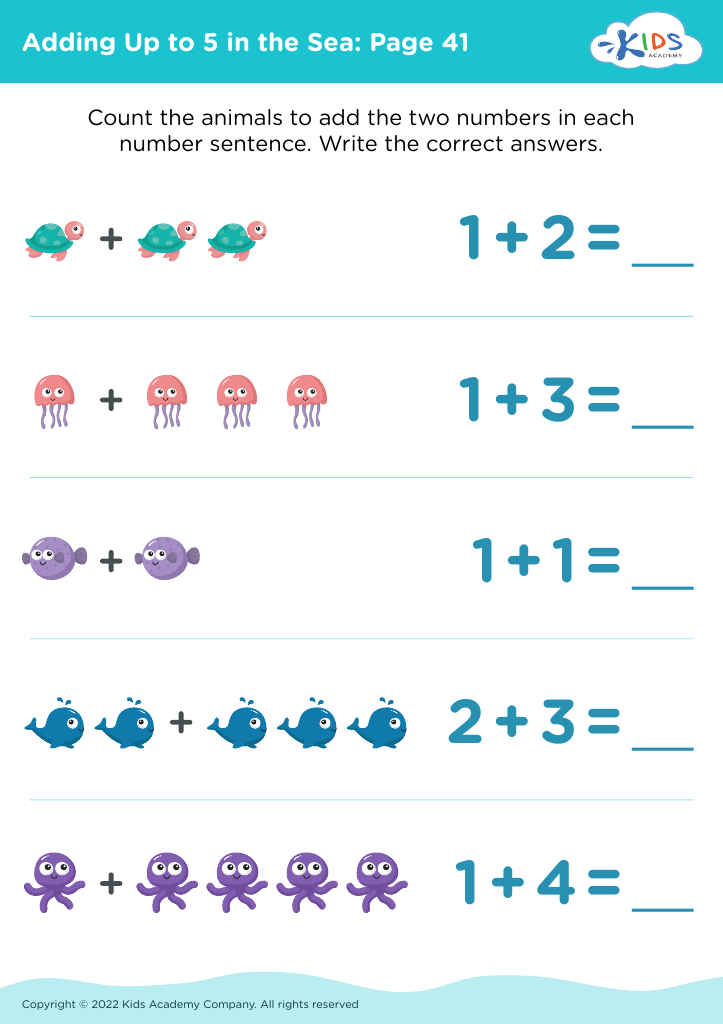
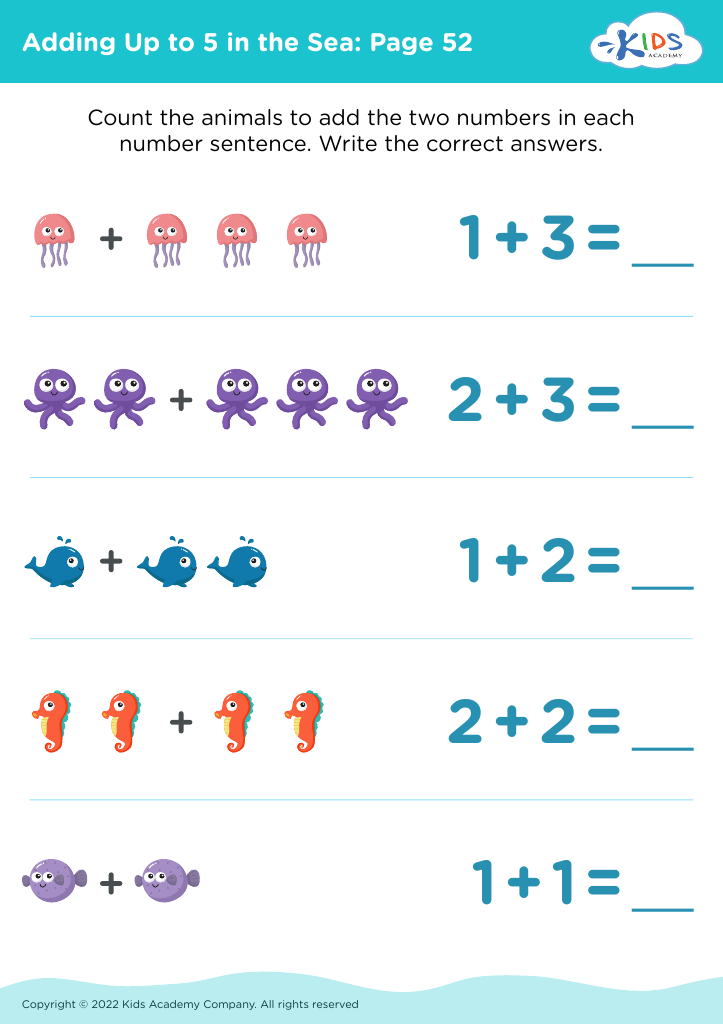
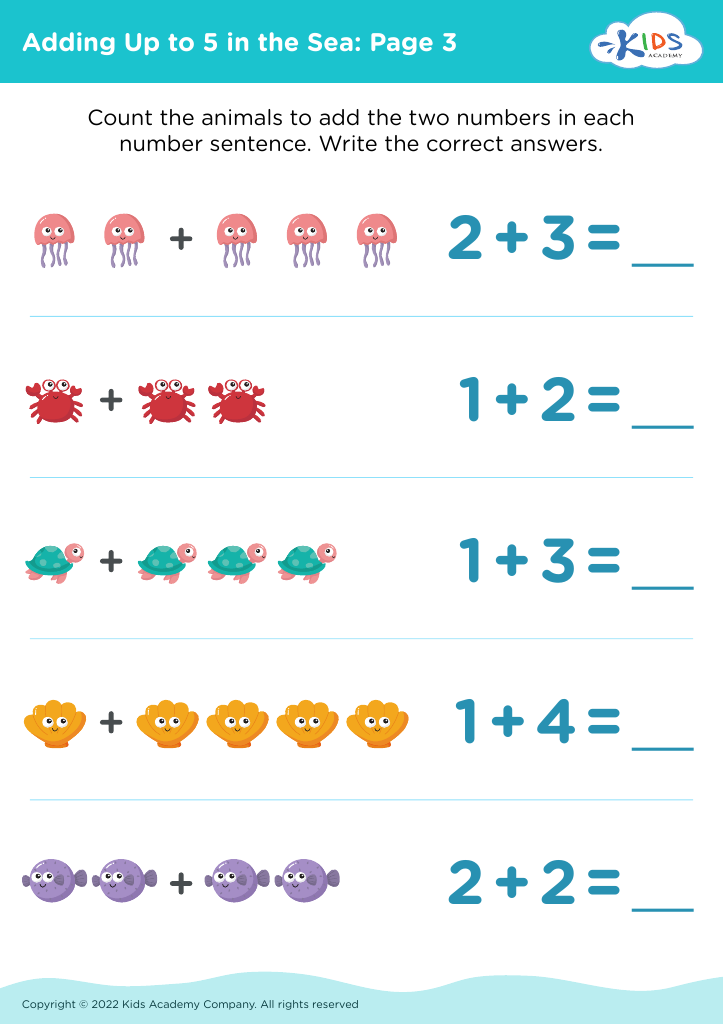
Explore the exciting world of underwater animals with our engaging "Underwater Animal Identification: Adding Up to 5" worksheets, designed for children aged 3-9! These colorful, themed worksheets combine fun animal images with essential math skills, allowing young learners to practice counting and addition. Each worksheet features a variety of marine creatures, helping kids identify and connect with the ocean's inhabitants while they enhance their mathematical abilities. Perfect for classroom activities or at-home learning, these resources encourage creativity and critical thinking while making math an enjoyable adventure. Dive into learning and watch your child's confidence soar with these delightful educational tools!







%20(1).jpg)
Understanding underwater animal identification can enrich young children's knowledge about the ocean and spark their interest in marine biology. Parents and teachers should care about this subject for several reasons.
First, identifying underwater animals fosters curiosity and encourages observational skills. Children learn about biodiversity, helping them appreciate the variety of life in our oceans. This foundational knowledge can lead to a deeper respect for nature and an understanding of environmental conservation.
Additionally, incorporating math concepts like "Adding Up to 5" while identifying animals can create cross-curricular connections. For example, children can count and compare different underwater creatures they observe or draw. This concrete experience reinforces counting and offers a fun, hands-on approach to learning.
Moreover, recognizing various underwater animals enhances vocabulary and language skills. Engaging discussions about names, habitats, and characteristics can stimulate language development and boost communication skills.
Finally, through playful activities such as games and arts and crafts, children can explore these offerings collaboratively, promoting social skills and teamwork. By integrating underwater animal identification into learning, parents and teachers give children a well-rounded educational experience that nurtures their curiosity, creativity, and comprehension, making learning both enjoyable and meaningful.








