Visual learning reinforcement Adding Up to 5 Worksheets for Ages 3-9
5 filtered results
-
From - To
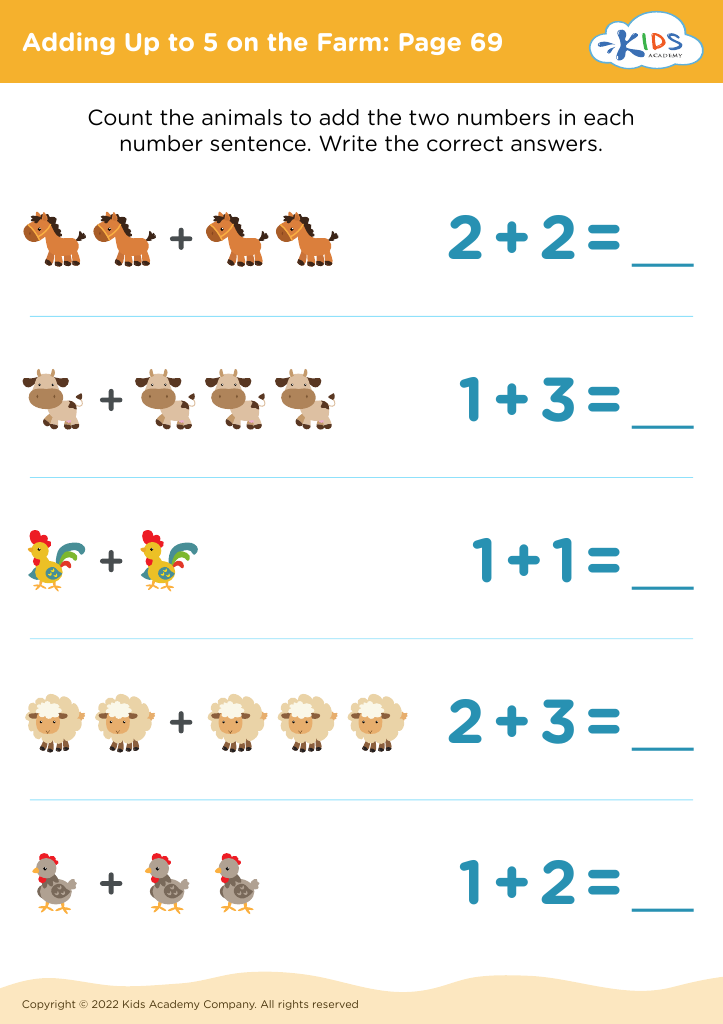
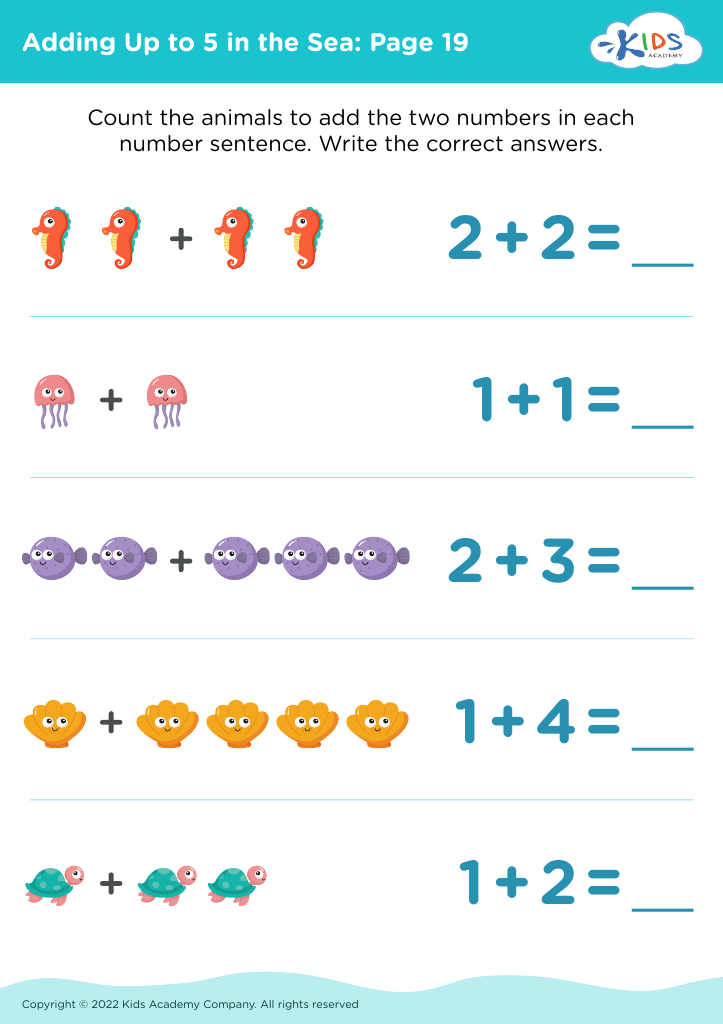
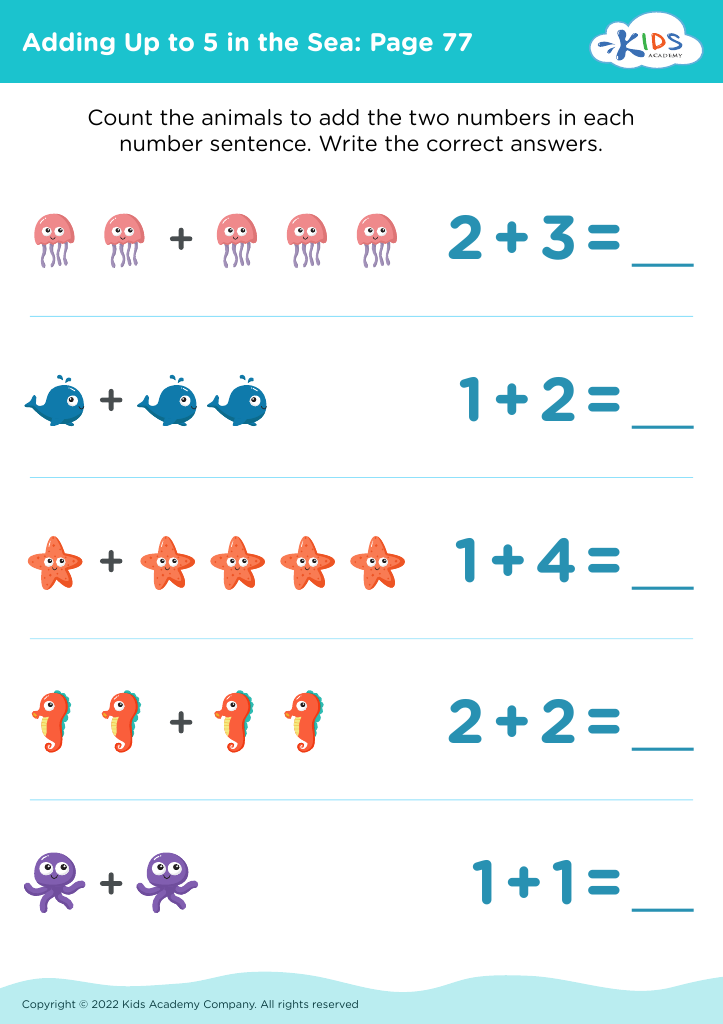
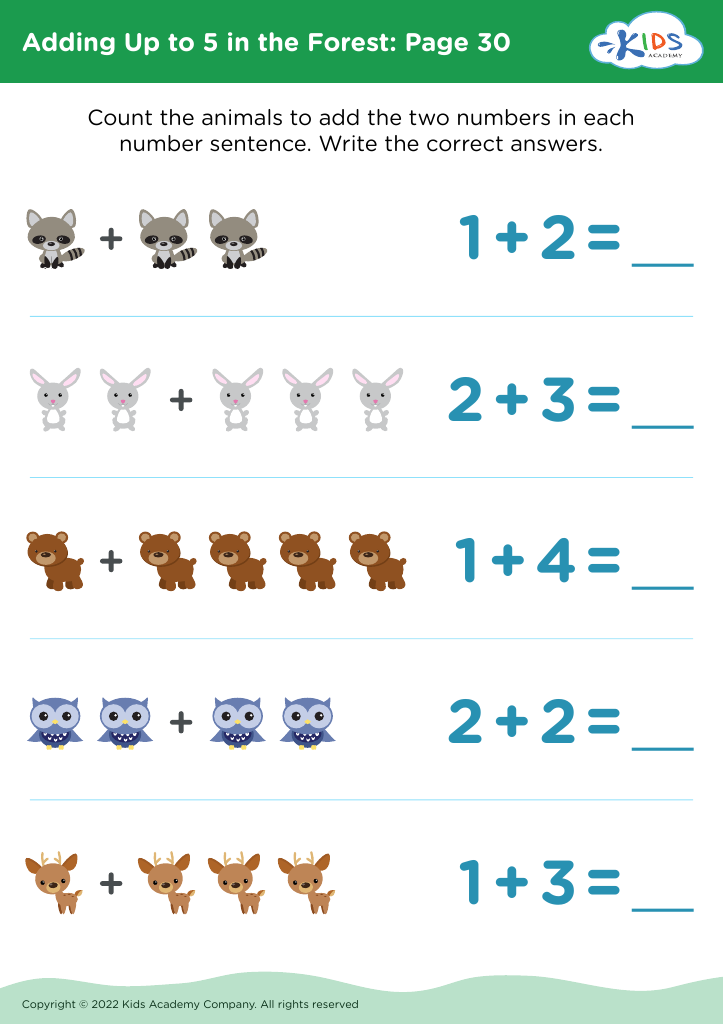
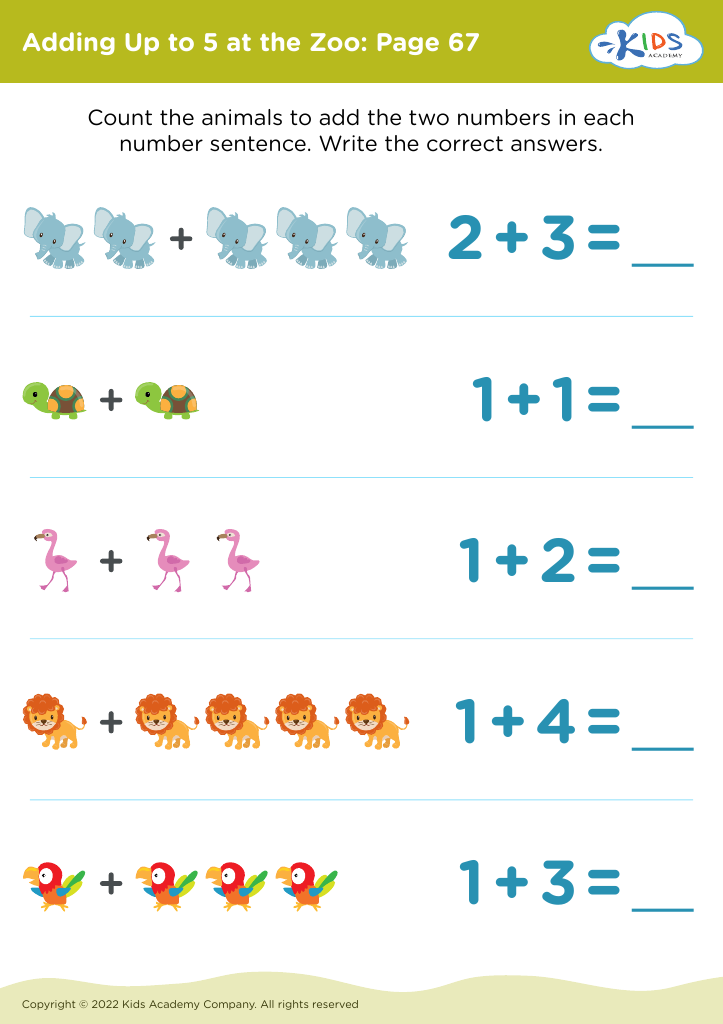
Boost your child's early math skills with our engaging "Adding Up to 5 Worksheets" tailored for ages 3-9. These visually appealing worksheets are designed to reinforce fundamental addition concepts through playful and interactive exercises. By combining bright colors, fun images, and hands-on activities, each worksheet effectively captures your child's attention while promoting critical thinking and problem-solving skills. Perfect for young learners, these resources inspire a love of math and build a strong foundation for future success. Whether at home or in the classroom, our visual learning reinforcement worksheets make mastering addition up to 5 an enjoyable and rewarding experience!





.jpg)


Parents and teachers should focus on visual learning reinforcement when teaching addition up to 5 for children aged 3-9 to leverage the developmental stages of this crucial age group. At this age, children predominantly learn through sensory experience, and visual aids provide a concrete understanding of abstract mathematical concepts. Utilizing colorful objects, interactive drawings, and engaging charts captures the young learners' attention, making learning playful and enjoyable.
When children see what they are adding, such as combining groups of blocks, they develop a fundamental understanding of quantity and number sense—critical building blocks for future mathematical learning. Visual reinforcement aids in solidifying these early numerical concepts by allowing children to see patterns and relationships between numbers. This strong numerical foundation helps reduce math anxiety, fostering a positive attitude toward learning mathematics.
Additionally, visual learning supports children with various learning styles, ensuring inclusive education. It offers immediate, tangible feedback, which is essential for immediate reinforcement of correct ideas and correction of misconceptions. Parents and teachers who focus on visual reinforcement methods will see increased retention, enhanced understanding, and a more engaging and supportive learning environment for the young learners. This lays the groundwork for a lifelong appreciation and comprehension of math.








