Visual-motor skills Adding Up to 5 Worksheets for Ages 3-9
3 filtered results
-
From - To
Enhance your child's visual-motor skills with our engaging "Adding Up to 5 Worksheets," designed specifically for ages 3-9. These worksheets combine fun and learning as children practice basic addition while developing their hand-eye coordination and fine motor skills. Your little ones will enjoy filling in numbers, matching images, and solving simple math problems that reinforce their understanding of addition up to 5. Perfect for early learners, our worksheets are easy to print and can be used at home or in the classroom. Foster creativity and mathematical foundations with these vibrant, interactive activities—an ideal resource for parents and teachers alike!
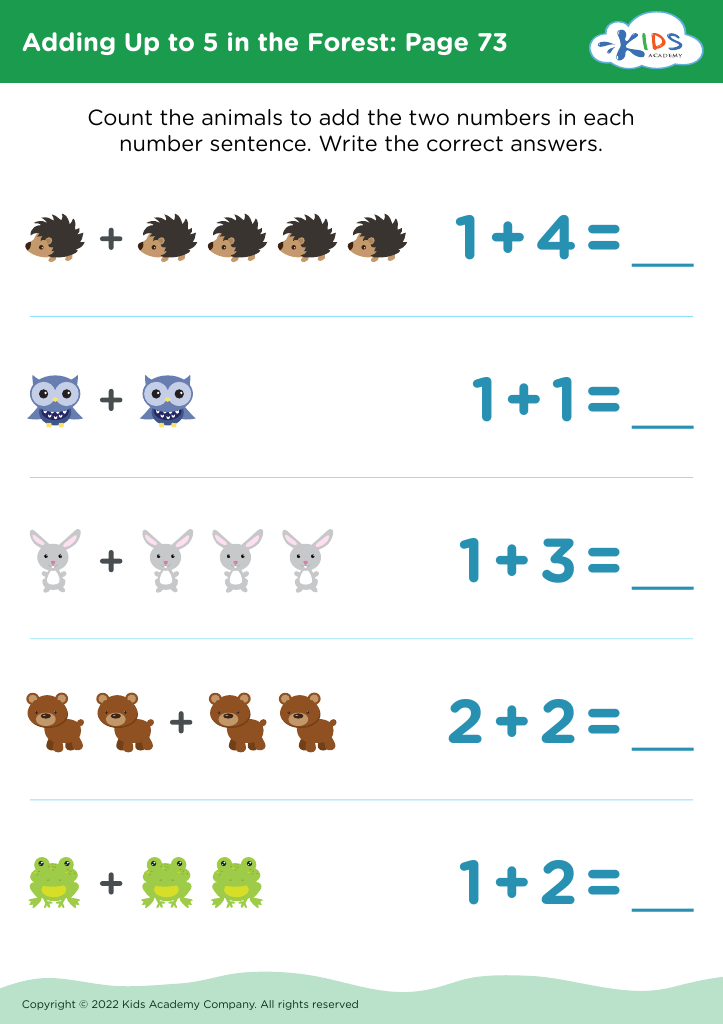
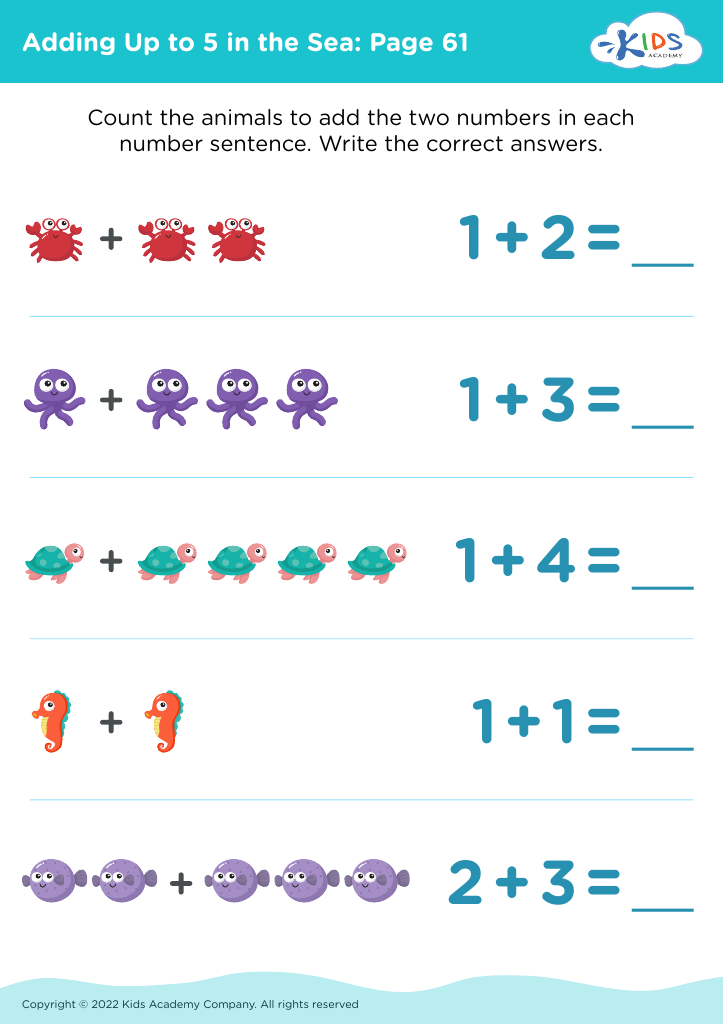
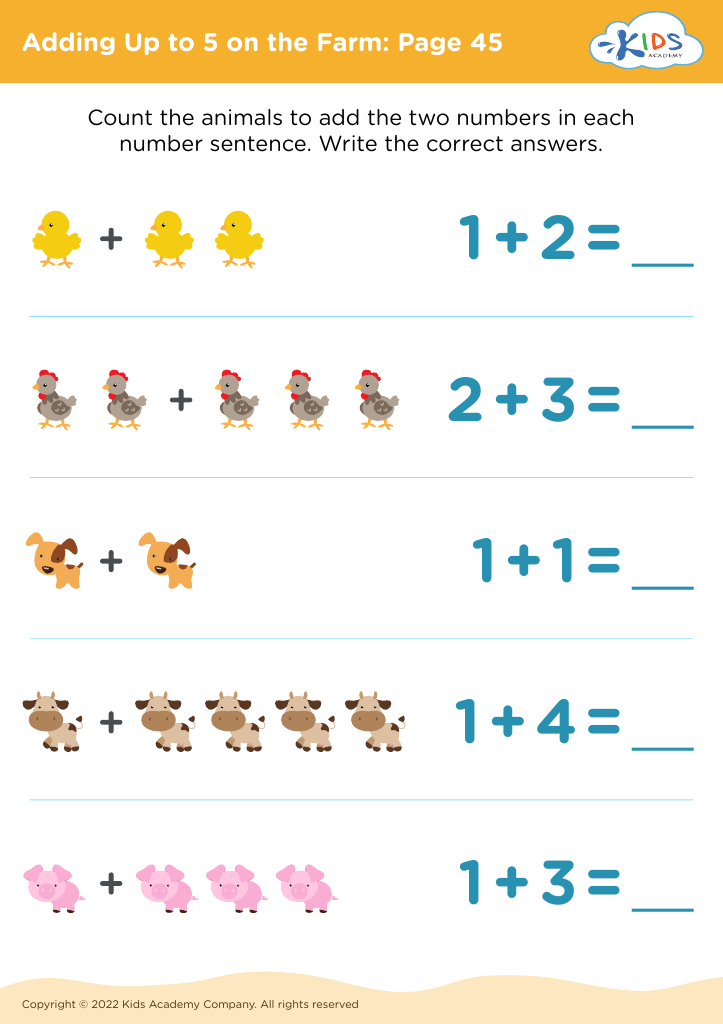


.jpg)

%20(1).jpg)



Visual-motor skills are essential developmental capabilities that significantly influence a child's learning and daily tasks, particularly for ages 3-9. These skills involve the coordination between visual input and motor output, helping children to effectively manipulate their environment. For example, the ability to draw shapes, write letters, and solve puzzles all require strong visual-motor integration.
In early education, mastering adding up to 5 can serve as a foundational experience in mathematics. It enhances not only counting skills but also the ability to visualize quantities and makes sense of numbers, thus fostering mathematical reasoning. Children with developed visual-motor skills are better equipped for tasks like writing numbers and understanding arrays in math, promoting clearer comprehension.
Moreover, visual-motor skills are linked to overall academic performance. A child struggling with these abilities may experience difficulties in reading, writing, and participating in group activities, potentially leading to lower self-esteem. By nurturing these skills, parents and teachers can foster a child's confidence and enthusiasm for learning, spacing out essential tools necessary for school readiness. Ultimately, investing time and resources in developing these skills can result in well-rounded, capable individuals who can tackle future challenges with resilience.








