Visual perception improvement Adding Up to 5 Worksheets for Ages 3-9
5 filtered results
-
From - To
Enhance your child's visual perception skills with our engaging "Adding Up to 5 Worksheets" designed for ages 3-9. These carefully crafted worksheets combine fun and learning, helping young learners identify numbers and patterns while practicing addition. By integrating visual perception exercises, children will improve their ability to recognize shapes, spatial relationships, and important cognitive skills essential for math success. Each worksheet promotes critical thinking and problem-solving while making counting enjoyable. Perfect for home or classroom use, these resources support early math development, ensuring your child builds a solid foundation for future learning. Download now to spark creativity and confidence!
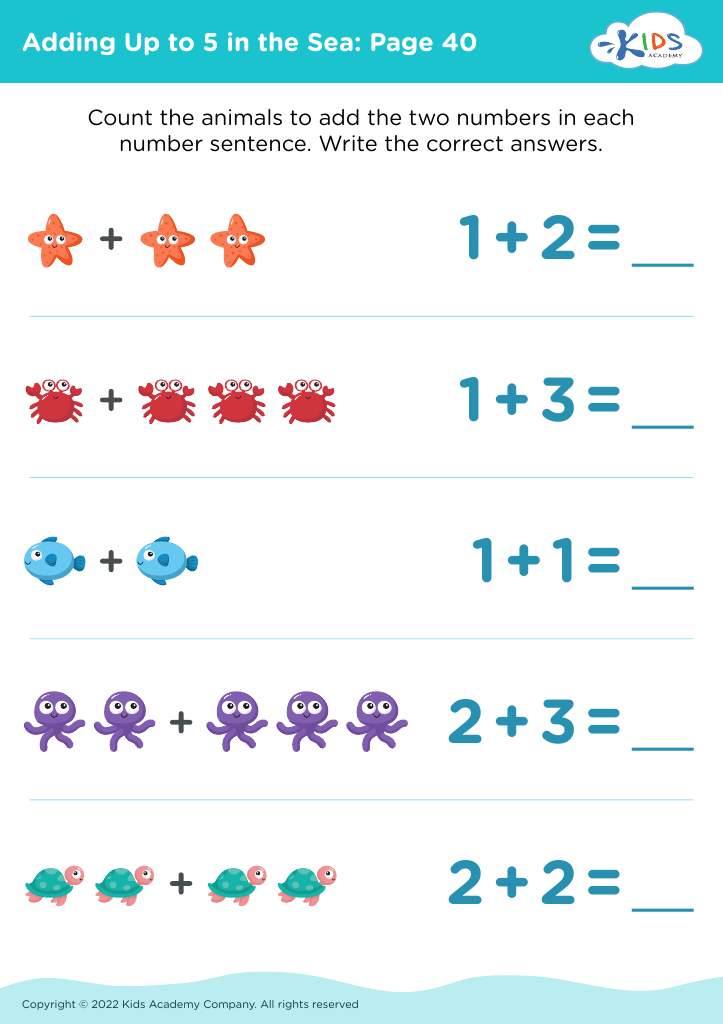
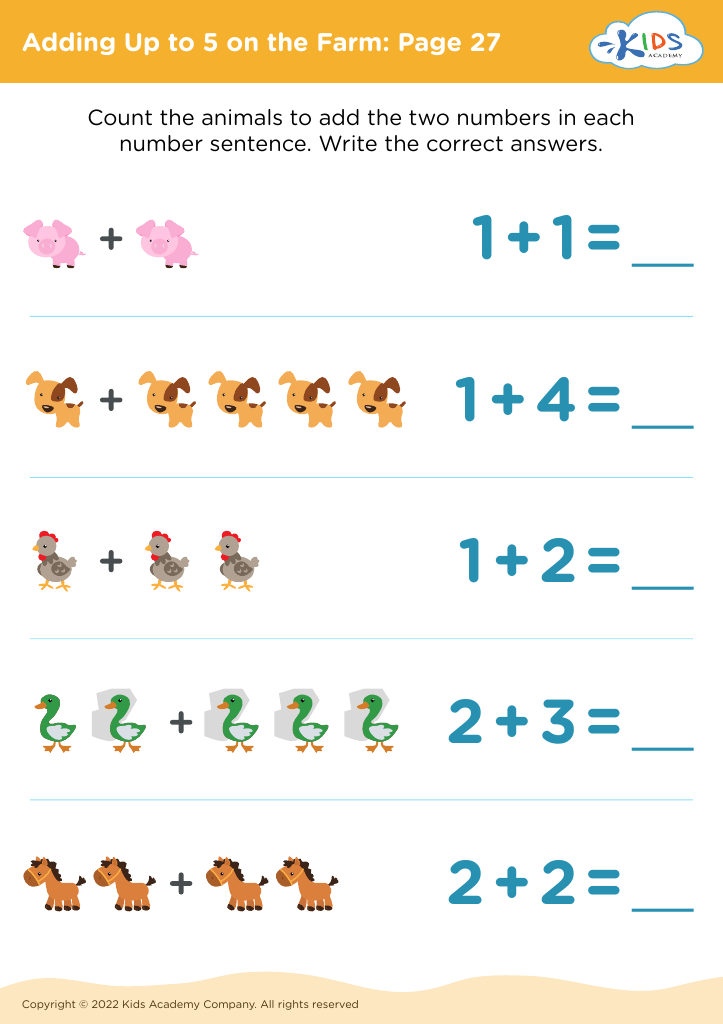

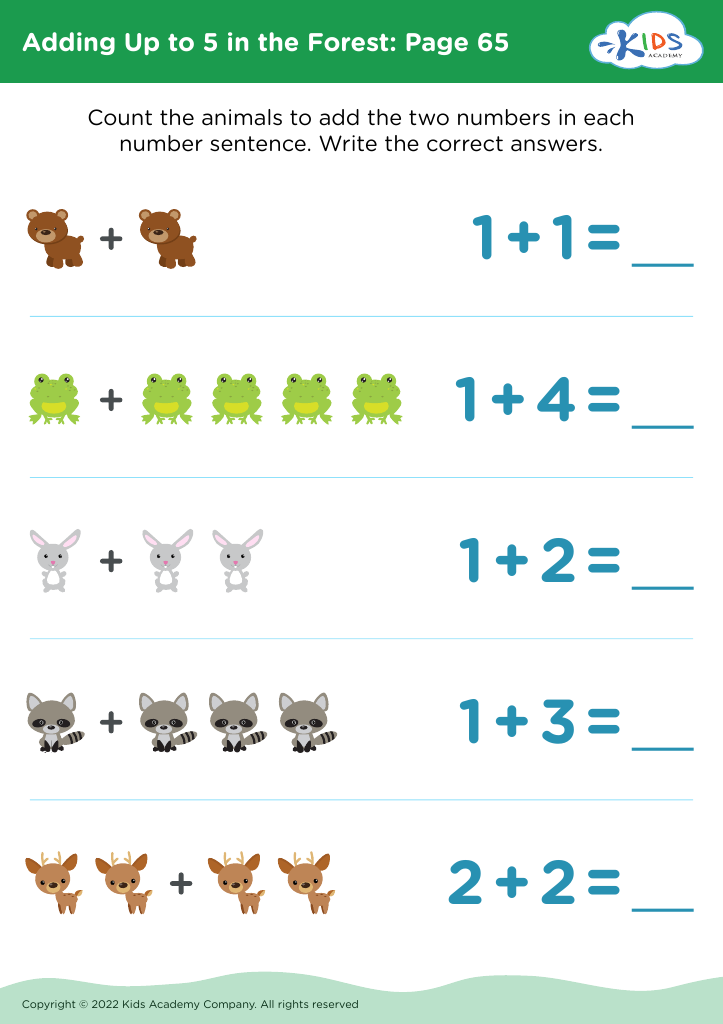
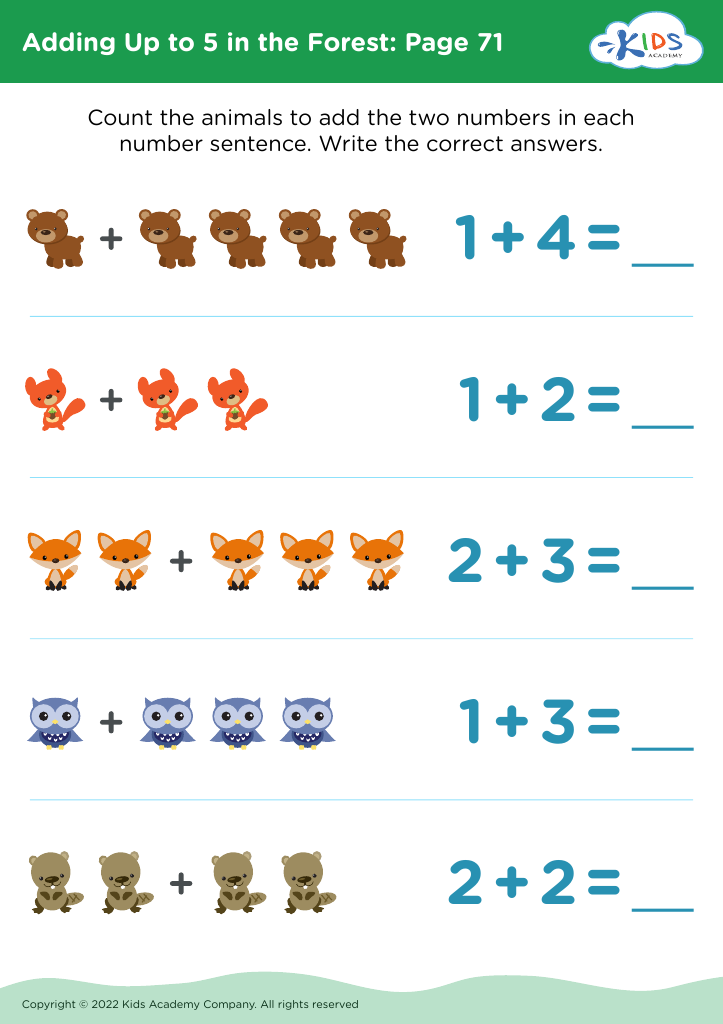








Visual perception is a crucial skill for children aged 3-9, as it significantly impacts their ability to learn and interact with their environment. When parents and teachers prioritize visual perception improvement, especially in the context of fundamental math concepts like "Adding Up to 5," they lay a strong foundation for children’s cognitive development.
Firstly, visual perception aids in recognizing patterns, shapes, and quantities, which are essential in both math and literacy. For young learners, developing these skills early can enhance their ability to solve mathematical problems, understand concepts of addition, and engage in meaningful play. This makes the process of learning enjoyable and reinforces self-confidence.
Additionally, improved visual perception helps with fine motor skills, enabling children to manipulate objects and tools effectively, whether it’s writing, drawing, or using counting aids. These fine motor skills complement their growing math abilities and overall academic performance.
Moreover, incorporating fun activities that promote visual perception, such as games and interactive tasks, can foster a stimulating learning environment. When parents and teachers collaboratively support visual skills, they encourage holistic development, paving the way for successful classroom experiences and lifelong learning. Ultimately, nurturing these abilities is integral to a child’s future educational achievements.








