Filters

128 filtered results

Clear all filters
Favorites
With answer key
Interactive

128 filtered results

Difficulty Level

Grade


Check out this FREE Trial Lesson on Addition & Subtraction for age 3-9!

Drawing for Addition

Favorites
With answer key
Interactive
  • 3-9
  • Addition skills
  • Addition & Subtraction
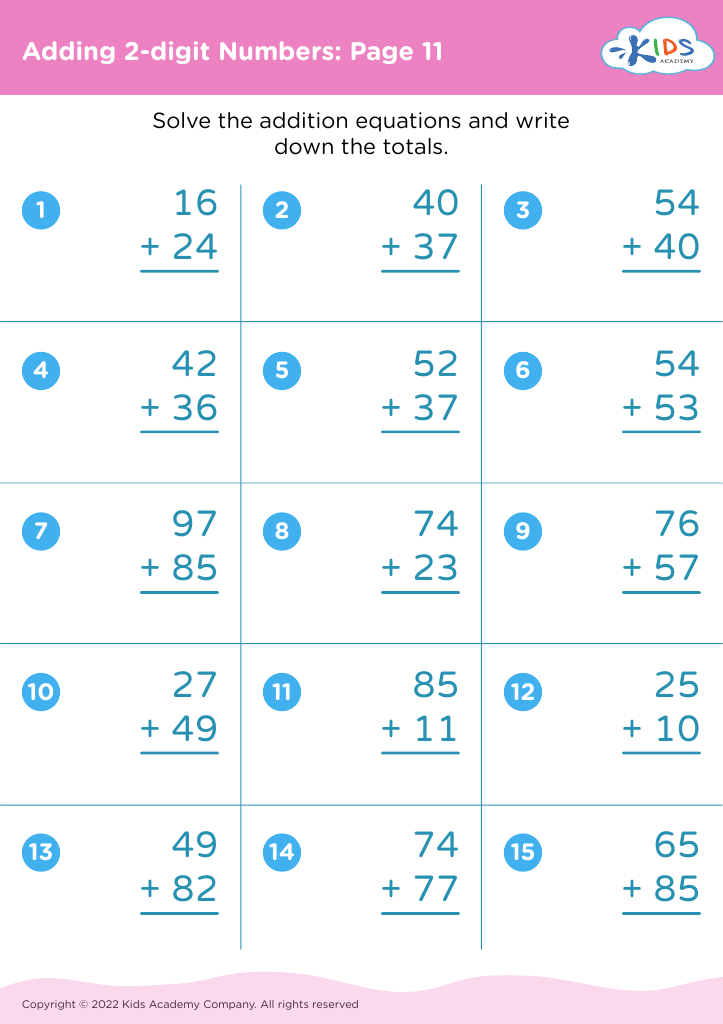
Adding 2-digit Numbers: Page 11

Adding 2-digit Numbers: Page 11

Adding 2-digit Numbers: Page 11
Worksheet
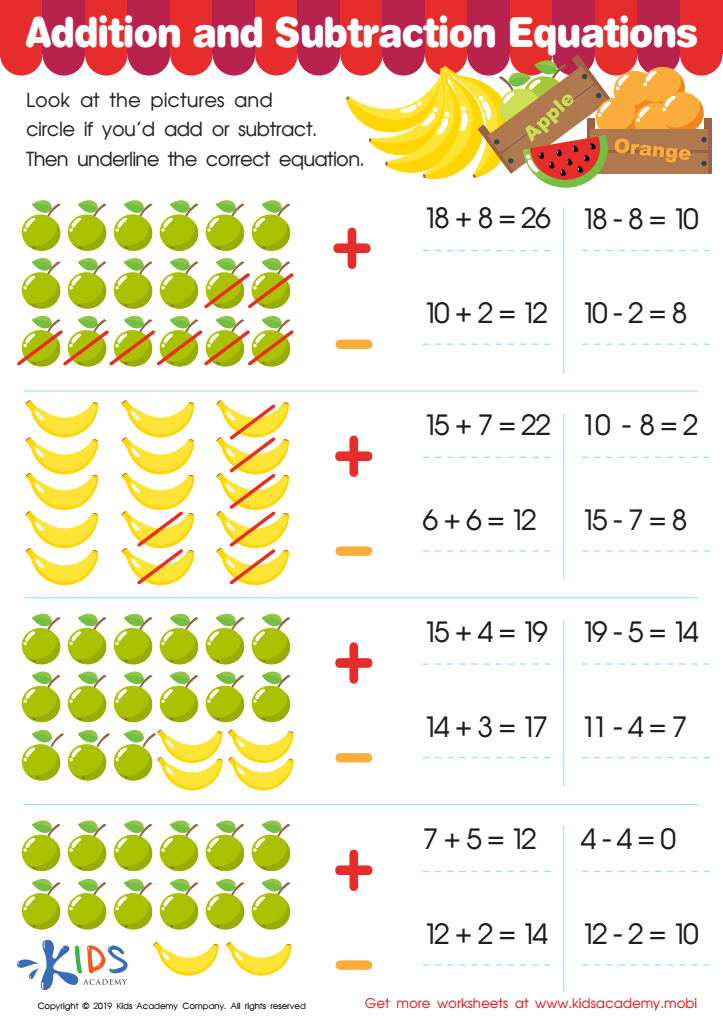
Addition and Subtraction: Equations Worksheet

Addition and Subtraction: Equations Worksheet

This worksheet sharpens your child's visual processing, math equation solving and order of operations skills. It features colorful pictures to help them add and subtract, and traceable lines to identify the correct equation. A great way to practice these skills! (80 words)
Addition and Subtraction: Equations Worksheet
Worksheet
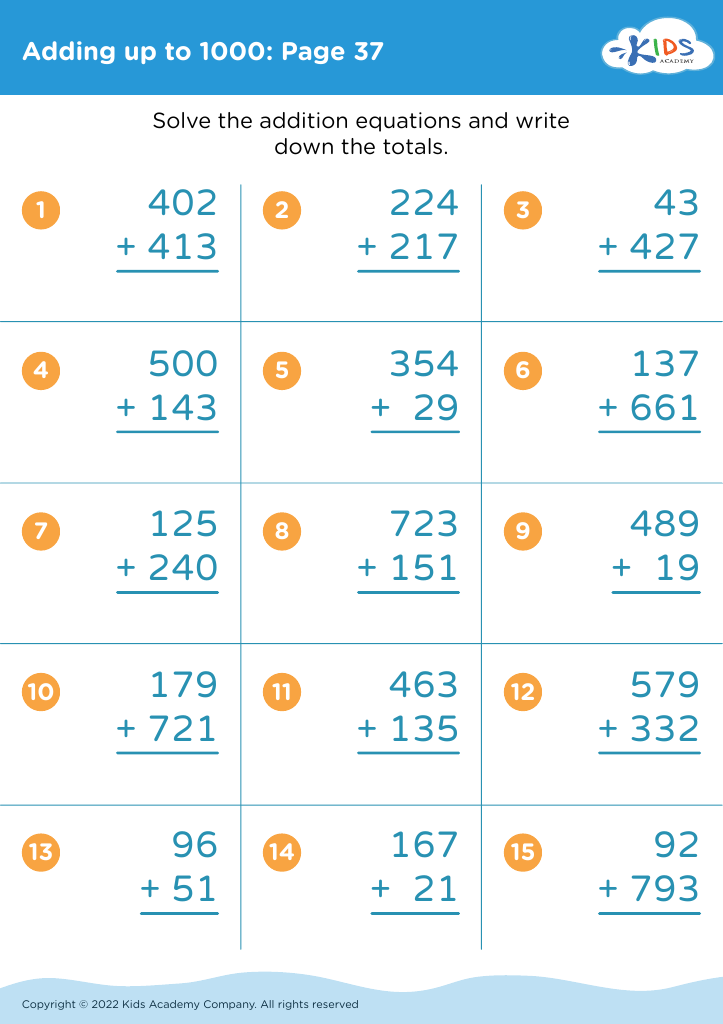
Adding up to 1000: Page 37

Adding up to 1000: Page 37

Adding up to 1000: Page 37
Worksheet
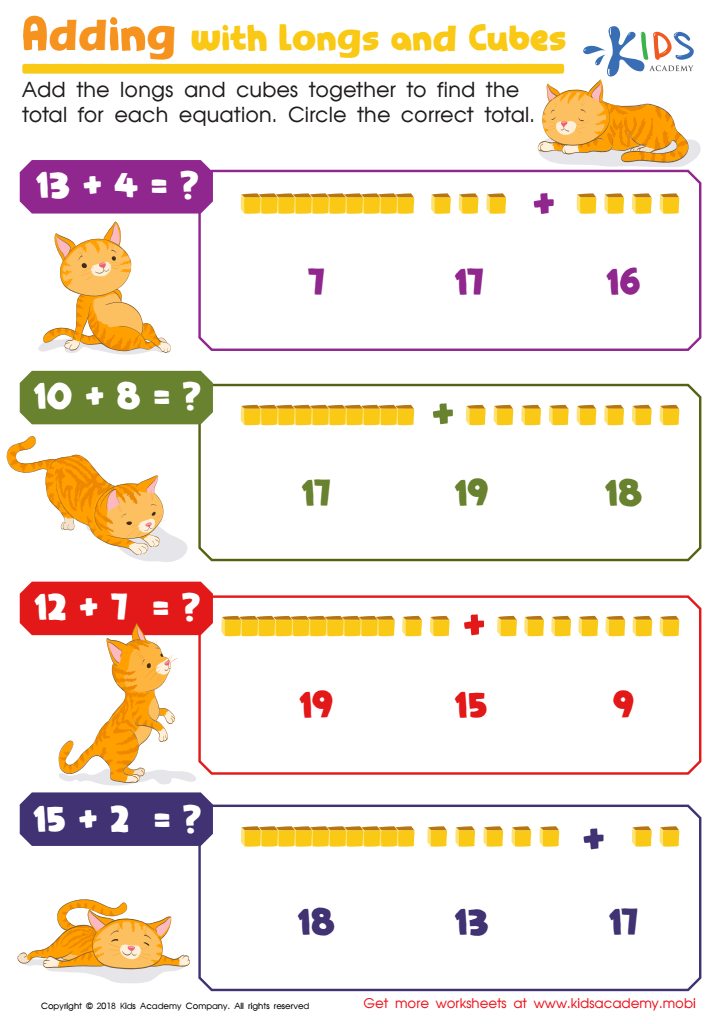
Adding With Longs and Cubes Worksheet

Adding With Longs and Cubes Worksheet

Math might not be your child's favorite, but they must master it to advance. If they're having difficulties or don't like it, use this worksheet to make it easier. Have them add longs and cubes together to find the total for each question, then circle the correct answer. This exercise can help make math experiences better.
Adding With Longs and Cubes Worksheet
Worksheet
Add it Up Worksheet
Add it Up Worksheet

Add it Up Worksheet

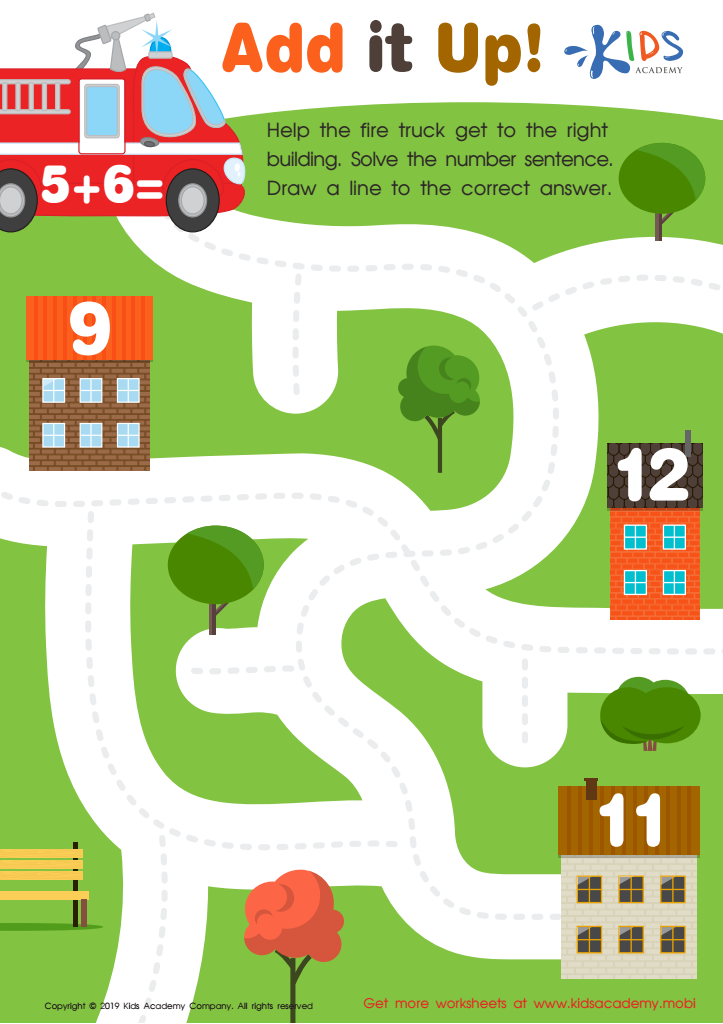
The fire service is the right number to call in case of a fire. Test your children's safety knowledge by asking them other emergency numbers. Have them identify the fire truck in the worksheet and solve the number sentences. Guide them in drawing a line to the right answer.
Add it Up Worksheet
Worksheet
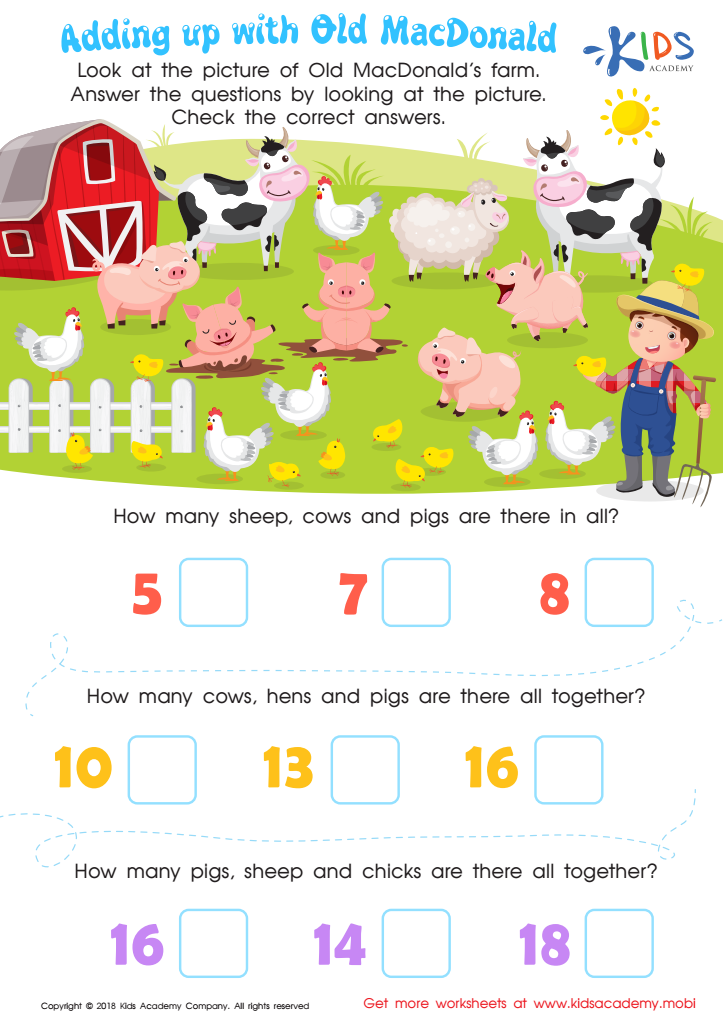
Adding Up with Old MacDonald Worksheet
Adding Up with Old MacDonald Worksheet
Old MacDonald needs help counting his animals! Give your little math whiz a fun challenge with a free PDF worksheet. They'll love counting the animals and doing basic addition with two or three addends. Who knew math could be so much fun on the farm?
Adding Up with Old MacDonald Worksheet
Worksheet
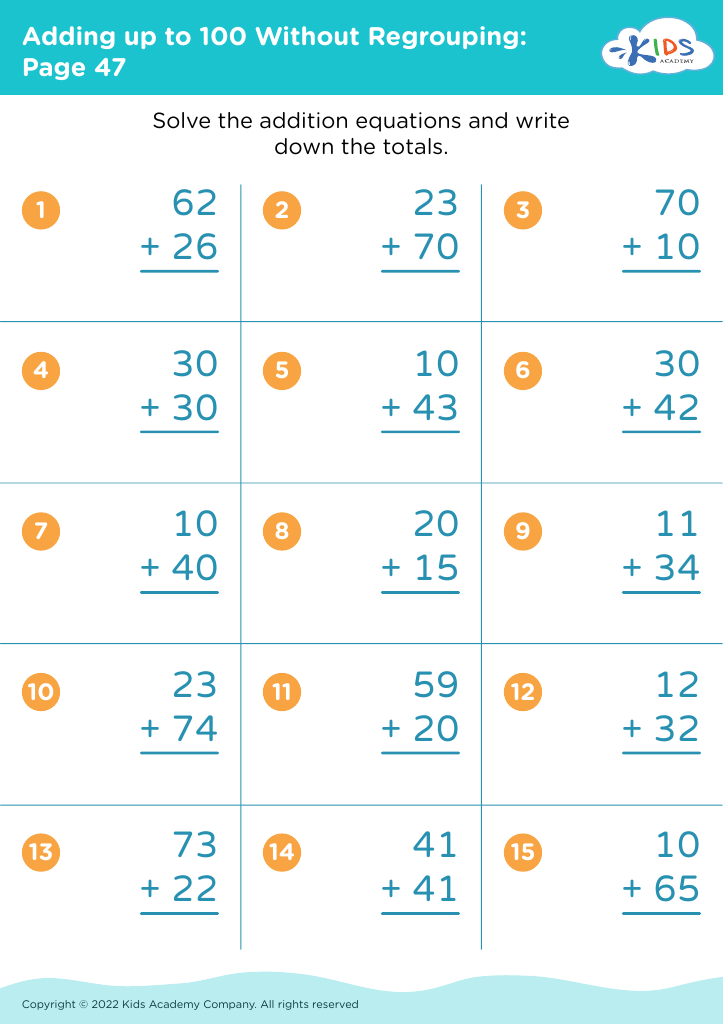
Adding up to 100 Without Regrouping: Page 47
Worksheet
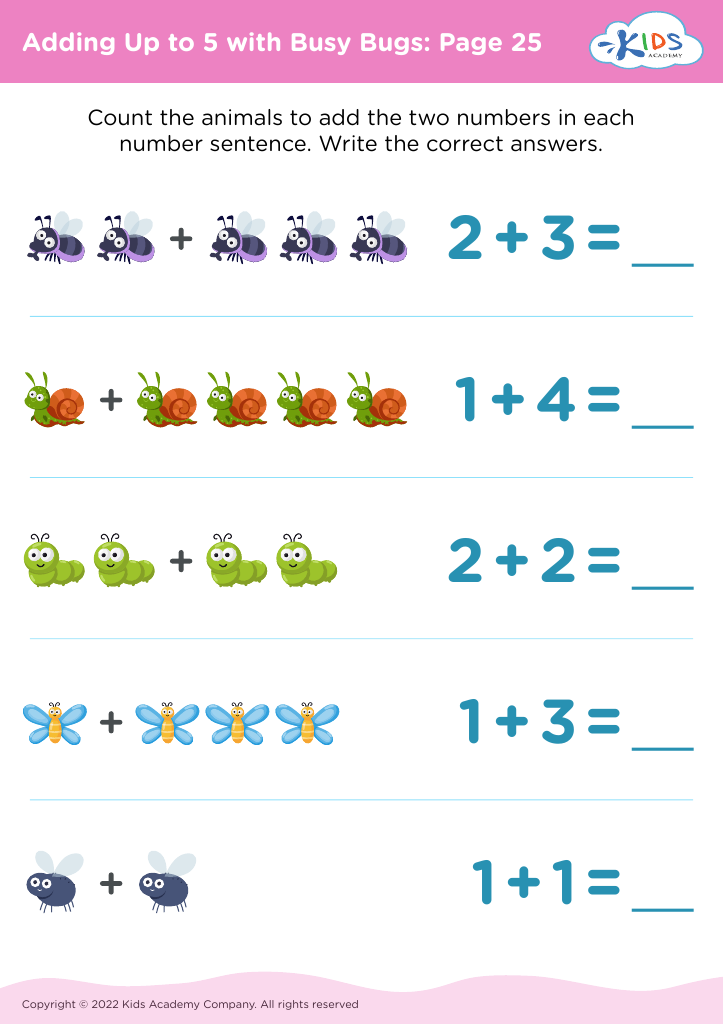
Adding Up to 5 with Busy Bugs: Page 25
Worksheet
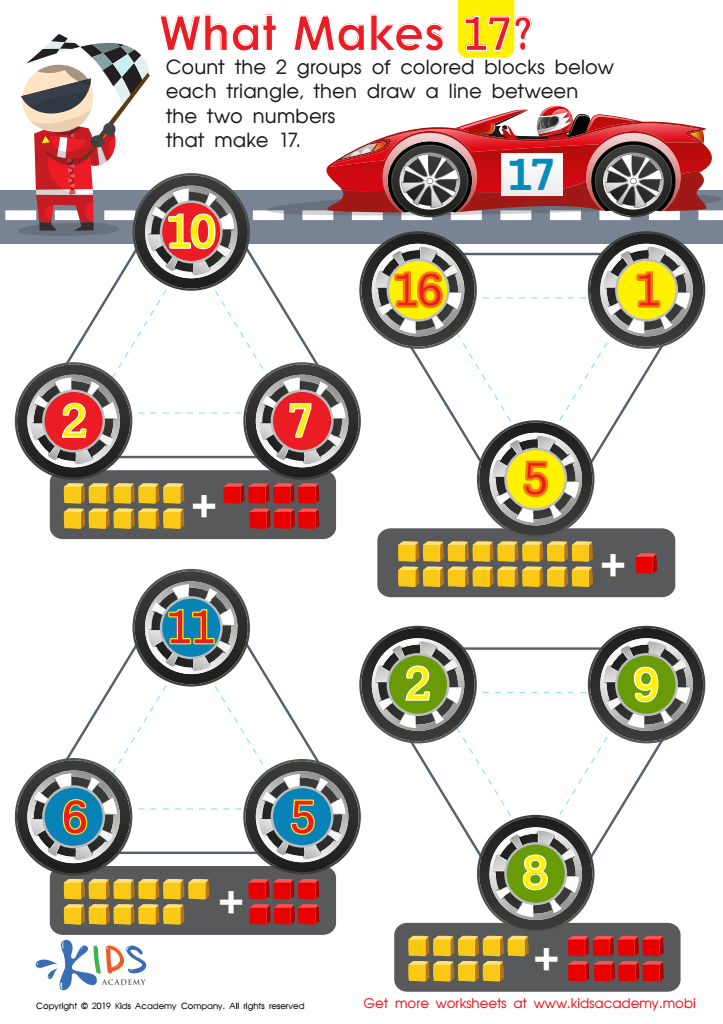
What Makes 17 Worksheet
What Makes 17 Worksheet
Practice makes perfect! Let your kindergartners explore addition using this worksheet. Count the blocks in each triangle to reach the same total of 17, and draw a line between the two numbers. Once they get the hang of it, nothing will be too difficult!
What Makes 17 Worksheet
Worksheet
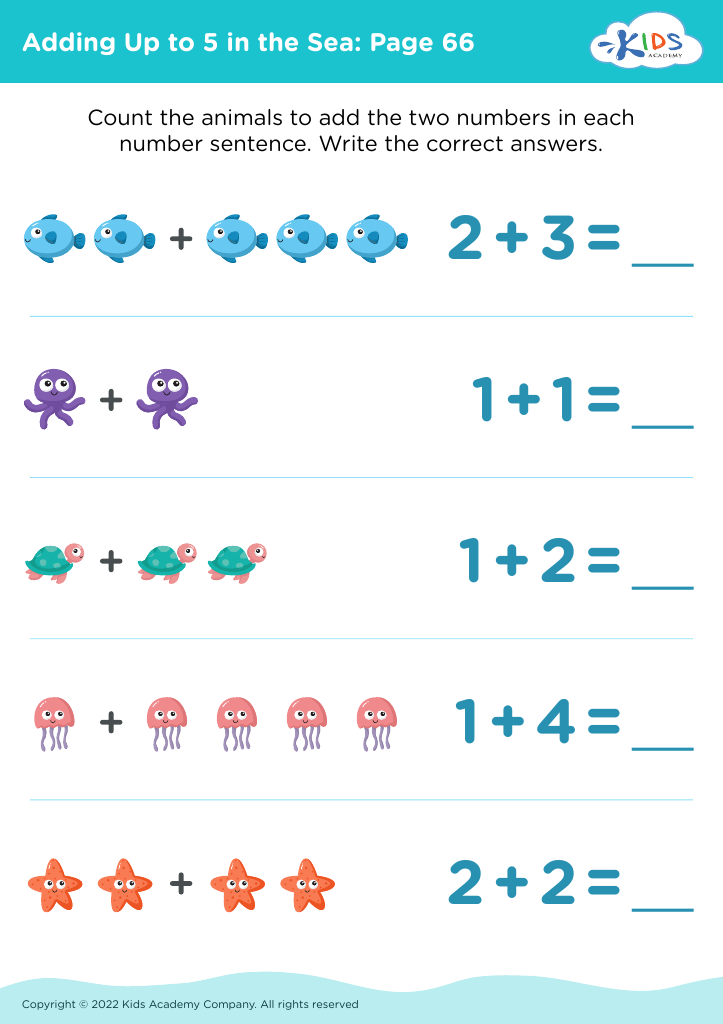
Adding Up to 5 in the Sea: Page 66
Worksheet
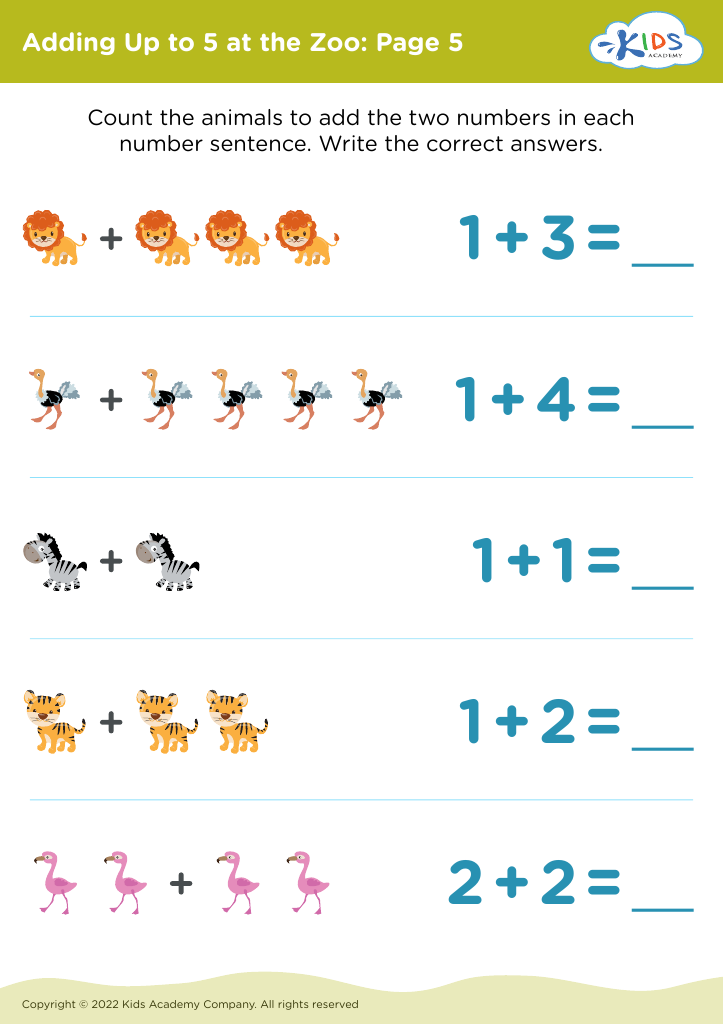
Adding Up to 5 at the Zoo: Page 5

Adding Up to 5 at the Zoo: Page 5

Adding Up to 5 at the Zoo: Page 5
Worksheet
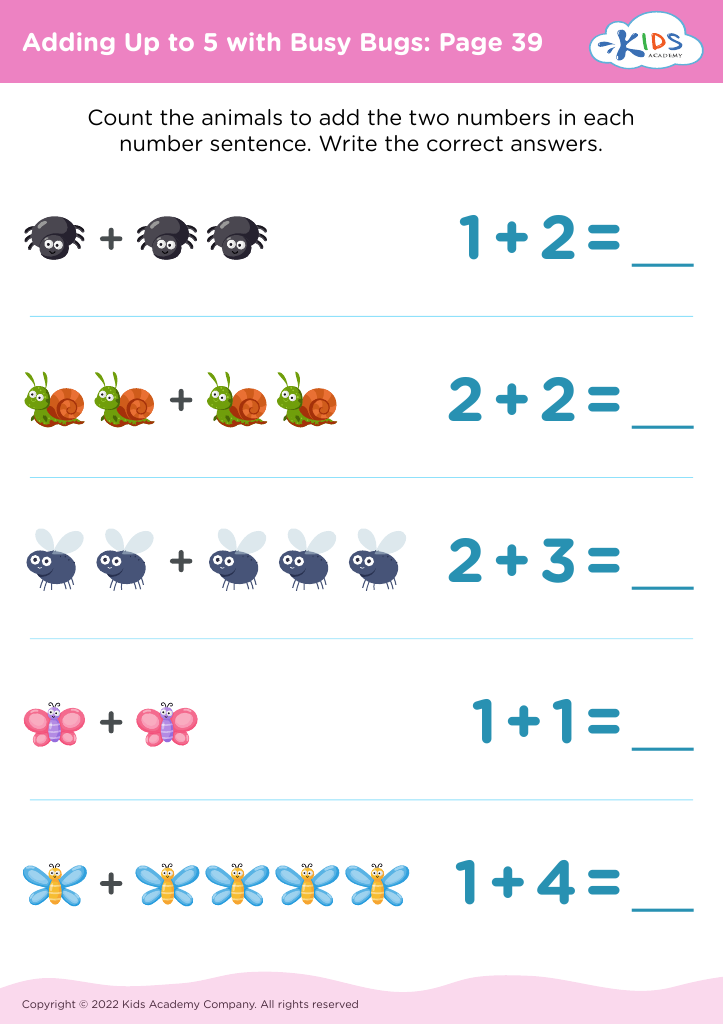
Adding Up to 5 with Busy Bugs: Page 39
Worksheet
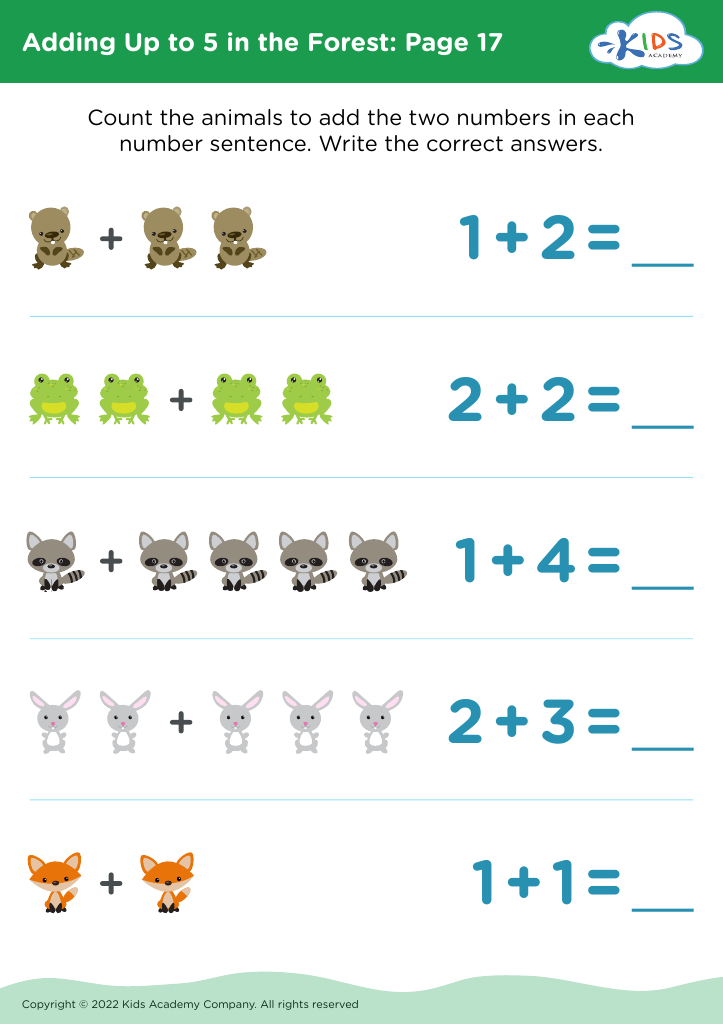
Adding Up to 5 in the Forest: Page 17
Worksheet
Magic Fives Worksheet
Magic Fives Worksheet
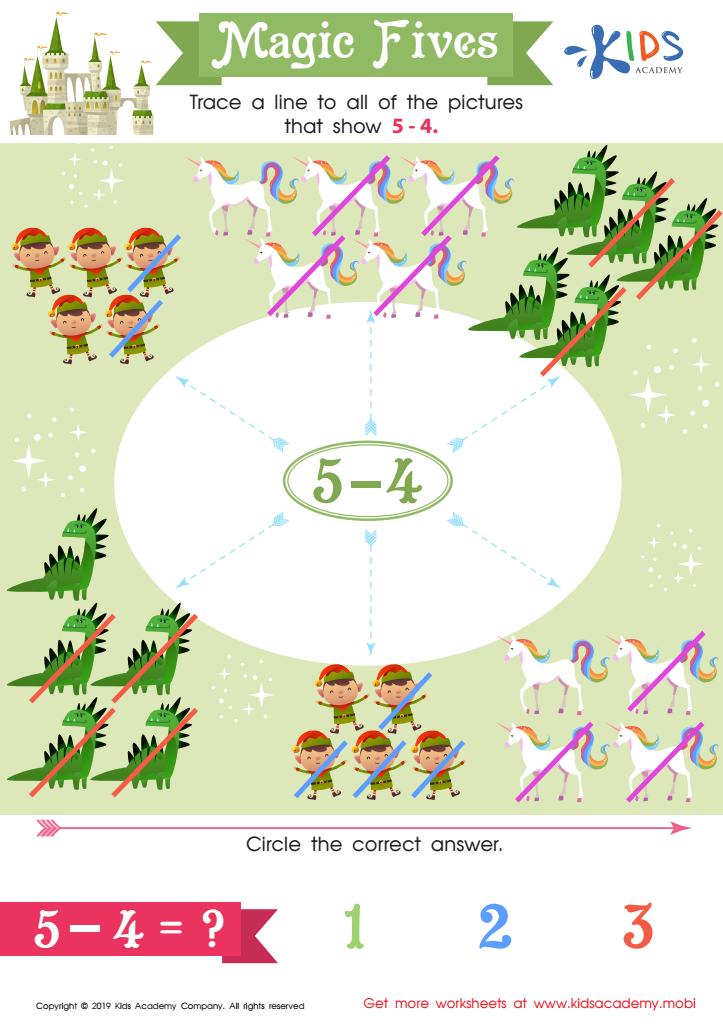
Help your students identify the objects & people in the worksheet. Point to the equation 5 -4 in the center, then get them to count the items and trace a line connecting those that add up to 5 - 4.
Magic Fives Worksheet
Worksheet
Adding Up to 5 in the Forest: Page 24
Worksheet
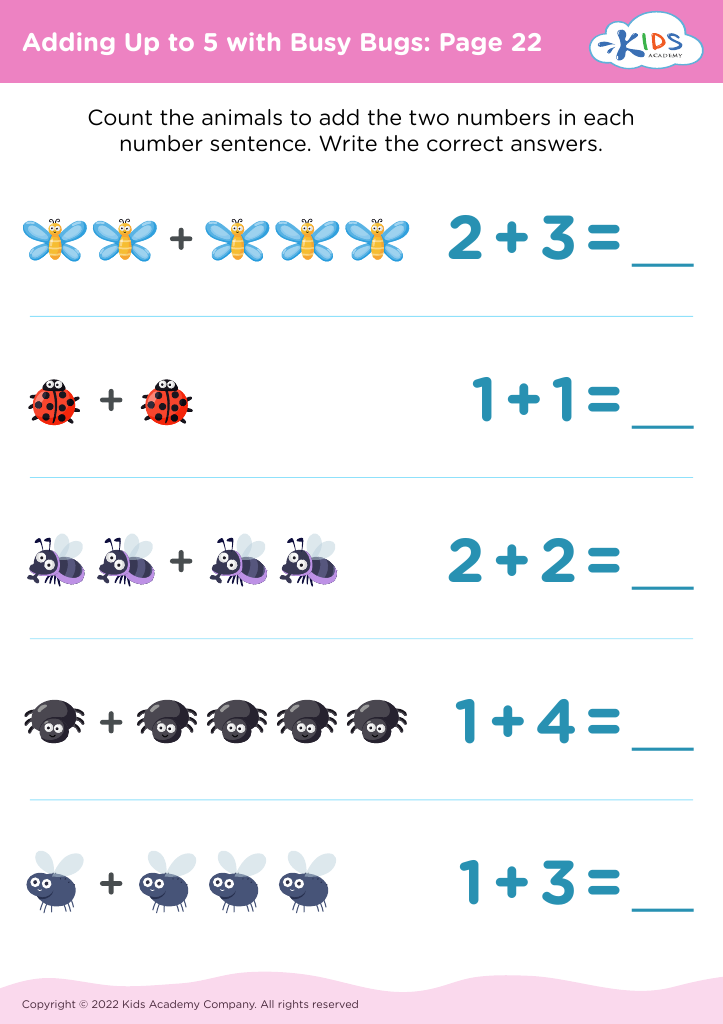
Adding Up to 5 with Busy Bugs: Page 22
Worksheet
Adding Up to 5 with Busy Bugs: Page 3
Worksheet
Adding Up to 5 with Busy Bugs: Page 42
Worksheet
Sums and Differences Within 1 - Assessment 3 Worksheet
Sums and Differences Within 1 - Assessment 3 Worksheet
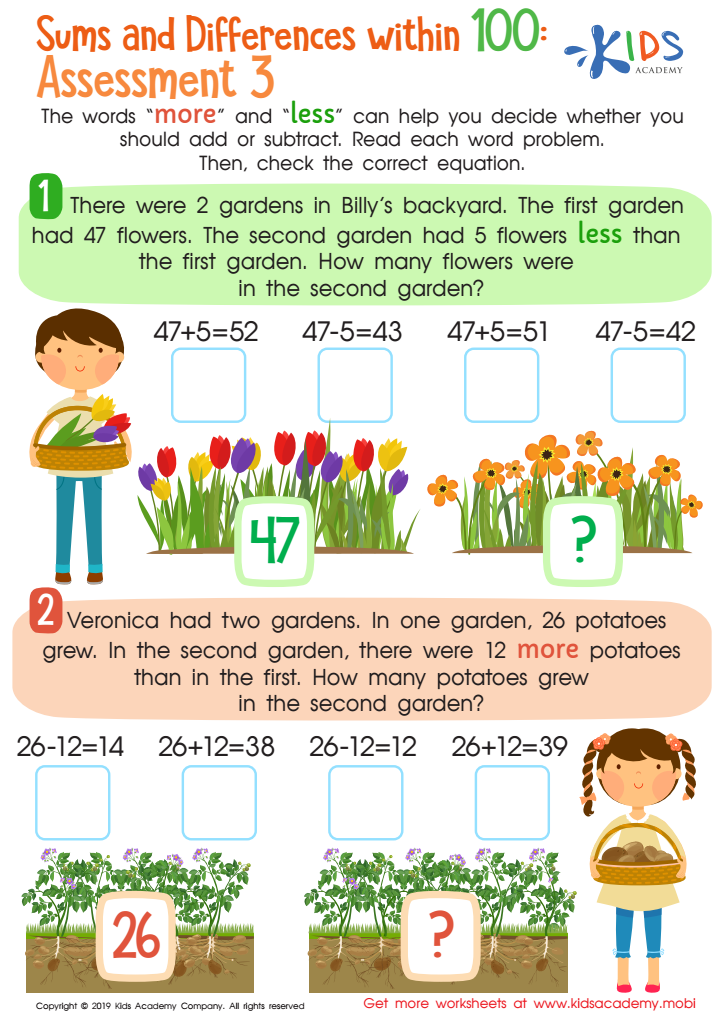
When we see 'more' or 'less', they usually refer to quantity. In Math, they indicate addition or subtraction. Help kids read aloud two simple word problems and figure out the correct equations for each. Check the correct equation afterwards.
Sums and Differences Within 1 - Assessment 3 Worksheet
Worksheet
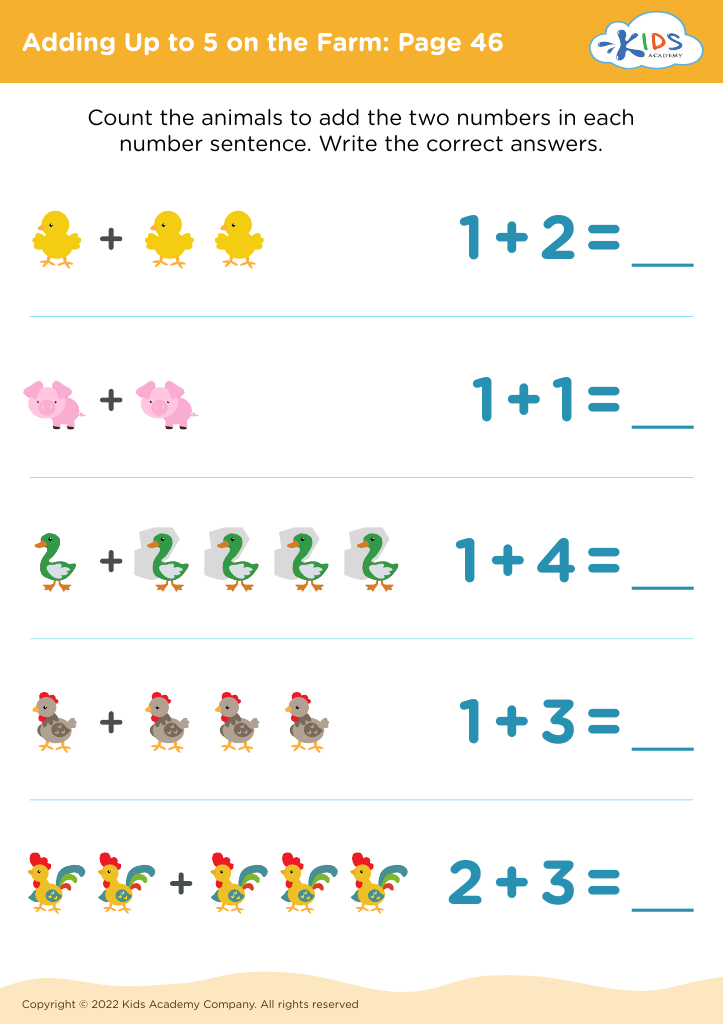
Adding Up to 5 on the Farm: Page 46
Worksheet
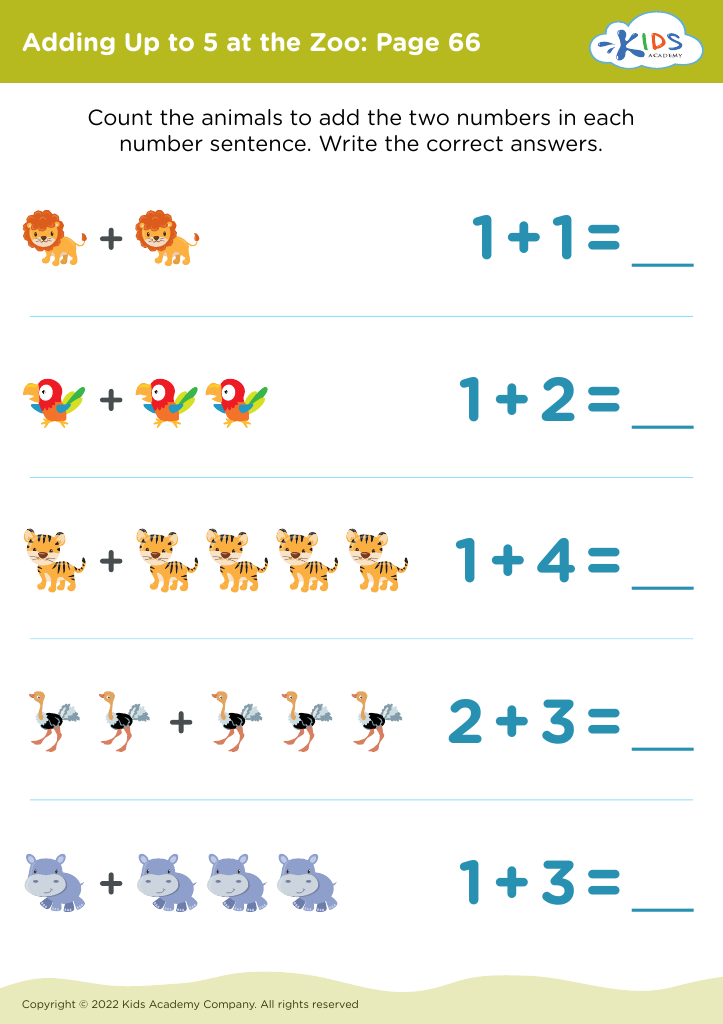
Adding Up to 5 at the Zoo: Page 66
Worksheet
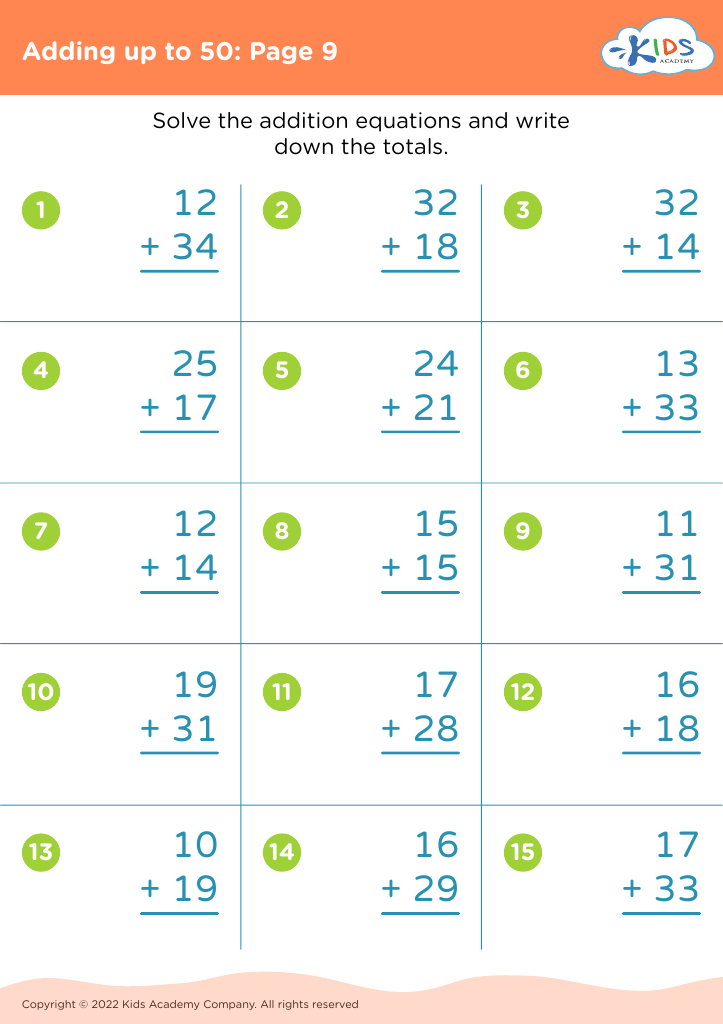
Adding up to 50: Page 9

Adding up to 50: Page 9

Adding up to 50: Page 9
Worksheet
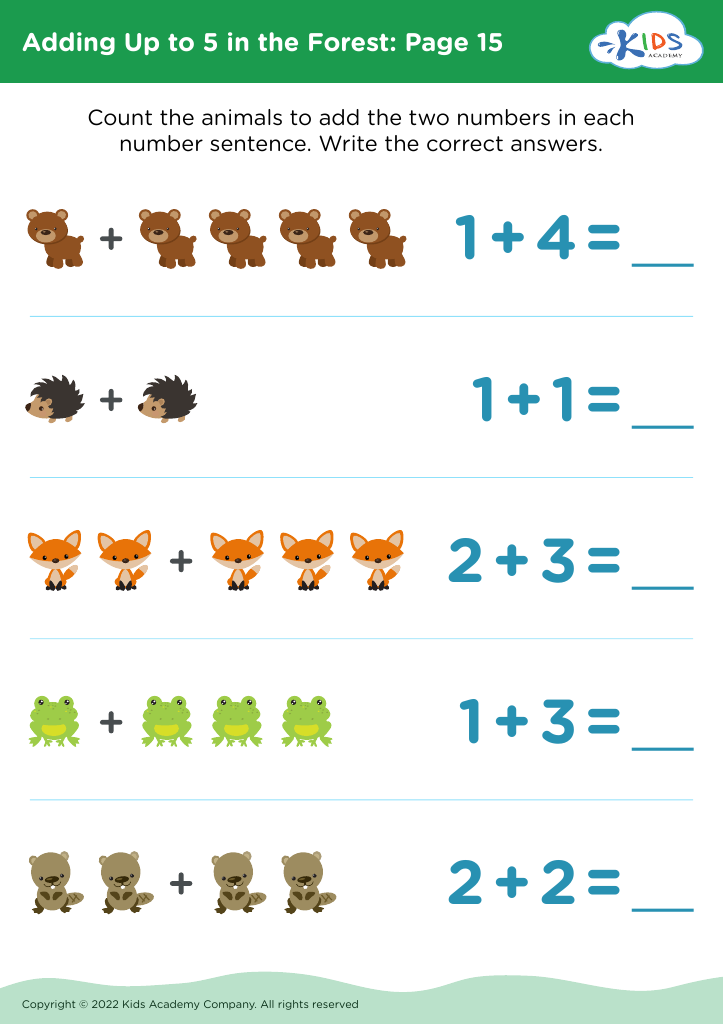
Adding Up to 5 in the Forest: Page 15
Worksheet
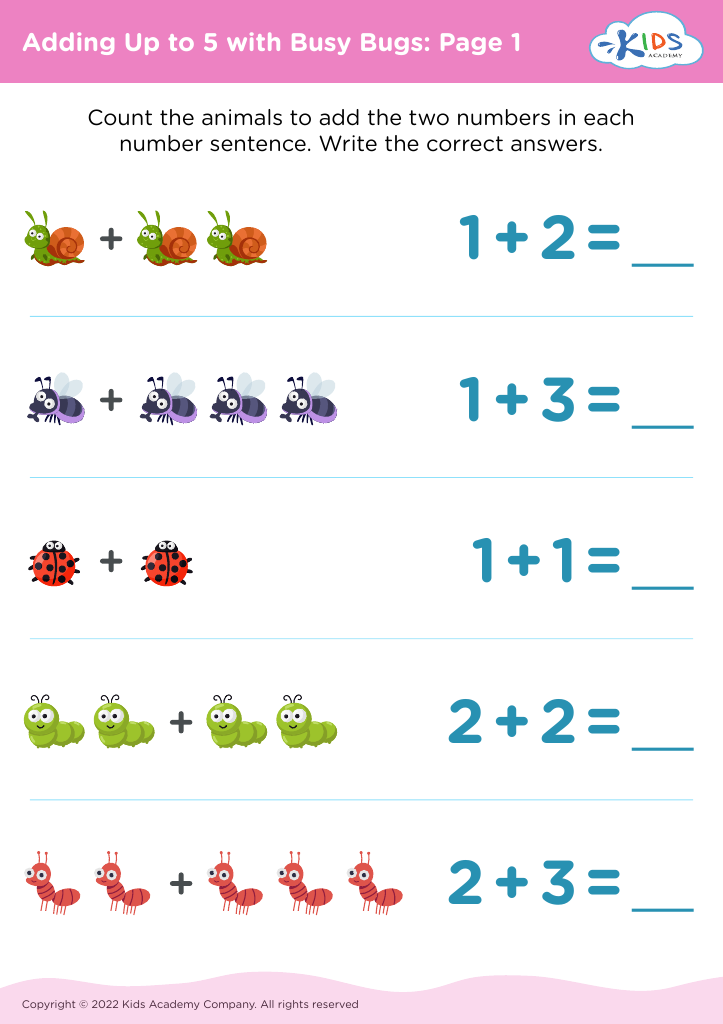
Adding Up to 5 with Busy Bugs: Page 1
Worksheet


Developing strong addition and subtraction skills in children aged 3-9 is crucial for several reasons. First and foremost, these skills form the foundational building blocks of all future mathematical learning. Without a solid grasp of basic addition and subtraction, children will struggle with more complex math concepts such as multiplication, division, fractions, and algebra, which they will encounter in later grades.

Early proficiency in these skills fosters a positive attitude towards math. When children are confident in their ability to solve simple problems, they are more likely to enjoy learning and approach challenges with a growth mindset. This confidence can extend beyond math, boosting their overall self-esteem and willingness to tackle new tasks.

Furthermore, addition and subtraction are not just academic skills; they are applied in daily life. From calculating change while shopping to measuring ingredients for a recipe, these mathematical operations are integral to everyday activities. Early competence ensures children can navigate these practical tasks independently and with ease.

Finally, learning these skills enhances cognitive development. It improves critical thinking, problem-solving, and logical reasoning abilities. Thus, parents and teachers should prioritize nurturing strong addition and subtraction skills to ensure children’s academic success and real-world proficiency while fostering much-needed cognitive and emotional growth.