Get your child started on their mathematical journey with our Basic Addition Practice worksheets! Perfect for ages 3-9, our engaging and colorful worksheets are designed to build strong foundational skills in addition and subtraction. These printable resources are ideal for home or classroom use, offering a variety of fun and interactive activities that cater to different learning styles. With Kid’s Academy, children will develop confidence and proficiency in basic arithmetic, setting the stage for future success in math. Download today and give your child the tools they need to excel in their early math skills!
Check out this FREE Trial Lesson on Addition & Subtraction for age 3-9!

Enrichment

Favorites
With answer key
Interactive
  • 3-9
  • Basic addition practice
  • Addition & Subtraction
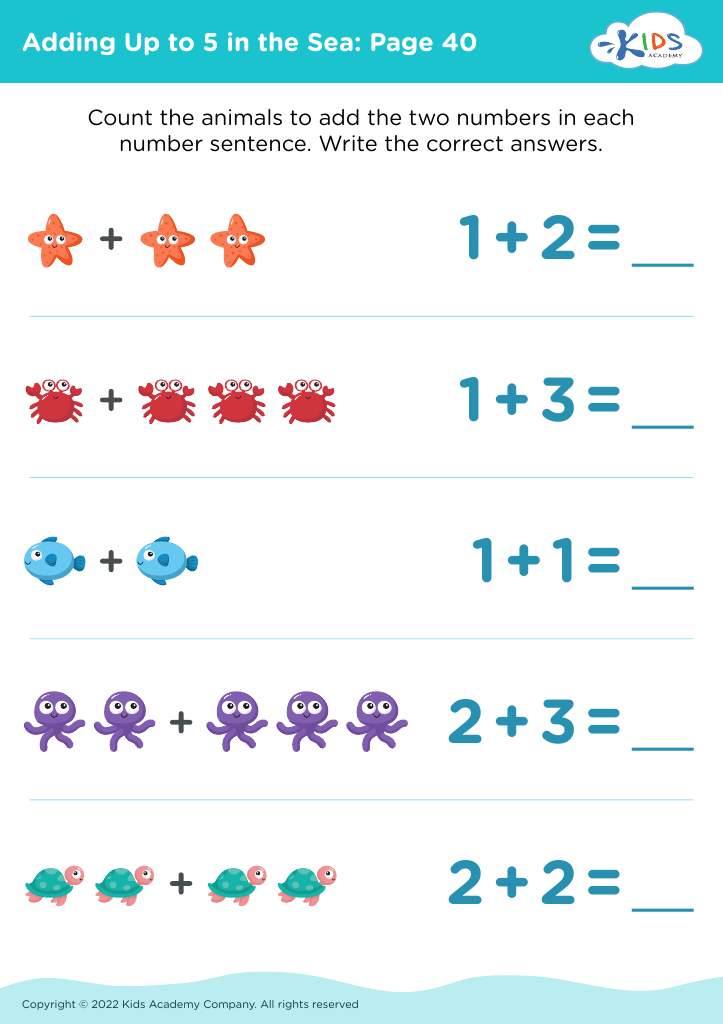
Adding Up to 5 in the Sea: Page 40
Worksheet
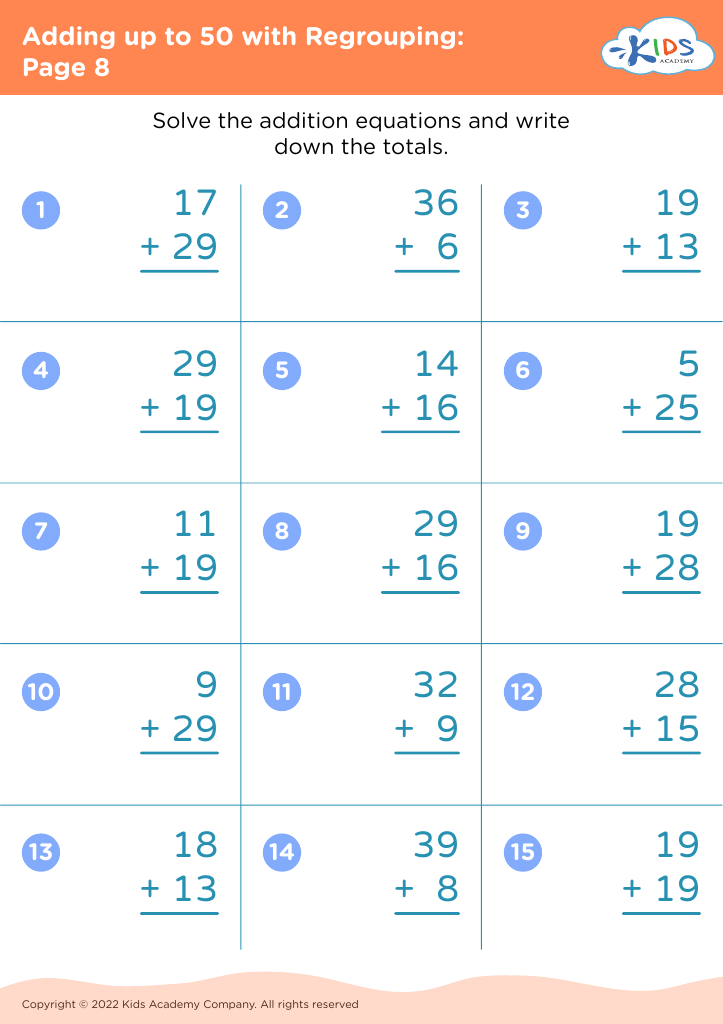
Adding up to 50 with Regrouping: Page 8
Worksheet
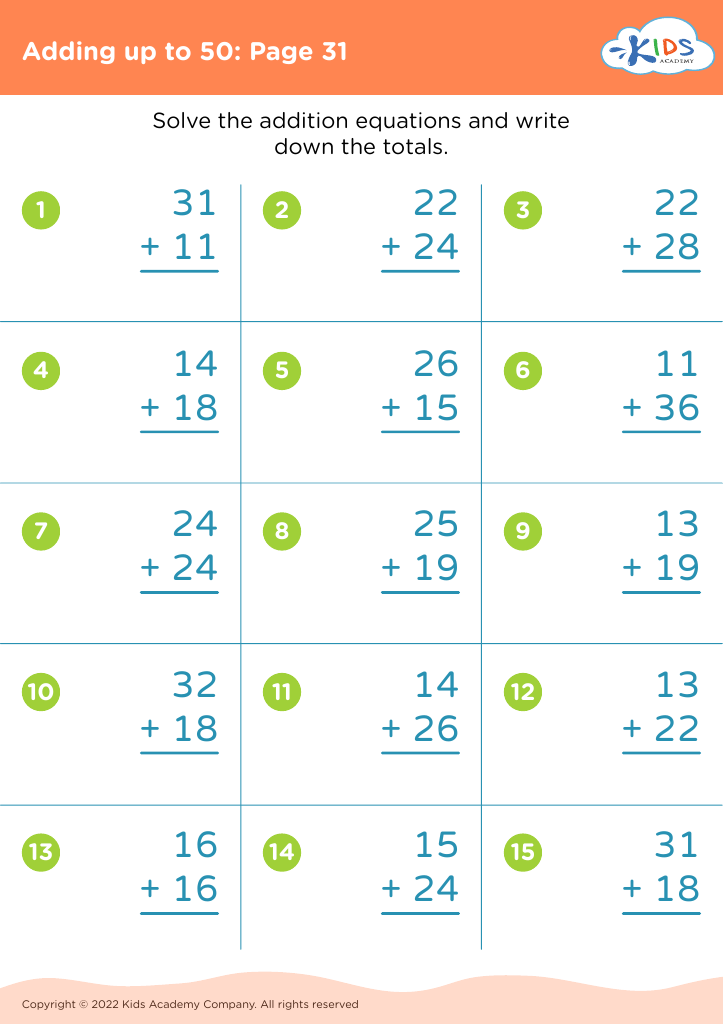
Adding up to 50: Page 31

Adding up to 50: Page 31

Adding up to 50: Page 31
Worksheet
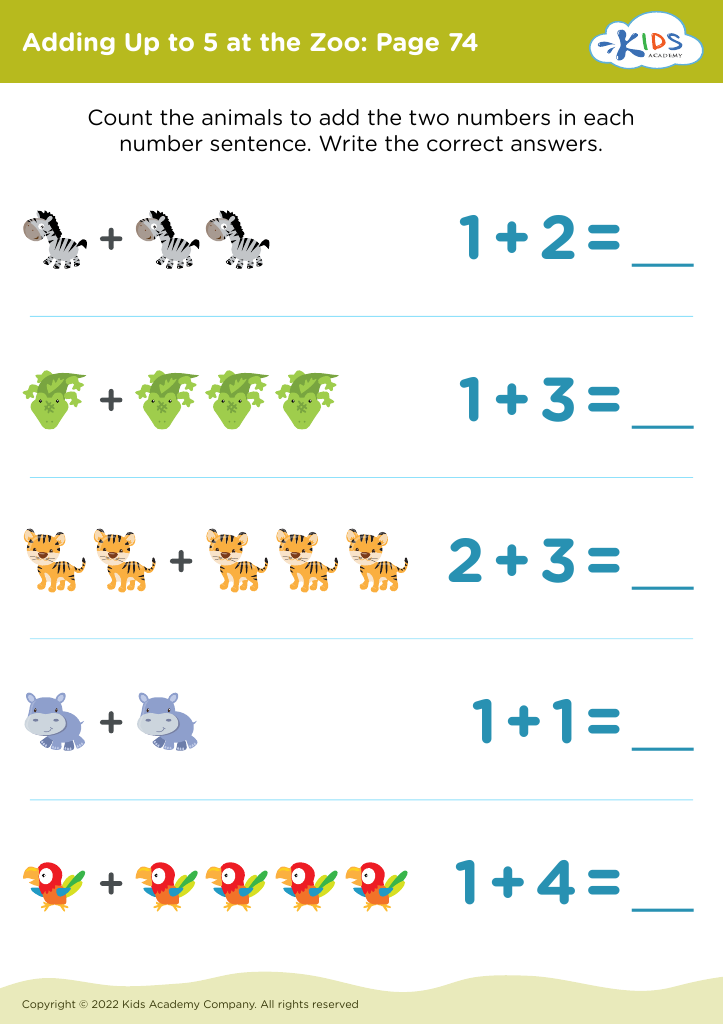
Adding Up to 5 at the Zoo: Page 74
Worksheet
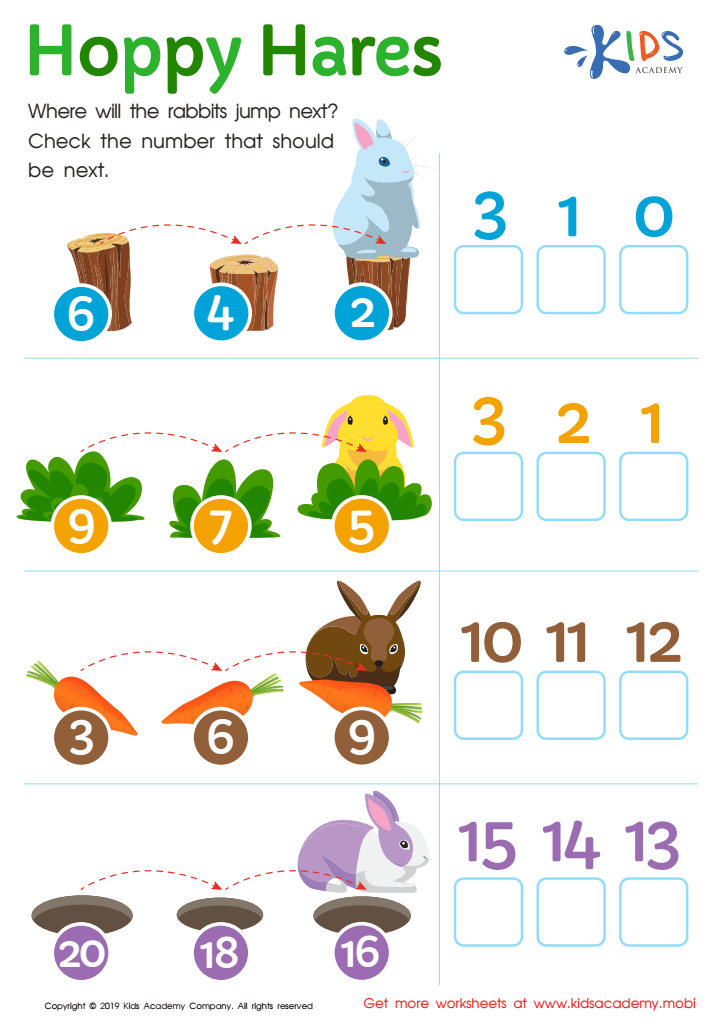
Hoppy Hares Worksheet

Hoppy Hares Worksheet

Ask your kids if they can identify the rabbits in the picture, then help them solve the math problems. The rabbits need to hop from place to place, so look at the numbers and help your kids figure out the next one. These cute and friendly little animals make great pets. Have fun solving this worksheet together!
Hoppy Hares Worksheet
Worksheet
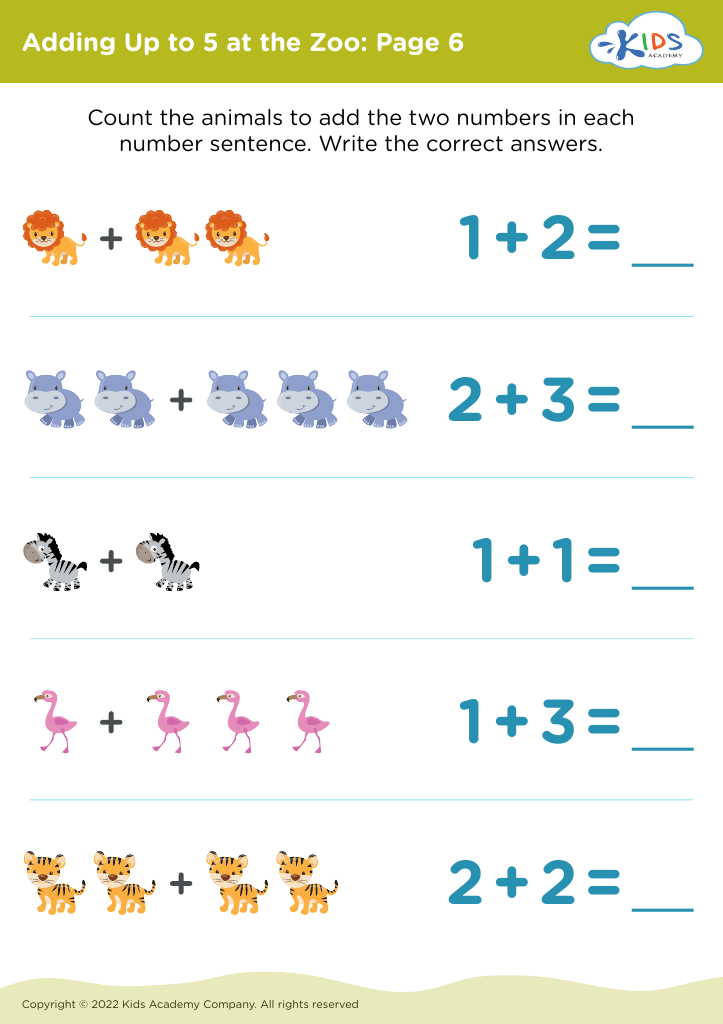
Adding Up to 5 at the Zoo: Page 6

Adding Up to 5 at the Zoo: Page 6

Adding Up to 5 at the Zoo: Page 6
Worksheet
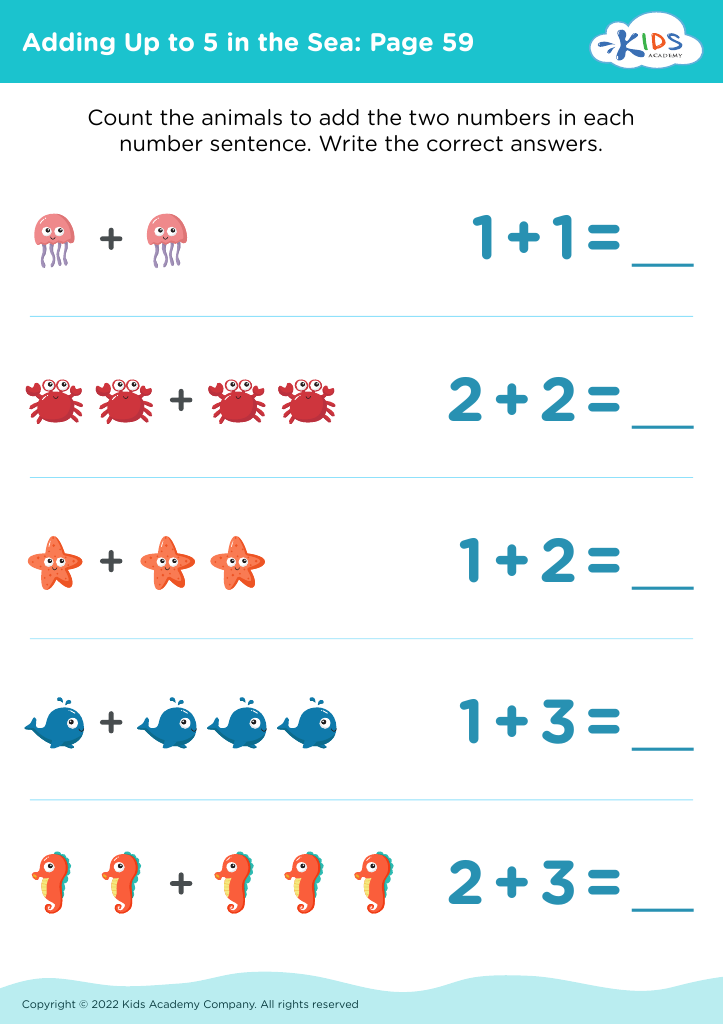
Adding Up to 5 in the Sea: Page 59
Worksheet
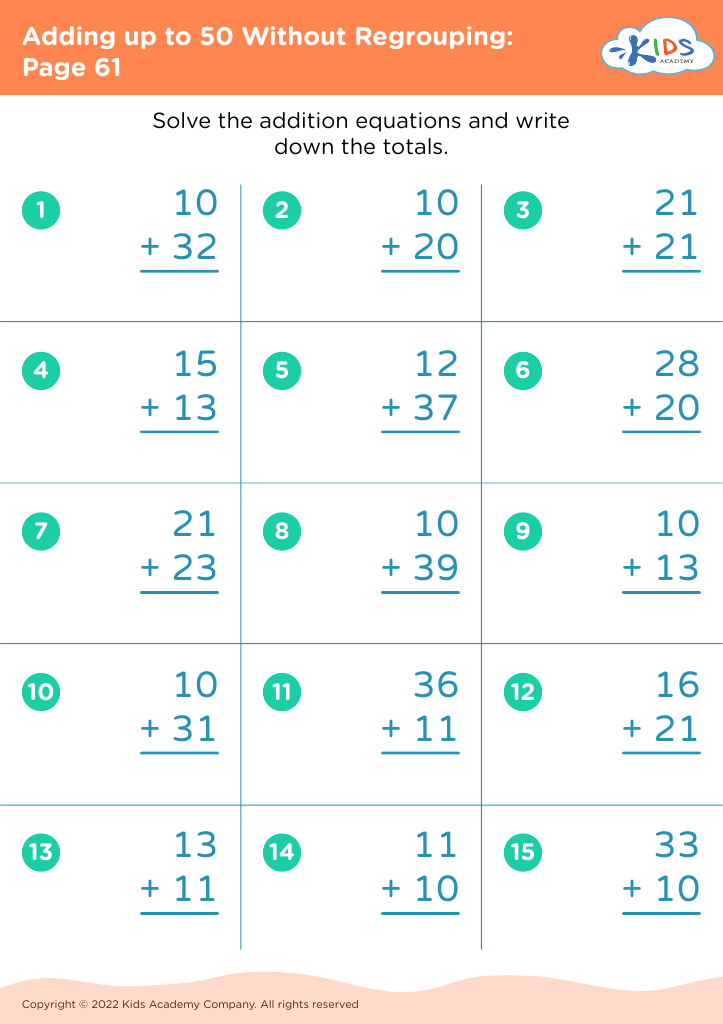
Adding up to 50 Without Regrouping: Page 61
Worksheet
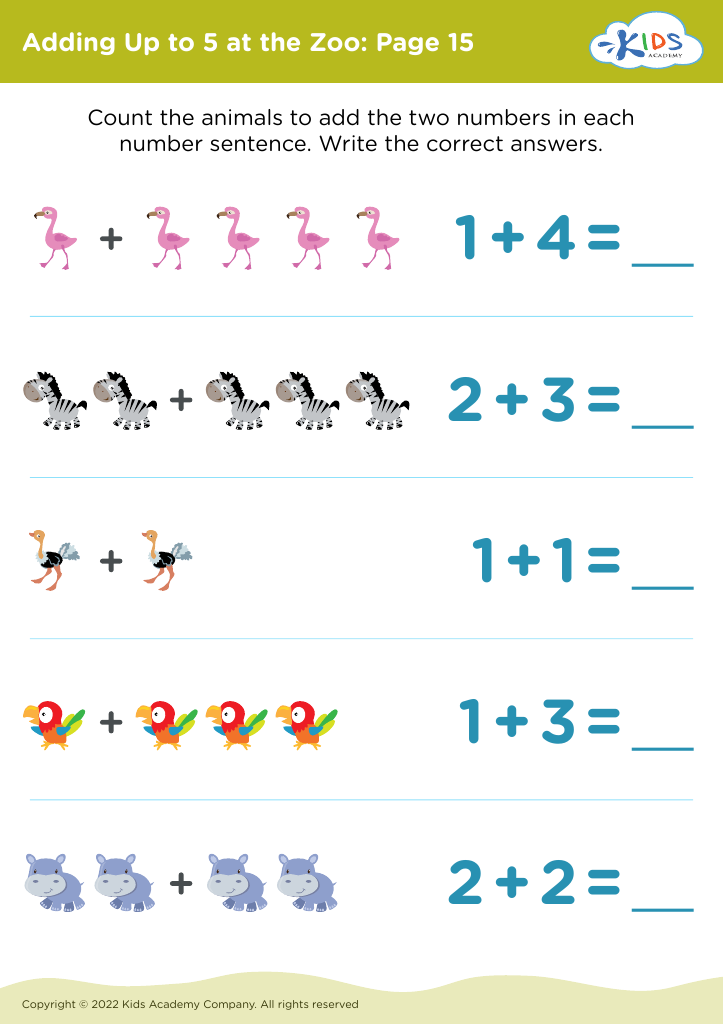
Adding Up to 5 at the Zoo: Page 15
Worksheet
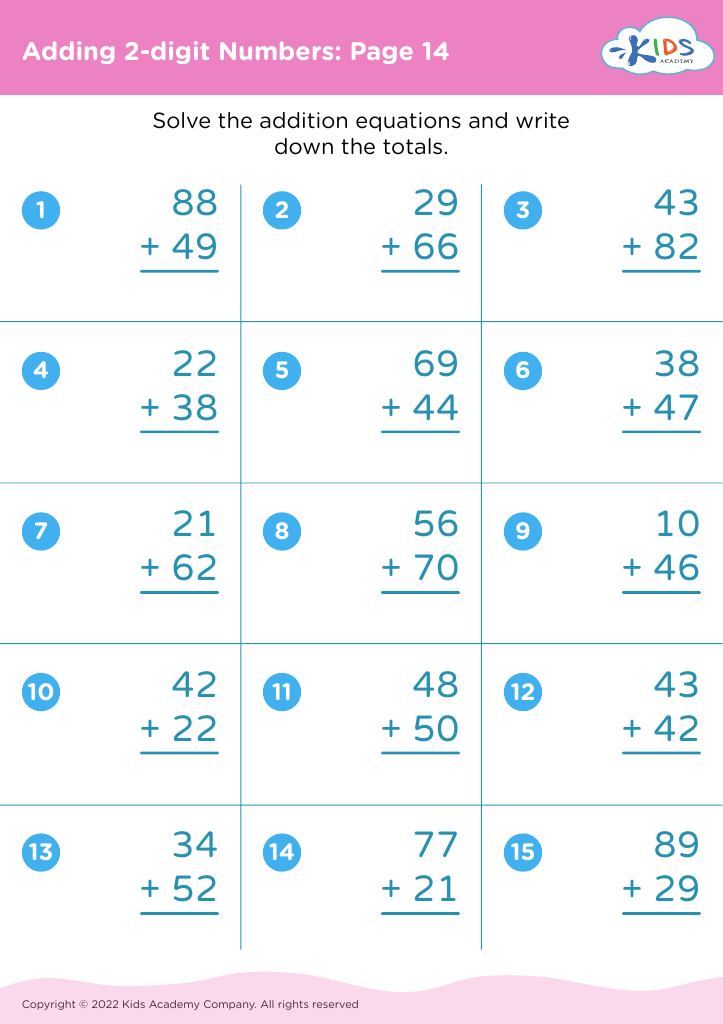
Adding 2-digit Numbers: Page 14

Adding 2-digit Numbers: Page 14

Adding 2-digit Numbers: Page 14
Worksheet
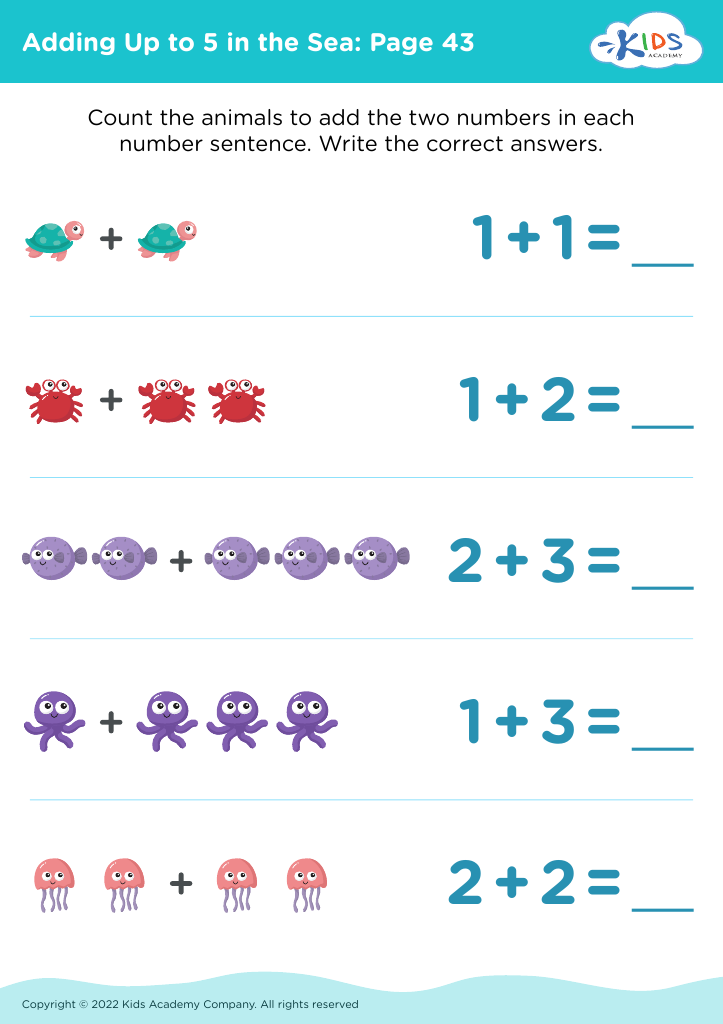
Adding Up to 5 in the Sea: Page 43
Worksheet
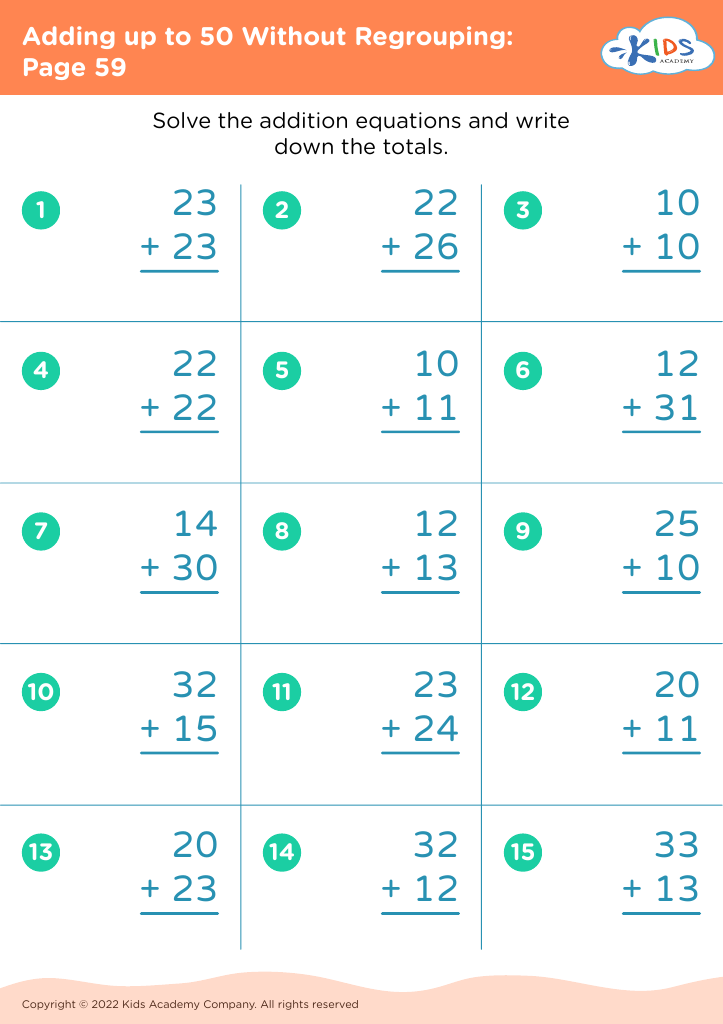
Adding up to 50 Without Regrouping: Page 59
Worksheet
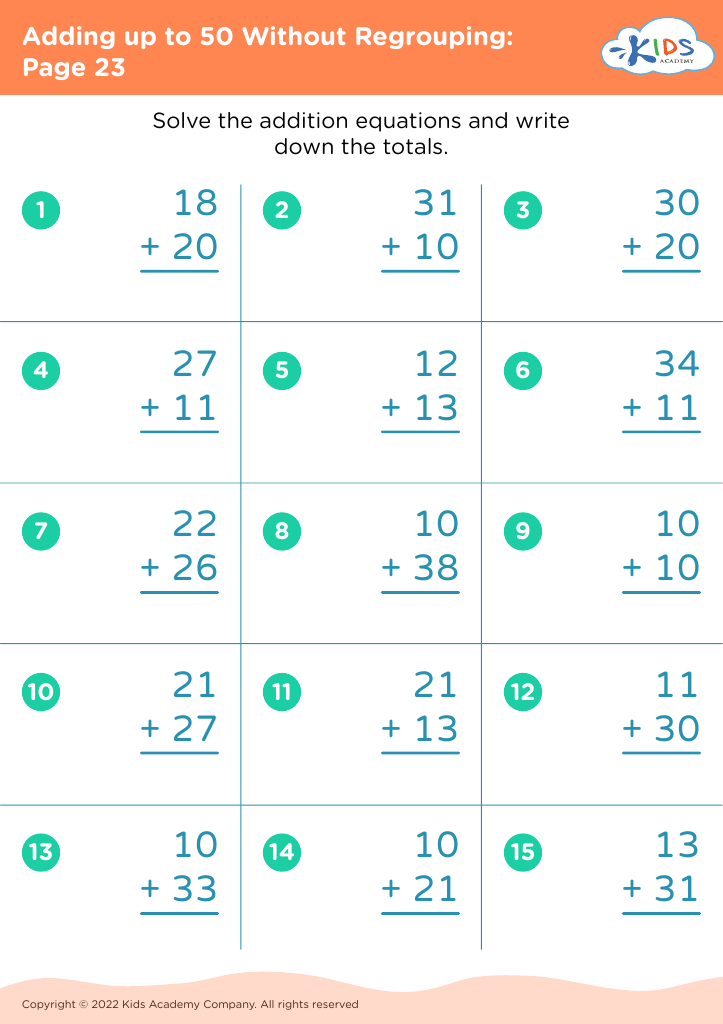
Adding up to 50 Without Regrouping: Page 23
Worksheet
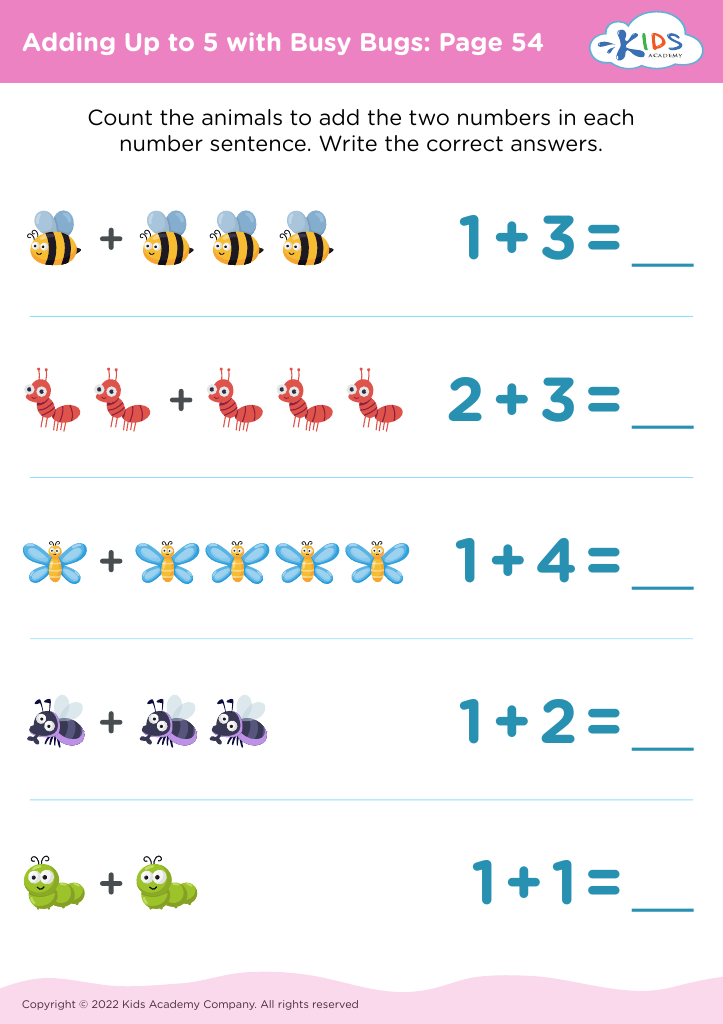
Adding Up to 5 with Busy Bugs: Page 54
Worksheet
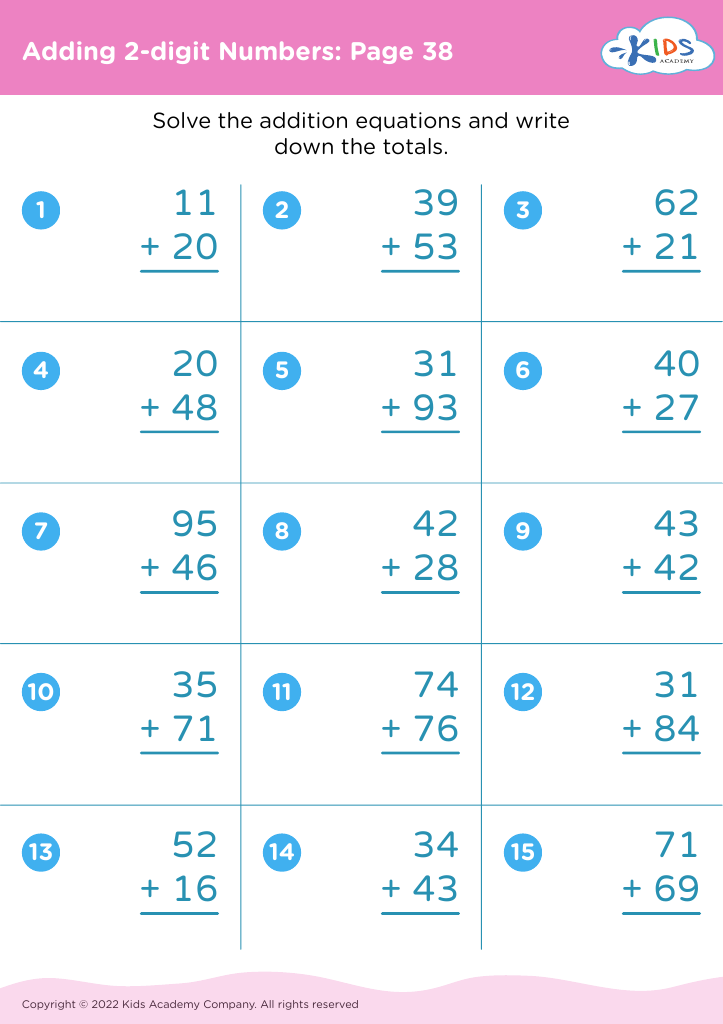
Adding 2-digit Numbers: Page 38

Adding 2-digit Numbers: Page 38

Adding 2-digit Numbers: Page 38
Worksheet
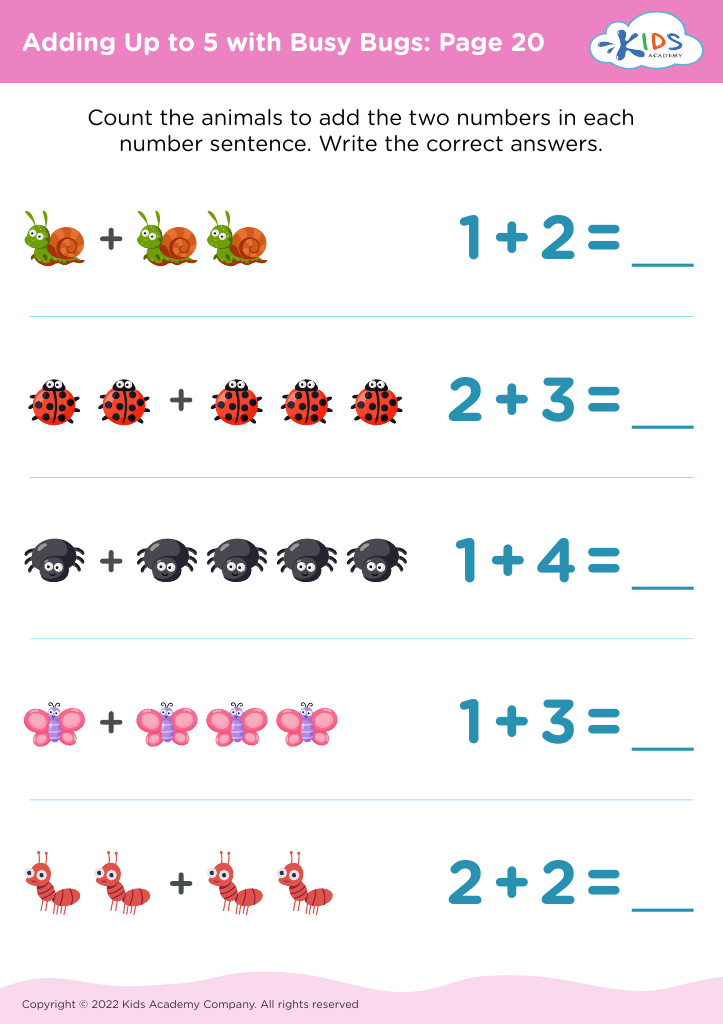
Adding Up to 5 with Busy Bugs: Page 20
Worksheet
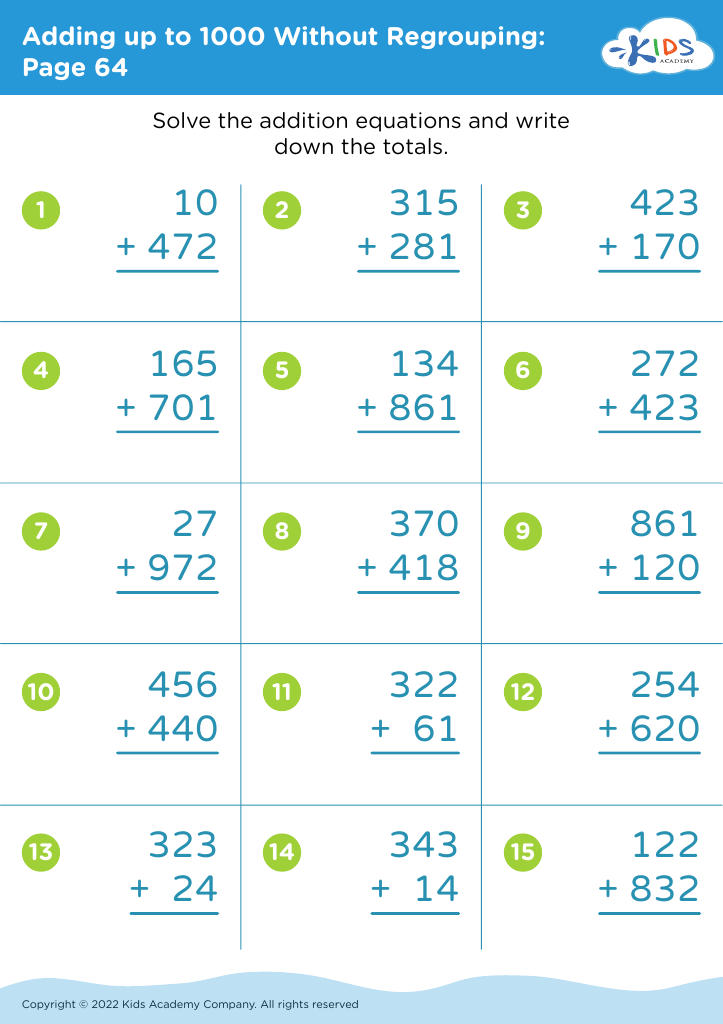
Adding up to 1000 Without Regrouping: Page 64
Worksheet
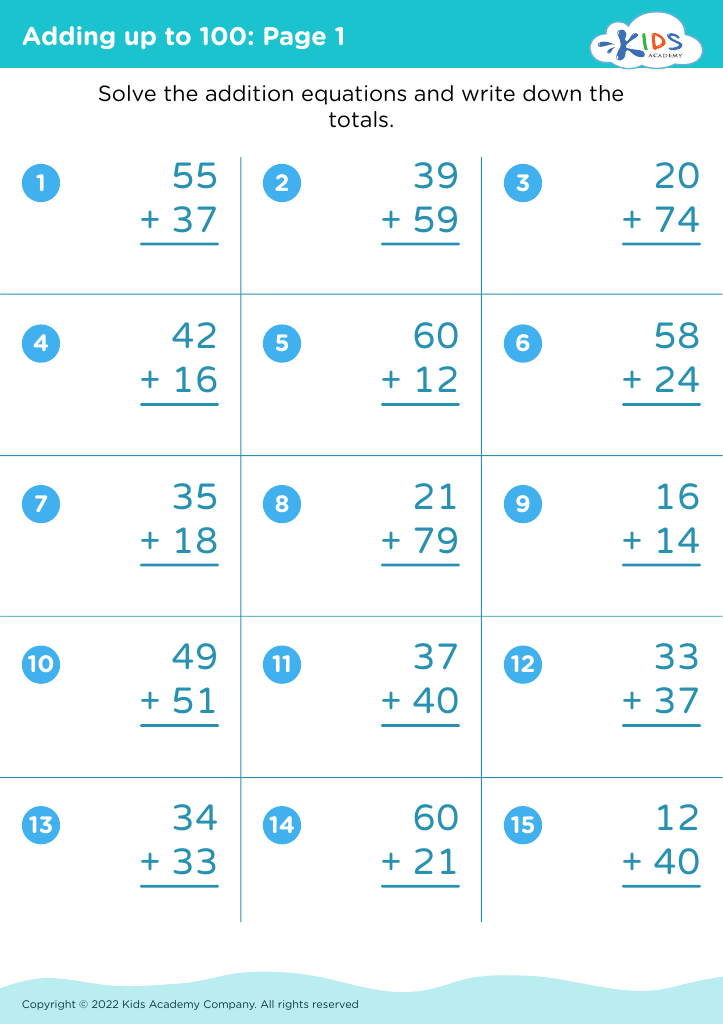
Adding up to 100: Page 1

Adding up to 100: Page 1

Adding up to 100: Page 1
Worksheet
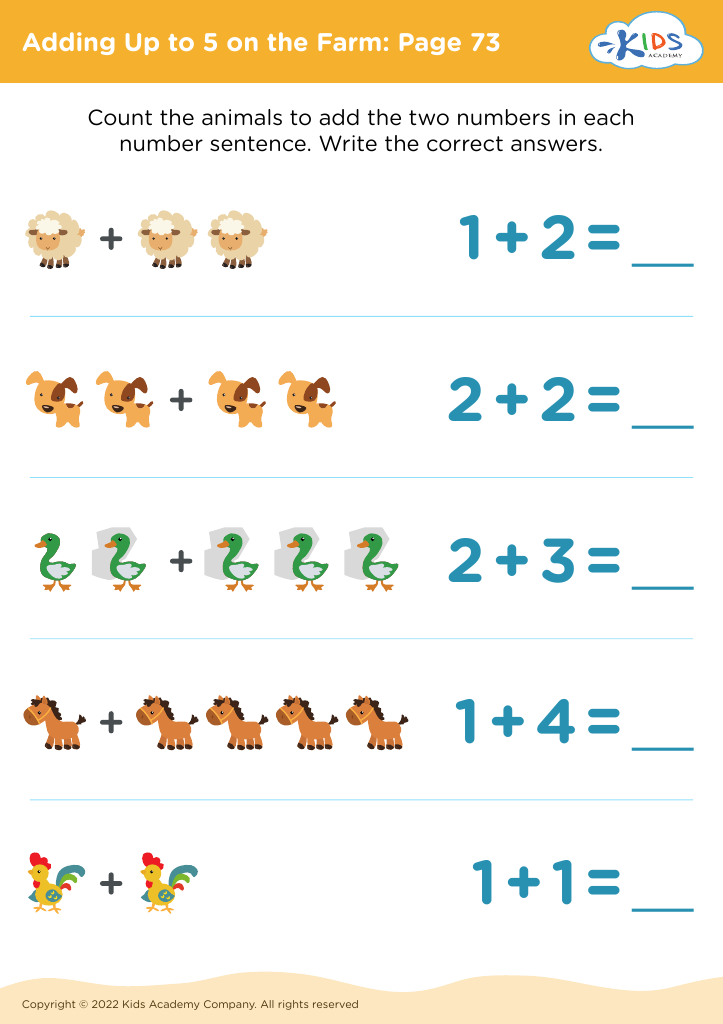
Adding Up to 5 on the Farm: Page 73
Worksheet


Basic addition and subtraction are foundational skills crucial for young learners aged 3-9 because they form the bedrock of all future mathematical understanding. Parents and teachers should prioritize these practices as they enable children to develop critical problem-solving abilities, logical thinking, and numerical comprehension.

First, mastering these operations enhances a child’s confidence; knowing they can solve basic math problems successfully builds their self-esteem, making them more enthusiastic about tackling increasingly complex concepts. This early success sets a positive tone for lifelong learning.

Second, arithmetic skills gained in early years translate directly to everyday activities, such as understanding time, managing money, and comparing quantities. Proficiency in addition and subtraction helps children to make sense of the world around them and fosters independence.

Additionally, introducing these concepts early supports cognitive development. Early practice with numbers stimulates neural pathways that enhance memory and analytical skills. It also aids in the development of fine motor skills when children use manipulatives or write out their calculations.

Finally, early arithmetic practice prepares children for formal schooling. Schools expect students to have a foundational grasp of basic math, and early exposure ensures smooth transitions into more structured learning environments.

In sum, basic arithmetic skills are indispensable, and nurturing them through consistent practice benefits children both academically and in their everyday lives.