
Develop addition skills Addition & Subtraction Worksheets for Ages 3-9
4 filtered results
Difficulty Level
Grade
Age
-
From - To
Subject
Activity
Standards
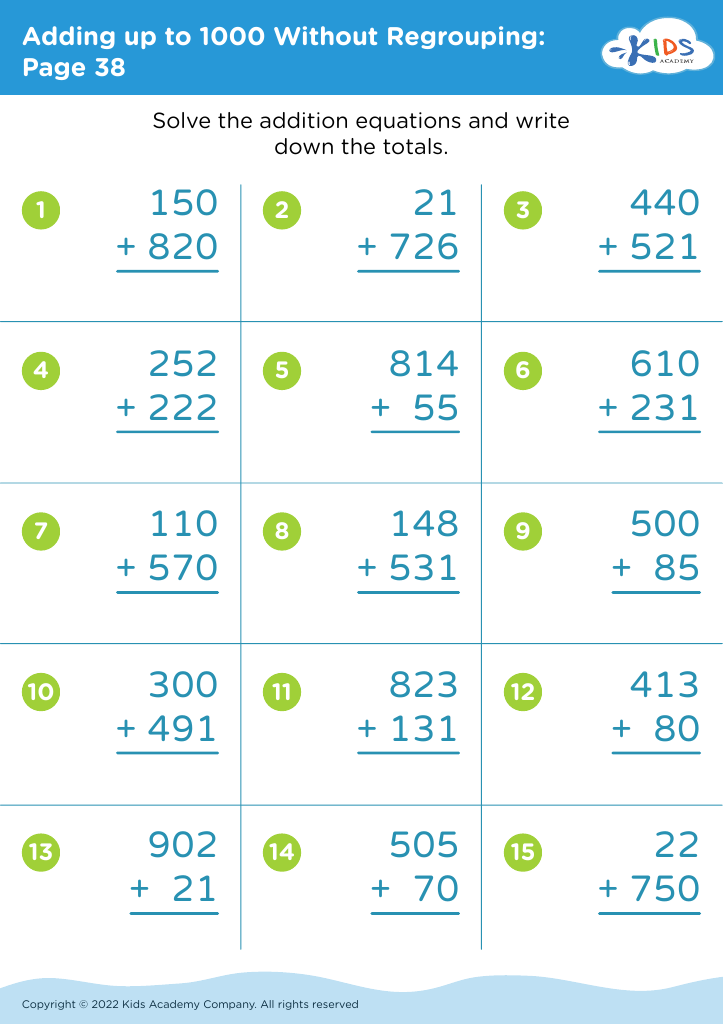
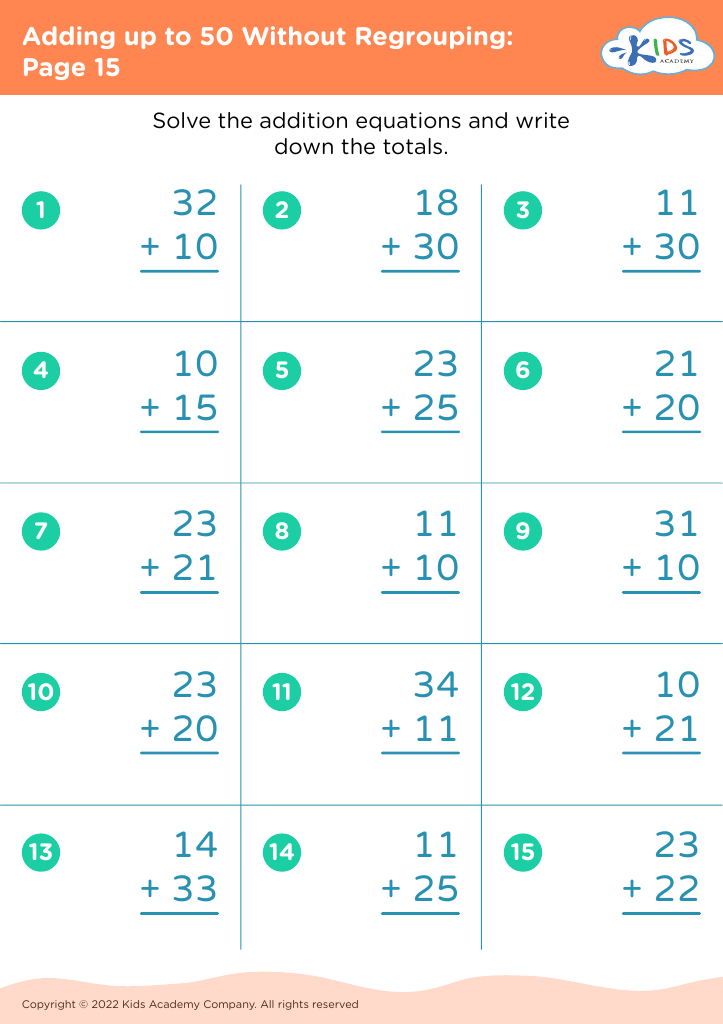
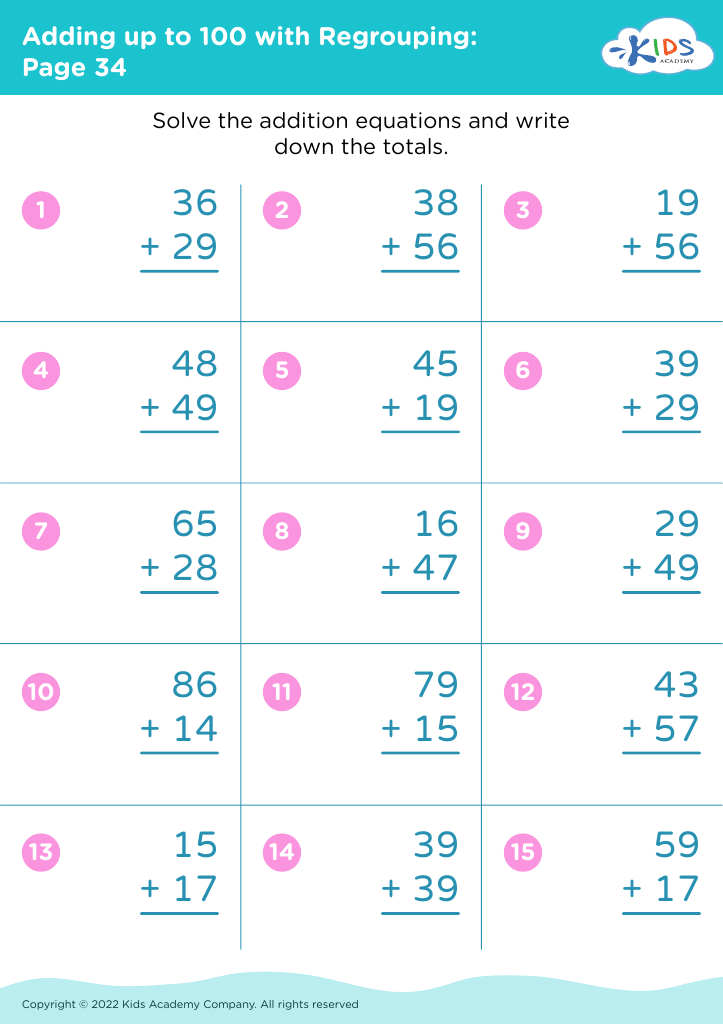
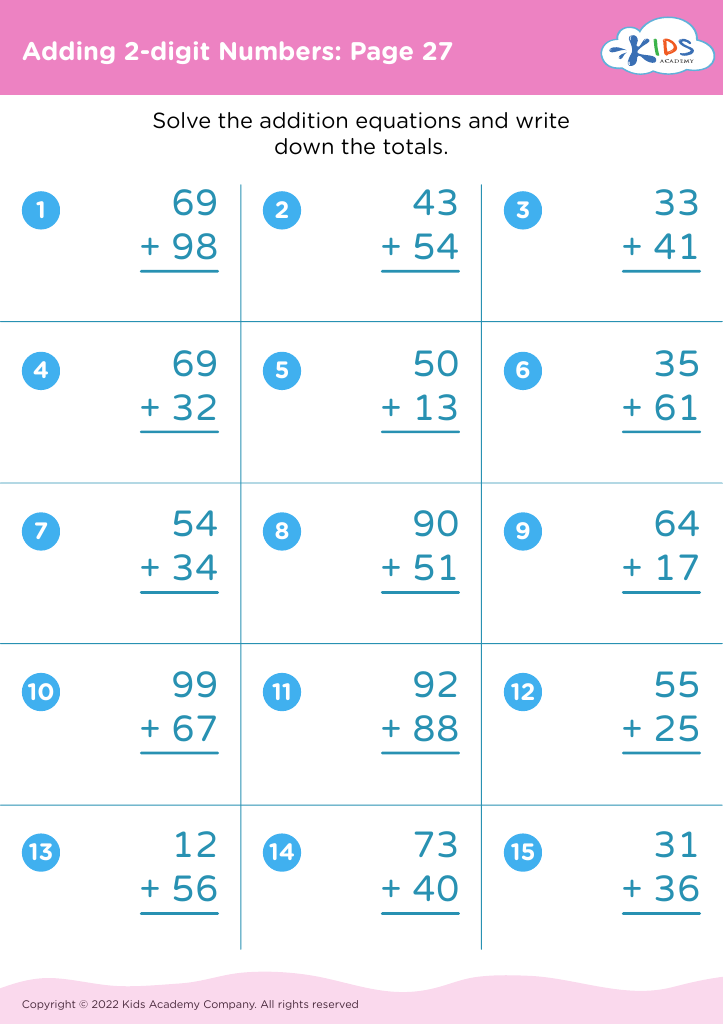
Enhance your child's mathematical foundation with our engaging Addition & Subtraction Worksheets designed for ages 3-9. These thoughtfully crafted resources promote a fun, interactive approach to mastering basic addition skills. Catering to various learning styles, our worksheets feature colorful graphics and age-appropriate exercises that keep young learners motivated and focused. Regular practice helps boost confidence in problem-solving, paving the way for more advanced math concepts. Perfect for parents, teachers, and caregivers, these printable worksheets are an excellent tool for reinforcing classroom learning or providing supplementary activities at home. Start developing strong math skills with our resourceful and enjoyable worksheets today!
Favorites
With answer key
Interactive
Learning Skills
Join Kids Academy for Free
Who is primarily going to use this learning content?








Developing addition and subtraction skills in children aged 3-9 is crucial for several reasons. Firstly, these foundational math skills are essential for academic success. Early proficiency in addition and subtraction lays the groundwork for more complex mathematical concepts that students will encounter later, such as multiplication, division, and fractions.
Furthermore, mastering these skills enhances critical thinking and problem-solving abilities. As children learn to manipulate numbers, they develop analytical skills that can be applied across various subjects. Second, improving these skills builds confidence in young learners. When children can successfully solve simple addition and subtraction problems, they gain a sense of accomplishment, fostering a positive attitude toward math in general.
Additionally, addition and subtraction skills are not only academic but practical. They prepare children for everyday tasks, like managing money, measuring ingredients, or determining quantities during play. Engaging parents and teachers in this process creates a supportive learning environment, where children are encouraged to explore math concepts in fun, interactive ways.
Ultimately, prioritizing the development of addition and subtraction skills for young children creates a strong mathematical foundation, paving the way for lifelong learning and success in various life skills.








