
Developing critical thinking Addition & Subtraction Worksheets for Ages 3-9
3 filtered results
Difficulty Level
Grade
Age
-
From - To
Subject
Activity
Standards
Our "Developing Critical Thinking: Addition & Subtraction Worksheets for Ages 3-9" are designed to enhance young learners' mathematical skills while fostering critical thinking. Tailored for children aged 3 to 9, these engaging, age-appropriate worksheets guide kids through various problems that challenge their reasoning abilities. With vibrant visuals and interactive activities, children not only practice basic arithmetic but also develop logical analyzing skills. As they progress, they sharpen their problem-solving techniques, building a strong foundation for future mathematical learning. These worksheets provide an enjoyable and effective way for children to explore and understand key concepts while honing essential critical thinking skills.
Favorites
With answer key
Interactive
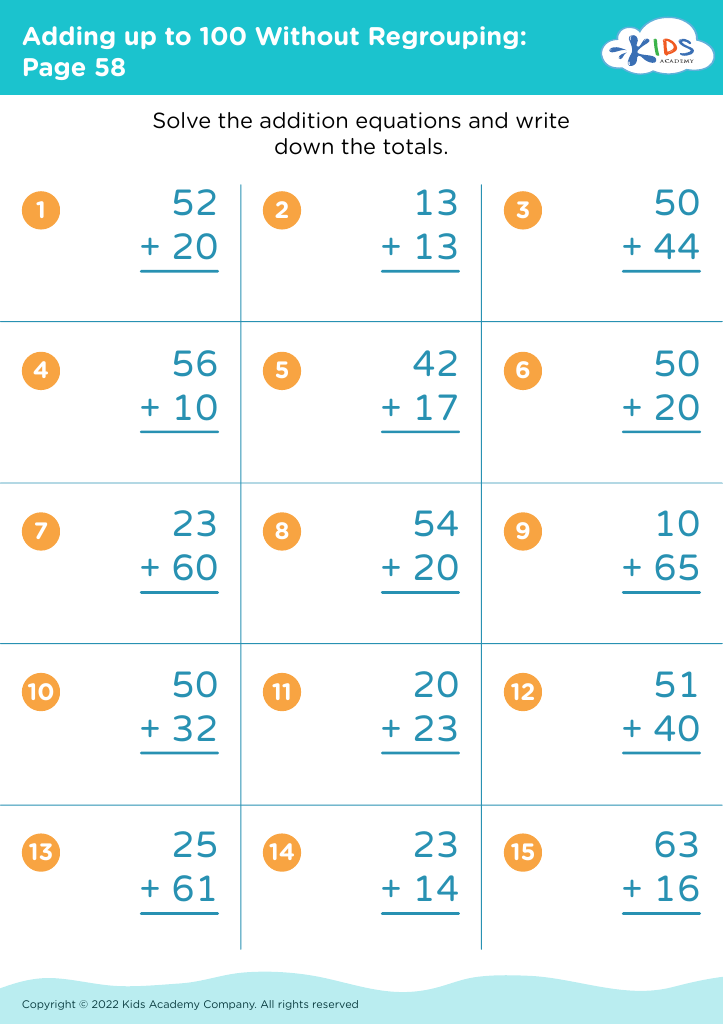
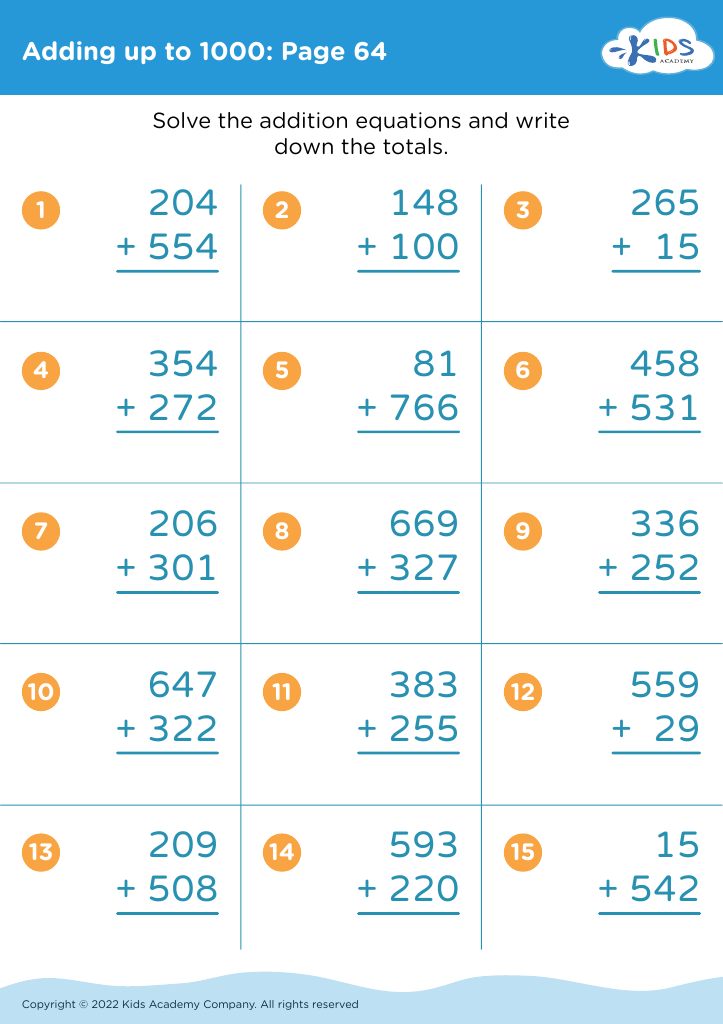
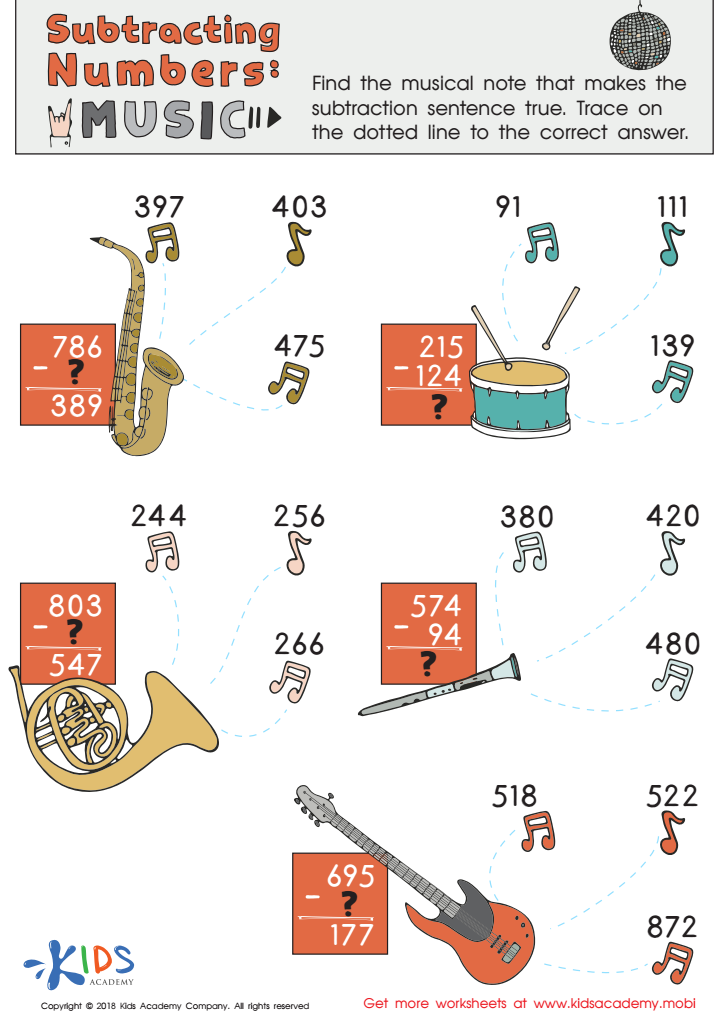
Subtracting Numbers: Music Worksheet
Enroll your kids in a music class and let them express their feelings via music! This worksheet challenges them to identify the musical note that makes the subtraction sentence true. Help them solve the problem and trace the dotted line to the correct answer. Let their appreciation for music grow!
 Assign to My Students
Subtracting Numbers: Music Worksheet
Worksheet
Learning Skills
Join Kids Academy for Free
Who is primarily going to use this learning content?








Parents and teachers should focus on developing critical thinking skills combined with basic arithmetic, such as addition and subtraction, for children aged 3-9 because early childhood is a critical period for cognitive development. Critical thinking fosters children’s ability to analyze, problem-solve, and make informed decisions. By intertwining these skills with basic arithmetic, children can learn to approach problems systematically rather than just memorizing facts or procedures.
When young children engage in solving addition and subtraction problems, they learn to recognize patterns, make predictions, and draw logical conclusions. This builds a strong foundation for later, more complex mathematical concepts and everyday problem-solving situations. Moreover, combining critical thinking with arithmetic enhances their confidence and autonomy in learning, as children understand the 'why' and 'how' behind mathematical operations, not just the 'what'. This methodological understanding leads to better retention and application of knowledge.
Additionally, developing critical thinking through arithmetic can foster a growth mindset. Children learn that effort and strategizing can solve problems, which can influence their approach to learning across various disciplines. Overall, this dual focus equips children with essential skills that apply beyond the math classroom, fostering versatile thinkers and lifelong learners.








