Developing logical thinking Addition & Subtraction Worksheets for Ages 3-9
4 filtered results
-
From - To
Unlock your child's potential with our engaging, age-appropriate Addition and Subtraction Worksheets designed for children aged 3-9. These worksheets not only aim to enhance fundamental math skills but also foster logical thinking, critical reasoning, and problem-solving abilities. Each activity provides a fun and interactive way for young learners to explore mathematical concepts while developing essential cognitive skills. Whether in the classroom or at home, our resources offer a perfect blend of education and enjoyment. Encourage your child's growth and confidence in math with our structured worksheets that cater to different learning styles and paces. Start your journey towards mathematical mastery today!
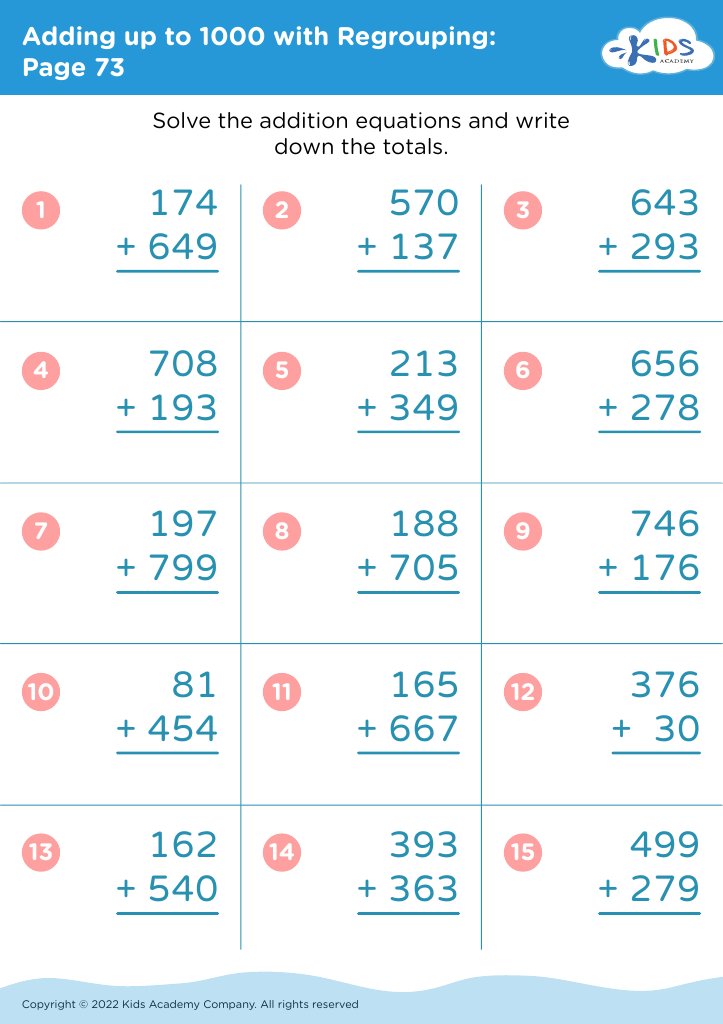
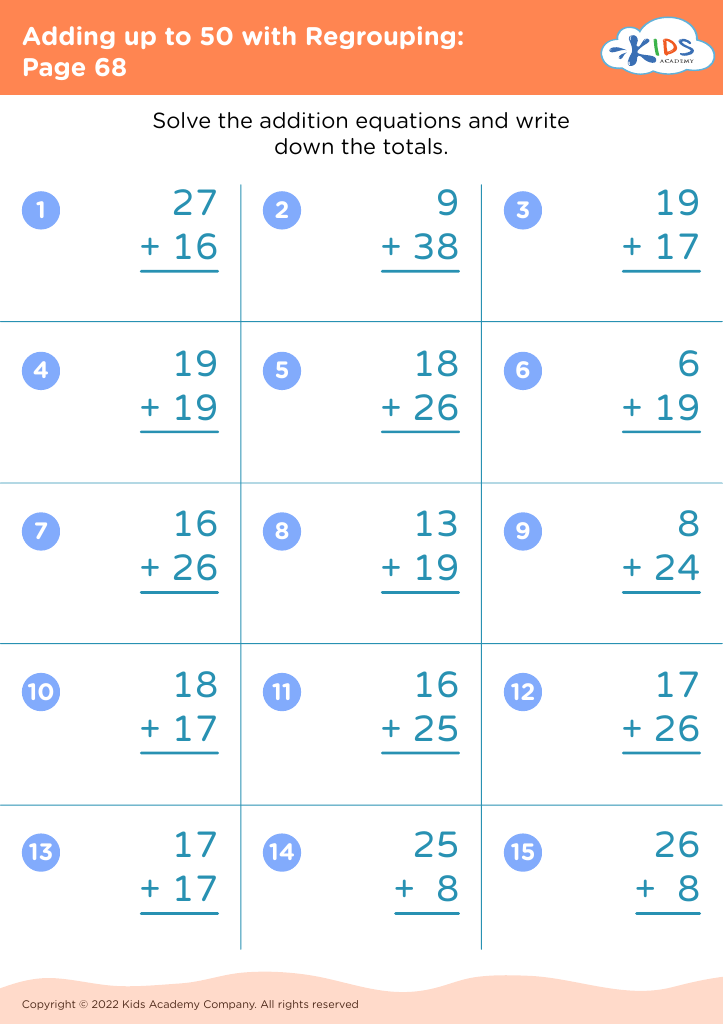
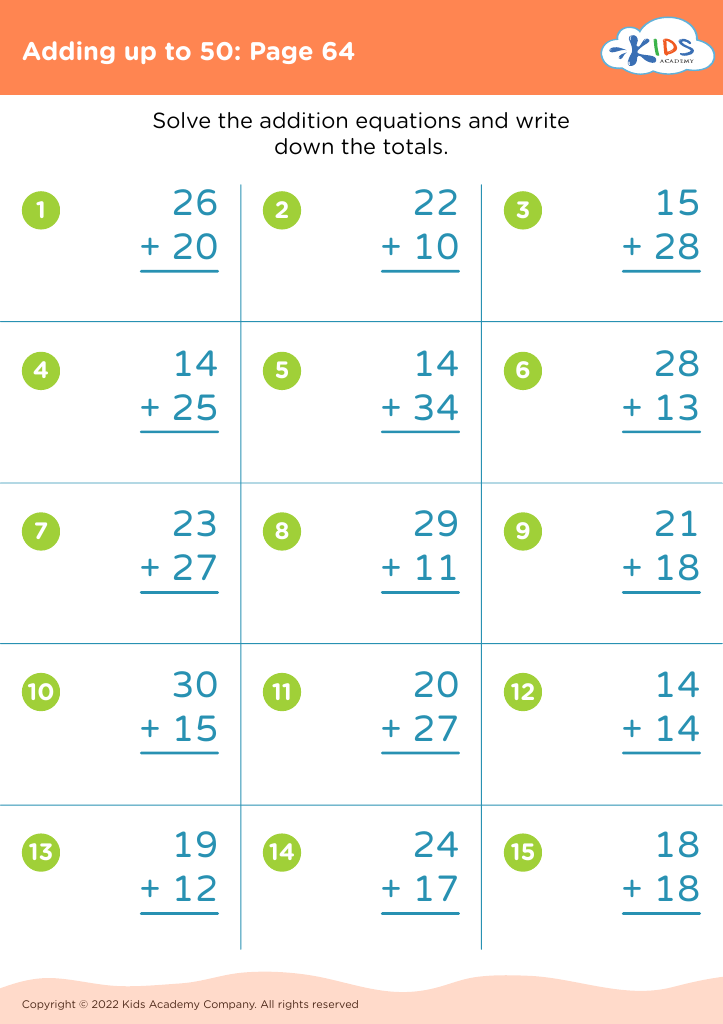
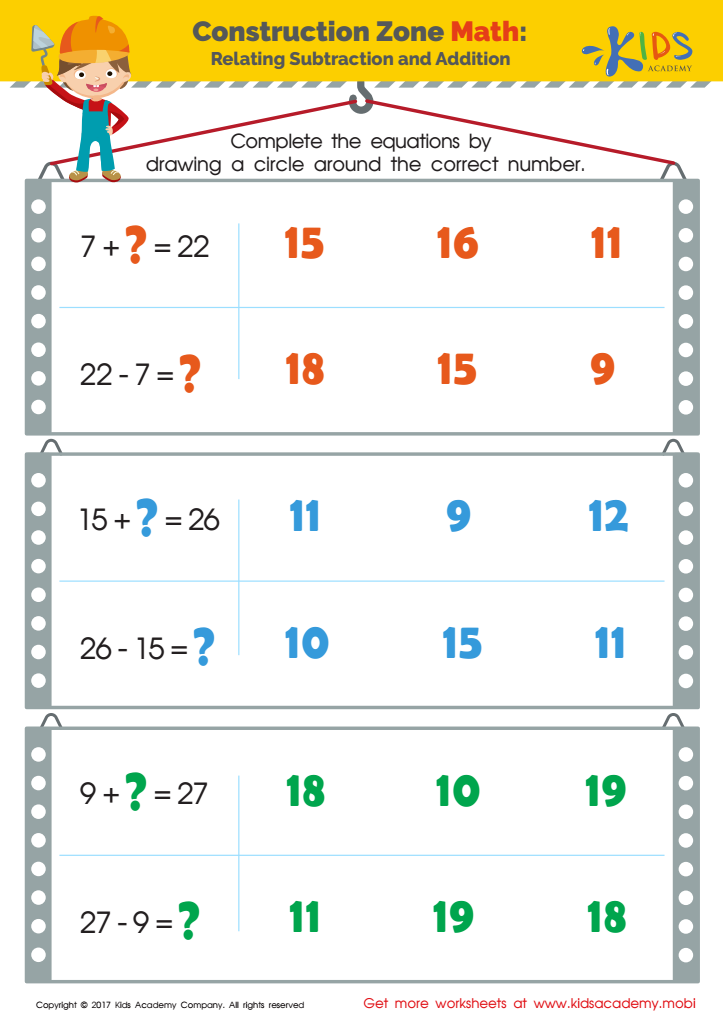
Related Addition and Subtraction Facts Worksheet
 Assign to My Students








Developing logical thinking in young children, particularly through addition and subtraction, is essential for their cognitive and social development. Early math skills form the foundation for future academic success and everyday decision-making. When parents and teachers focus on these basic arithmetic concepts, they are not merely teaching numbers; they are fostering critical thinking skills. Logical thinking enables children to analyze situations, solve problems effectively, and make reasoned decisions.
For children aged 3-9, mastering addition and subtraction promotes an understanding of quantity and relationships—key elements of logical reasoning. When children engage in activities that require them to think logically about numbers, they develop a sense of confidence and competence. This foundational knowledge aids their transition to more complex mathematical concepts later on and enhances their overall learning trajectory.
Furthermore, logical thinking through math encourages collaboration and communication, as children learn to explain their reasoning to peers and adults. This social interaction strengthens language skills and emotional intelligence. By prioritizing the development of logical thinking and early math skills, parents and teachers equip children with numerous tools to navigate their world, ultimately setting them on a path toward lifelong learning and success in multiple areas.








