Enhance problem-solving Addition & Subtraction Worksheets for Ages 3-9
3 filtered results
-
From - To
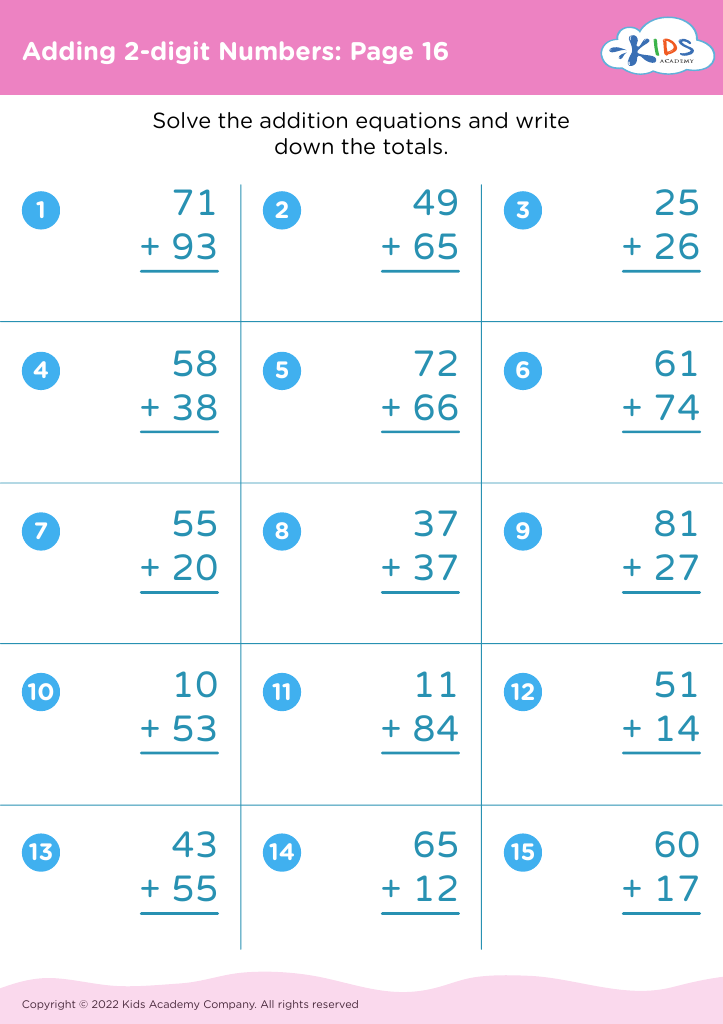
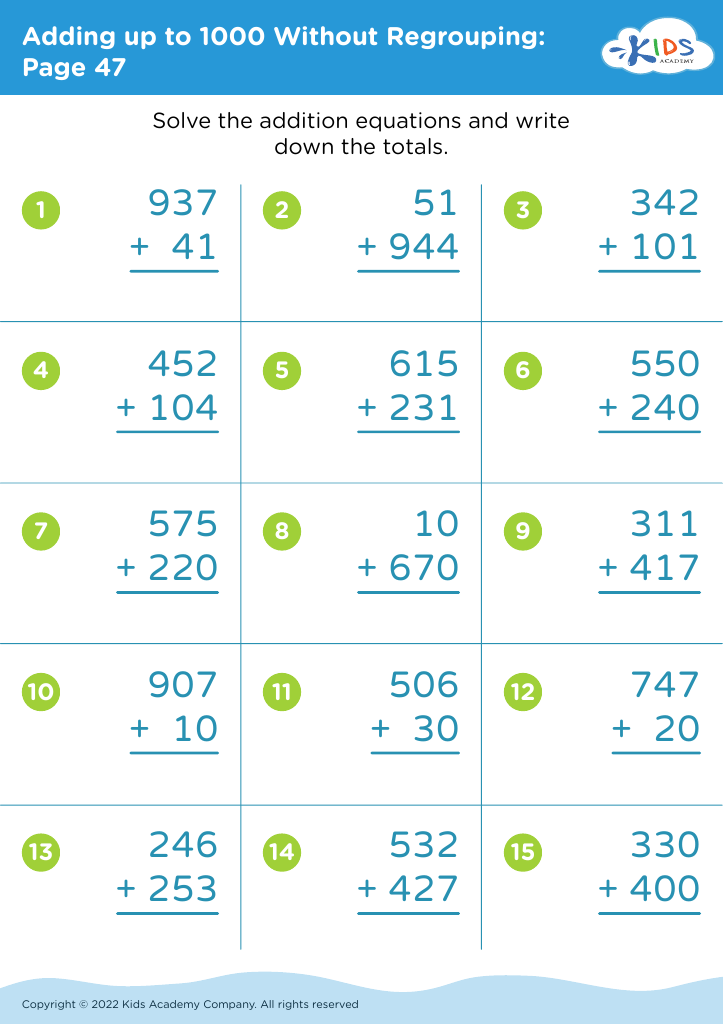
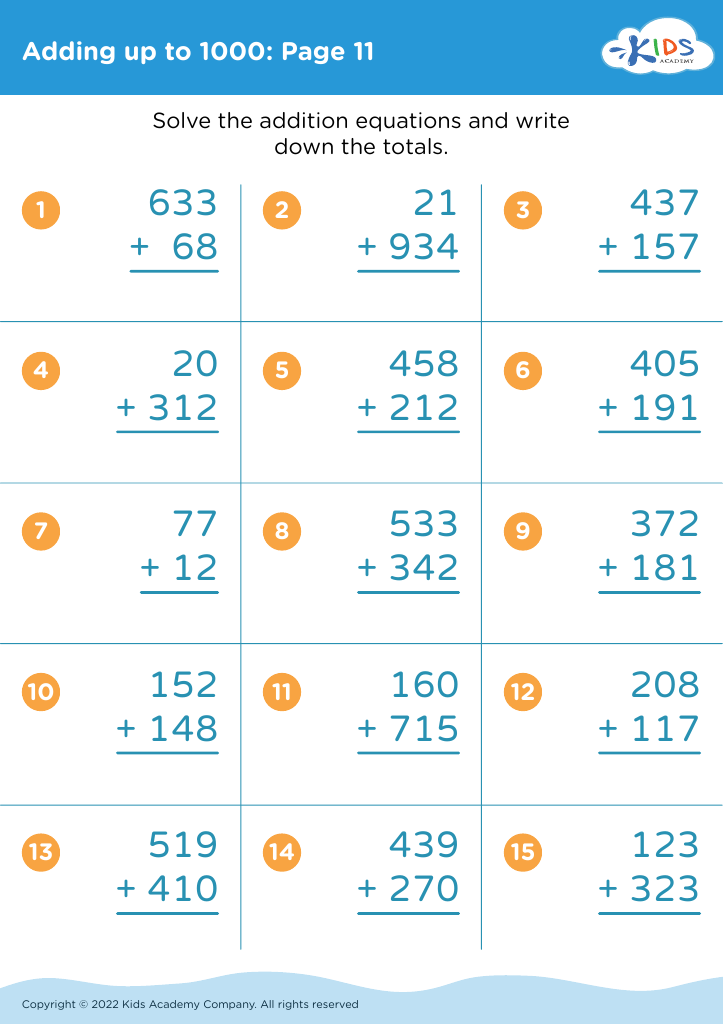
Boost your child’s math skills with our "Enhance Problem-Solving Addition & Subtraction Worksheets" designed specifically for ages 3-9. These engaging worksheets foster critical thinking and help children develop essential problem-solving abilities through fun and interactive exercises. Each worksheet presents relatable scenarios, making math enjoyable and accessible while improving numerical fluency. With a variety of formats and difficulties, these resources support diverse learning styles and ensure your child gains confidence in their addition and subtraction skills. Ideal for classroom use or at home, our worksheets make math a delightful adventure! Start nurturing your child's math mastery today.








Enhancing problem-solving skills in addition and subtraction for children aged 3-9 is crucial for several reasons. First, these foundational skills form the basis of mathematics, influencing a child's ability to tackle more complex concepts as they progress in school. By engaging young learners in meaningful problem-solving tasks, parents and teachers foster critical thinking abilities and encourage kids to approach challenges with confidence.
Moreover, mastering addition and subtraction supports children’s understanding in everyday situations, such as shopping or sharing items, prompting them to apply mathematical reasoning in real life. This not only enhances their practical skills but also cultivates a positive attitude towards mathematics, reducing anxiety associated with numerical tasks later on.
Additionally, early exposure to engaging problem-solving activities helps improve concentration, memory, and cognitive flexibility. It encourages collaboration and communication when children discuss their strategies and findings with peers or adults, enriching their social skills.
Ultimately, caring about and investing time in enhancing these problem-solving skills can lead to lifelong benefits, equipping children with the tools they need for academic success and everyday decision-making. By nurturing these skills early on, parents and teachers ensure children are well-prepared for the challenges ahead.








