Fine motor skills (writing numbers) Addition & Subtraction Worksheets for Ages 3-9
17 filtered results
-
From - To
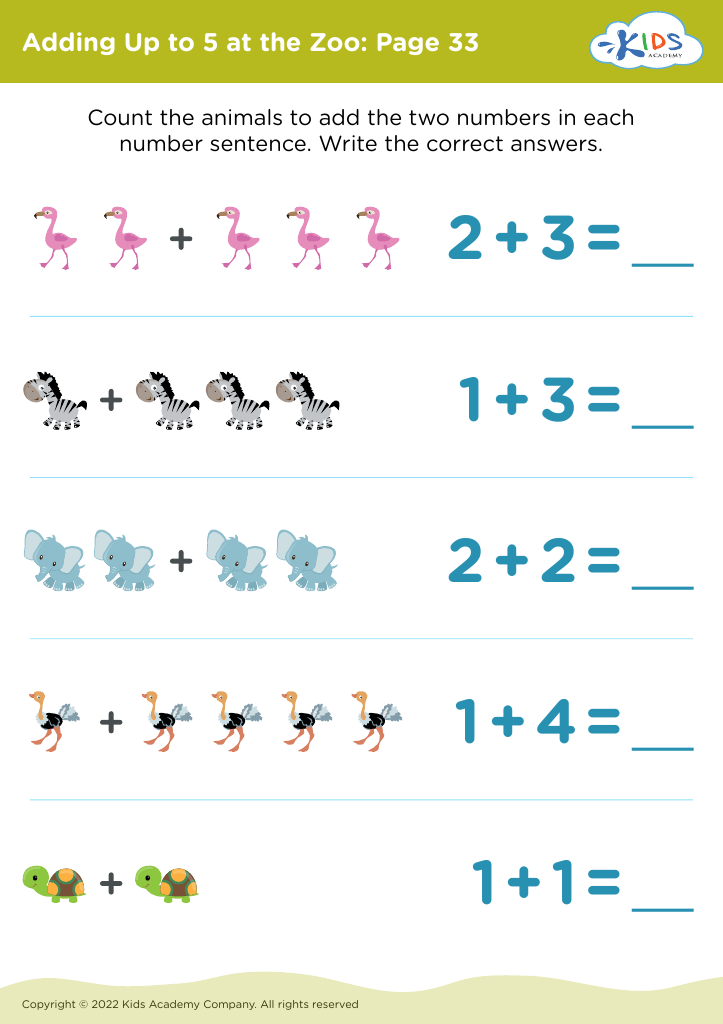
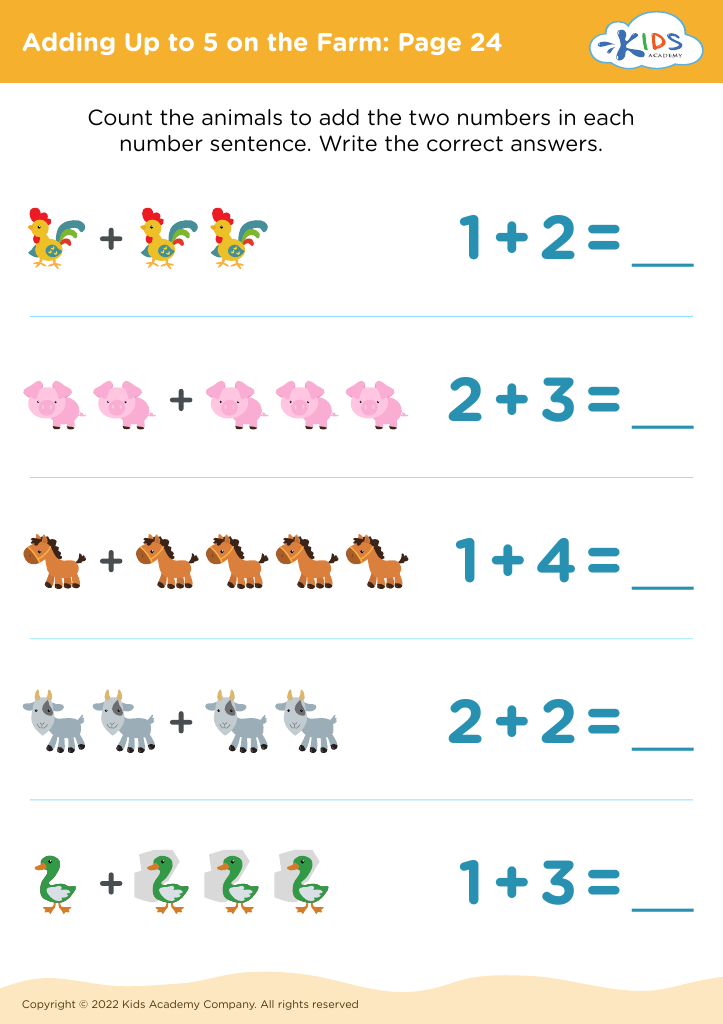
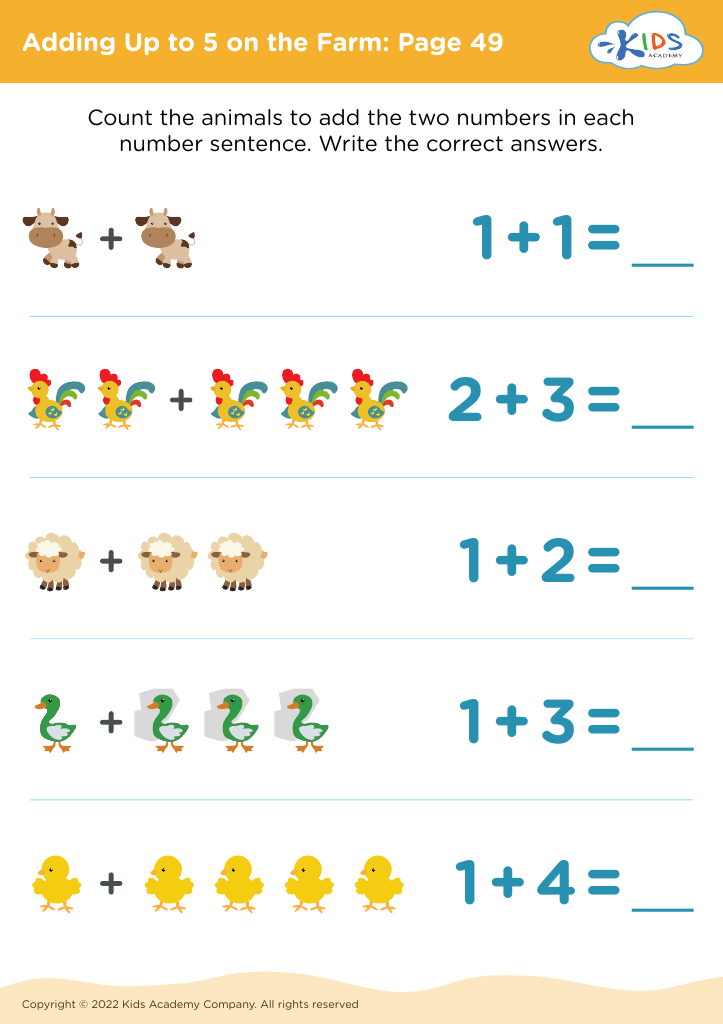
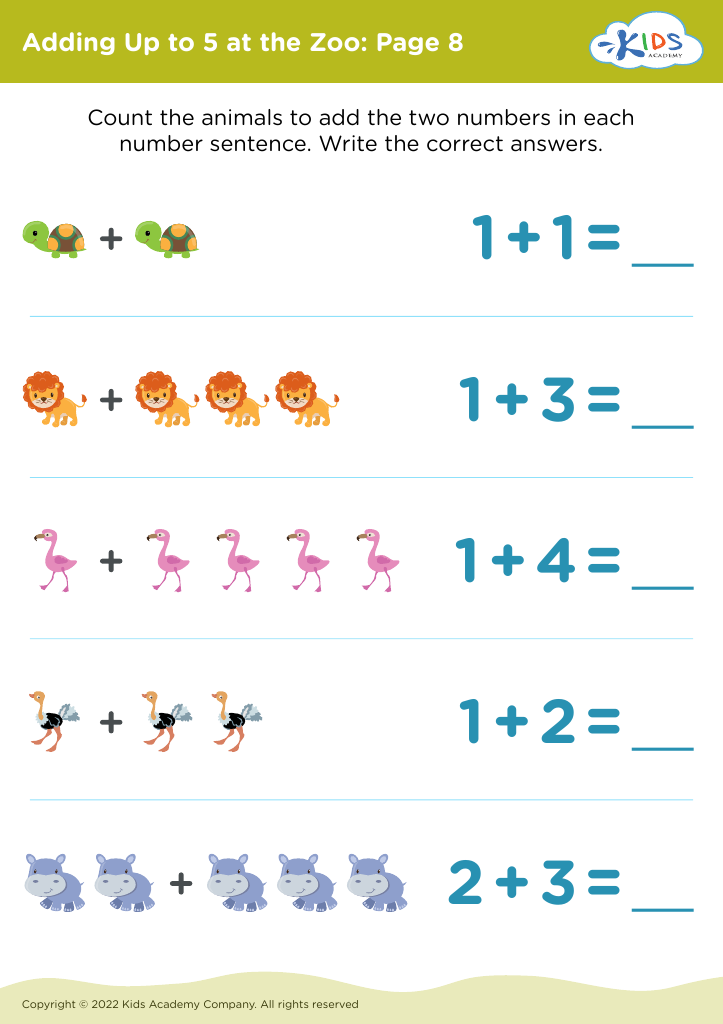
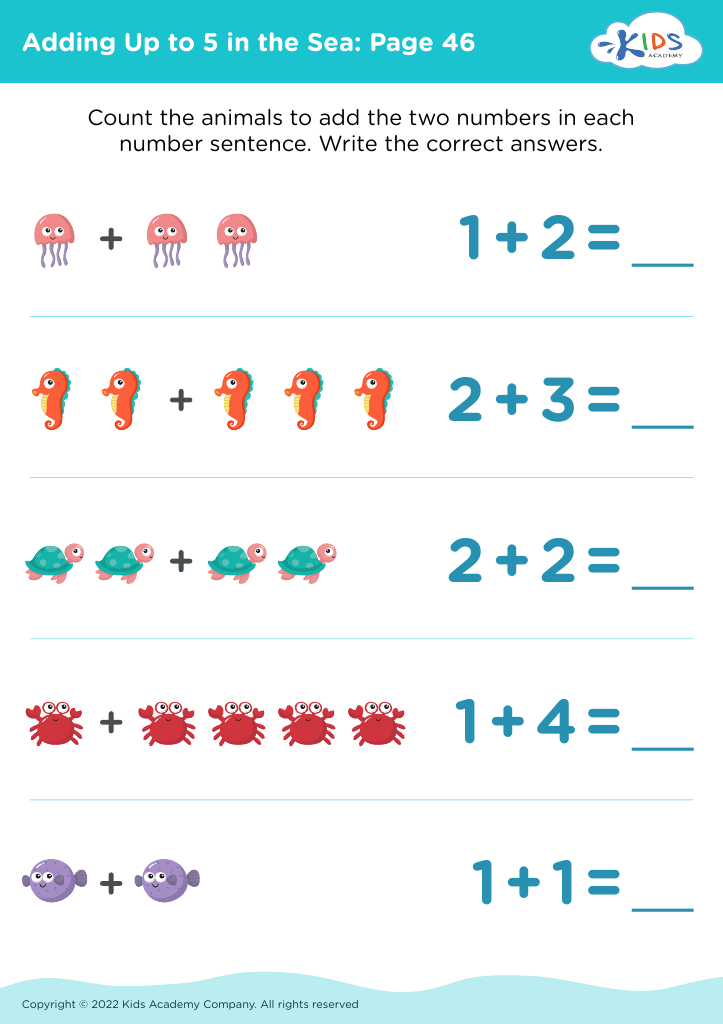
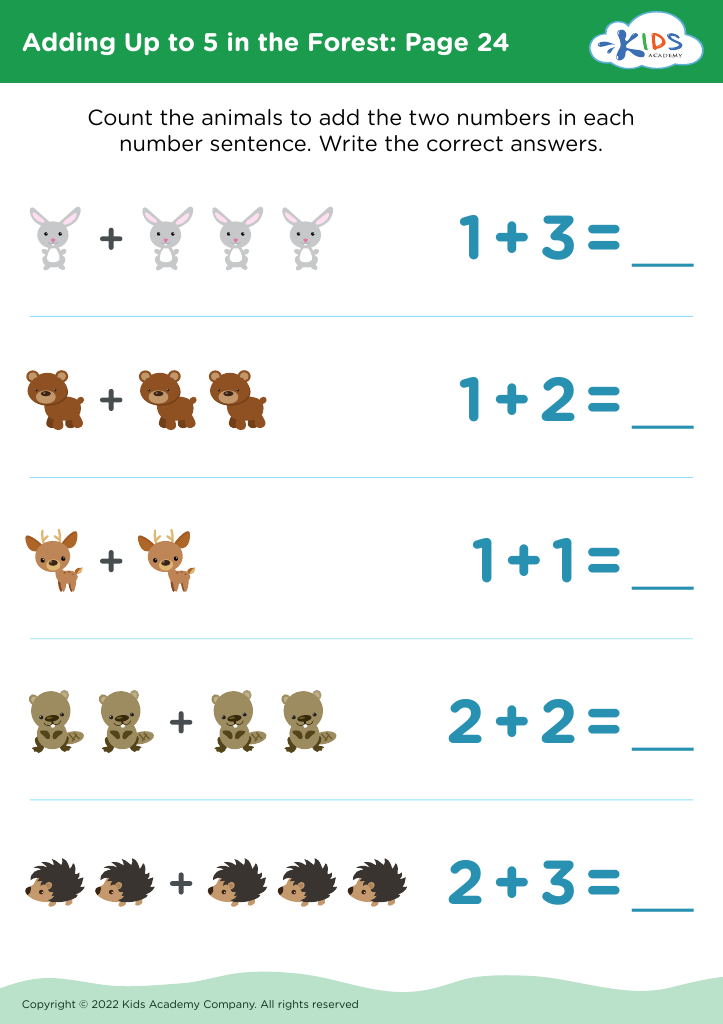
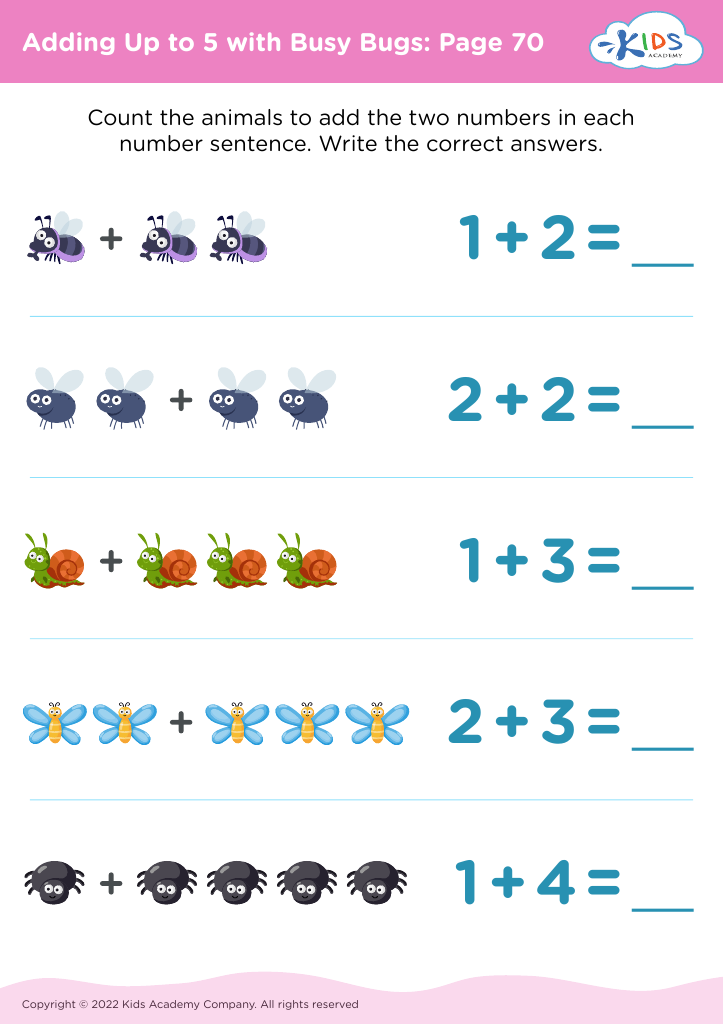
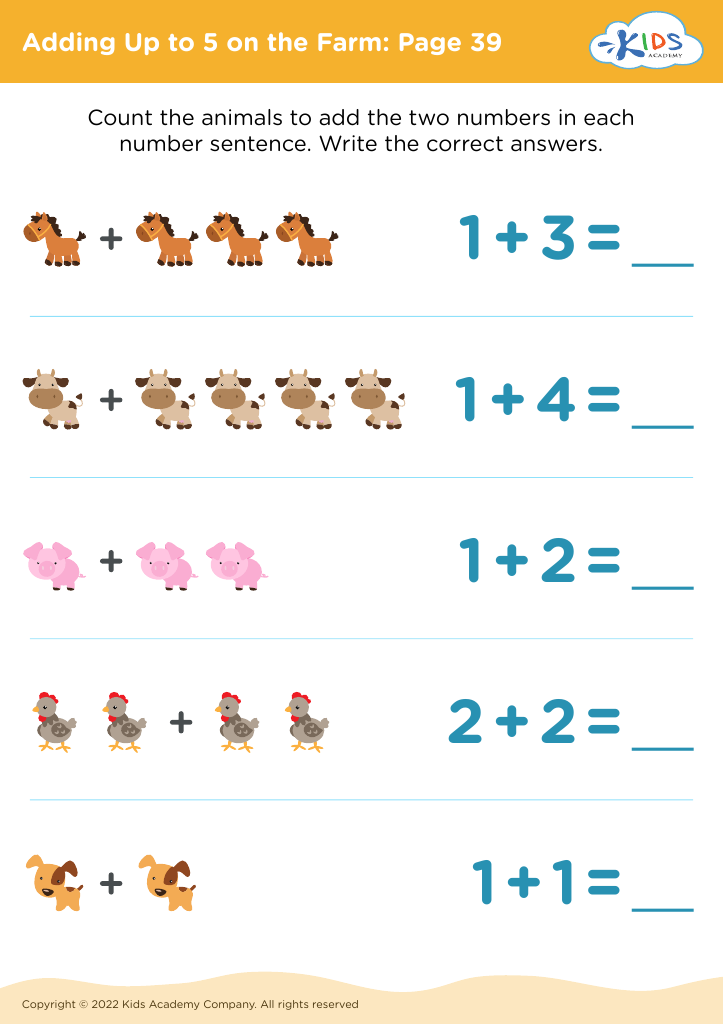
Enhance your child's fine motor skills and mathematical abilities with our “Fine Motor Skills (Writing Numbers) Addition & Subtraction Worksheets” specially designed for ages 3-9. These printable worksheets from Kids Academy make learning addition and subtraction fun and engaging while helping young learners to practice number writing. Each sheet includes activities that strengthen hand-eye coordination and dexterity, vital for proper number formation. Our exercises are tailored to gradually improve your child's numerical skills, promoting confidence and academic growth. Ideal for preschoolers to early elementary students, these worksheets provide a foundation for lifelong learning. Jumpstart your child’s math journey today!
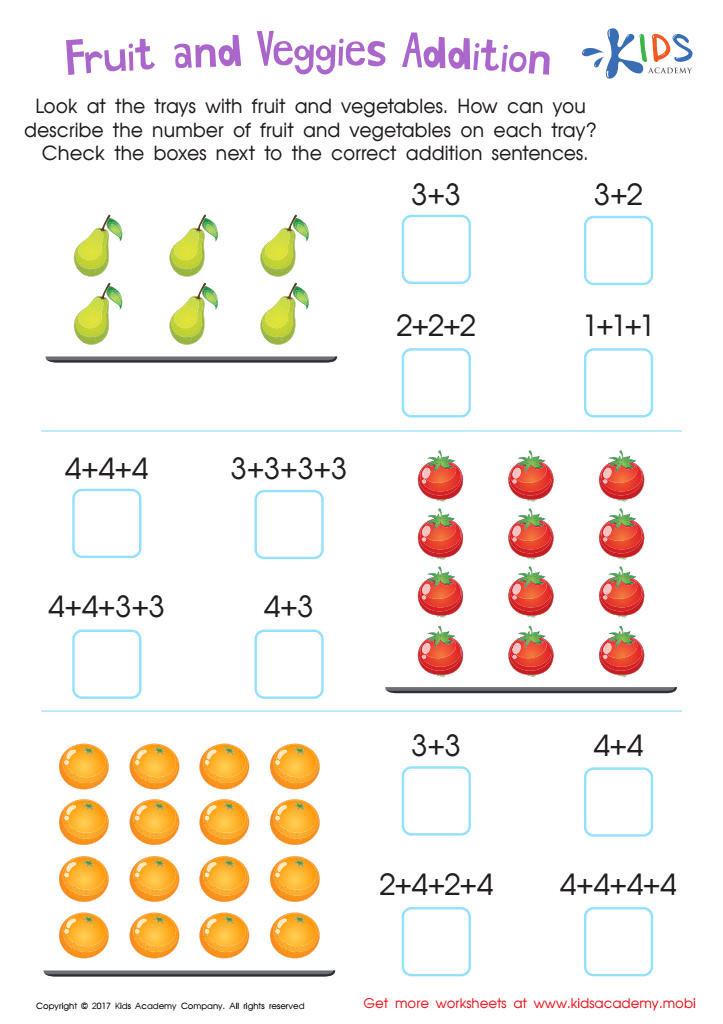
Fruit and Veggies Worksheet
 Assign to My Students
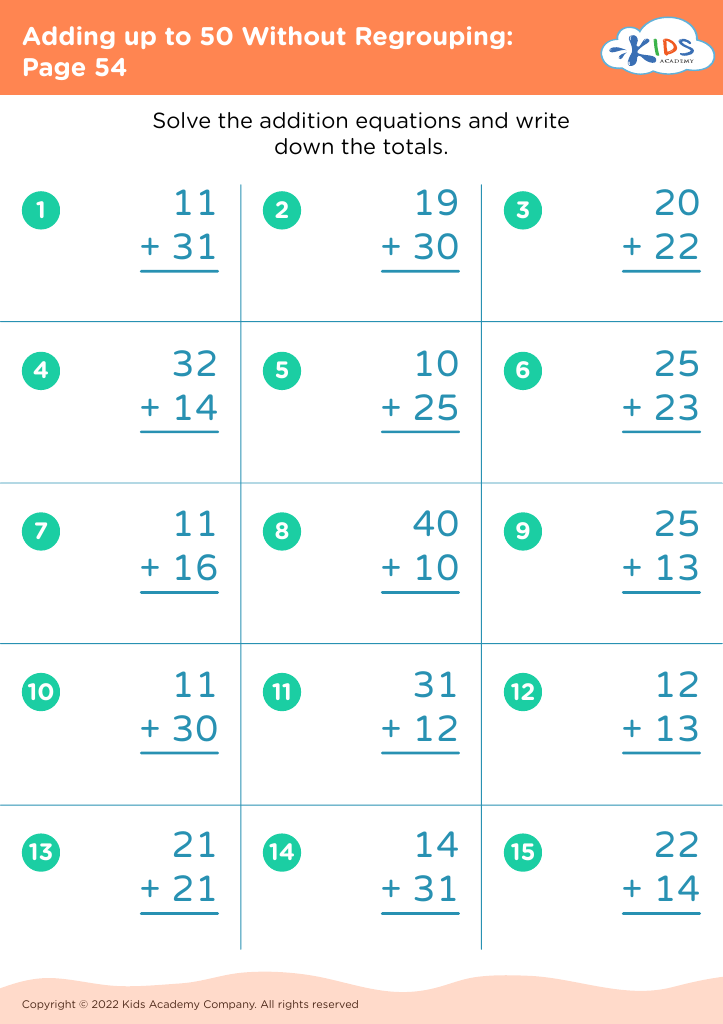
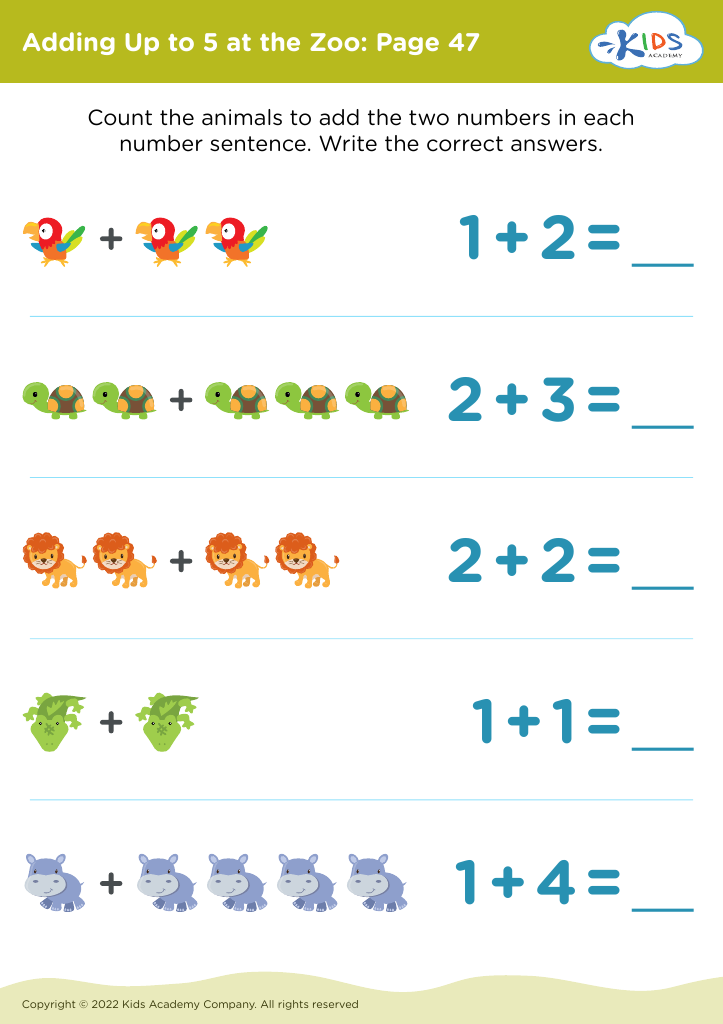
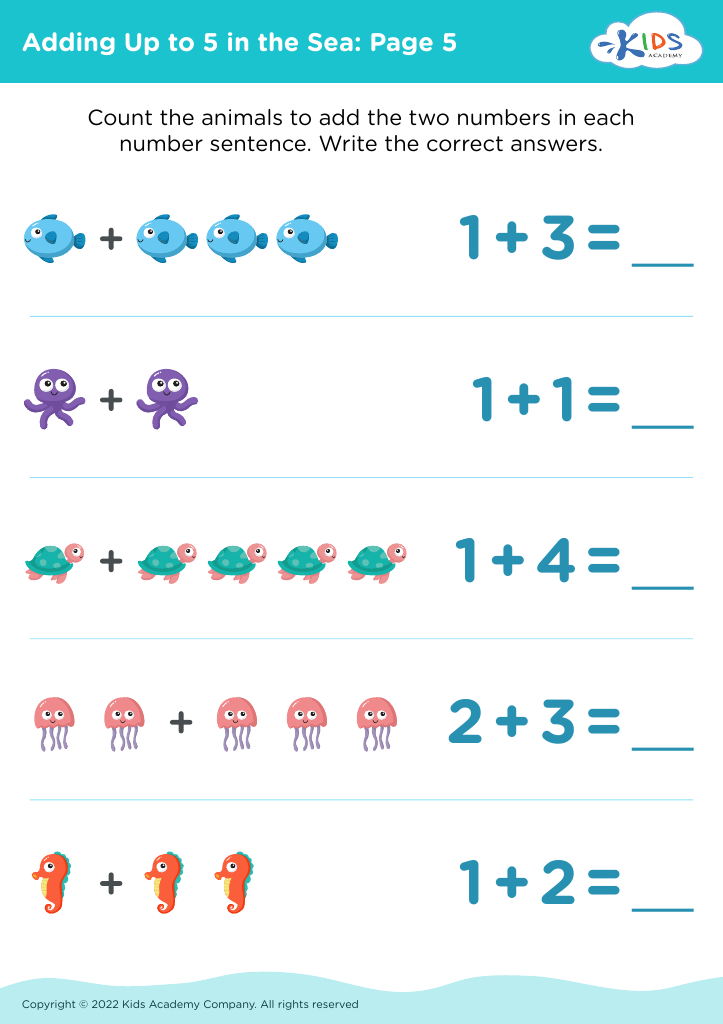
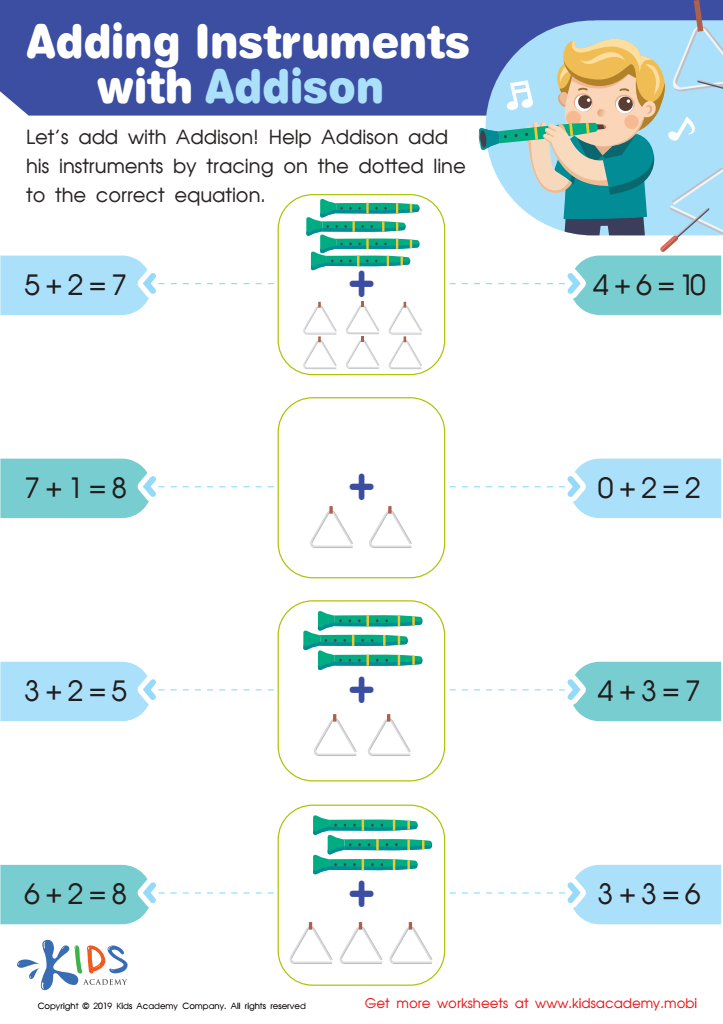
Adding Instruments with Addison Worksheet
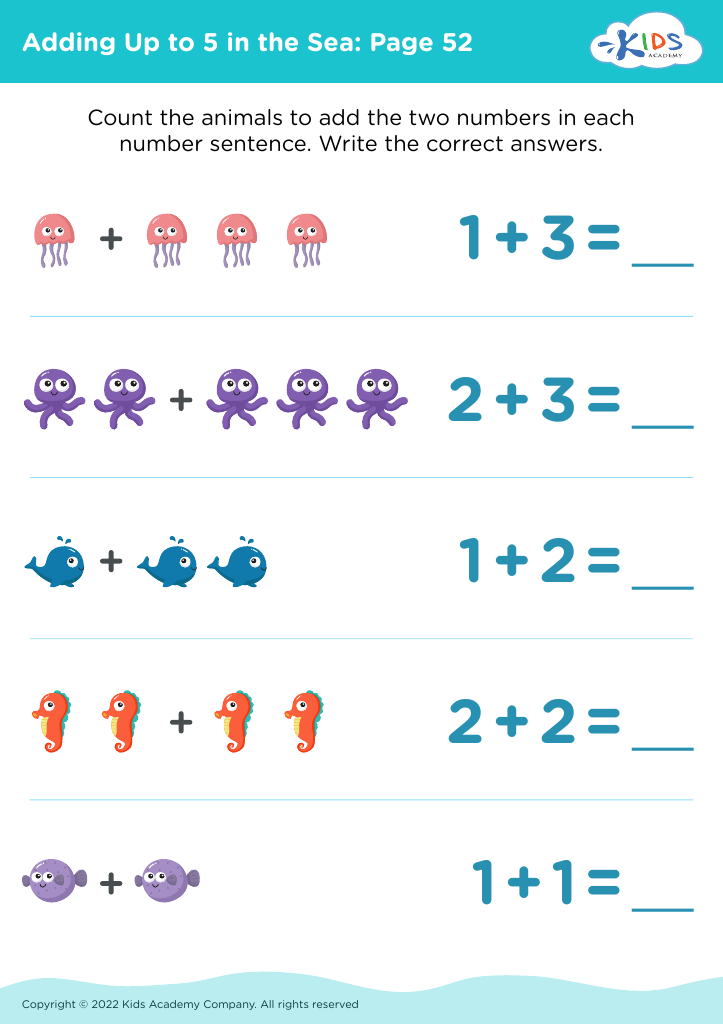








Developing fine motor skills, writing numbers, and practicing addition and subtraction are crucial for children aged 3-9 as they form the foundation for more complex learning and everyday activities. Fine motor skills involve refined movements of the hands and fingers, essential for tasks like buttoning a shirt, tying shoelaces, and, crucially, writing. Good fine motor skills enable children to hold a pencil correctly, write legibly, and perform daily tasks independently, which boosts their confidence and self-esteem.
Learning to write numbers is not just about mastering penmanship but also understanding numerical concepts and sequencing. Recognizing and writing numbers solidifies the cognitive process of counting and numeral identification, which are stepping stones to advanced mathematical concepts.
Addition and subtraction are fundamental arithmetic operations that underpin nearly all future math learning. They help develop logical thinking and problem-solving skills. By engaging with simple equations, children learn to manipulate numbers, recognize patterns, and perform mental calculations. Practicing these skills at an early age fosters a positive attitude towards math, reducing anxiety associated with the subject later on.
Therefore, both parents and teachers should prioritize these foundational skills, ensuring children are well-prepared for future academic challenges and everyday tasks. Involvement in these early learning stages contributes significantly to a child's overall development and lifelong learning journey.








