
Improve counting Addition & Subtraction Worksheets for Ages 3-9
3 filtered results
Difficulty Level
Grade
Age
-
From - To
Subject
Activity
Standards
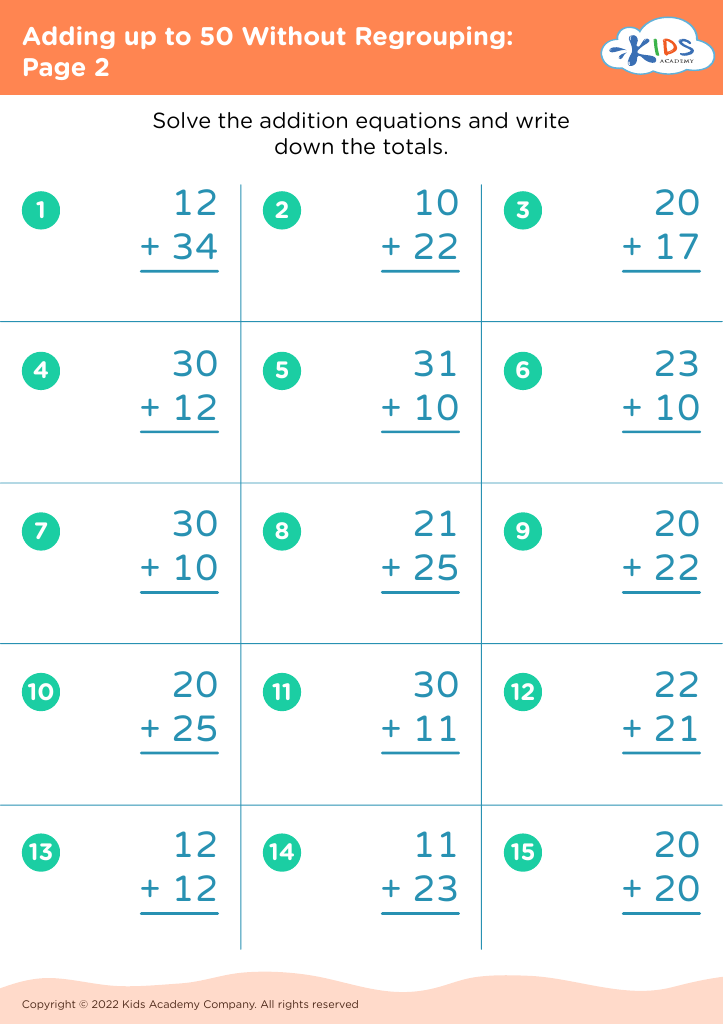
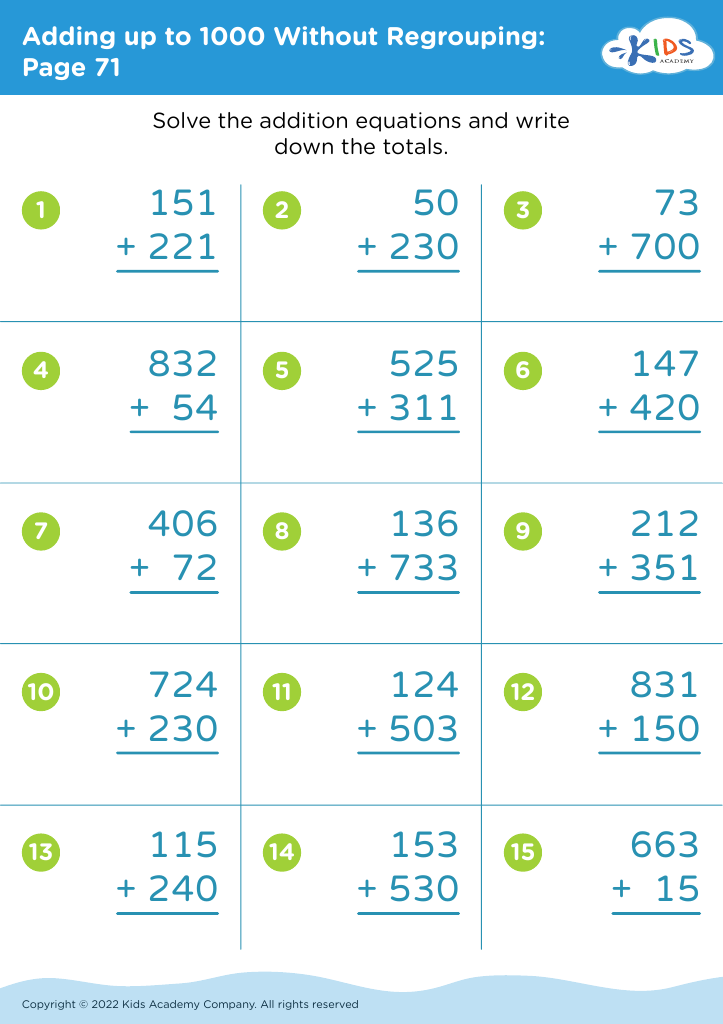
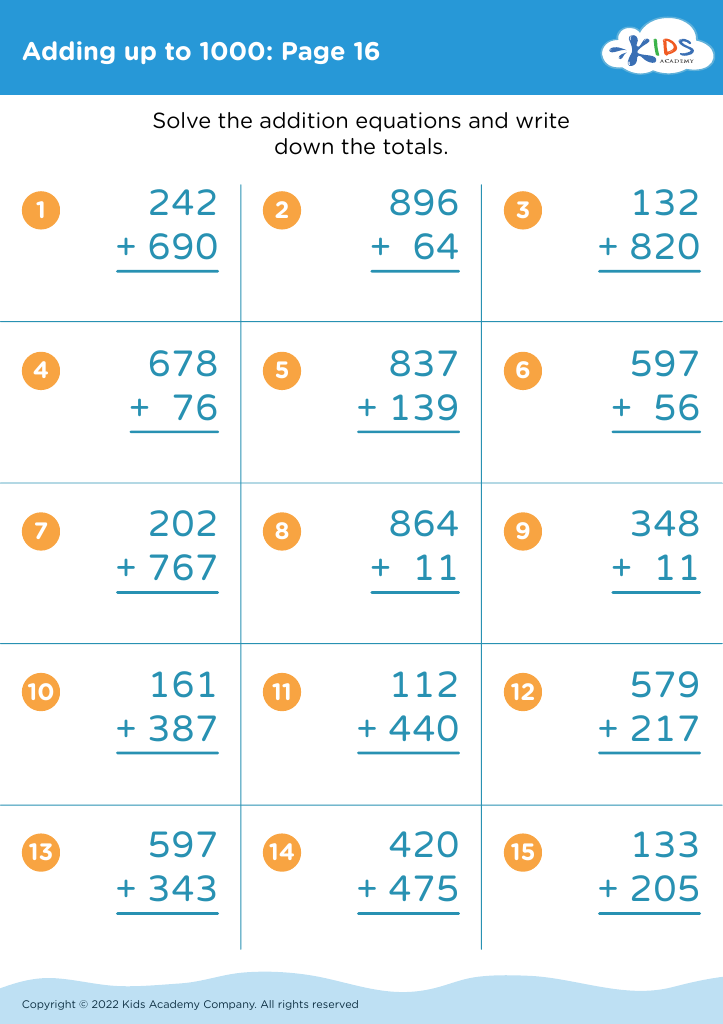
Boost your child’s math skills with our "Improve Counting Addition & Subtraction Worksheets" specifically designed for ages 3-9! These engaging worksheets focus on enhancing counting abilities while laying a solid foundation for addition and subtraction. Kids will enjoy interactive exercises that promote number recognition, counting fluency, and problem-solving skills, making math fun and enjoyable. Ideal for homeschooling or classroom activities, our worksheets cater to various learning styles and ensure kids gain confidence in their math abilities. Explore a wealth of resources tailored to spark curiosity and support young learners in mastering essential math concepts. Start building a strong math foundation today!
Favorites
With answer key
Interactive
Join Kids Academy for Free
Who is primarily going to use this learning content?








Parents and teachers play a crucial role in developing early math skills, particularly in counting, addition, and subtraction for children aged 3-9. Mastering these foundational concepts is essential as they set the stage for future mathematical learning and overall academic success.
First, counting helps children understand number relationships and builds number sense, which is vital for more complex math concepts later on. By engaging in counting activities, such as counting objects or finger play, children develop their spatial and logical thinking skills.
Second, addition and subtraction are not just about numbers; they enhance problem-solving abilities and critical thinking. When children learn to add and subtract, they also learn to decipher word problems, handle data, and engage in analytical thinking, which are essential skills in everyday life.
Moreover, strong early math skills correlate with improved performance in later grades, leading to greater confidence and a positive attitude towards math. This confidence can reduce math anxiety as children progress in their education.
Ultimately, nurturing these skills fosters a love of learning and encourages lifelong educational engagement. By prioritizing counting, addition, and subtraction, parents and teachers set a solid foundation for children’s future mathematical journeys and overall cognitive development.








