Improve problem-solving Addition & Subtraction Worksheets for Ages 3-9
4 filtered results
-
From - To
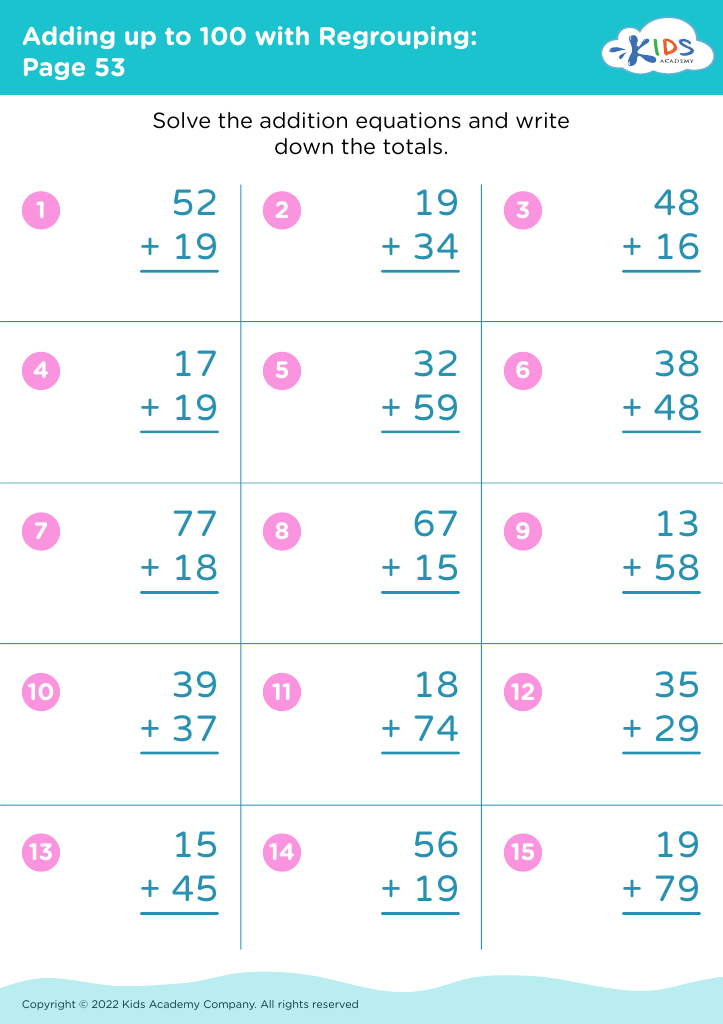
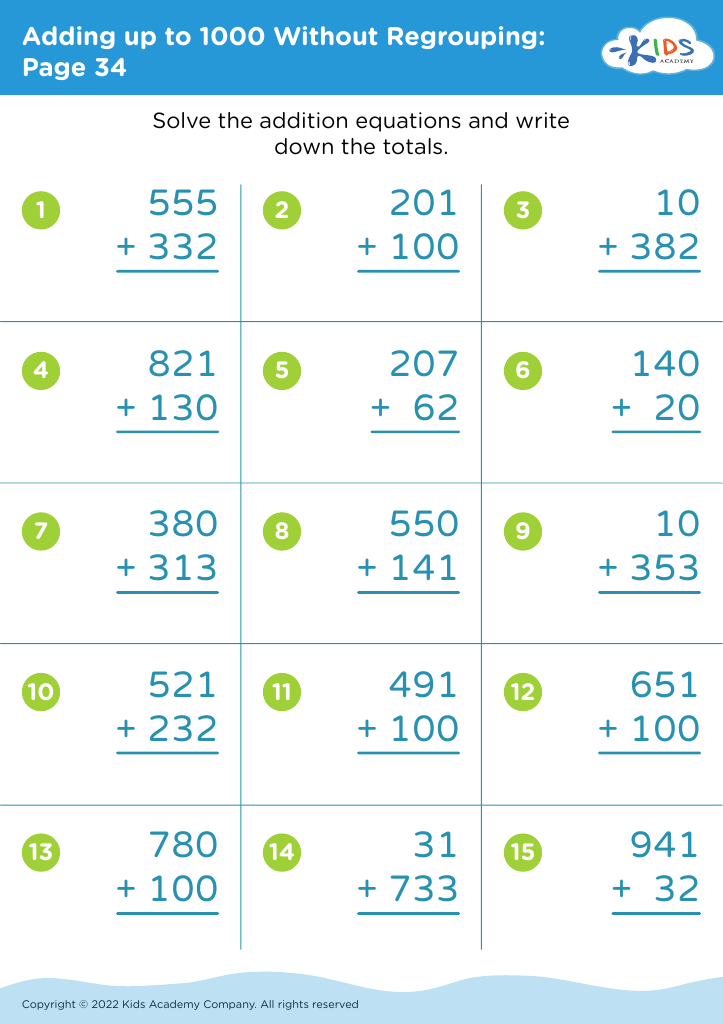
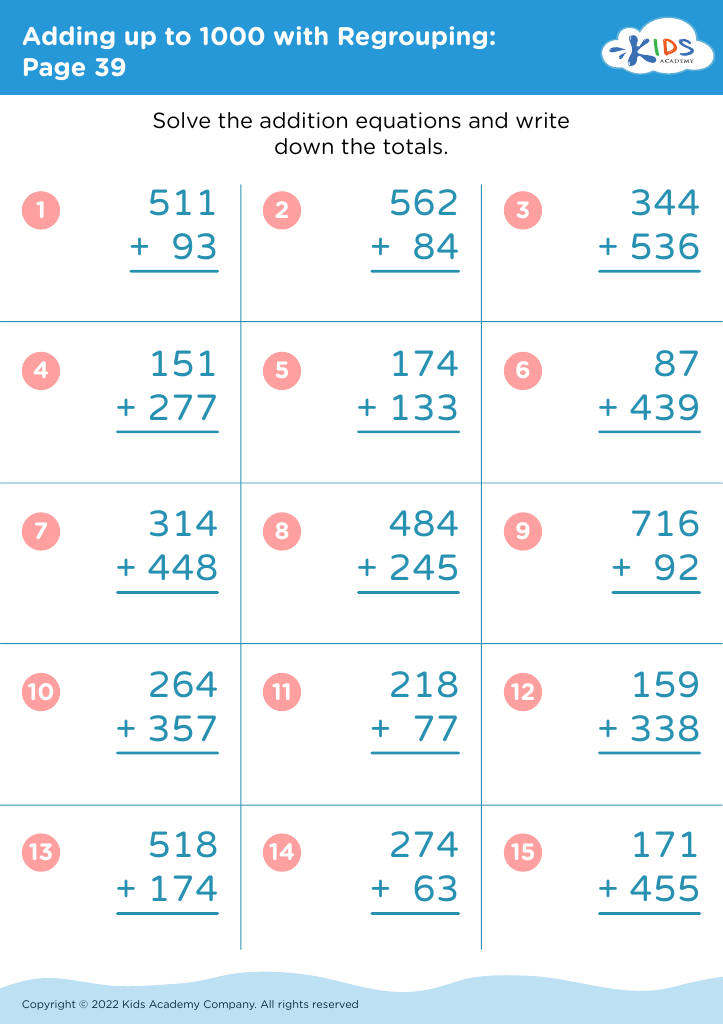
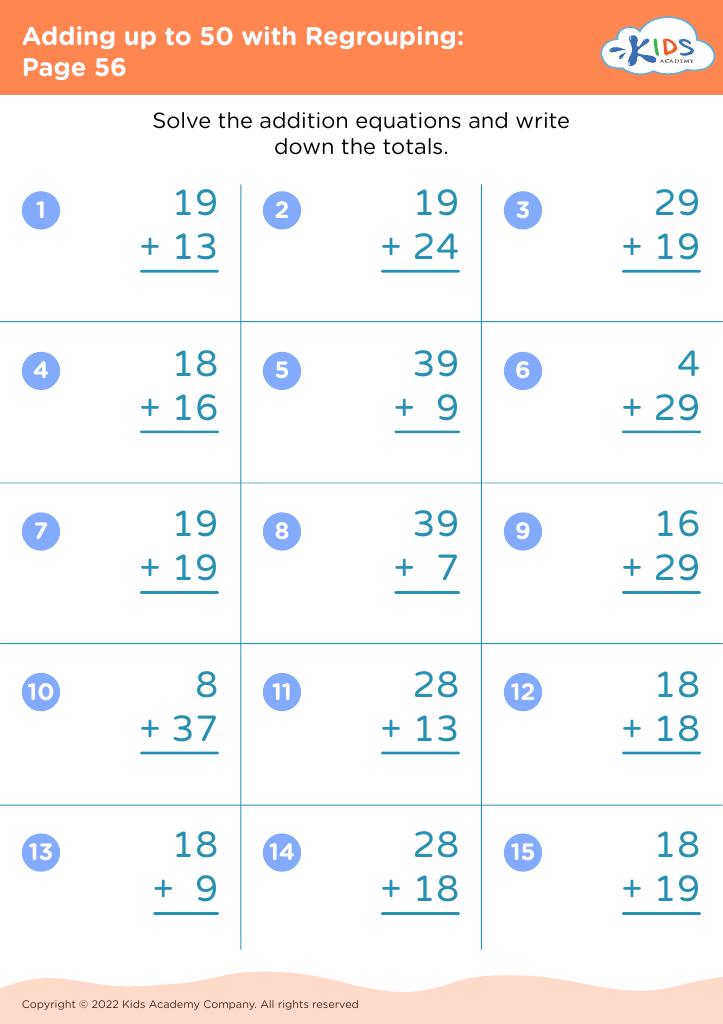
Discover our engaging "Improve Problem-Solving Addition & Subtraction Worksheets for Ages 3-9" designed to boost your child's math skills through fun and interactive exercises. Our worksheets, tailored for young learners, incorporate engaging visuals and step-by-step problem-solving techniques to make mastering addition and subtraction a breeze. Perfect for in-class or at-home learning, these resources help children develop critical thinking abilities, enhance their mathematical foundation, and promote a love for learning. Trusted by parents and educators alike, Kids Academy offers a comprehensive toolset to support your child's educational journey. Visit us for endless learning fun!








Parents and teachers play a crucial role in the development of early math skills, especially addition and subtraction, for children aged 3-9. These foundational arithmetic skills are essential for several reasons. First, they are building blocks for more complex mathematical concepts. A strong grasp of basic addition and subtraction paves the way for more advanced topics like multiplication, division, and algebra.
Second, problem-solving with these operations enhances critical thinking. By figuring out how to add or subtract, children learn to approach and solve problems systematically. This kind of analytical thinking extends beyond math, benefitting areas like reading comprehension and logical reasoning.
Moreover, mastering these skills early fosters a positive attitude toward math. Children who struggle with basic concepts may develop math anxiety, which can hinder their academic progress and interest in STEM fields. On the other hand, children who succeed feel more confident and are more likely to enjoy learning.
Lastly, everyday life is full of situations requiring basic math skills—shopping, cooking, and even time management involve addition and subtraction. Therefore, fostering these skills early prepares children not just for school, but for life.
In summary, focusing on improving problem-solving abilities in addition and subtraction for young children is vital for their academic success, development of critical thinking, and practical life skills.








