Improve reading skills Addition & Subtraction Worksheets for Ages 3-9 - Page 2
29 filtered results
-
From - To
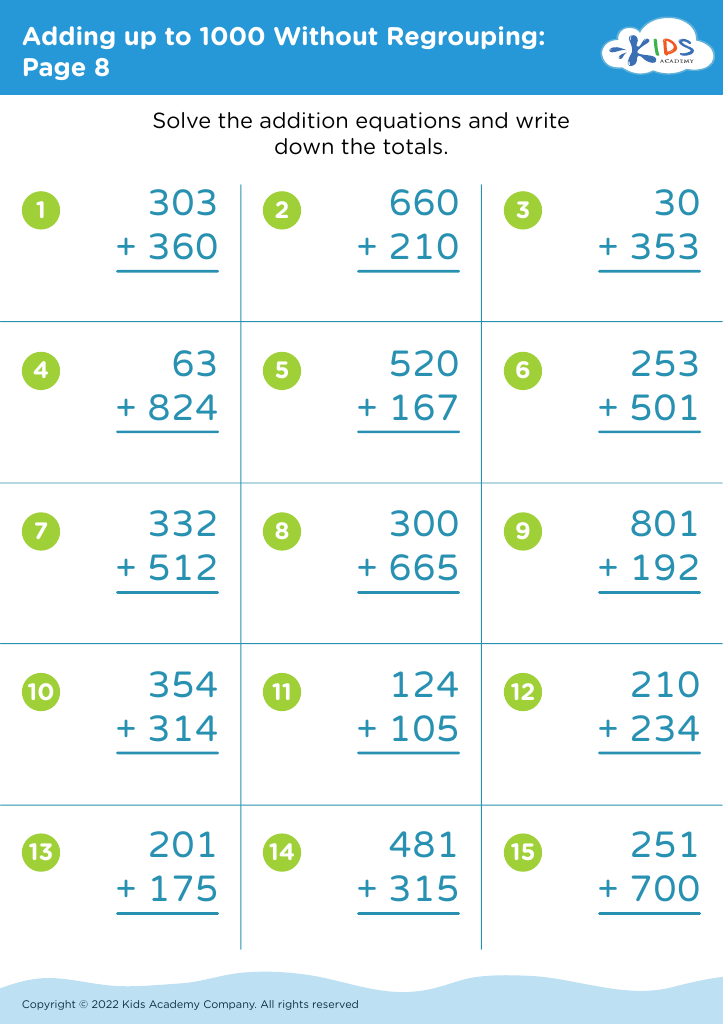
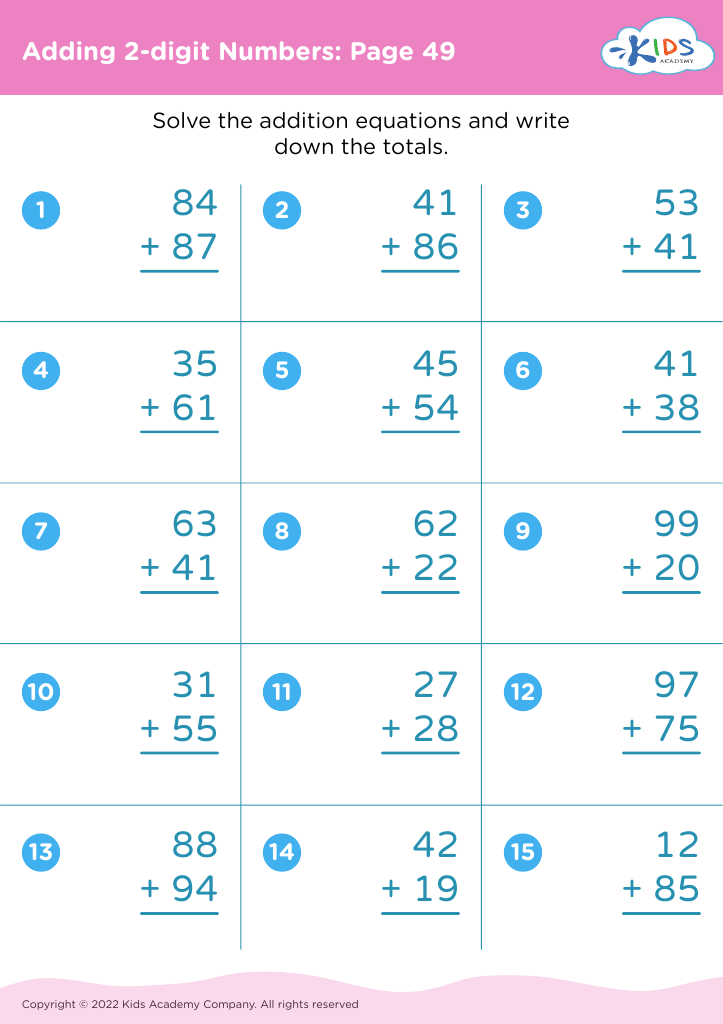
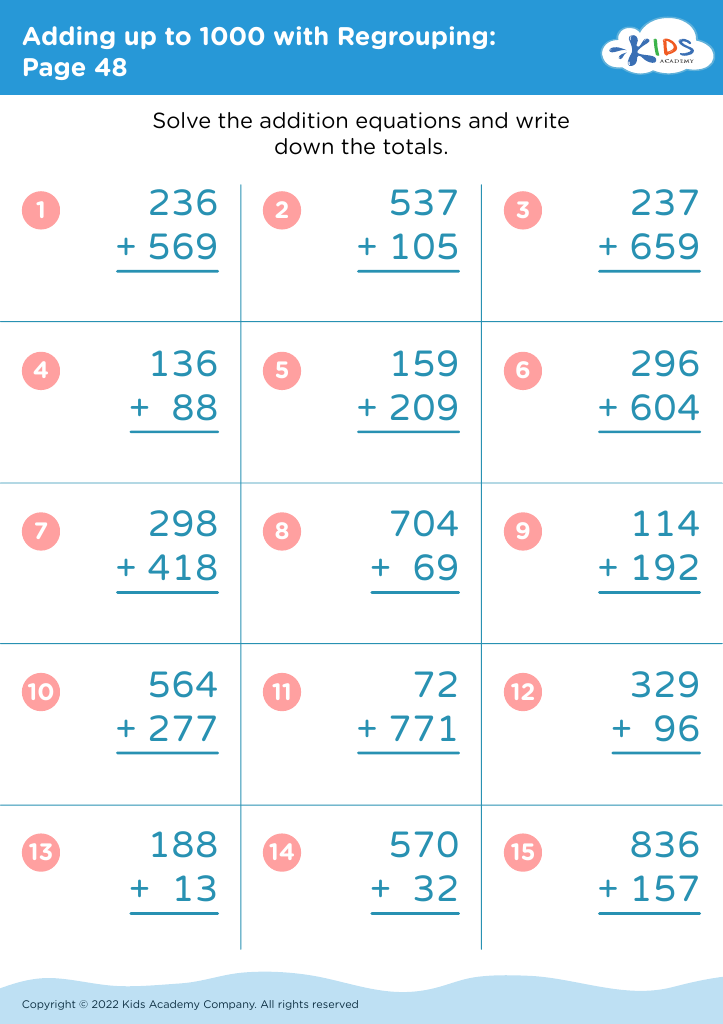
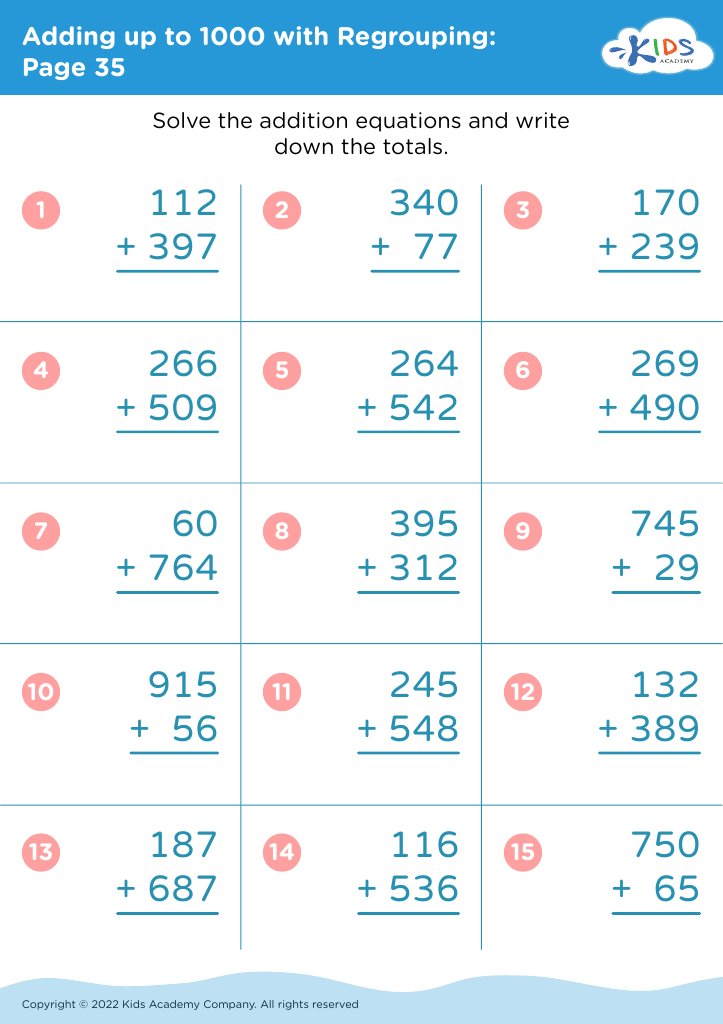
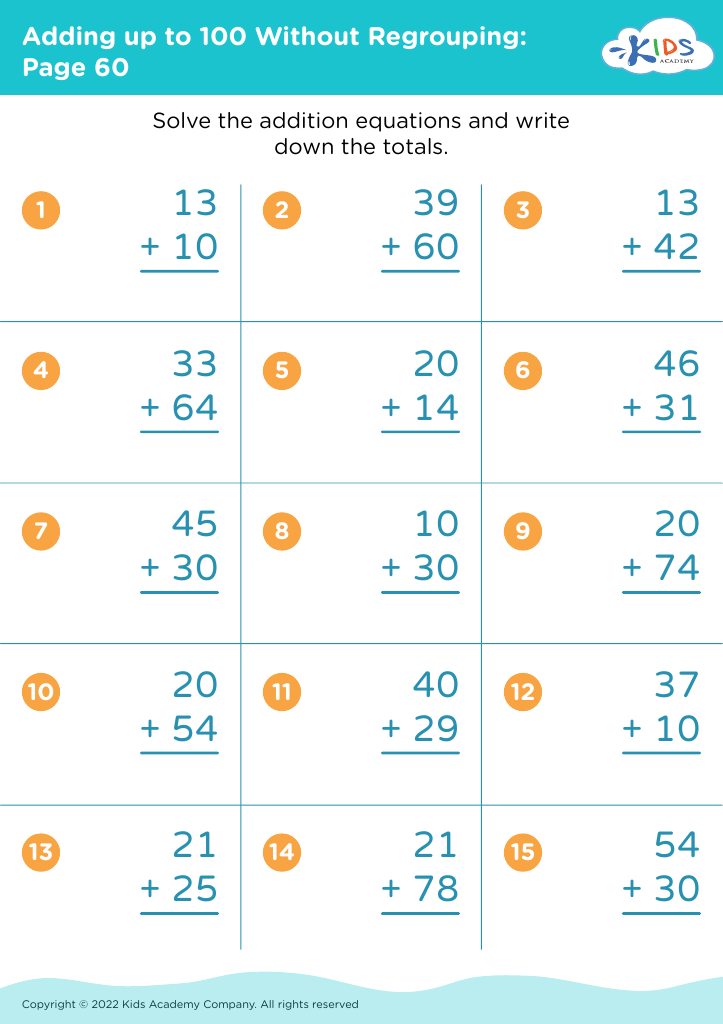








Parents and teachers should prioritize improving reading and math skills, particularly addition and subtraction, for children aged 3-9 as these foundational abilities are crucial for lifelong learning. Early reading skills enhance vocabulary, comprehension, and communication, fostering a love for literature. This lays a critical groundwork for later academic success, as strong reading skills encourage critical thinking and creativity.
Similarly, mastering basic addition and subtraction allows children to engage with essential mathematical concepts that form the basis for more complex problem-solving later on. Skills in these areas cultivate logical reasoning, spatial awareness, and a positive attitude toward math—key components for academic confidence.
Furthermore, early proficiency in these skills is linked to overall school performance, impacting self-esteem and motivation. When children feel competent in these foundational areas, they are more likely to participate actively in class discussions and engage in other learning opportunities.
Investing time and resources into developing reading and math skills for young children not only supports their academic journeys but also equips them with essential tools for navigating everyday life challenges. Parents and teachers play a vital role in creating an environment that nurtures curiosity and a growth mindset, ensuring these young learners thrive.








