Problem-solving abilities Addition & Subtraction Worksheets for Ages 3-9 - Page 2
42 filtered results
-
From - To
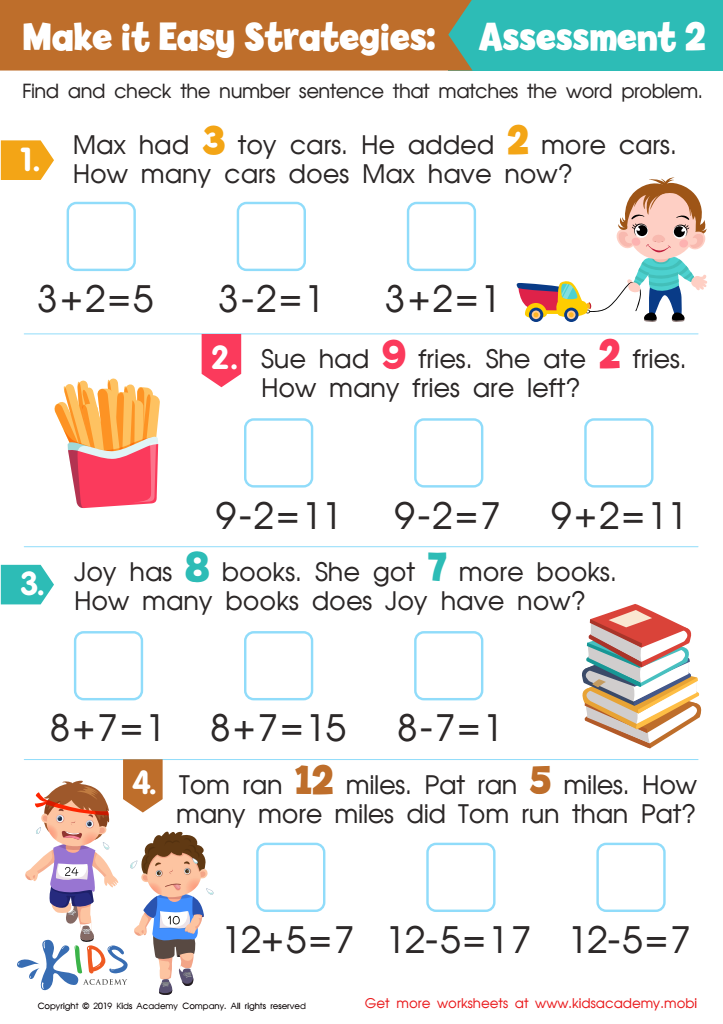
Make it Easy Strategies: Assessment 2 Worksheet
 Assign to My Students
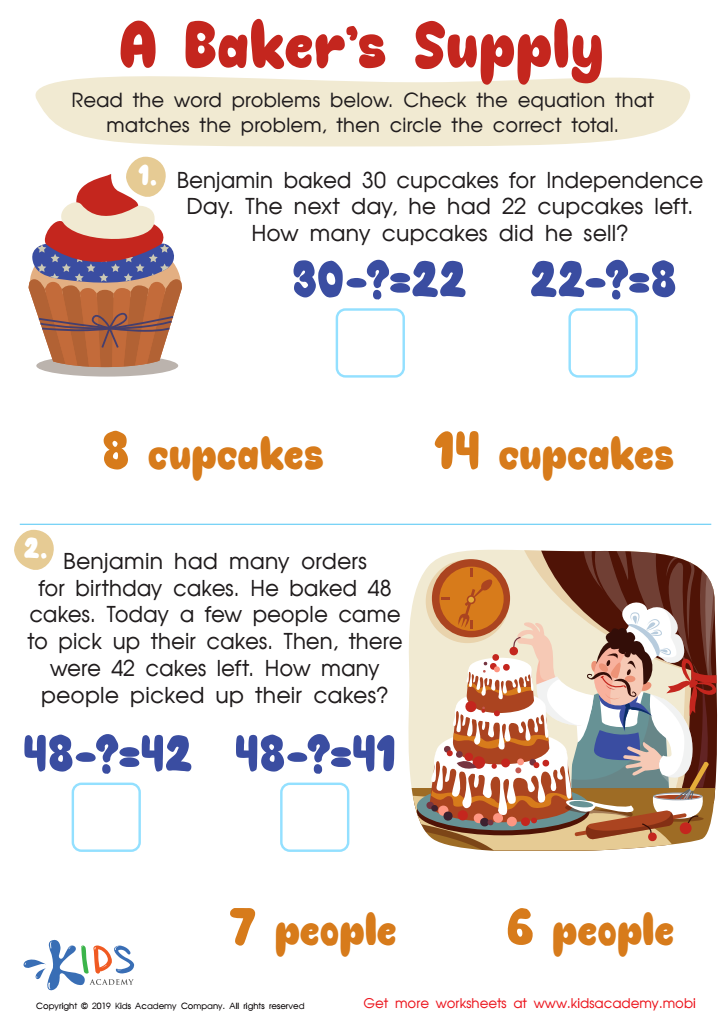
A Baker's Supply Worksheet
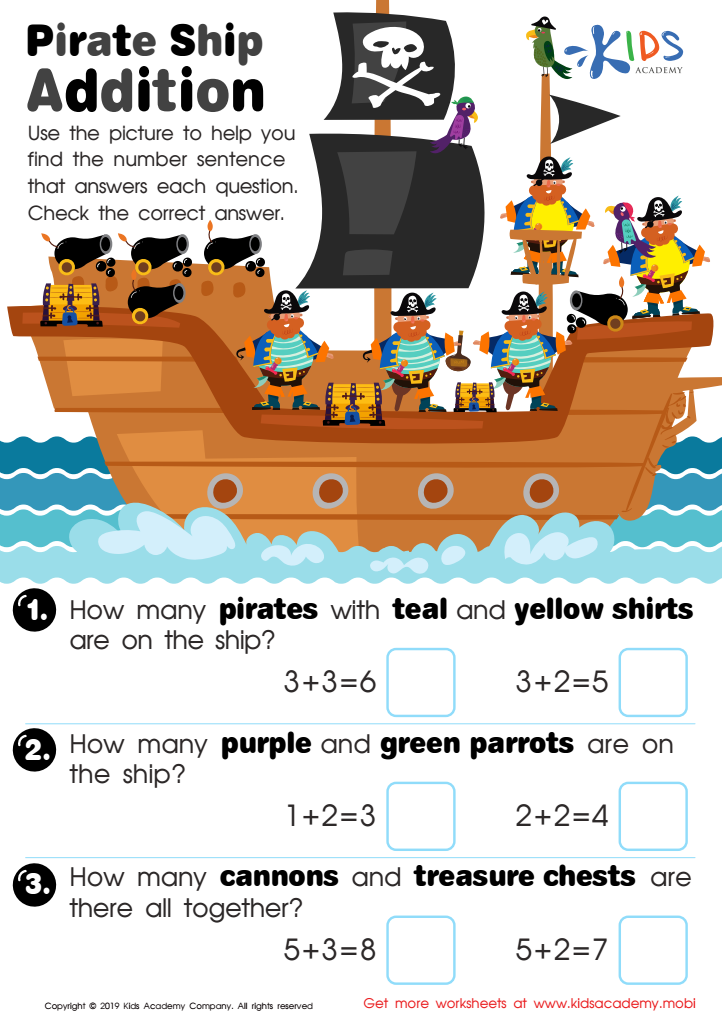
Pirate Ship Addition Worksheet
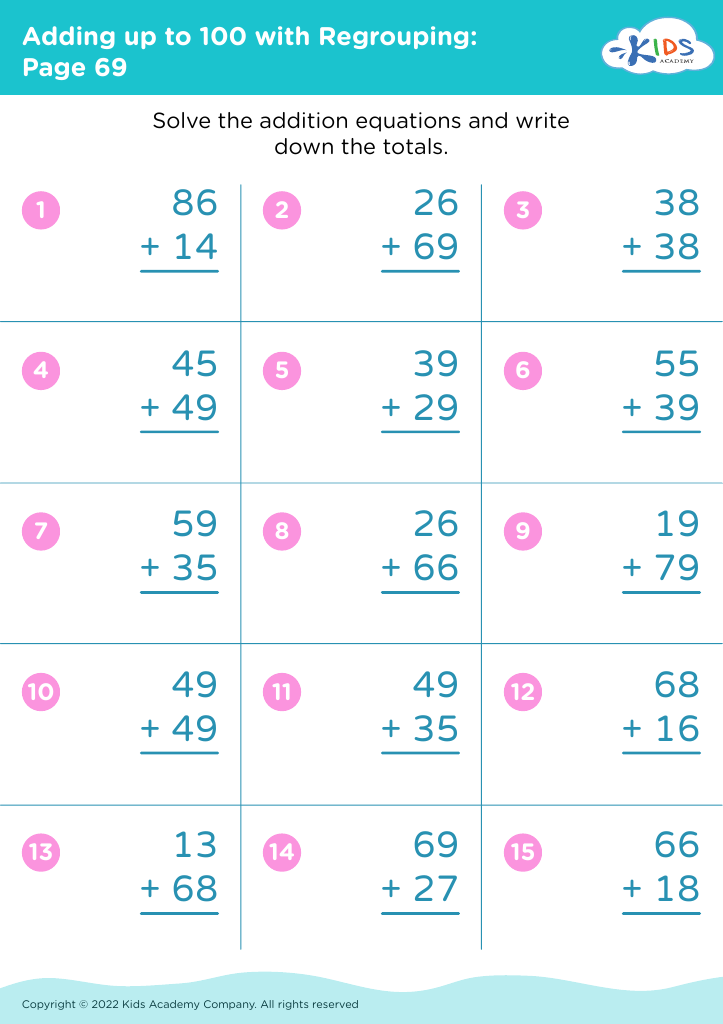
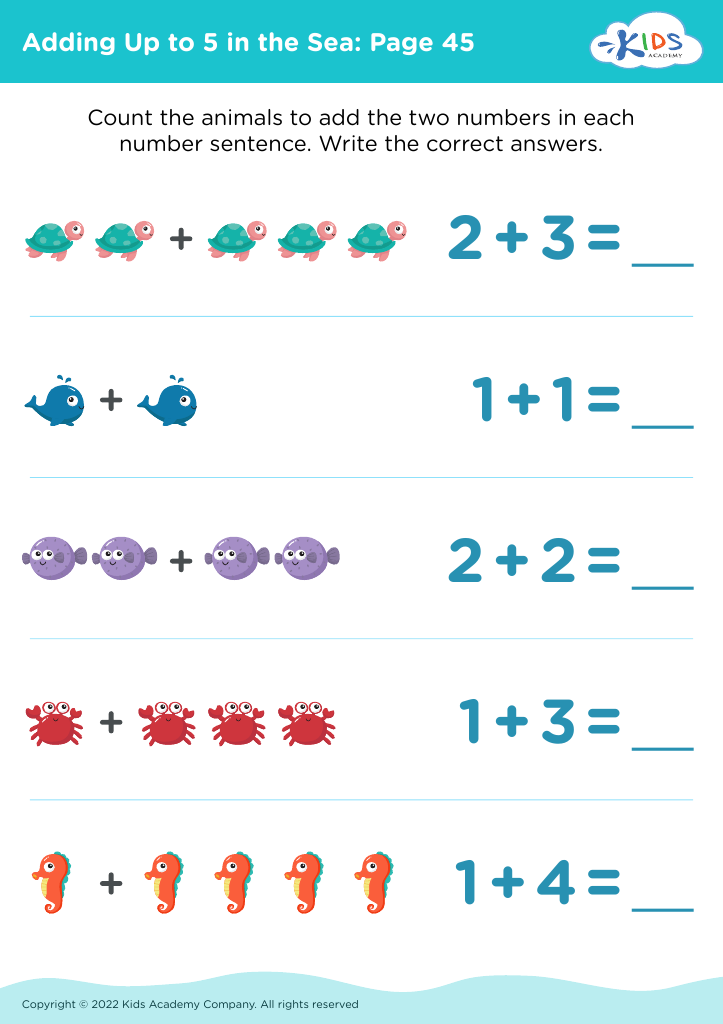
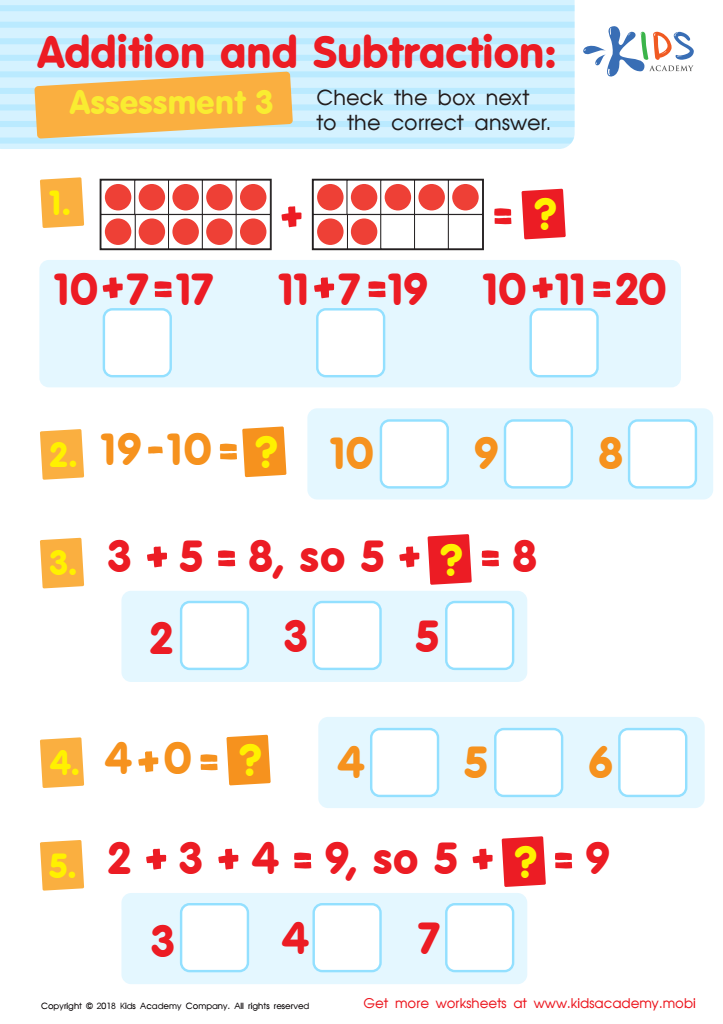
Addition and Subtraction Assessment 3 Worksheet
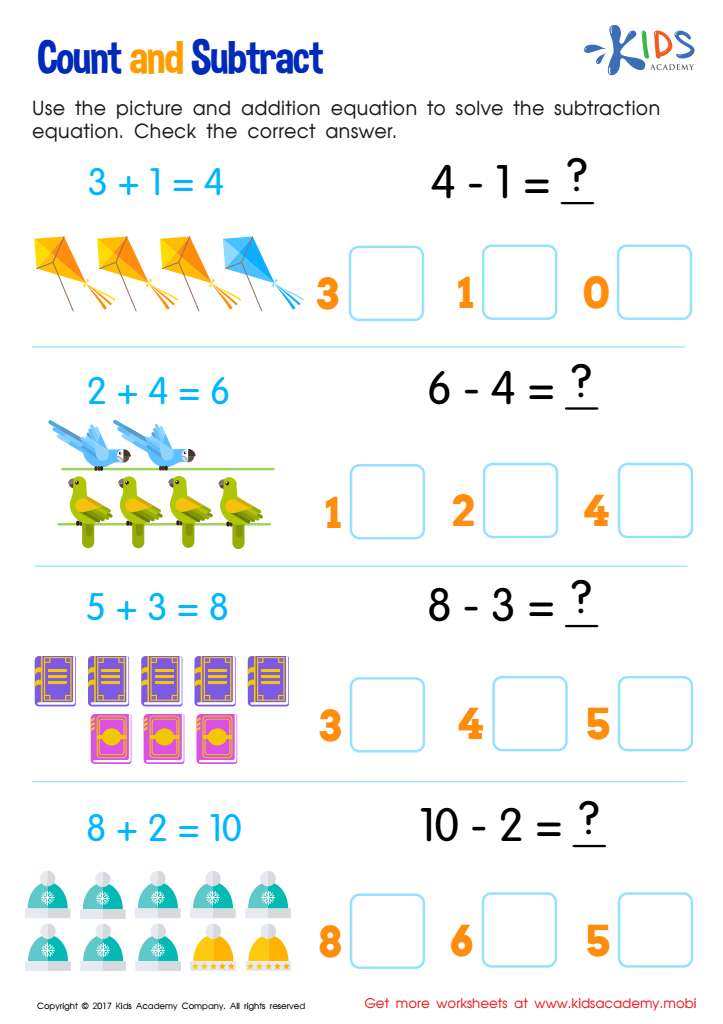
Count and Subtract Worksheet
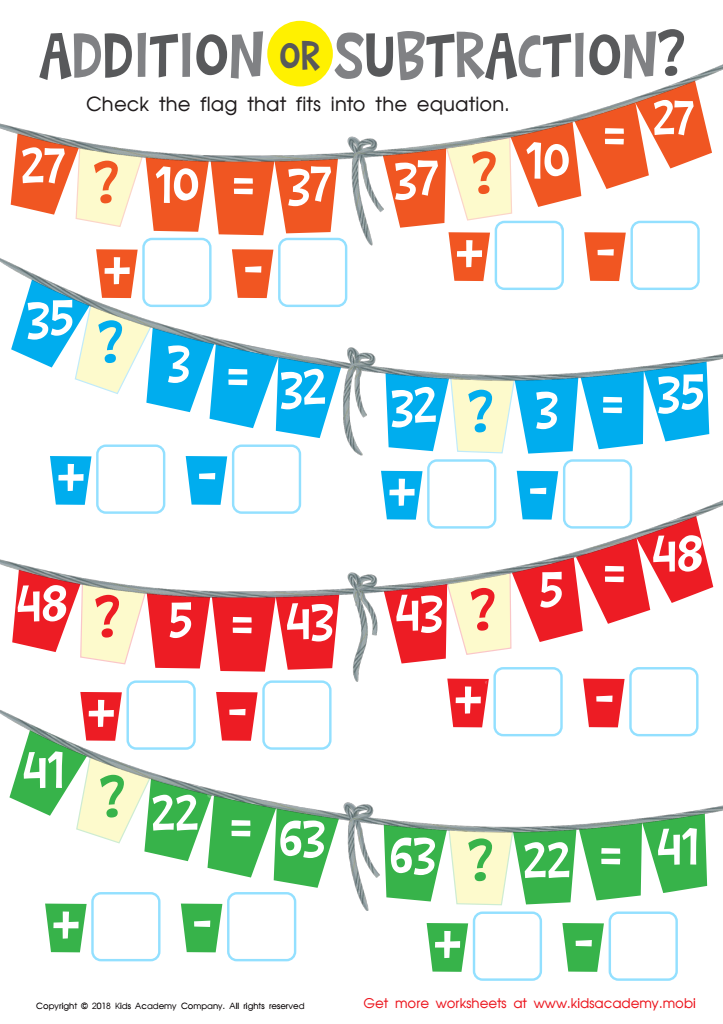
Addition or Subtraction? Worksheet
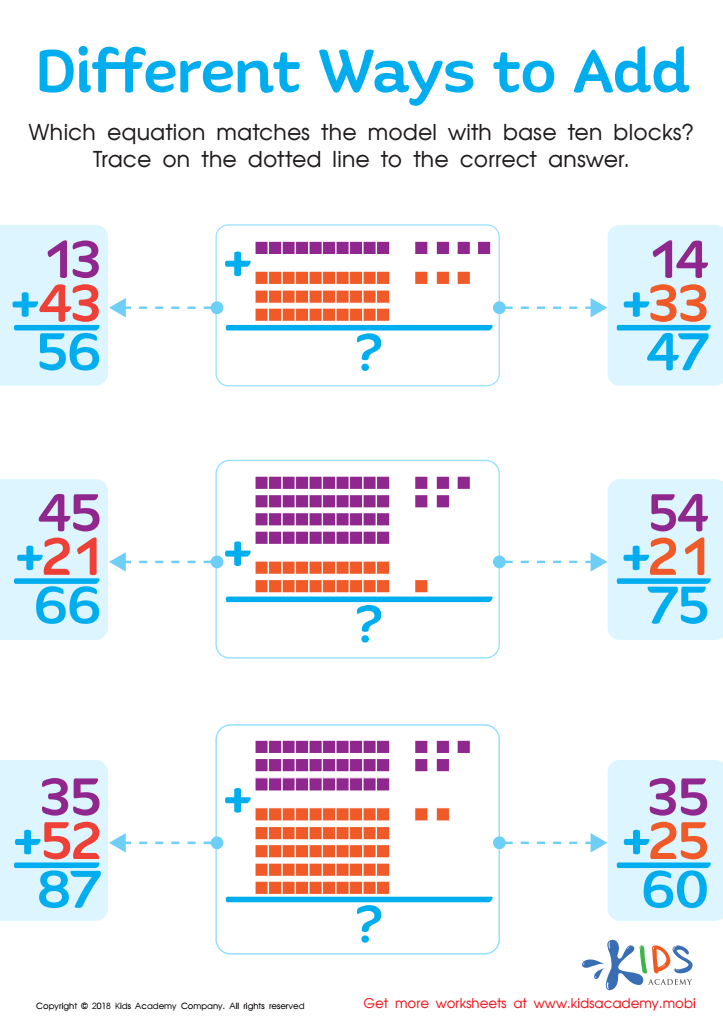
Different Ways to Add Worksheet
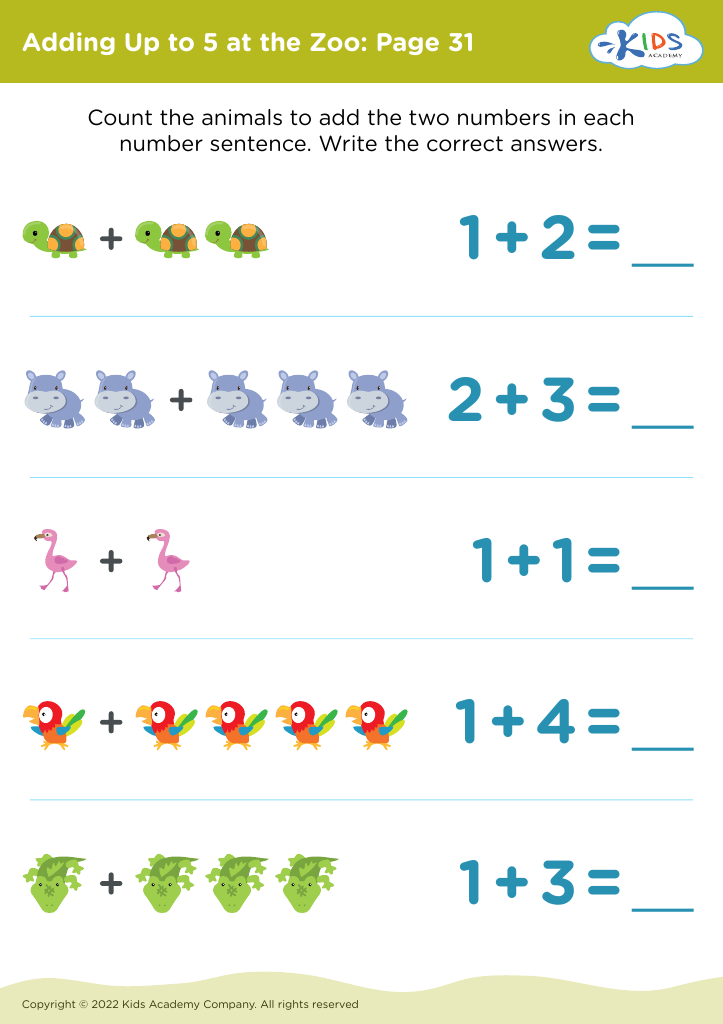
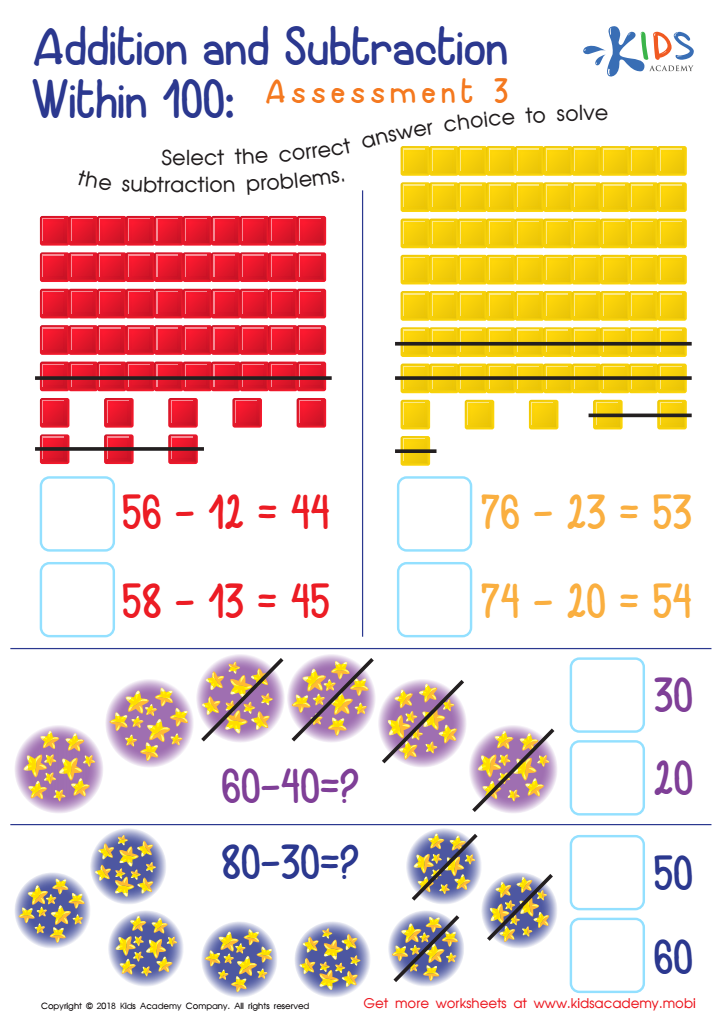
Addition and Subtraction Within 1: Assessment 3 Worksheet
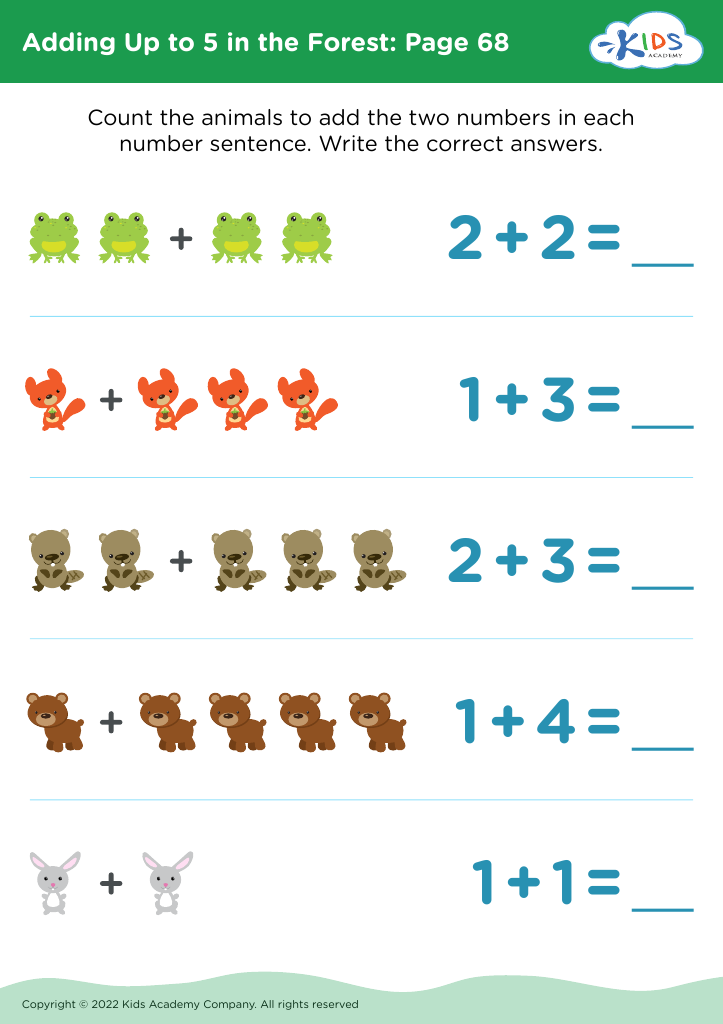
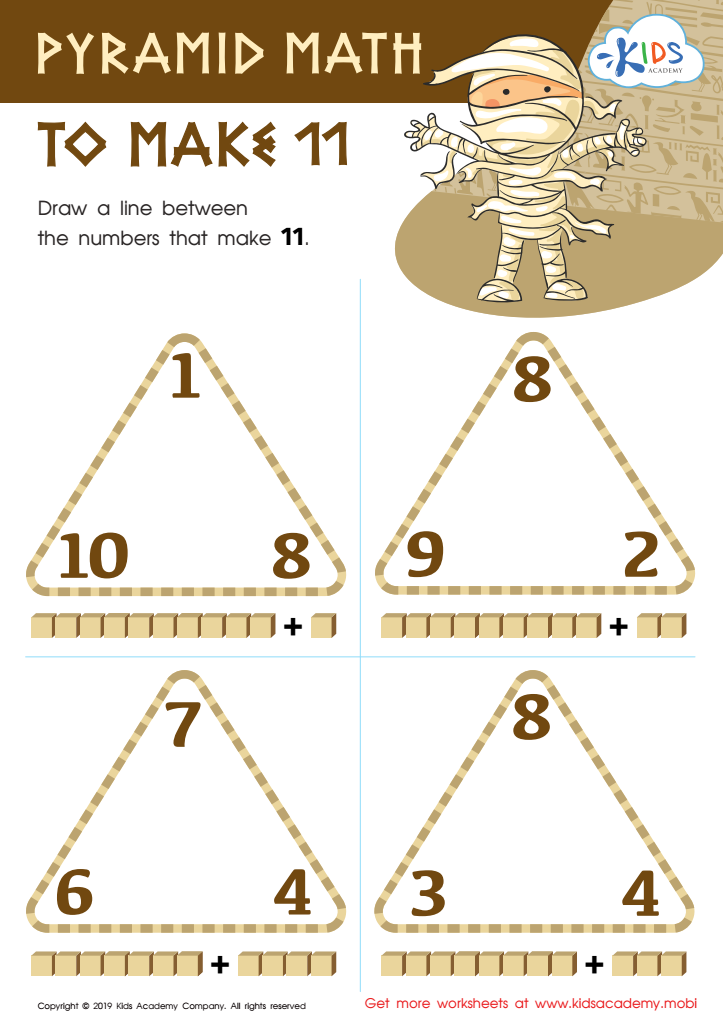
Pyramid Math to Make 11 Worksheet
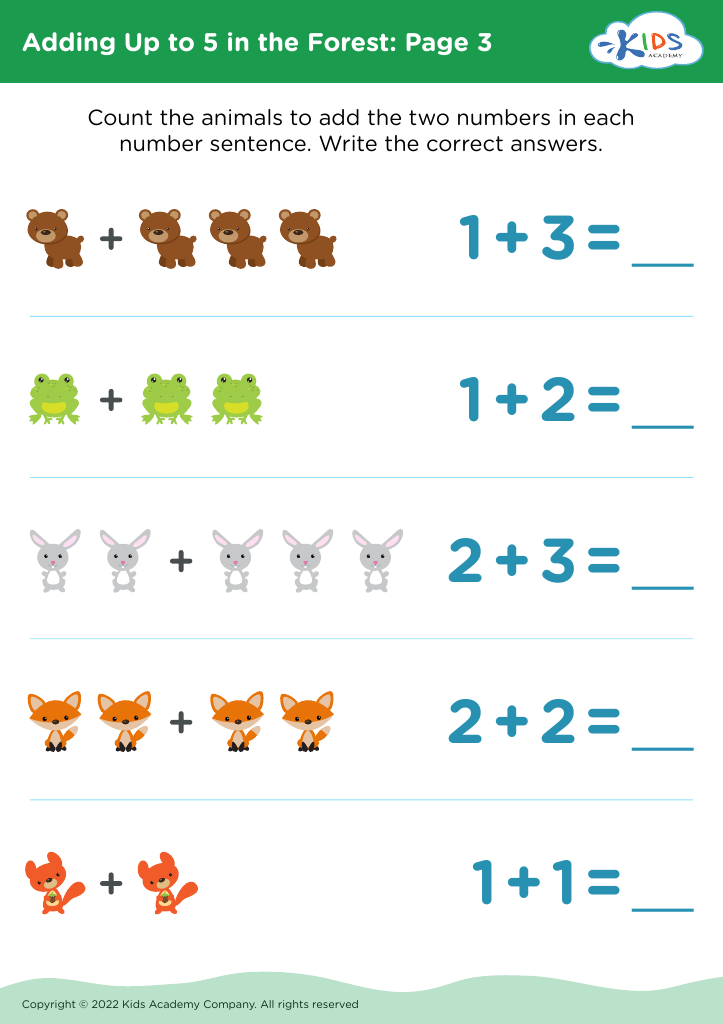







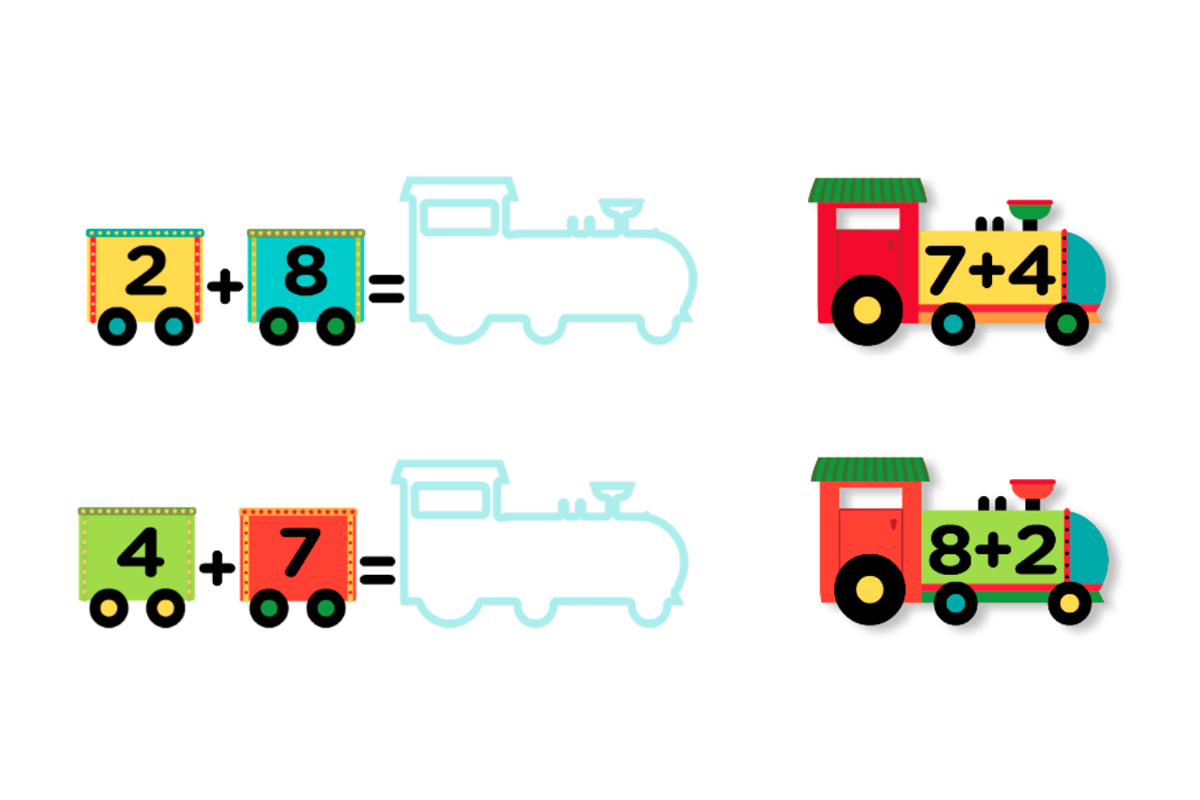
Problem-solving abilities in addition and subtraction are crucial for children aged 3-9, as they lay the foundation for more complex mathematical concepts and critical-thinking skills later in life. Early mastery of these skills equips children with the ability to approach challenges systematically, fostering independence and resilience. At this age, children are naturally curious and eager to explore, making it the ideal time to introduce them to mathematical reasoning through engaging activities and games.
Parents and teachers play a pivotal role in nurturing these abilities. They can create an environment rich in opportunities for practice, encouraging children to use addition and subtraction in real-world contexts—like counting toys, sharing snacks, or solving puzzles. This not only enhances numerical fluency but also reinforces cognitive processes linked to problem-solving, such as analyzing relationships and making connections.
Furthermore, children who develop strong problem-solving skills in mathematics are better prepared for future academic pursuits. They may find subjects like science and technology more accessible, as these fields often rely on quantitative reasoning. By prioritizing these fundamental skills, parents and teachers are investing in children's holistic development, preparing them not only for academic success but also for everyday decision-making and problem-solving scenarios.








