Problem-solving ability Addition & Subtraction Worksheets for Ages 3-9
3 filtered results
-
From - To
Discover our engaging "Problem-solving Ability Addition & Subtraction Worksheets" designed specifically for children ages 3-9. These interactive worksheets help young learners enhance their critical thinking and problem-solving skills through fun math challenges. Tailored to meet developmental milestones, our resources provide a diverse range of addition and subtraction activities that make learning enjoyable. With colorful visuals and age-appropriate scenarios, kids will build foundational math skills while boosting their confidence. Perfect for home or classroom use, these worksheets foster independence and ensure a solid understanding of mathematical concepts. Equip your child with essential problem-solving abilities and watch them excel in math!
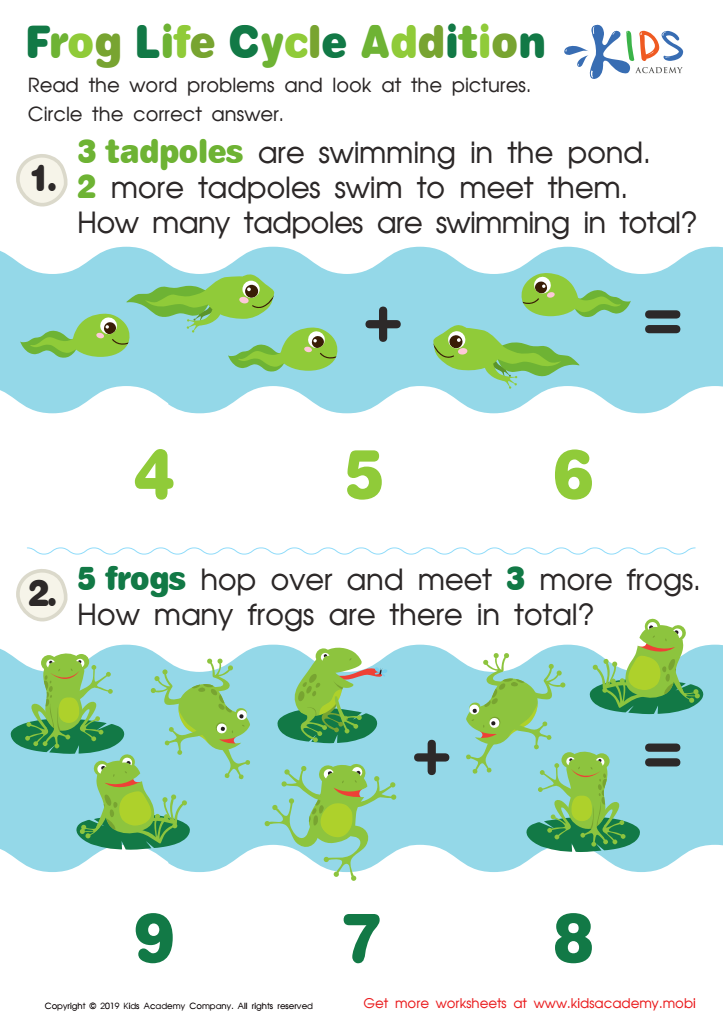
Frog Life Cycle Addition Worksheet
 Assign to My Students
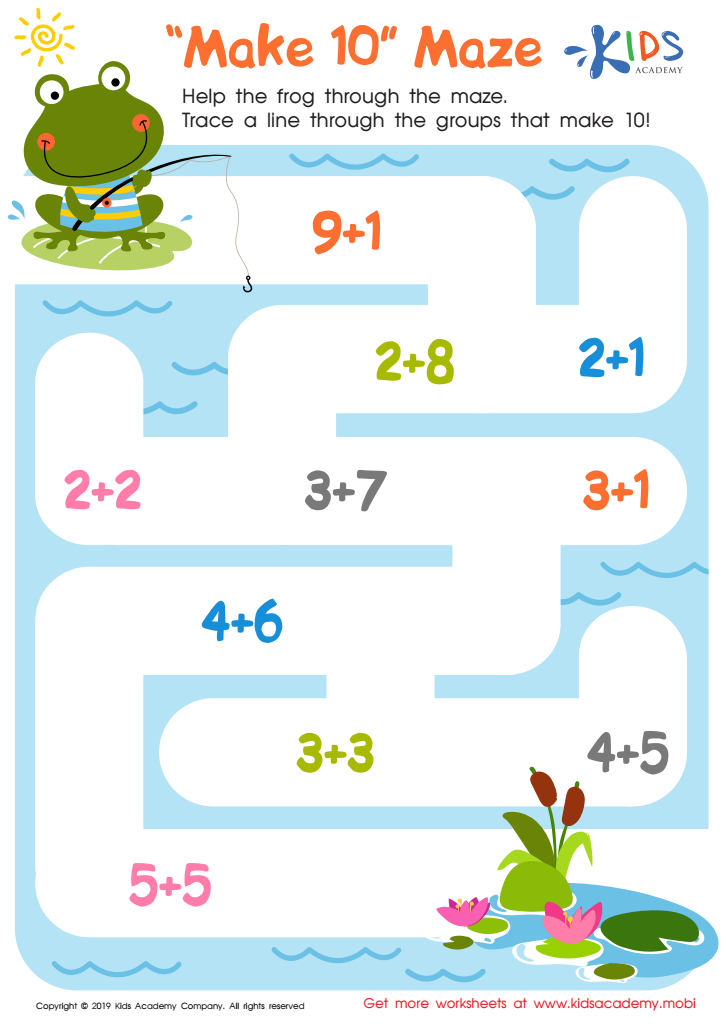
Make 10 Maze Worksheet








Problem-solving ability in addition and subtraction is crucial for children aged 3 to 9 as it lays the foundation for their mathematical understanding and critical thinking skills. At this developmental stage, children are not only learning basic arithmetic but are also honing their ability to think logically and approach challenges creatively. Engaging in problem-solving activities fosters a sense of curiosity and builds resilience, as children learn to tackle new and unfamiliar situations.
Parents and teachers should prioritize this skill because it promotes cognitive development, enhancing a child's ability to analyze, reason, and make connections between concepts. Moreover, strong problem-solving skills in mathematics translate to improved performance in various subjects and real-life scenarios, encouraging a growth mindset.
Additionally, early proficiency in addition and subtraction boosts children's confidence in their mathematical abilities, making them more eager to participate in classroom discussions and tackle complex problems as they progress through their education. By providing supportive environments that encourage exploration and inquiry, adults can help children develop a positive attitude toward math, promoting lifelong learning and academic success. Ultimately, fostering problem-solving abilities in early education is essential for equipping children with the tools they need to navigate both academic and everyday challenges effectively.








