
Telling time Addition & Subtraction Worksheets for Ages 3-9
3 filtered results
Difficulty Level
Grade
Age
-
From - To
Subject
Activity
Standards
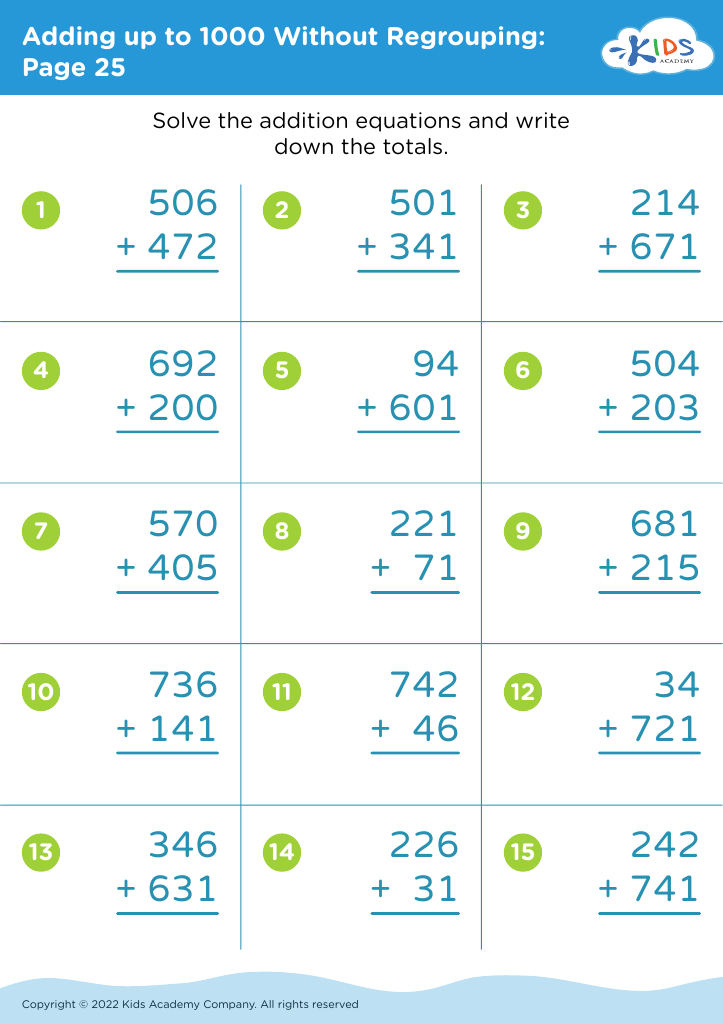
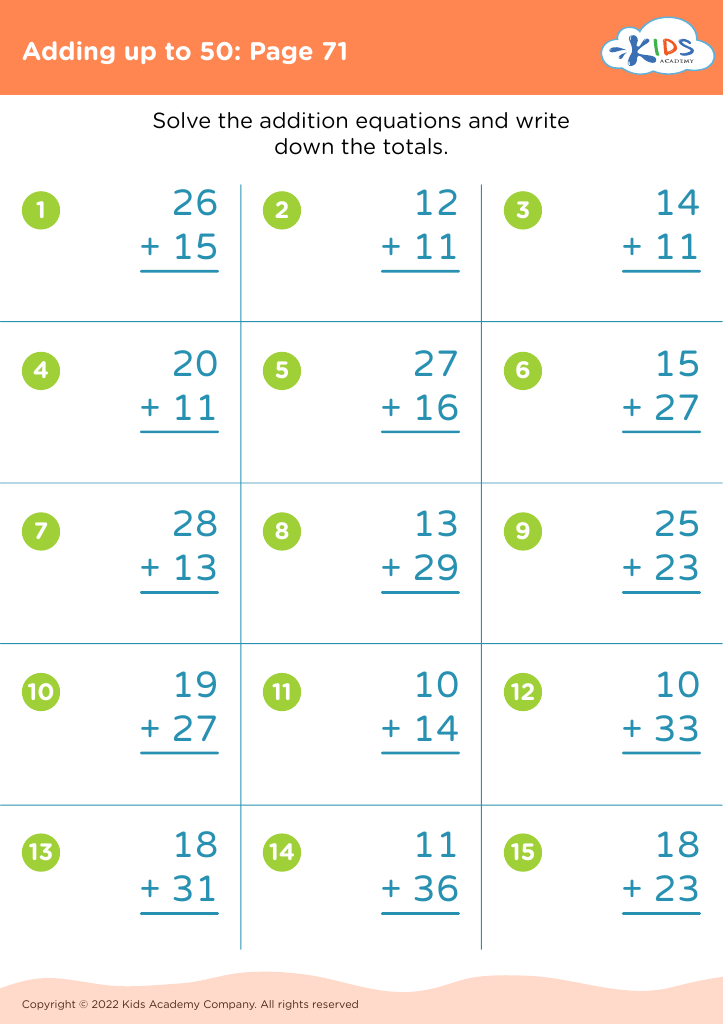
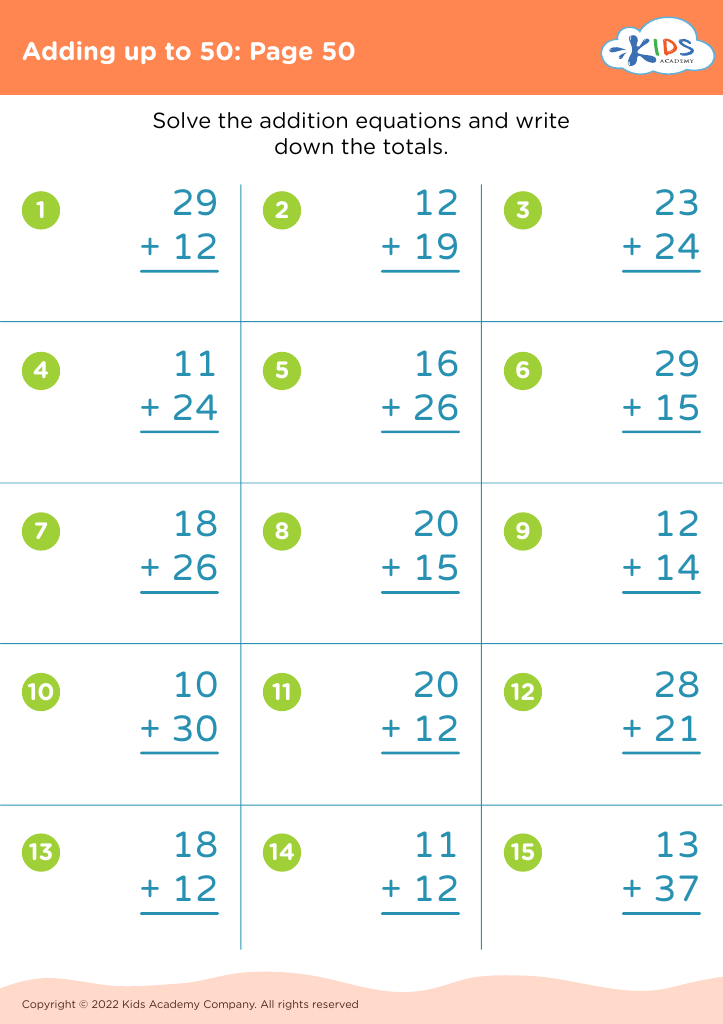
Explore our engaging "Telling Time Addition & Subtraction Worksheets" designed for children ages 3-9. These worksheets combine essential math skills with the fun of telling time, helping young learners develop a solid foundation in addition and subtraction while mastering clock reading. Our colorful, interactive activities capture children's imagination and reinforce their understanding of hours and minutes. Ideal for home or classroom use, these resources provide step-by-step guidance to facilitate learning and build confidence in early math skills. Perfect for educators and parents seeking to make learning enjoyable, our worksheets offer a comprehensive approach to understanding time and basic arithmetic!
Favorites
With answer key
Interactive
Join Kids Academy for Free
Who is primarily going to use this learning content?








Telling time, along with mastering addition and subtraction, is foundational for children's cognitive development, particularly for those aged 3-9. Understanding time helps young learners grasp the structure of their daily lives, promoting routine and responsibility. It instills an awareness of timing, which enhances their organizational skills and prepares them for more complex concepts in math and life.
Adding and subtracting are core mathematical skills that establish a solid base for advanced arithmetic and problem-solving. By engaging in these activities early, children develop numeracy skills crucial not only for academic success but also for everyday decision-making and critical thinking.
Incorporating time, addition, and subtraction into play and learning promotes cognitive flexibility. Parents and teachers can create engaging activities that make learning enjoyable and age-appropriate. For instance, games involving clocks or counting objects can encourage children to practice these skills without the pressure of traditional learning methods.
Ultimately, mastering these concepts boosts children's confidence and independence. As they learn to manage time and solve mathematical problems, they build critical life skills that extend beyond classroom walls, ensuring they are better equipped to navigate the world around them. Thus, fostering these skills should be a priority for caregivers and educators alike.








