Understanding equations Addition & Subtraction Worksheets for Ages 3-9
7 filtered results
-
From - To
Discover engaging "Understanding Equations Addition & Subtraction Worksheets" for children aged 3-9 at Kids Academy! Our expertly crafted worksheets help young learners master the basics of addition and subtraction through fun, age-appropriate activities designed to boost mathematical understanding and confidence. These exercises seamlessly blend learning with play, reinforcing critical thinking and problem-solving skills. Perfect for classrooms or home use, our worksheets cater to different skill levels, ensuring every child's success in developing essential math foundations. Visit our website for diverse, high-quality resources tailored to support your child's educational journey in a positive and encouraging environment.
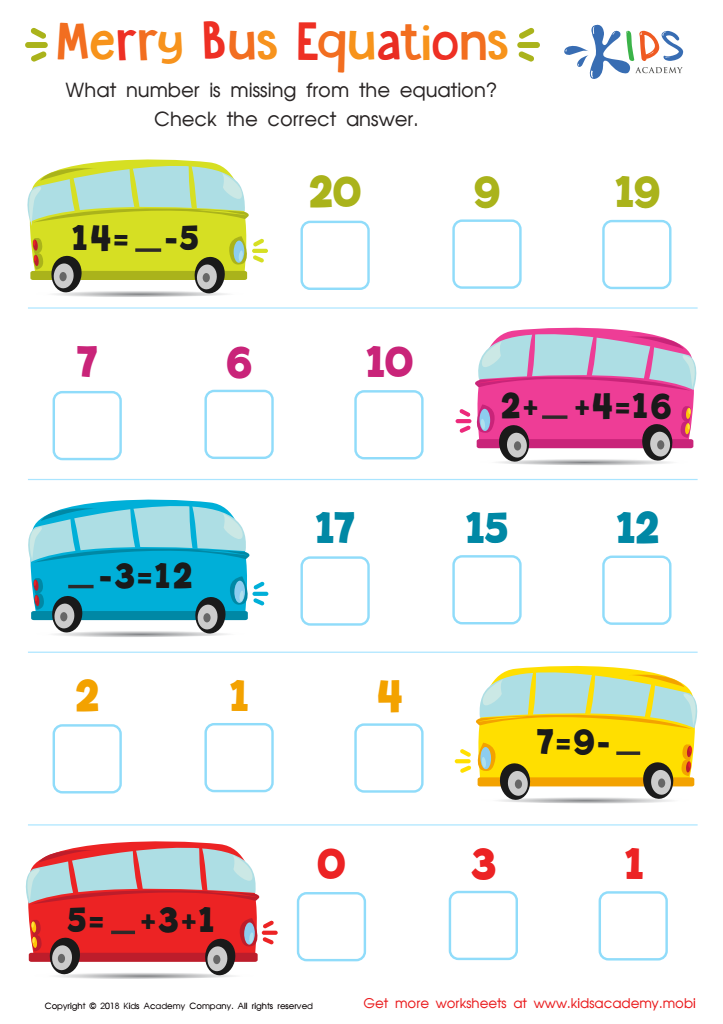
Merry Bus Equations Worksheet
 Assign to My Students
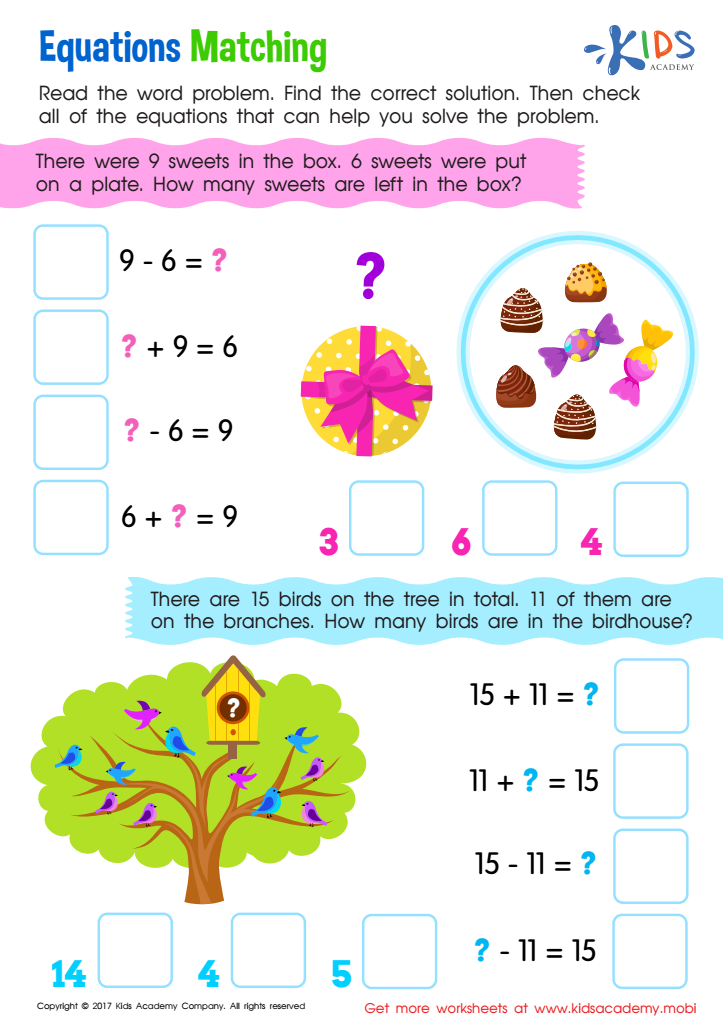
Equations Matching Word Problems Worksheet
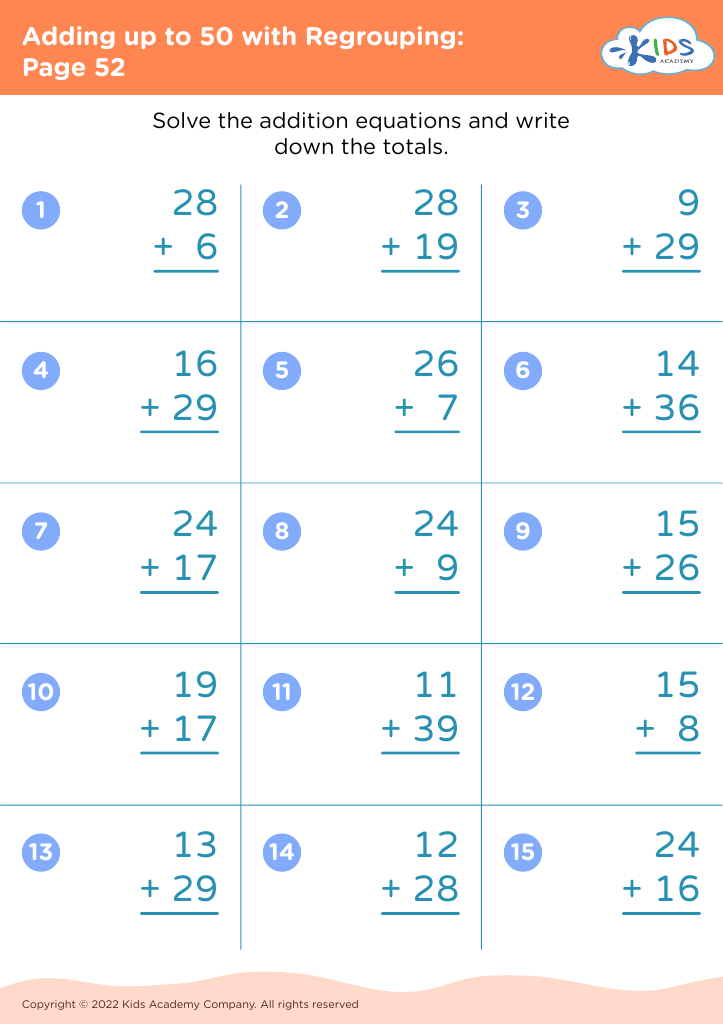
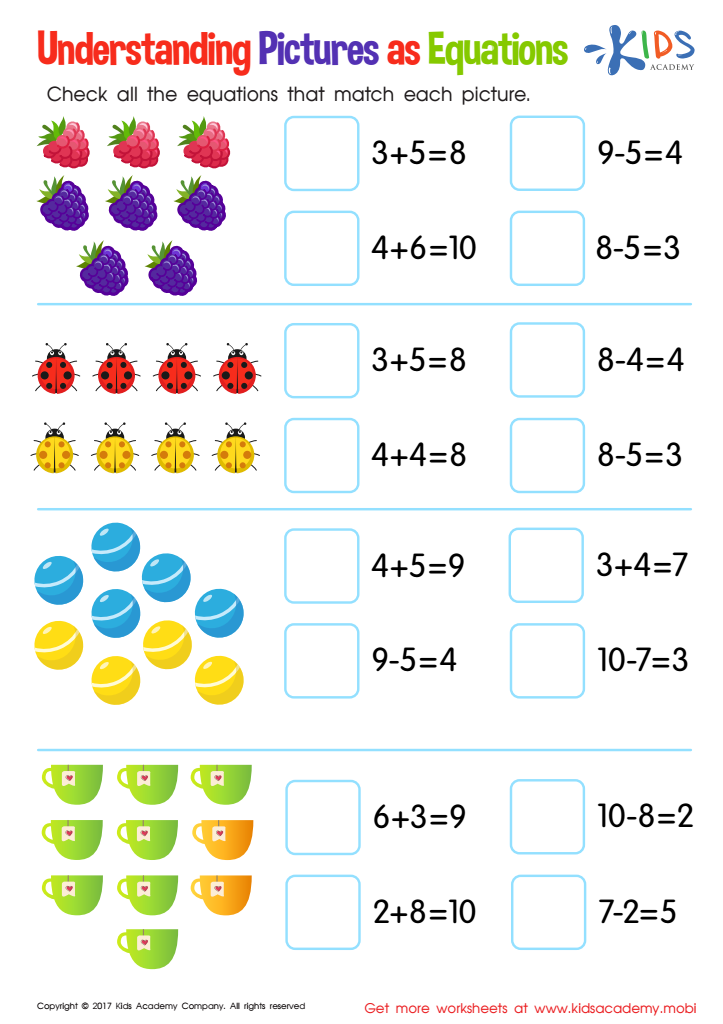
Understanding Pictures as Equations Worksheet
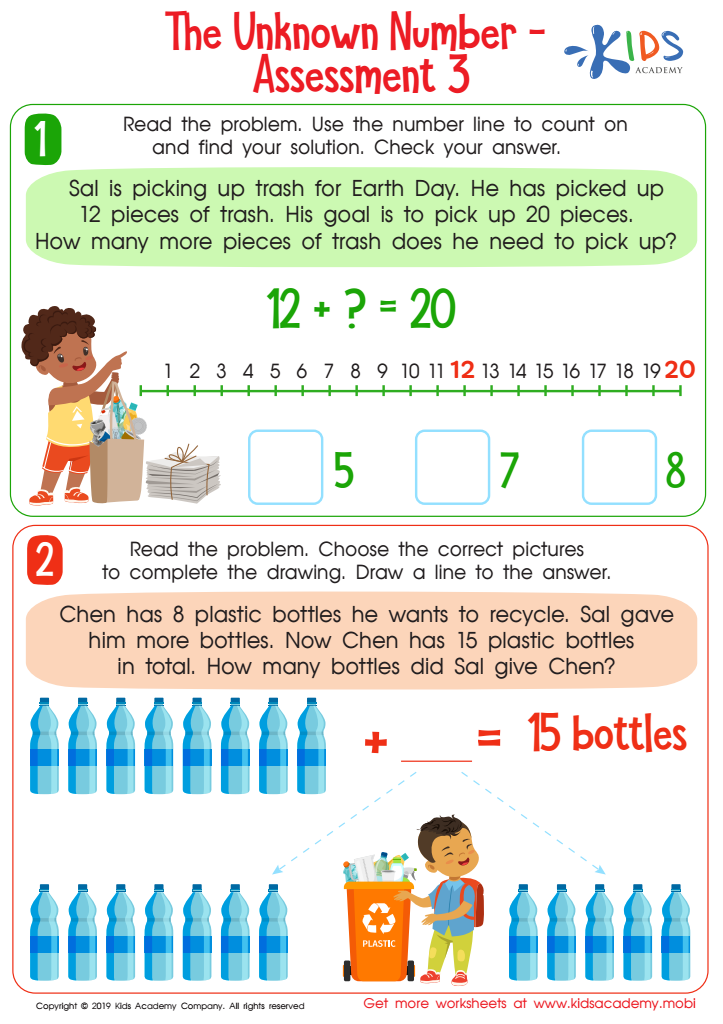
The Unknown Number - Assessment 3 Worksheet
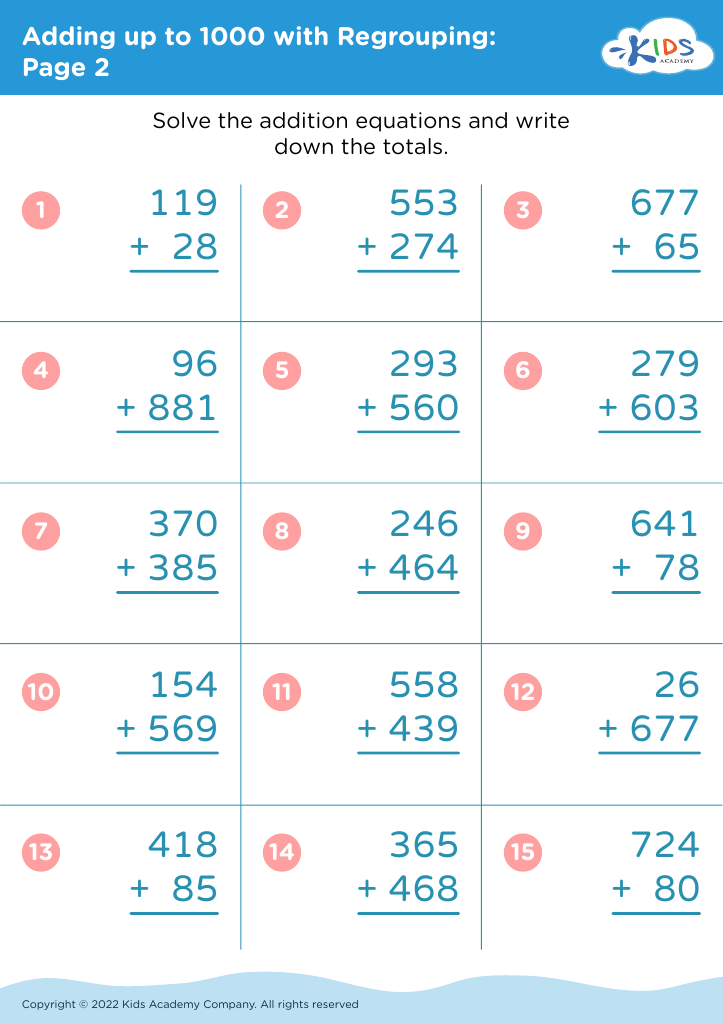
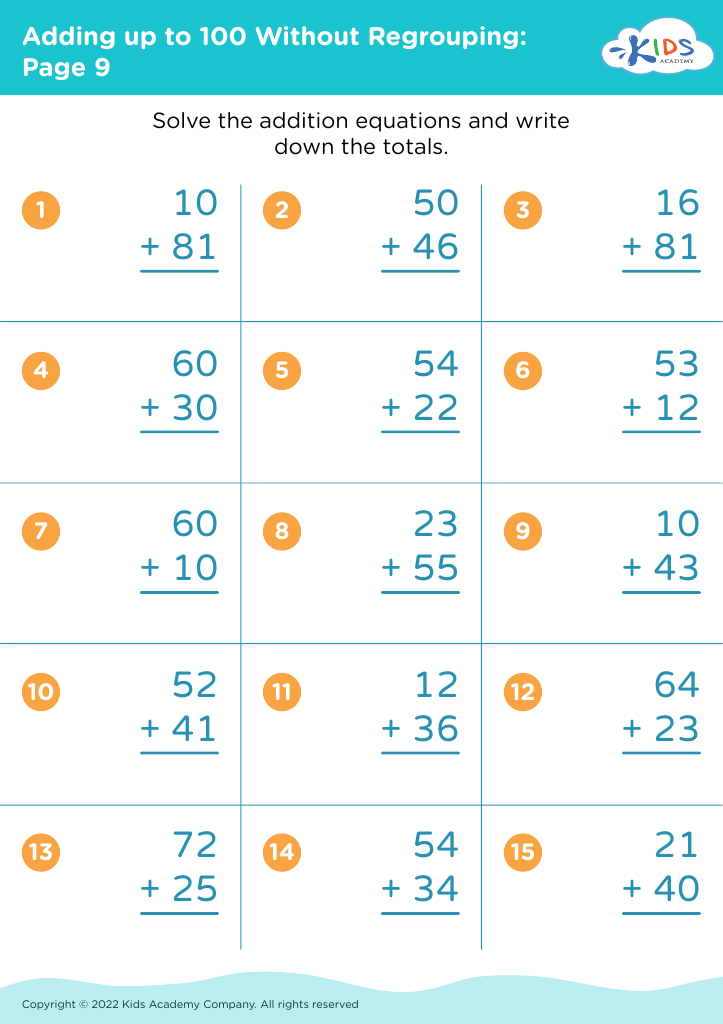








Understanding equations involving addition and subtraction for ages 3-9 is crucial for several reasons. Early proficiency in these fundamental math skills paves the way for future academic success and everyday practicality. At this developmental stage, children are like sponges, absorbing information rapidly, which helps set the groundwork for more complex mathematical concepts. Recognizing how to combine or separate quantities cultivates logical reasoning and problem-solving skills. This foundational knowledge aids children in understanding the relationships between numbers, which is essential for later arithmetic operations like multiplication and division.
Moreover, math skills are highly relevant in daily life. Learning addition and subtraction at an early age helps children grasp concepts of money, measurement, and time, enhancing their ability to make informed decisions. For teachers and parents, fostering a supportive learning environment that promotes mathematical thinking is crucial. Early enthusiasm and confidence in math can prevent math anxiety, encouraging a more positive attitude toward learning.
Additionally, cognitive benefits such as improved memory, attention to detail, and analytical thinking are nurtured through understanding basic equations. Thus, investing in teaching these essential skills early equips children with the tools needed to navigate both academic challenges and real-world scenarios effectively.








