Understanding number relationships Addition & Subtraction Worksheets for Ages 3-9
8 filtered results
-
From - To
Enhance your child's mathematical skills with our "Understanding Number Relationships" worksheets designed for ages 3-9. These engaging activities focus on the foundational concepts of addition and subtraction, helping young learners grasp how numbers interact. Through fun and interactive exercises, children will develop crucial number sense while working on skills such as identifying patterns, making comparisons, and solving basic math problems. Our worksheets are tailored to different developmental stages, ensuring that every child, whether a beginner or advanced, can effectively learn and practice essential math concepts. Equip your child with the confidence they need to succeed in math with these essential resources!
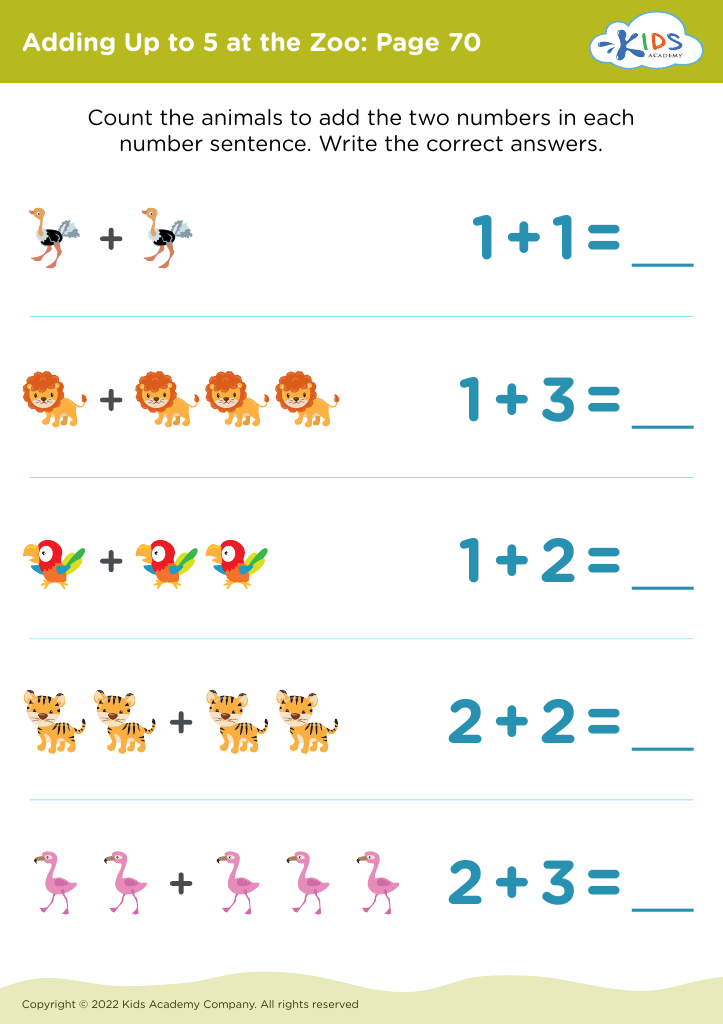
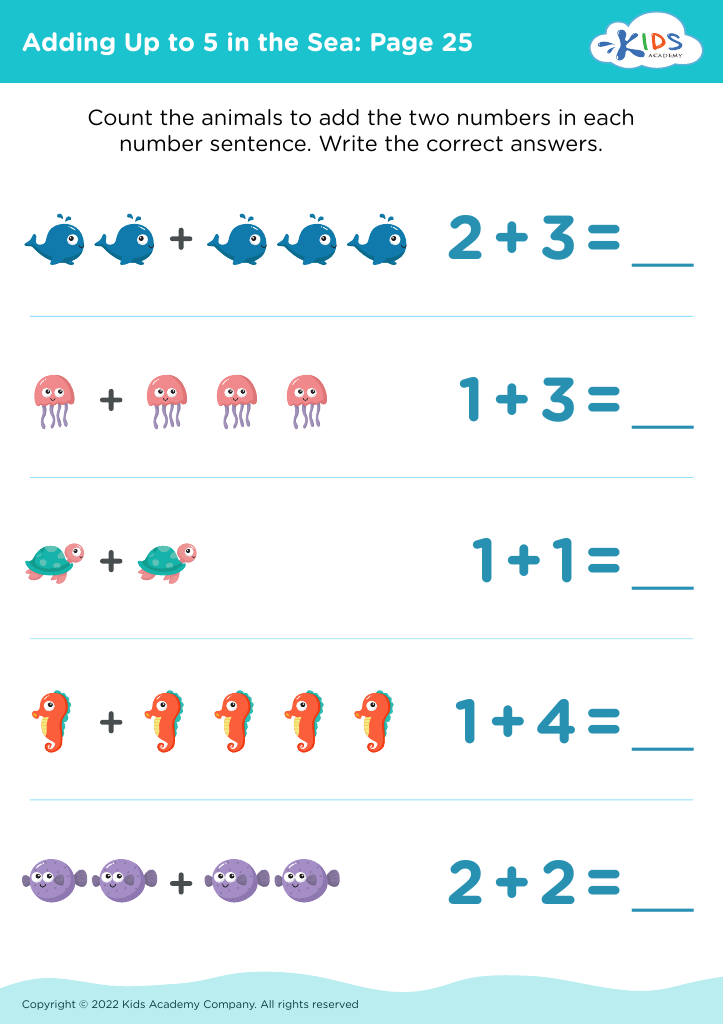
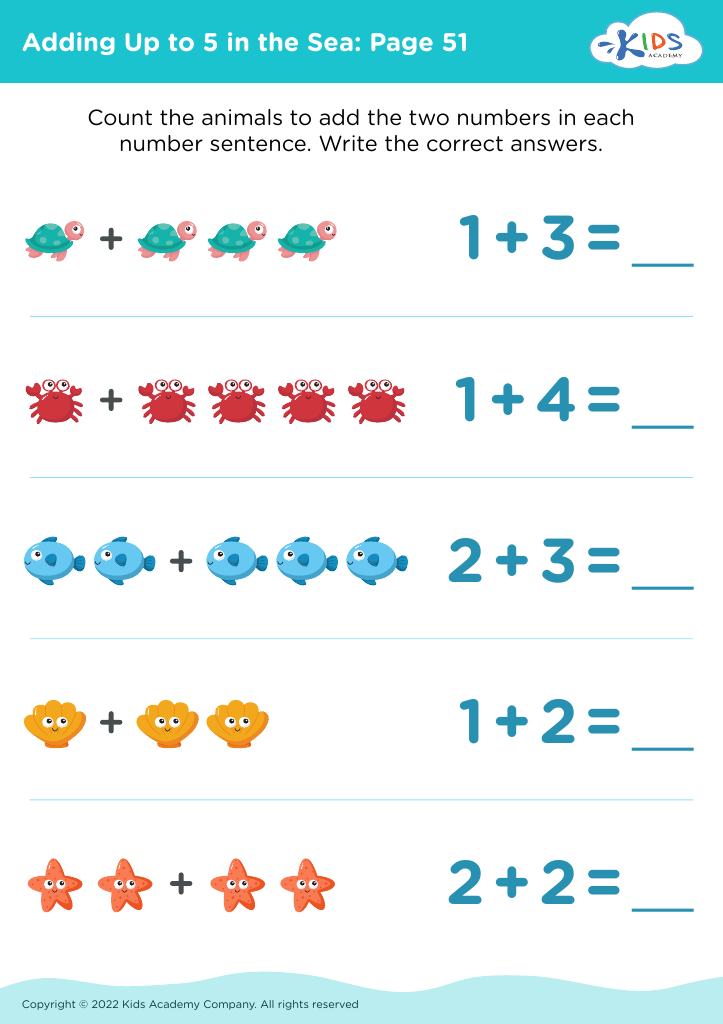
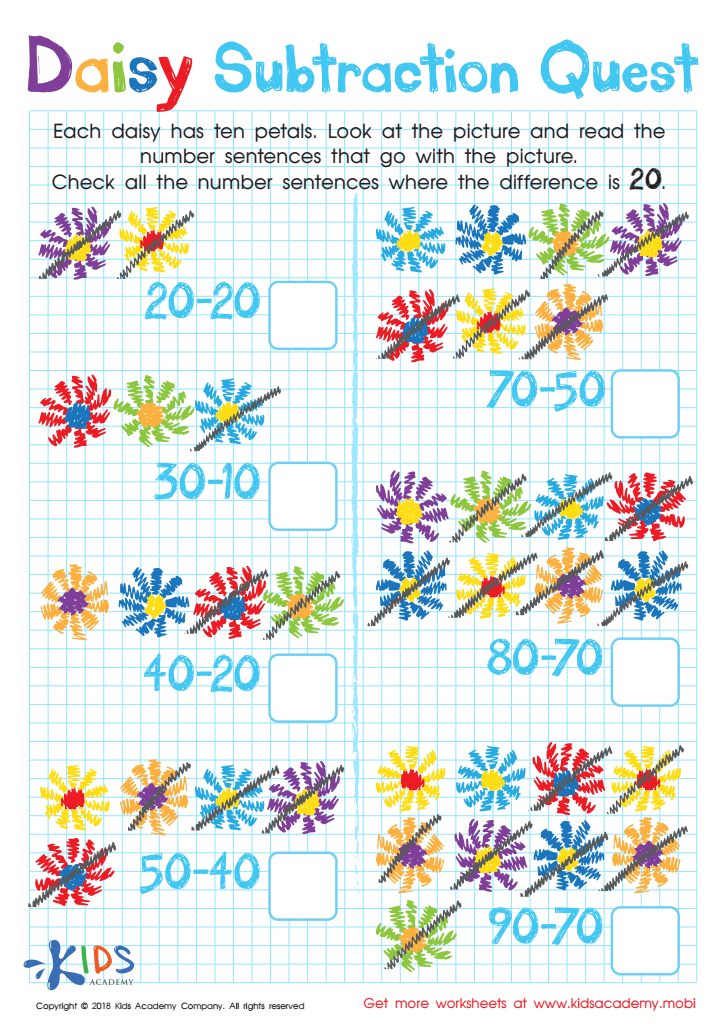
Daisy Subtraction Quest Worksheet
 Assign to My Students
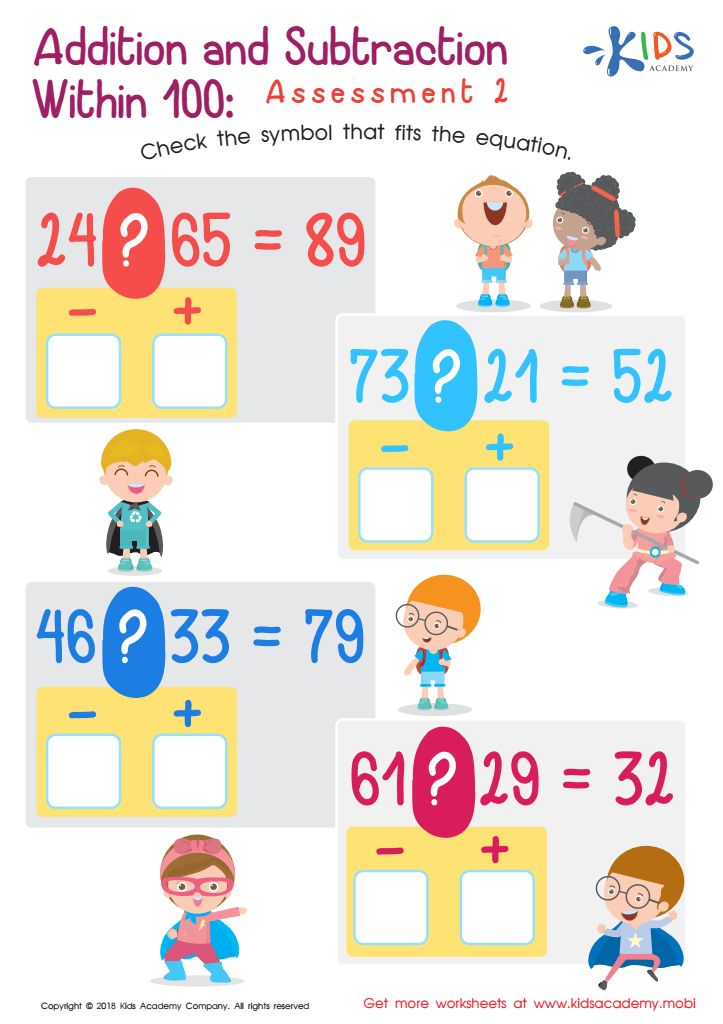
Addition and Subtraction Within 1: Assessment 2 Worksheet
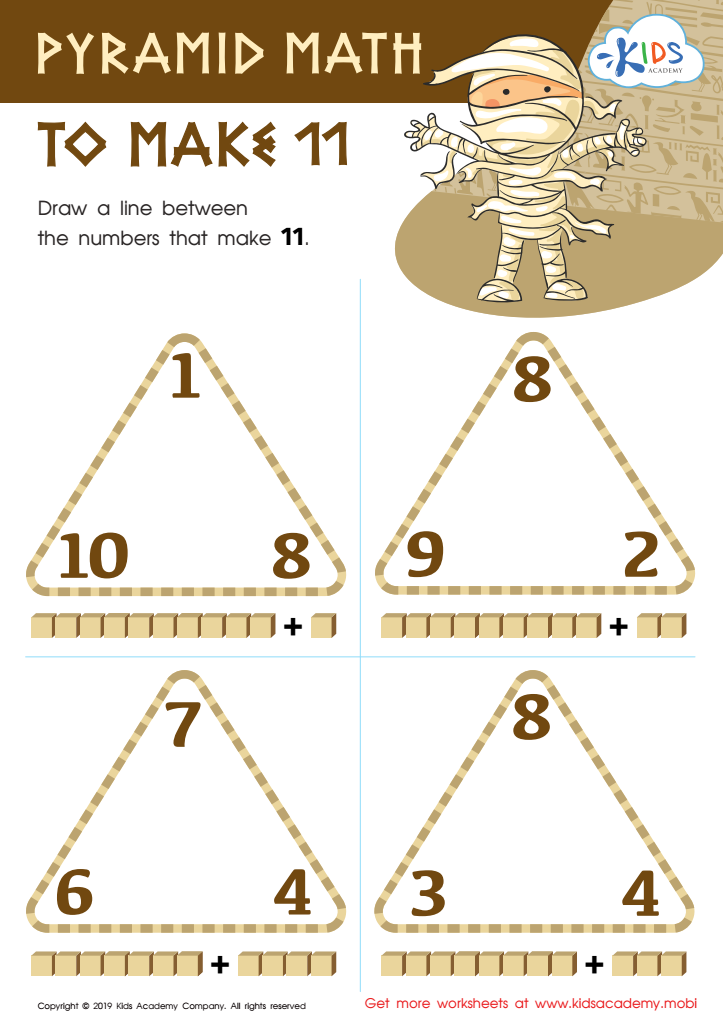
Pyramid Math to Make 11 Worksheet








Understanding number relationships, particularly in addition and subtraction, is crucial for children aged 3-9 as it lays the foundation for their future mathematical understanding. At this developmental stage, children are naturally curious and eager to explore numbers. Early exposure to addition and subtraction helps them recognize how numbers interact, which fosters critical thinking and problem-solving skills.
Engaging with these concepts using age-appropriate activities enhances children's numeracy by promoting a strong grasp of quantities and operations. When parents and teachers provide support and resources, children develop a confident attitude toward math. This confidence is pivotal as math anxiety often stems from early experiences; negative feelings can hinder a child's future engagement with math.
Additionally, understanding number relationships strengthens cognitive skills. It promotes logical reasoning and enhances spatial awareness. Through games and playful interactions, children can explore these concepts in a fun way, making learning memorable. Teachers and parents play a vital role in facilitating these experiences, ensuring children see the relevance of math in daily life, from counting toys to sharing snacks.
In summary, caring about children's understanding of number relationships in addition and subtraction fosters essential skills that will benefit them academically and socially throughout their development.








