Understanding number sequence Addition & Subtraction Worksheets for Ages 3-9
4 filtered results
-
From - To
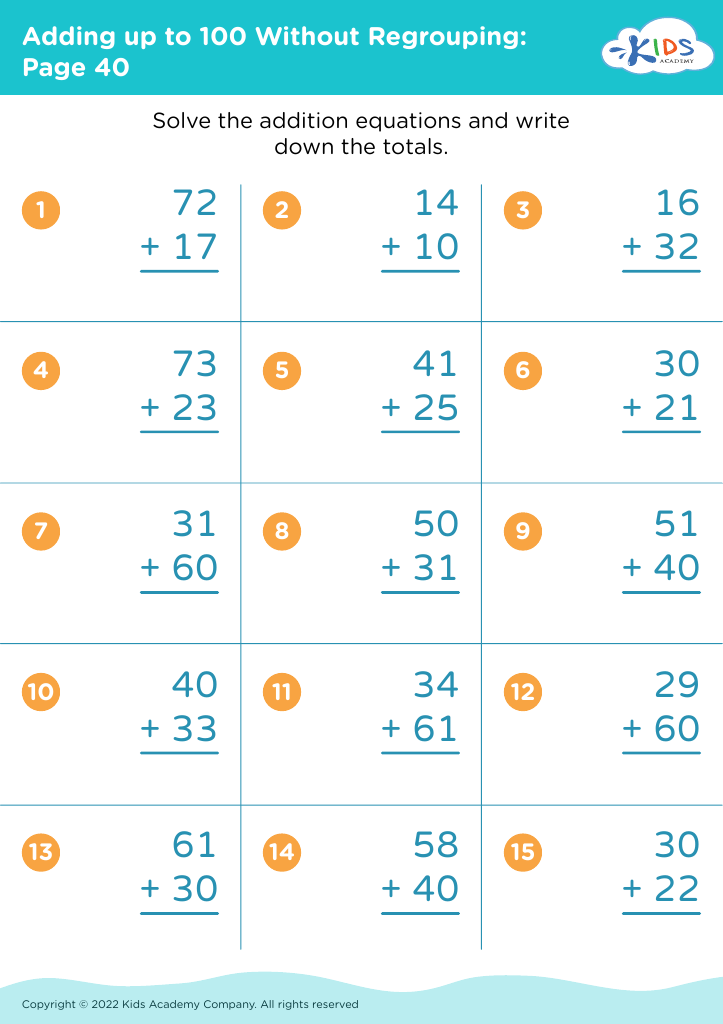
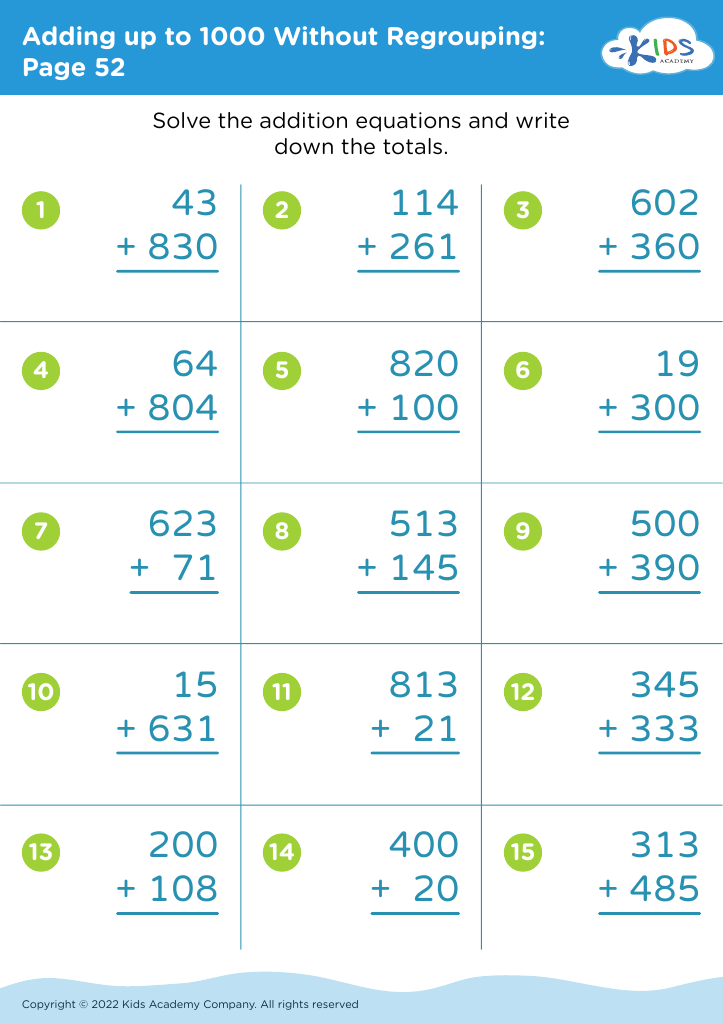
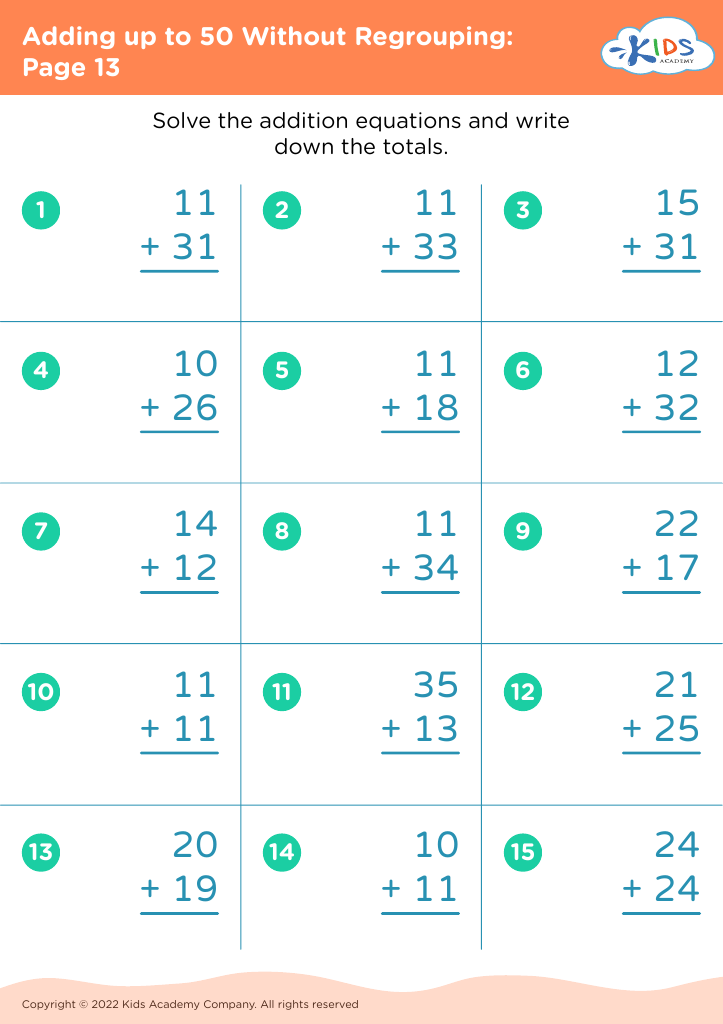
Discover our "Understanding Number Sequence Addition & Subtraction Worksheets" designed for children aged 3-9! These engaging worksheets help young learners grasp the foundational concepts of number sequencing, enhancing their addition and subtraction skills. Each worksheet incorporates colorful visuals and interactive elements to keep children motivated and excited about math. Tailored to various learning levels, our resources promote critical thinking and problem-solving abilities in a fun way. With a focus on grasping number patterns and sequences, kids will build confidence in their math skills. Explore our collection today and boost your child's mathematical journey with adventure and joy!
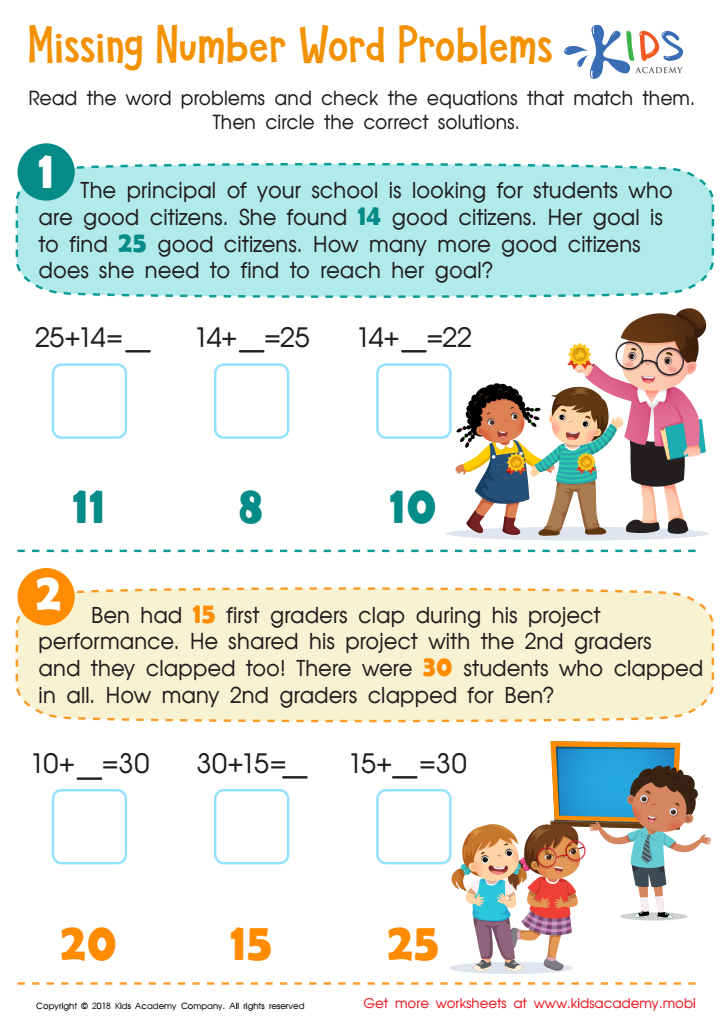
Missing Number Word Problems Worksheet
 Assign to My Students








Understanding number sequences and the fundamental concepts of addition and subtraction is crucial for children aged 3-9 as it lays the foundation for their mathematical development. During these formative years, children's cognitive abilities are rapidly developing, and they are naturally inclined to learn basic mathematical concepts through play and exploration. Mastery of number sequences helps children recognize patterns, which is essential for problem-solving and critical thinking skills.
By incorporating addition and subtraction into their learning, children enhance their ability to manipulate numbers, which fosters confidence and competence in mathematics. This knowledge not only facilitates daily activities, such as counting objects or sharing items but also prepares them for more complex mathematical concepts in later grades. Moreover, children who grasp these foundational skills are more likely to develop a positive attitude toward mathematics, reducing anxiety and promoting a lifelong interest in the subject.
Parents and teachers play a vital role in this development. Their encouragement, guidance, and use of engaging teaching methods can significantly enhance children's understanding and enjoyment of mathematics. Creating a supportive learning environment where these concepts are easily accessible will empower children and prepare them for academic success in the future.








