Understanding sequence Addition & Subtraction Worksheets for Ages 3-9
4 filtered results
-
From - To
Prepare your children ages 3-9 for math success with our 'Understanding Sequence Addition & Subtraction Worksheets.' These engaging and educational printables are designed to enhance essential skills in a developmentally appropriate sequence. Our well-structured activities guide young learners through foundational math concepts, transforming addition and subtraction into fun and manageable tasks. Perfect for both classroom and home-based learning, these worksheets support early cognitive development and foster a love for mathematics from an early age. Explore our extensive collection and empower your child to master math with confidence and enthusiasm today. Visit [your domain] for more details!
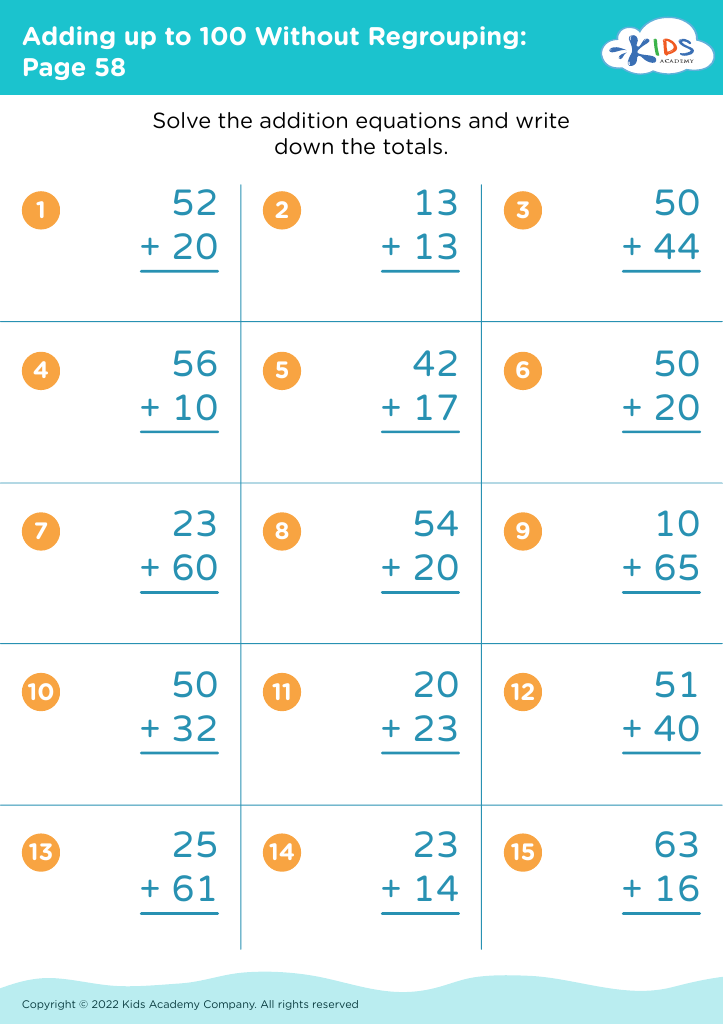
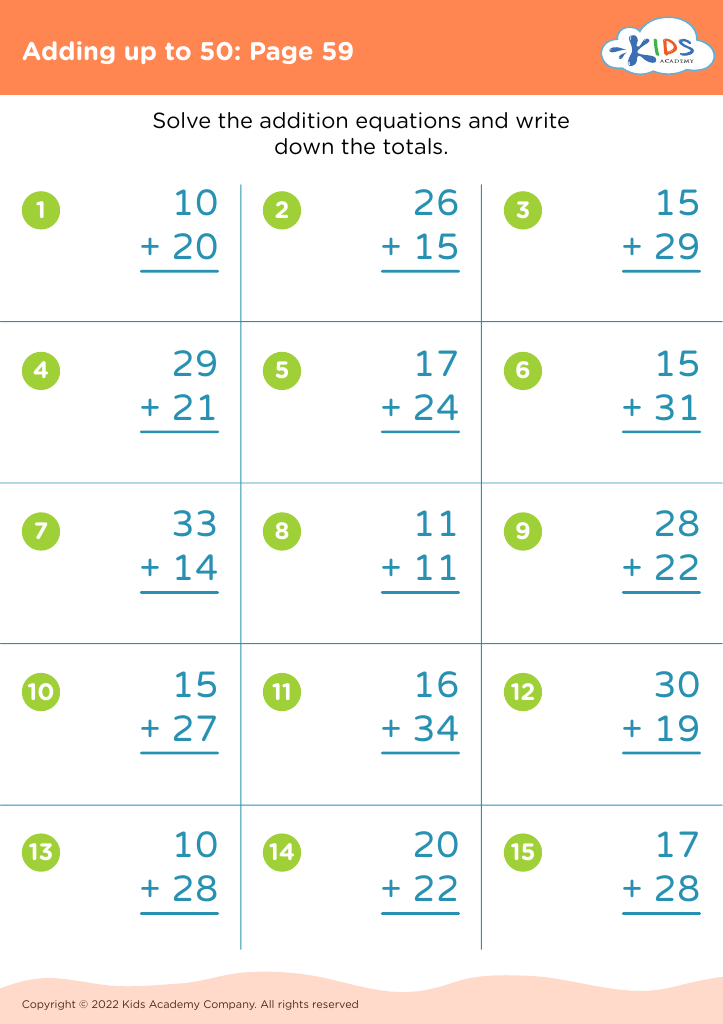
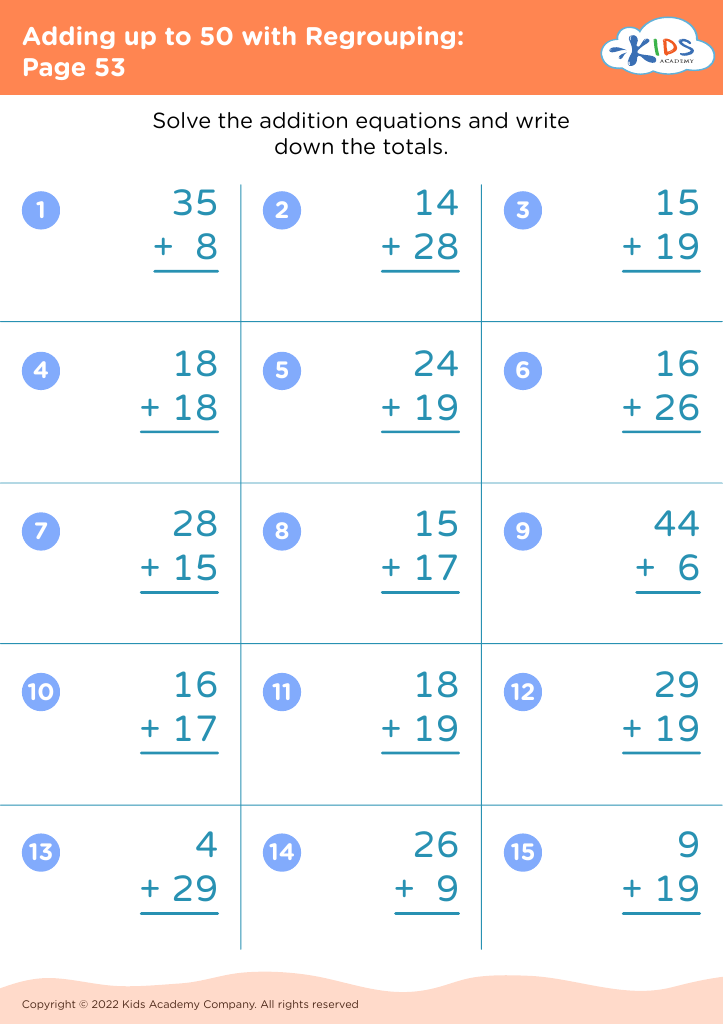
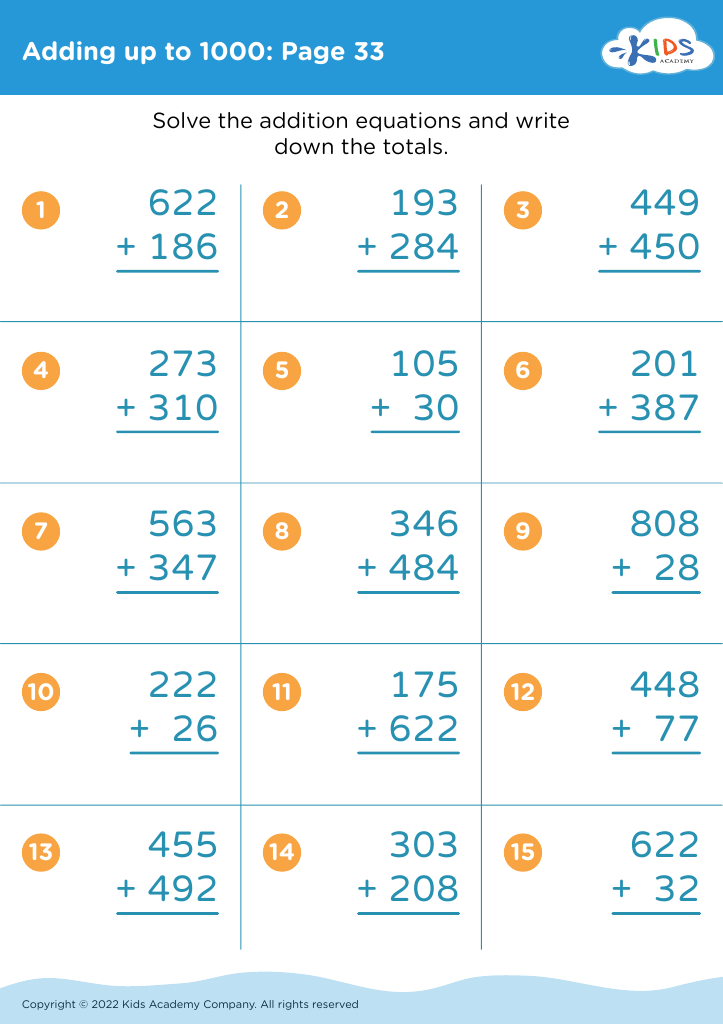








Understanding sequence addition and subtraction is vital for children aged 3-9, as these foundational concepts are key building blocks for their future mathematical learning. During this developmental period, children's cognitive skills are rapidly evolving, enabling them to grasp basic arithmetic operations and numerical relationships. Catching on early not only enhances their problem-solving abilities but also boosts their confidence in tackling more complicated math tasks later.
Firstly, learning sequence in addition and subtraction lays the groundwork for understanding number sense, crucial for all future math concepts. When children see the relationship between numbers, it aids them in grasping useful properties like commutativity (e.g., 3 + 4 is the same as 4 + 3).
Secondly, addition and subtraction story problems help develop critical thinking skills, allowing children to apply mathematical concepts to real-world scenarios, which fosters deeper comprehension.
Finally, early exposure to these sequences fosters familiarity and decreases anxiety towards math, a subject that can often intimidate. It’s not just about acknowledging that 4+3=7; it’s recognizing how math fits into the tapestry of daily life. By understanding sequences early, children are given the tools to be more effective learners, setting them up for sustained academic success in mathematics and beyond.








