Visual representation comprehension Addition & Subtraction Worksheets for Ages 3-9
5 filtered results
-
From - To
Explore our "Visual Representation Comprehension Addition & Subtraction Worksheets" designed for children aged 3-9. These engaging worksheets help young learners grasp fundamental math concepts through visual aids, enhancing their understanding of addition and subtraction. By utilizing colorful images and relatable scenarios, we make math accessible and enjoyable. Kids will sharpen their skills as they visually interpret problems, fostering a deeper comprehension of number relationships. Perfect for both classroom and home learning, our worksheets promote critical thinking and boost confidence in early math skills. Discover fun and effective ways to strengthen your child’s mathematical foundation today!
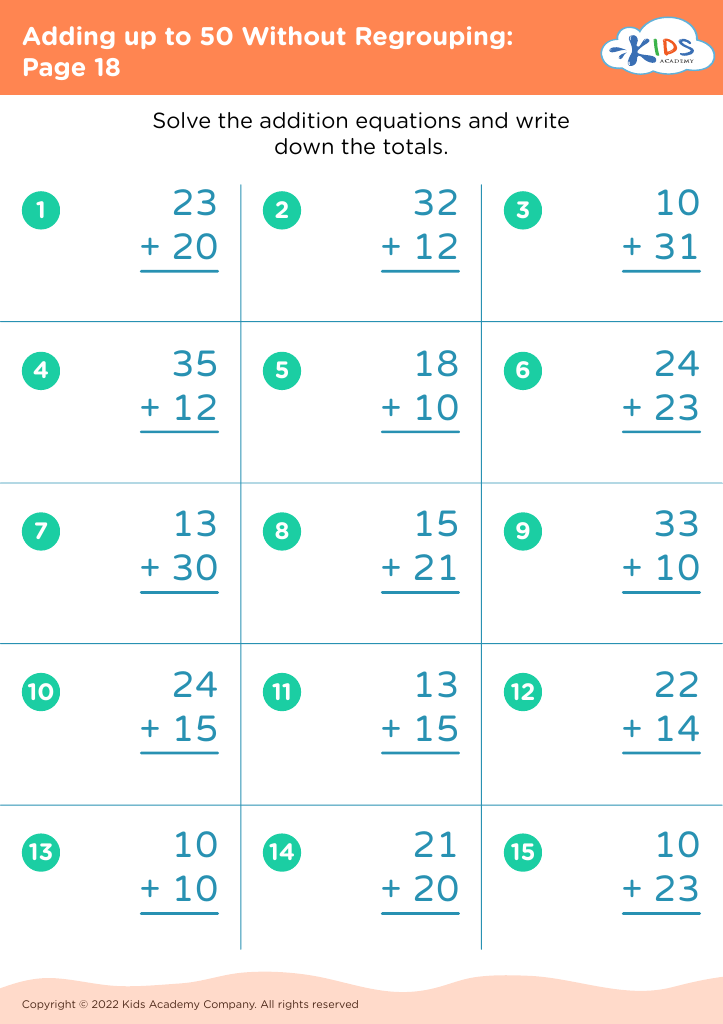
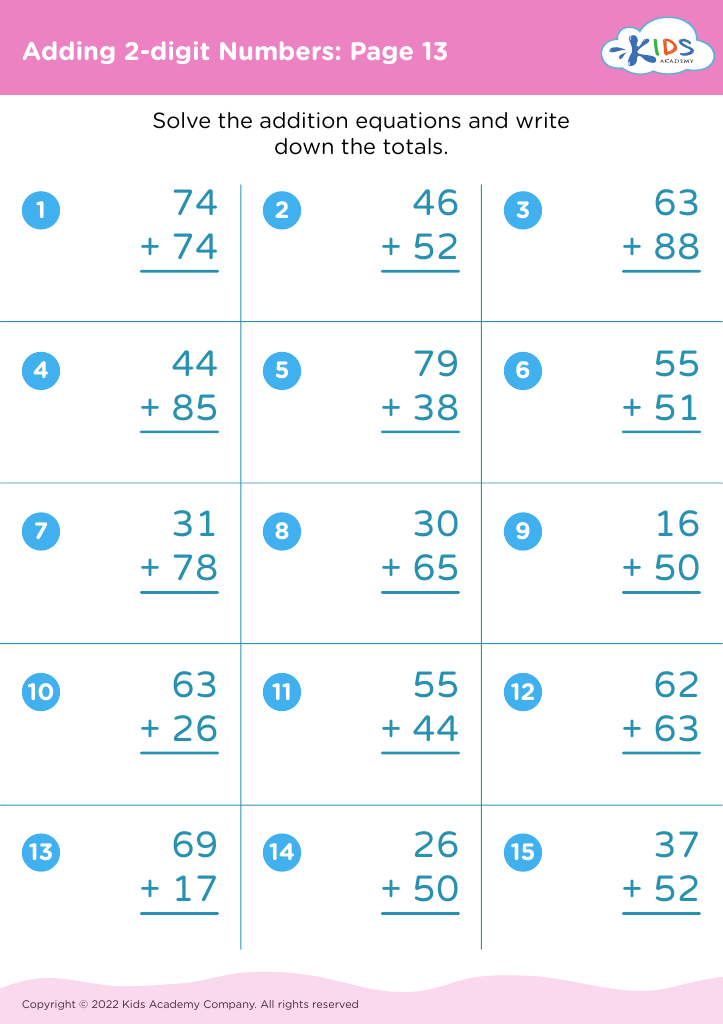
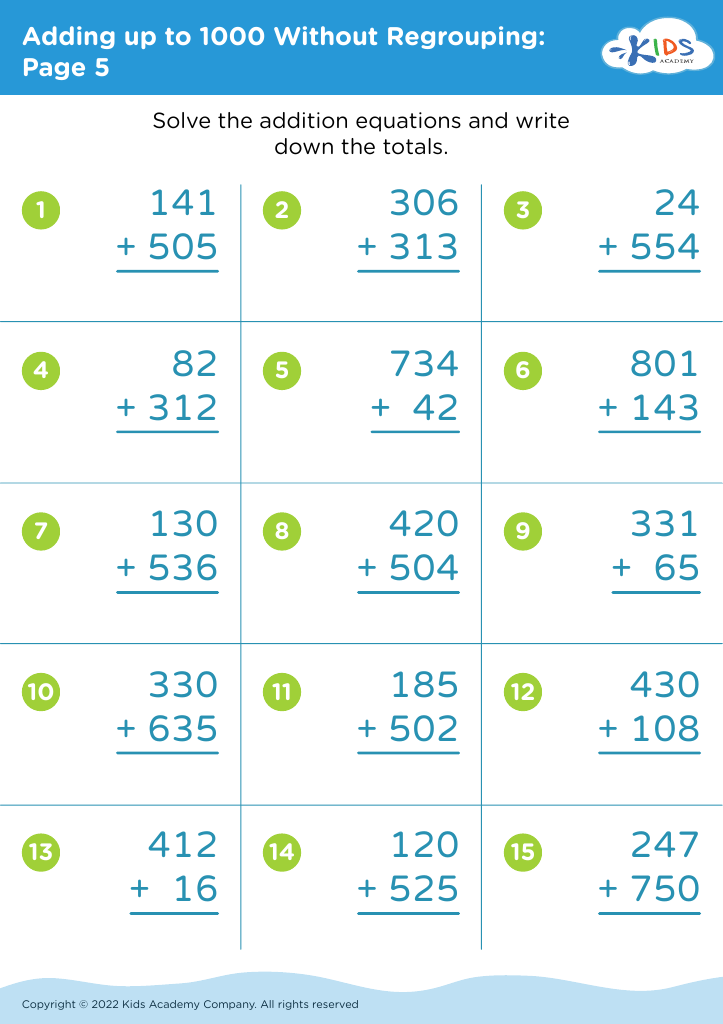
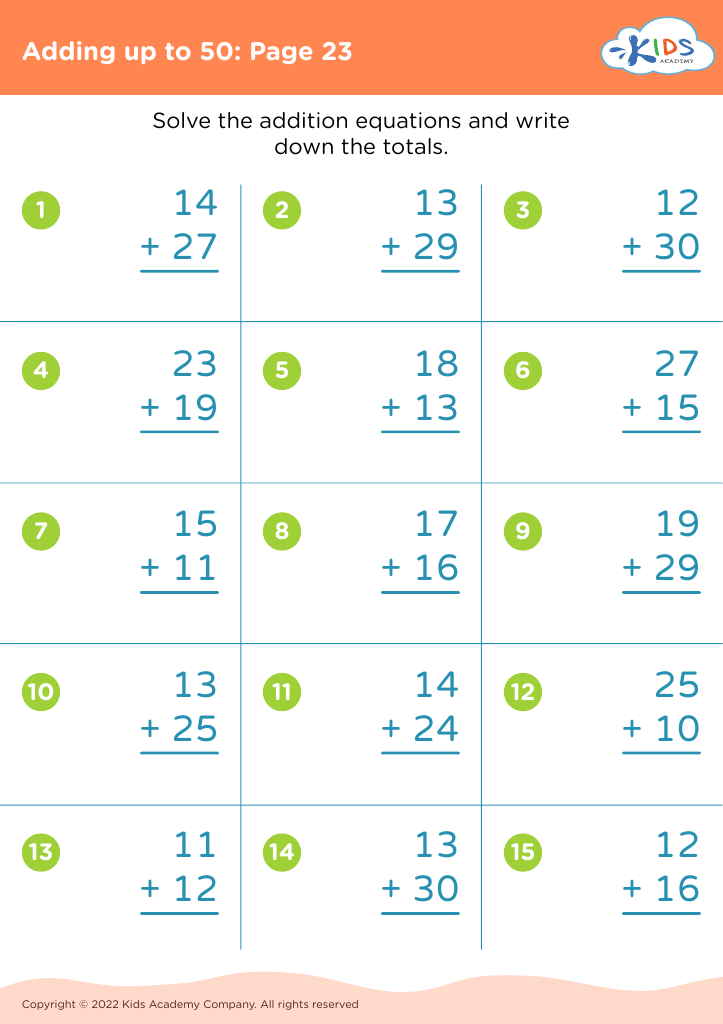
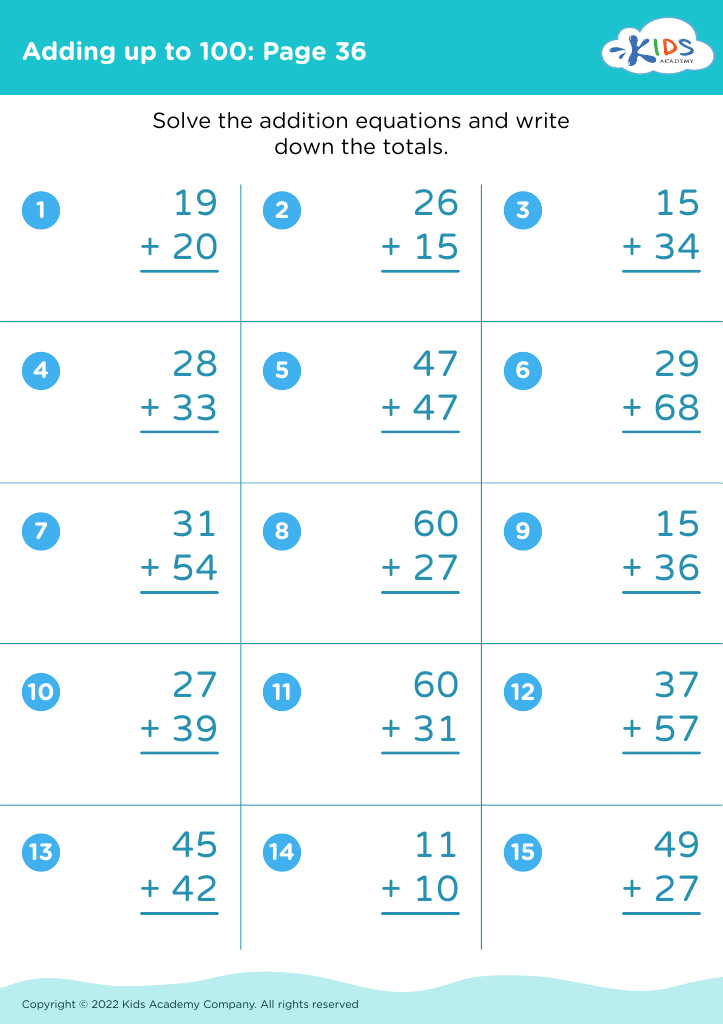








Visual representation comprehension in addition and subtraction is crucial for young learners aged 3-9, as it lays a strong foundation for their understanding of mathematical concepts. At this developmental stage, children benefit significantly from concrete visual aids, such as counters, number lines, or pictorial models, which help them grasp the abstract nature of addition and subtraction. These visual tools allow children to see the relationships between numbers and operations, fostering a deeper understanding of how they can manipulate values in practical situations.
Moreover, visual representations cater to diverse learning styles, enabling all children, regardless of their learning preferences, to engage with math in a meaningful way. This can enhance their confidence and motivation in the subject, reducing the likelihood of math anxiety as they progress to more advanced topics.
For parents and teachers, emphasizing visual representation aids in fostering critical thinking and problem-solving skills. By cultivating these abilities early on, children can develop positive attitudes toward mathematics, which are essential for their future academic success. Ultimately, imparting visual representation understanding not only supports computational proficiency but also encourages a well-rounded approach to learning that integrates visual, auditory, and kinesthetic experiences.








