Alphabet Recognition Addition Worksheets for Ages 3-9
4 filtered results
-
From - To
Discover fun, educational Alphabet Recognition Addition Worksheets designed for ages 3-9! Our engaging materials blend essential math skills with alphabet learning, helping children recognize letters and practice addition simultaneously. Perfect for preschool, kindergarten, and early elementary students, these worksheets provide a solid foundation in literacy and numeracy. Each activity is thoughtfully crafted to captivate young learners' attention while promoting cognitive development. Ideal for classroom use or homeschooling, these printable sheets foster a love for learning through interactive exercises and vibrant visuals. Download now to support your child's learning journey with enjoyable, skill-boosting practices!
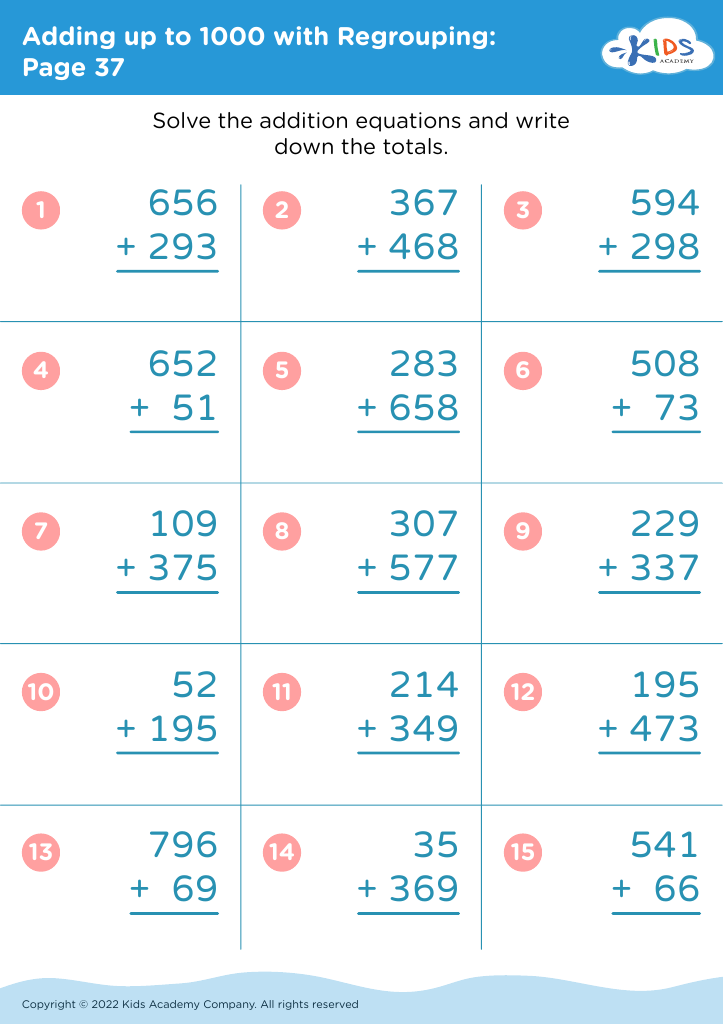
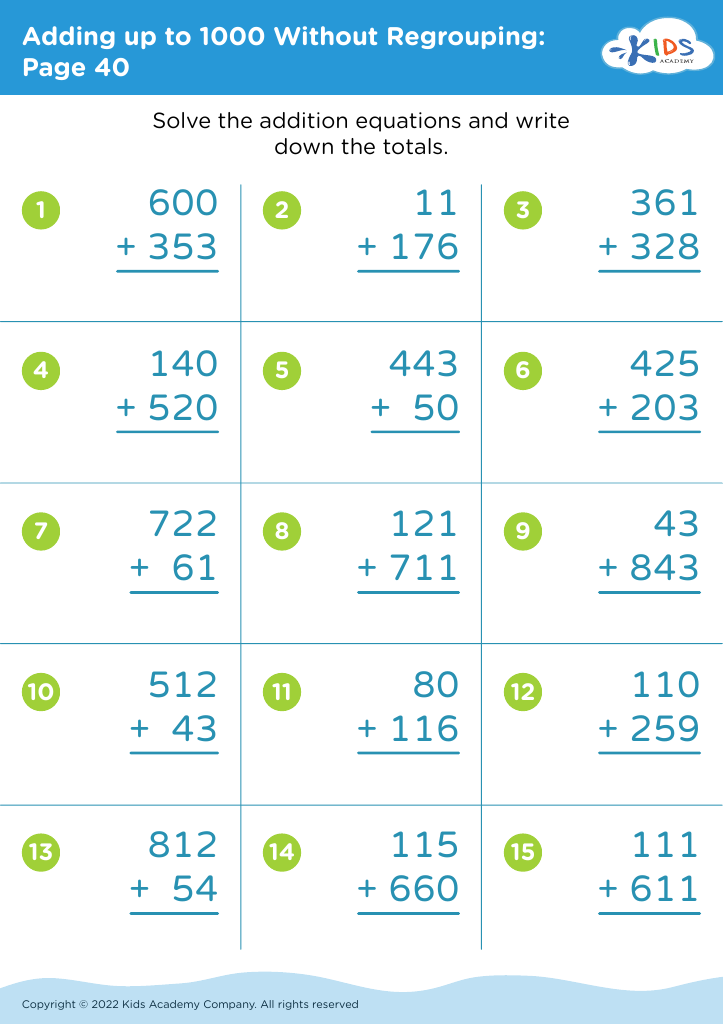
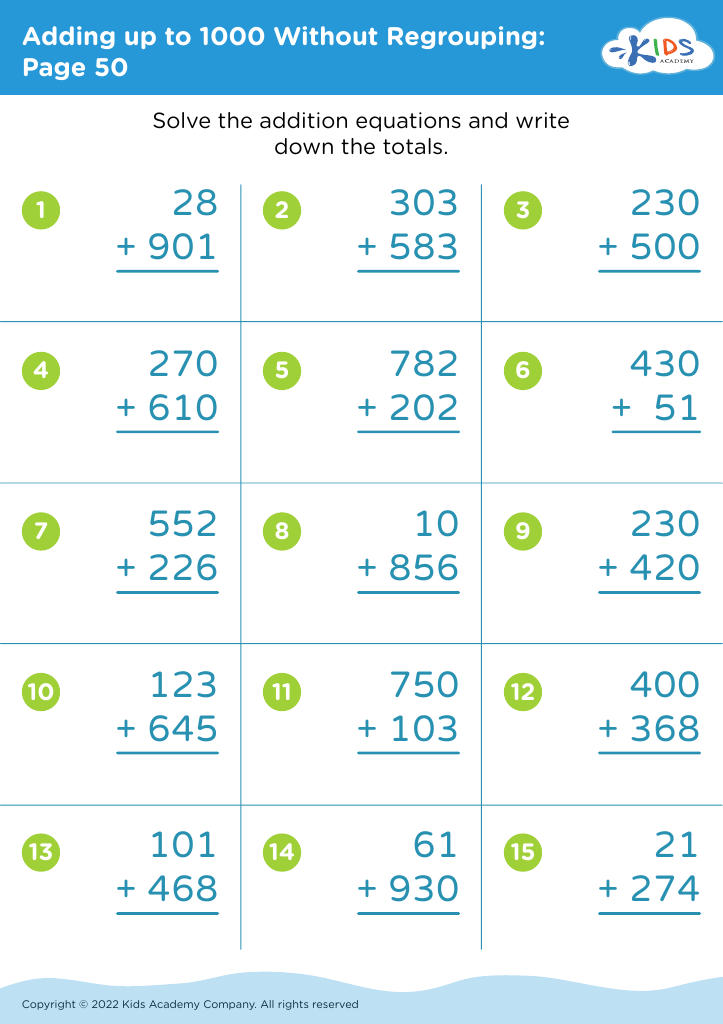
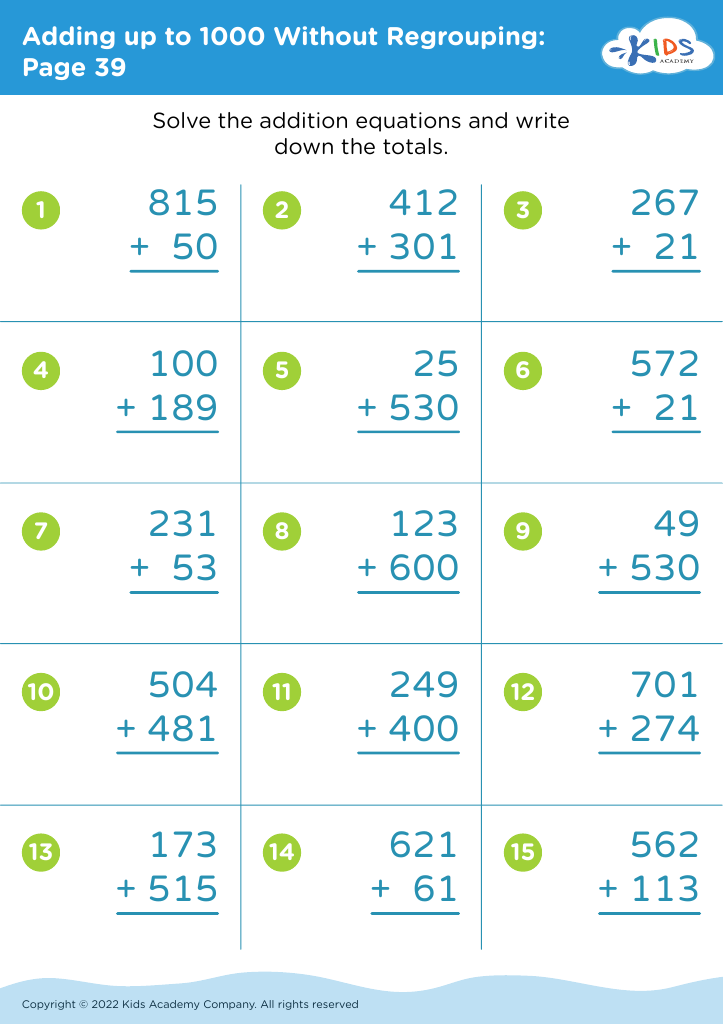






.jpg)

Parents and teachers should emphasize Alphabet Recognition Addition (ARA) for children ages 3-9 as it builds fundamental literacy skills vital for lifelong learning. At this early age, children’s brains are highly receptive to acquiring basic concepts that form the foundation for future academic success. ARA—an educational practice combining alphabet familiarity with basic arithmetic principles—not only enhances letter recognition and phonemic awareness but also introduces numerical and problem-solving skills.
When children engage in activities that both identify letters and associate them with numbers or simple calculations, they foster cognitive connections that enhance their overall understanding and memory retention. For instance, learning that "A" is associated with the value 1 and combining it with "B" with the value 2 to form a larger concept supports mathematical thinking alongside literacy.
Furthermore, ARA promotes fine motor skills and eye-hand coordination through activities like tracing and drawing letters or numbers, thus preparing children for writing tasks. It also encourages a blend of logical and creative thinking, making learning more comprehensive and enjoyable. In integrating these two foundational blocks, parents and teachers ensure children are better equipped with the versatility needed for multifaceted problem-solving skills, making the early academic journey both enriching and engaging.








