Compare fractions Addition Worksheets for Ages 3-9
6 filtered results
-
From - To
Welcome to our "Compare Fractions Addition Worksheets" designed specifically for children aged 3-9! These engaging and interactive worksheets help young learners develop essential math skills focused on addition and fraction comparison. Your child will explore various fraction concepts through colorful visuals and interactive exercises, making learning fun and effective. The activities not only reinforce fraction understanding but also enhance critical thinking and problem-solving skills. Ideal for both classroom settings and at-home practice, our worksheets cater to diverse learning styles, ensuring every child can thrive. Dive into the world of fractions today and watch your child's confidence in math grow!
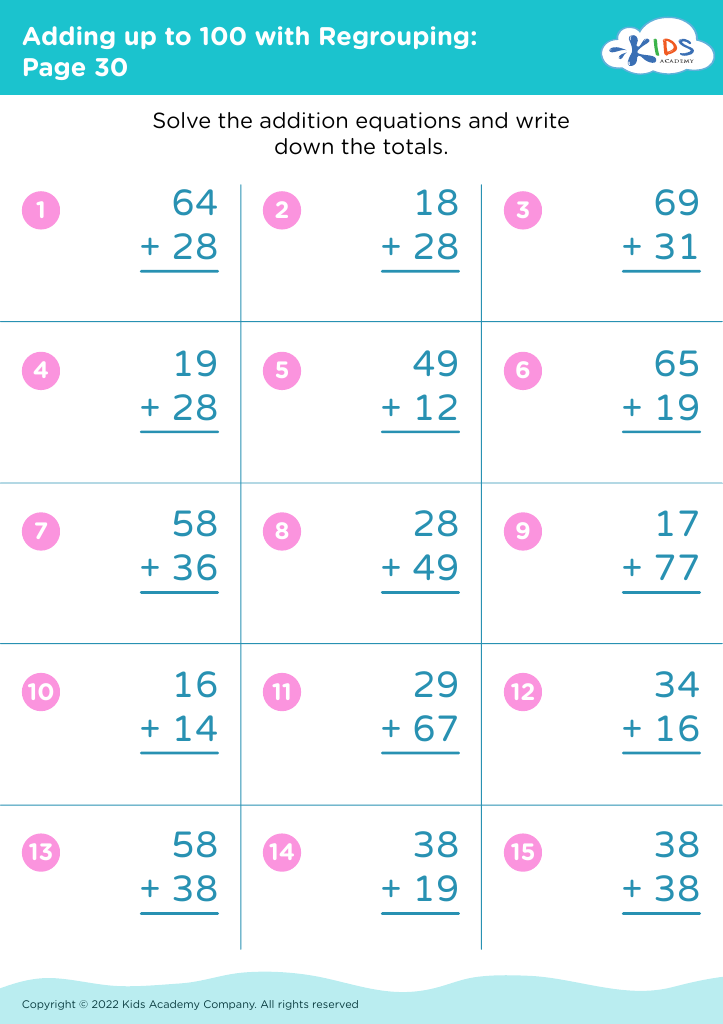
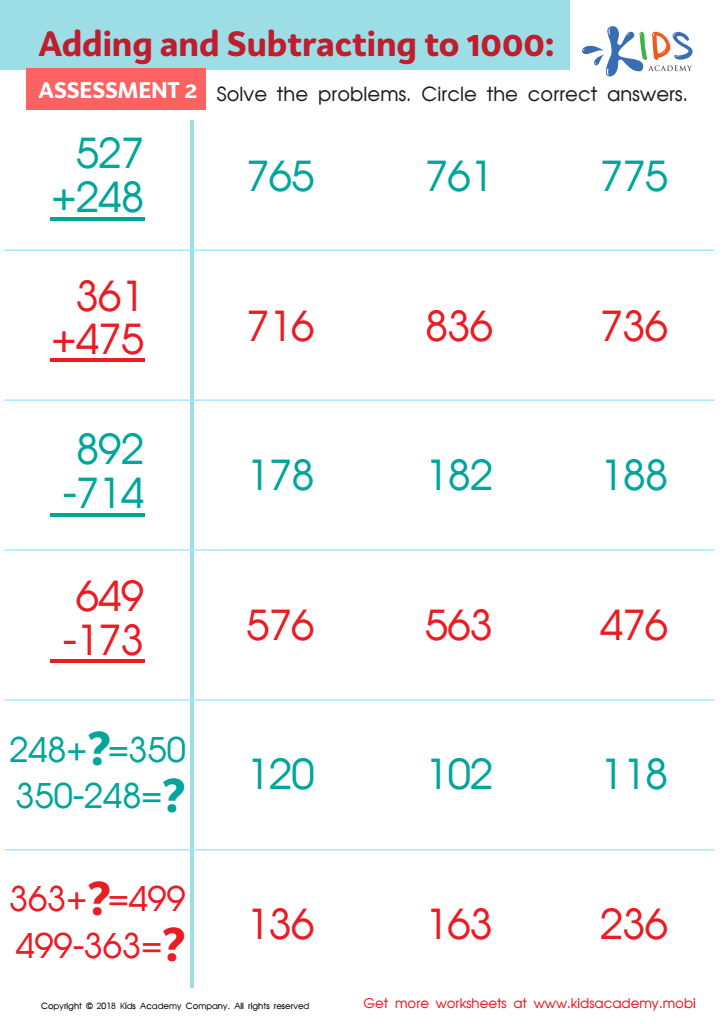
Adding and Subtracting to 1 Worksheet: Assessment 2
 Assign to My Students








Understanding and comparing fractions is a crucial foundational skill for young learners, particularly between the ages of 3 to 9. This concept is not only a key element of mathematics but also contributes to cognitive development and problem-solving skills. Parents and teachers should care about fostering a strong comprehension of fractions as it lays the groundwork for more complex mathematical concepts encountered later in education.
At this age, students are naturally curious and open to learning about quantities, sharing, and dividing things, which makes it an ideal time to introduce fractions. Activities that involve comparing and adding fractions can enhance their understanding of equal parts, relationships, and numerical reasoning. It also helps in developing visual-spatial skills by using tools like pie charts or fraction strips to represent parts of a whole.
Furthermore, mastering basic fraction concepts aids in daily life applications, such as cooking, shopping, or even sharing snacks, instilling confidence and independence in children. When parents and teachers actively engage children in learning fractions, they foster a positive attitude towards math as a whole, making learning enjoyable and meaningful. Ultimately, laying a solid foundation in fractions will serve children well throughout their educational journey and in real-world situations.








