Filters

292 filtered results

Clear all filters
Favorites
With answer key
Interactive

292 filtered results

Difficulty Level

Grade


Check out this FREE Trial Lesson on Addition for age 3-9!

T

Favorites
With answer key
Interactive
  • 3-9
  • Counting practice
  • Addition
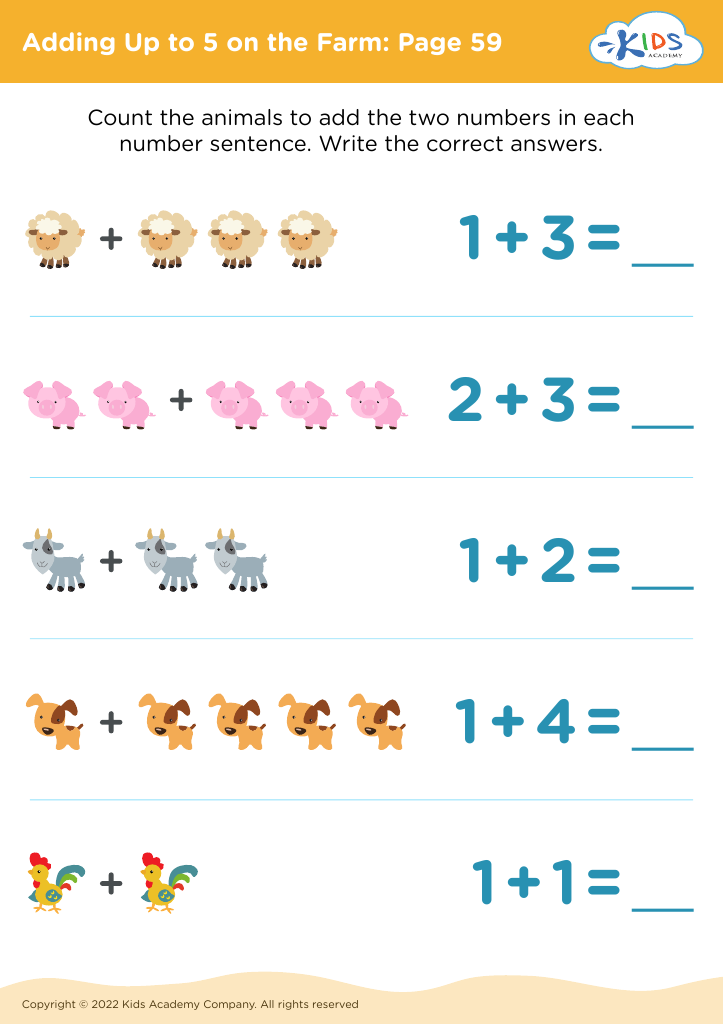
Adding Up to 5 on the Farm: Page 59
Worksheet
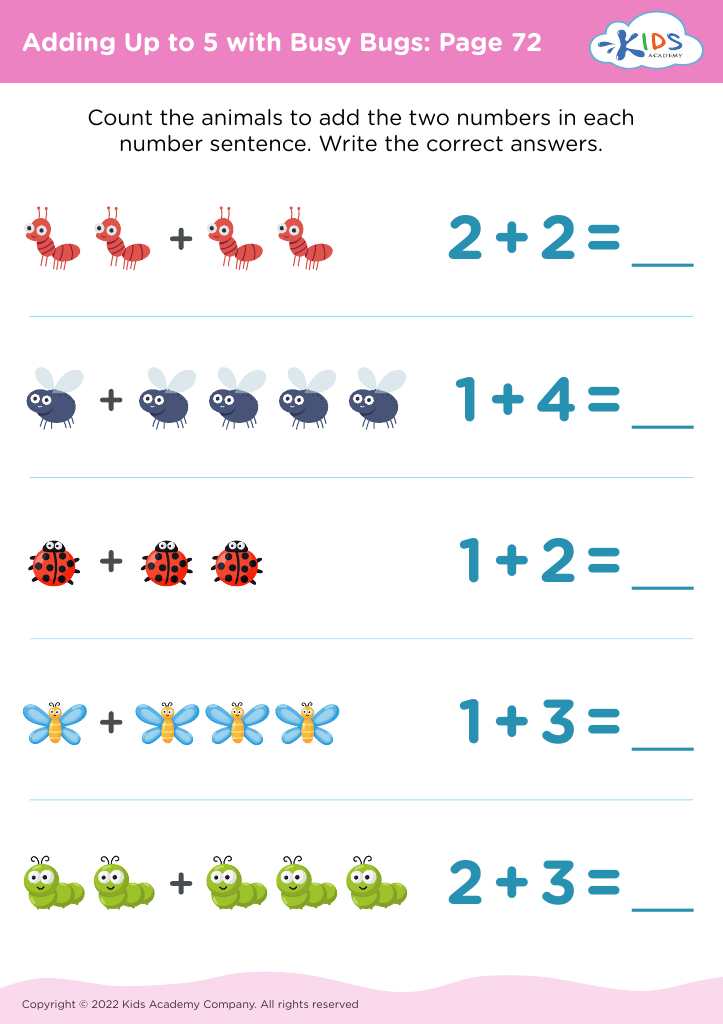
Adding Up to 5 with Busy Bugs: Page 72
Worksheet
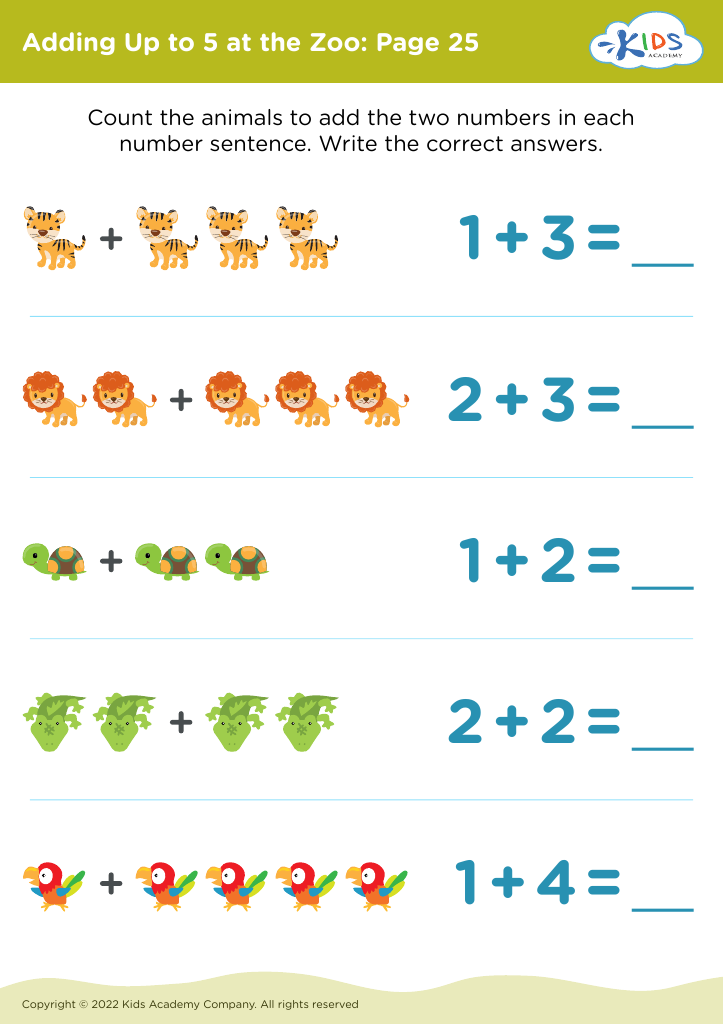
Adding Up to 5 at the Zoo: Page 25
Worksheet
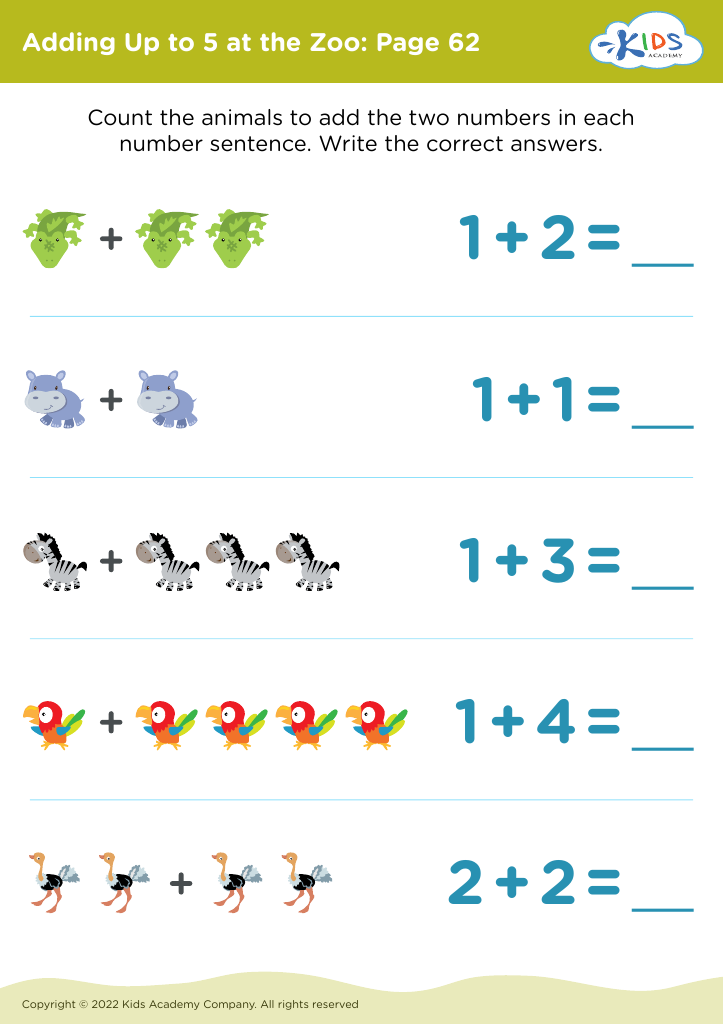
Adding Up to 5 at the Zoo: Page 62
Worksheet
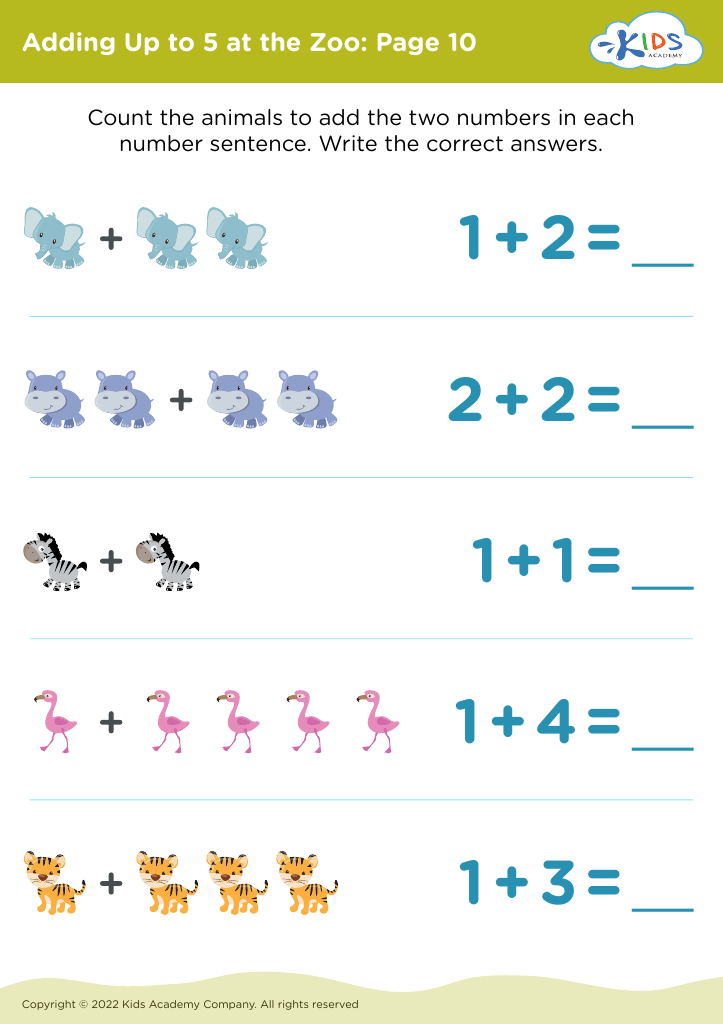
Adding Up to 5 at the Zoo: Page 10
Worksheet
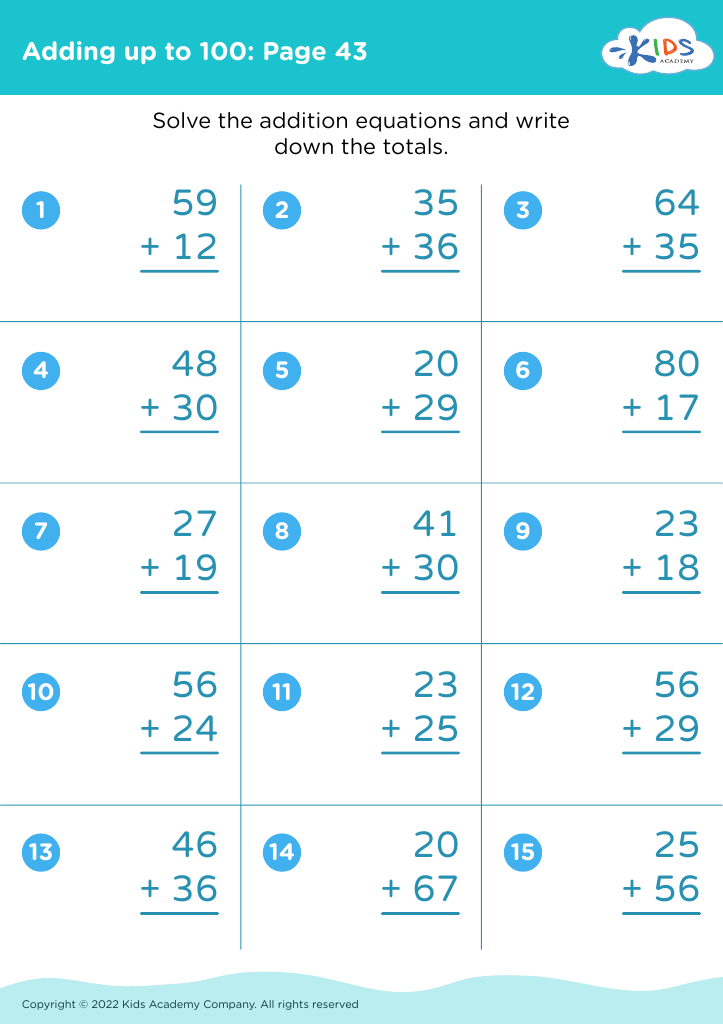
Adding up to 100: Page 43

Adding up to 100: Page 43

Adding up to 100: Page 43
Worksheet
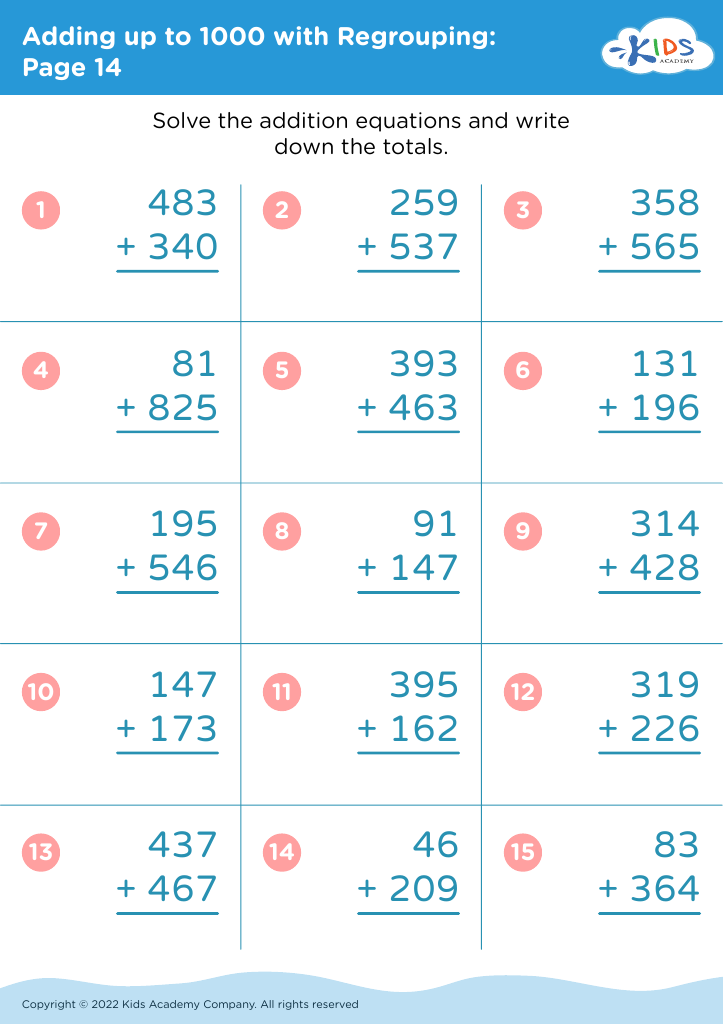
Adding up to 1000 with Regrouping: Page 14
Worksheet
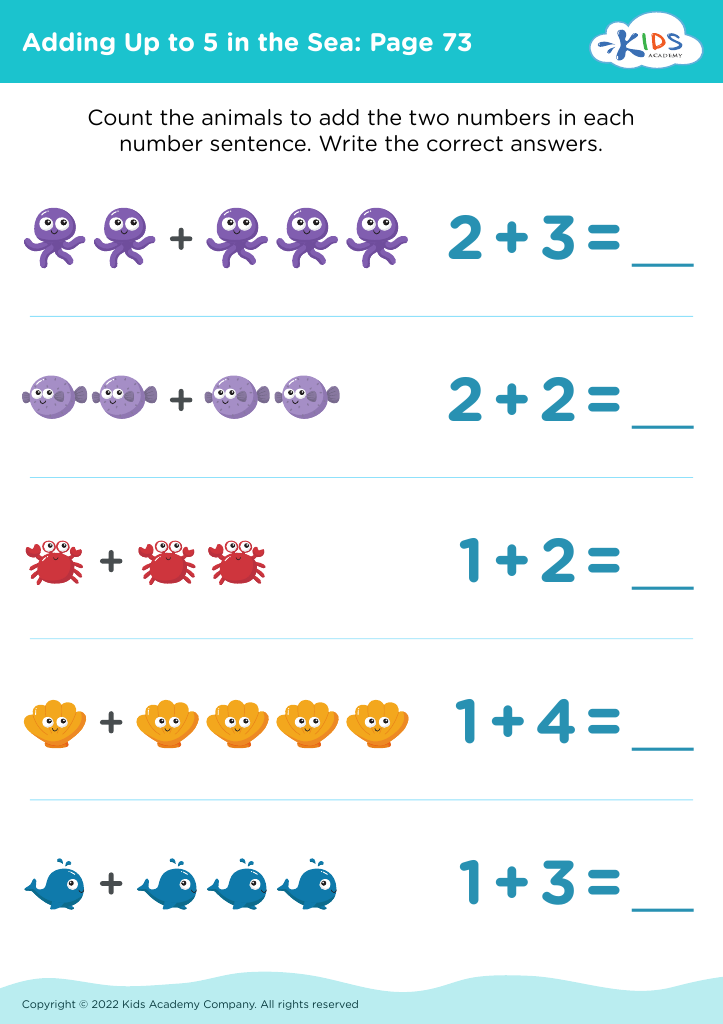
Adding Up to 5 in the Sea: Page 73
Worksheet
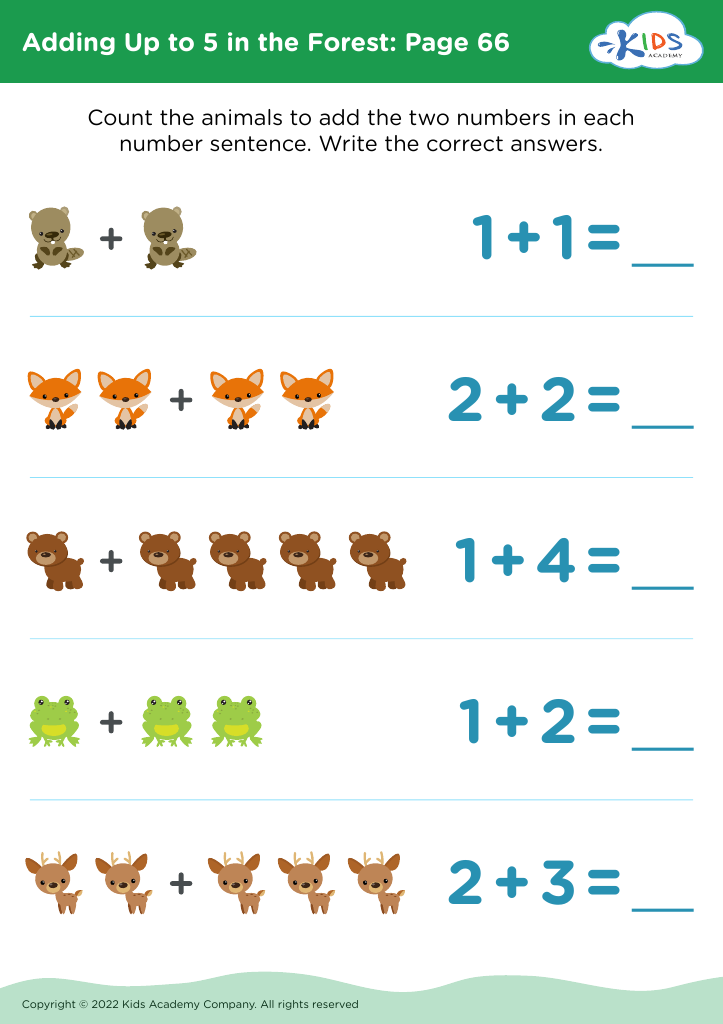
Adding Up to 5 in the Forest: Page 66
Worksheet
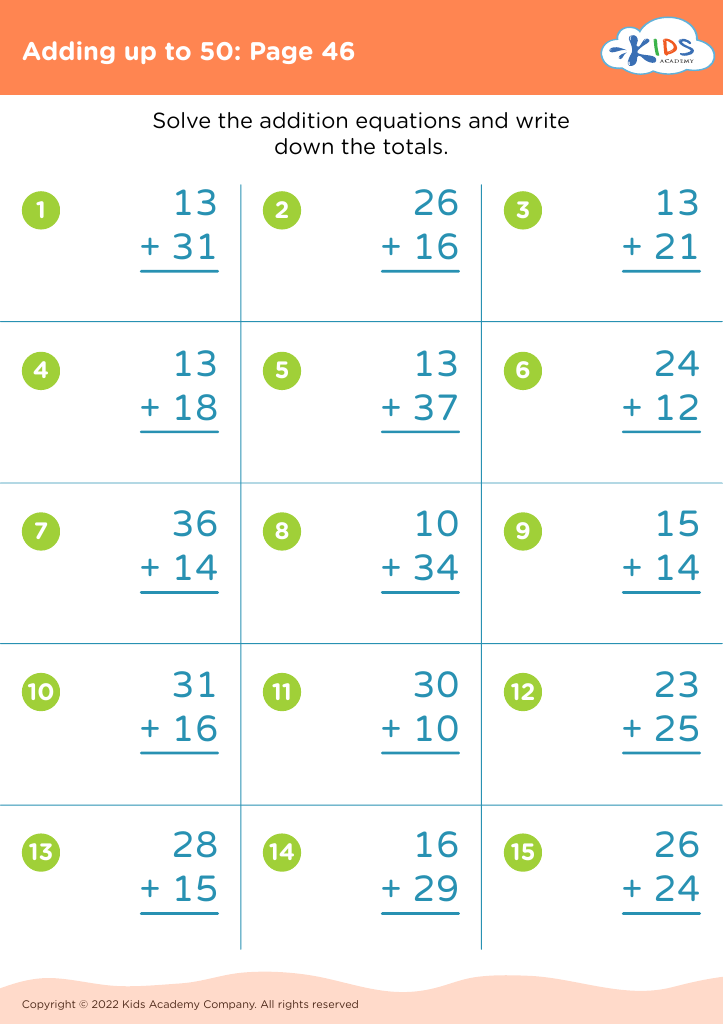
Adding up to 50: Page 46

Adding up to 50: Page 46

Adding up to 50: Page 46
Worksheet
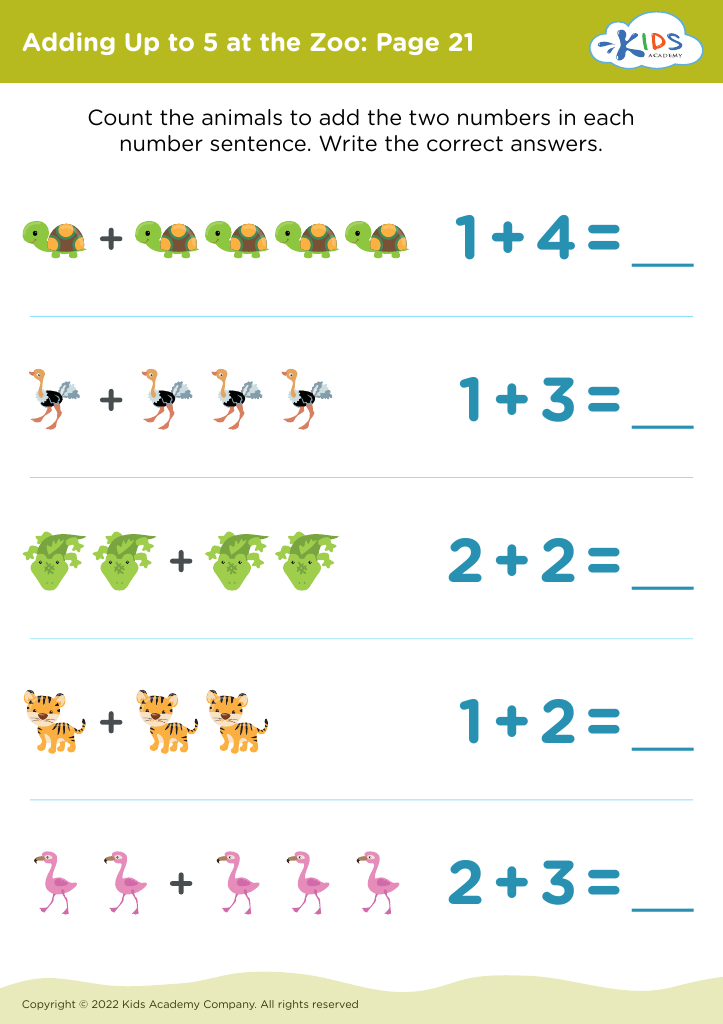
Adding Up to 5 at the Zoo: Page 21
Worksheet
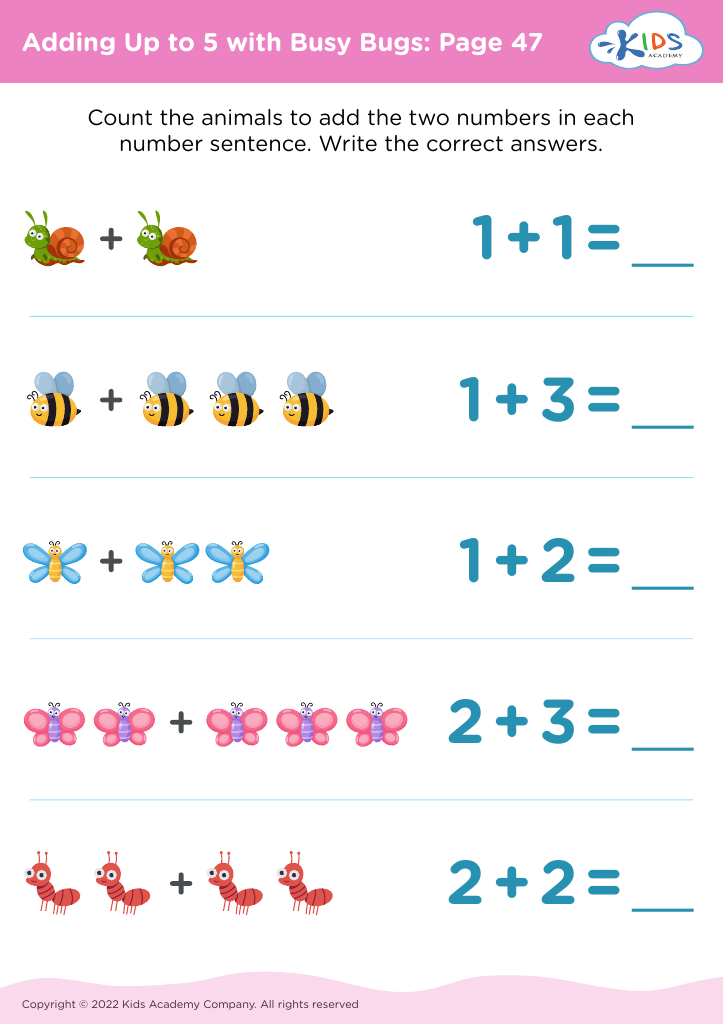
Adding Up to 5 with Busy Bugs: Page 47
Worksheet
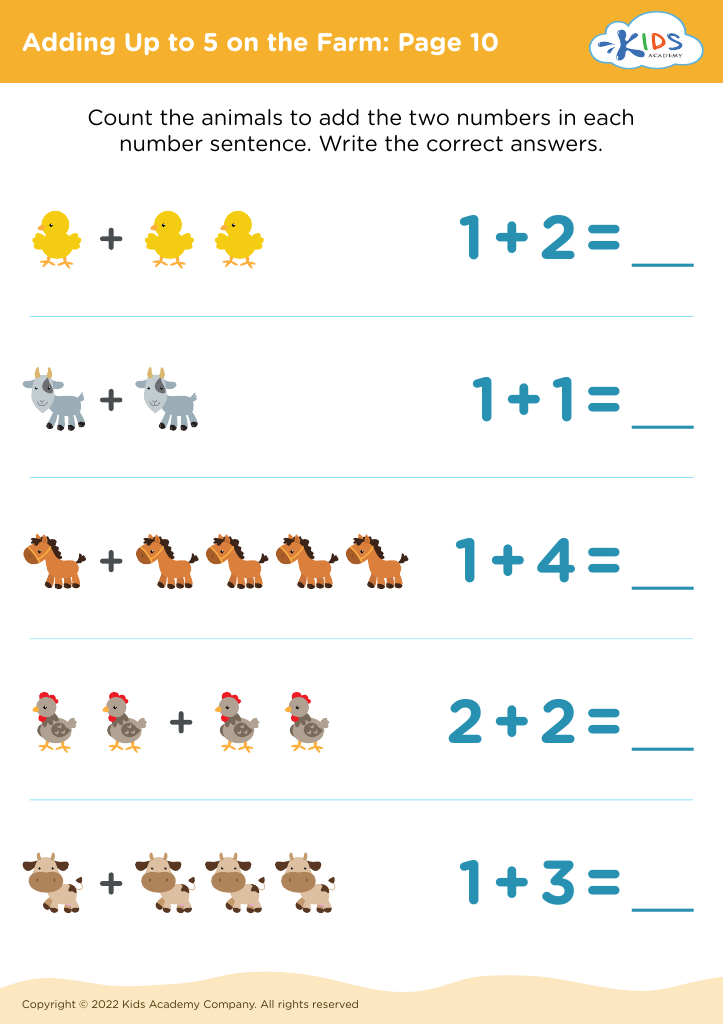
Adding Up to 5 on the Farm: Page 10
Worksheet
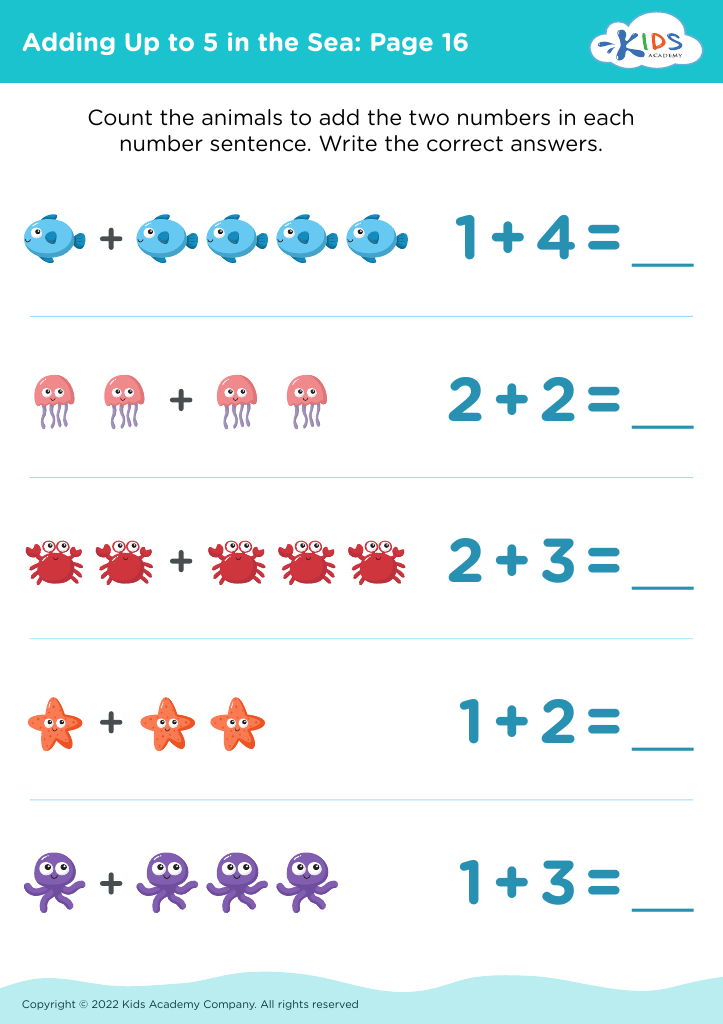
Adding Up to 5 in the Sea: Page 16
Worksheet
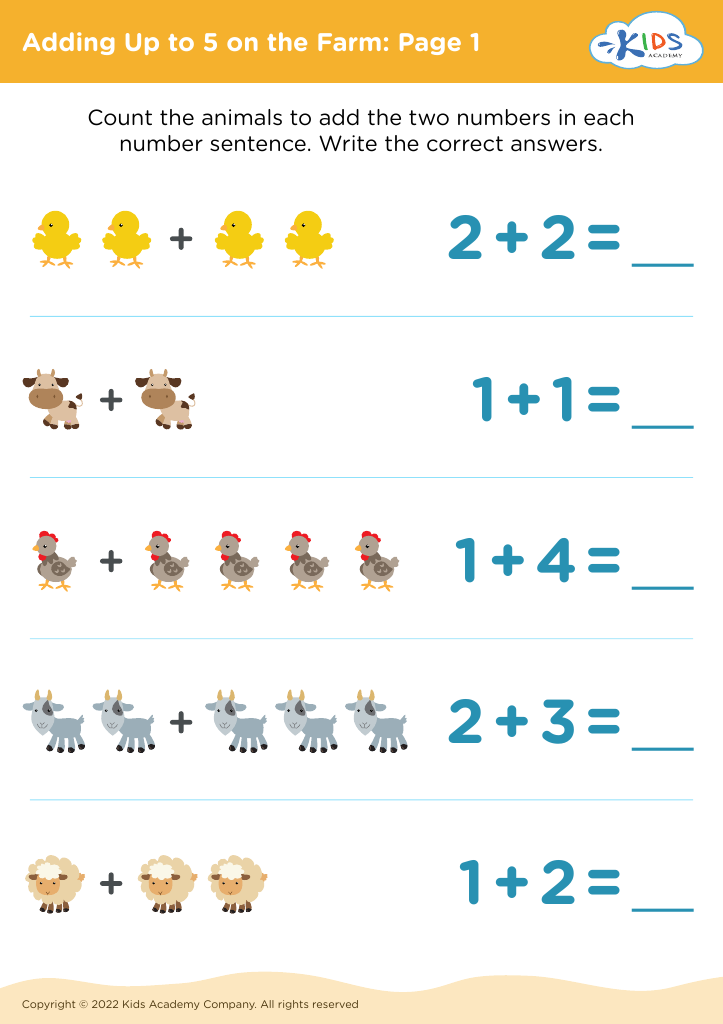
Adding Up to 5 on the Farm: Page 1
Worksheet
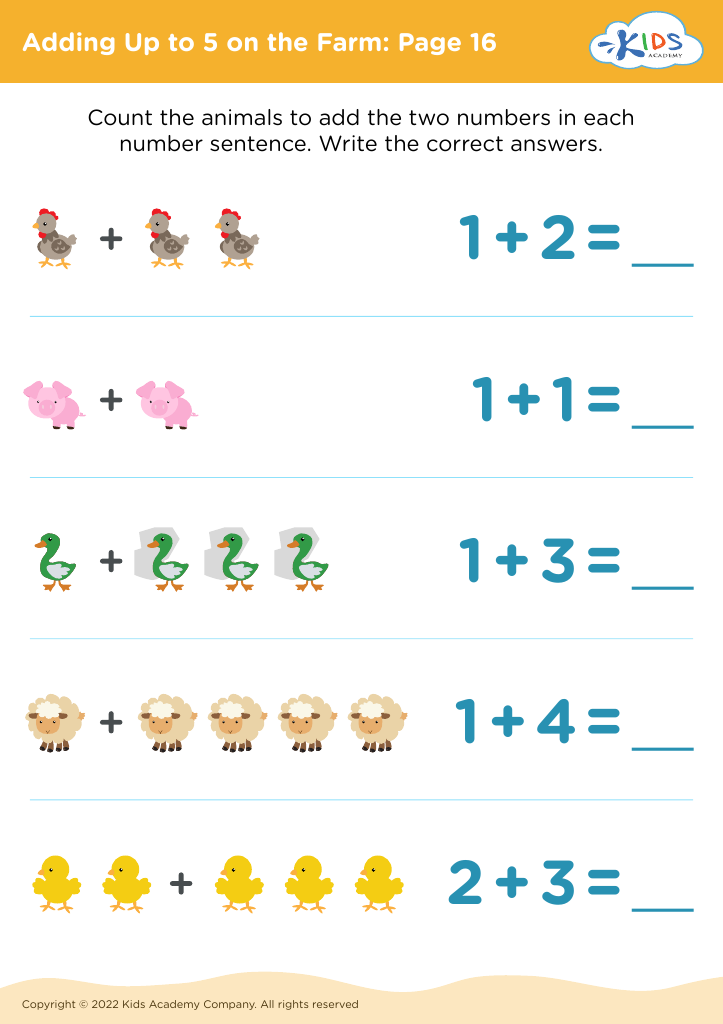
Adding Up to 5 on the Farm: Page 16
Worksheet
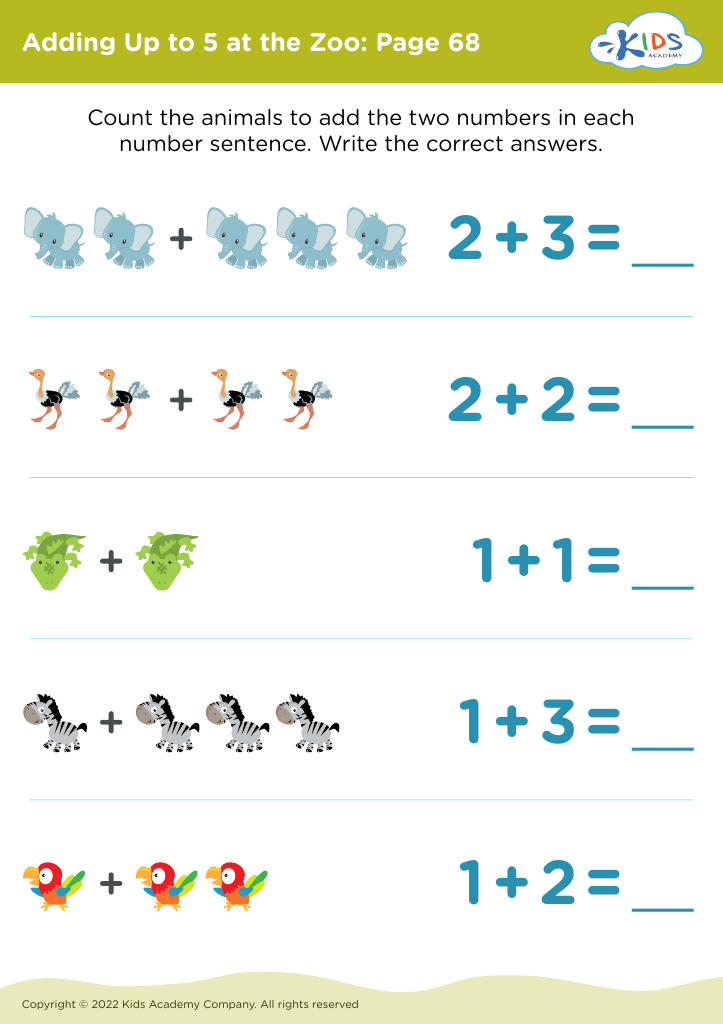
Adding Up to 5 at the Zoo: Page 68
Worksheet
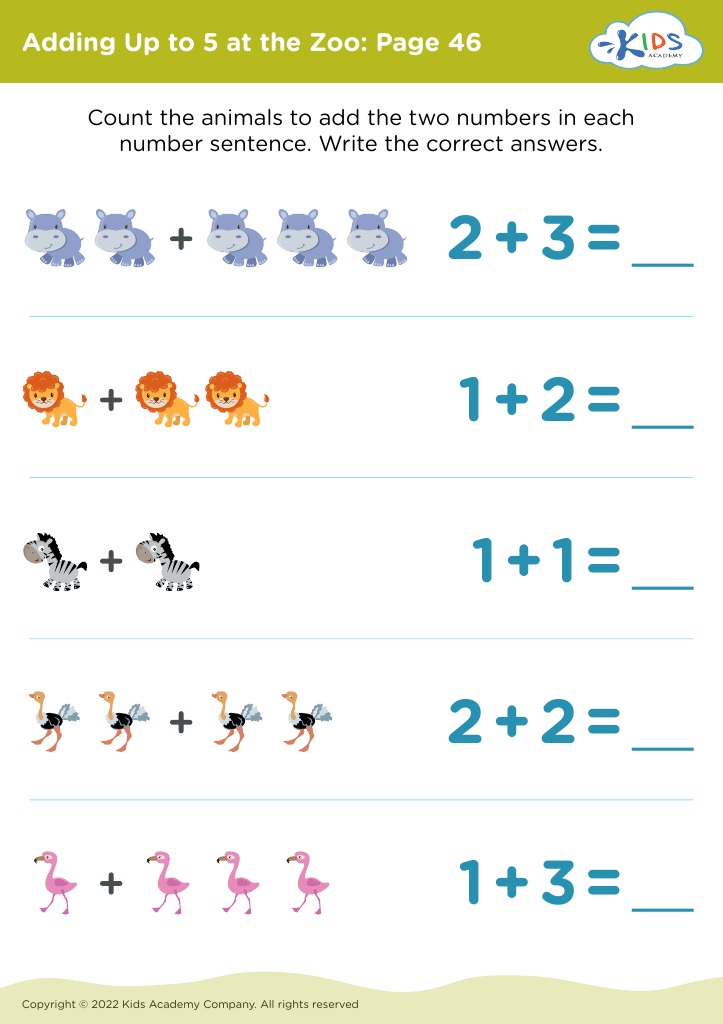
Adding Up to 5 at the Zoo: Page 46
Worksheet
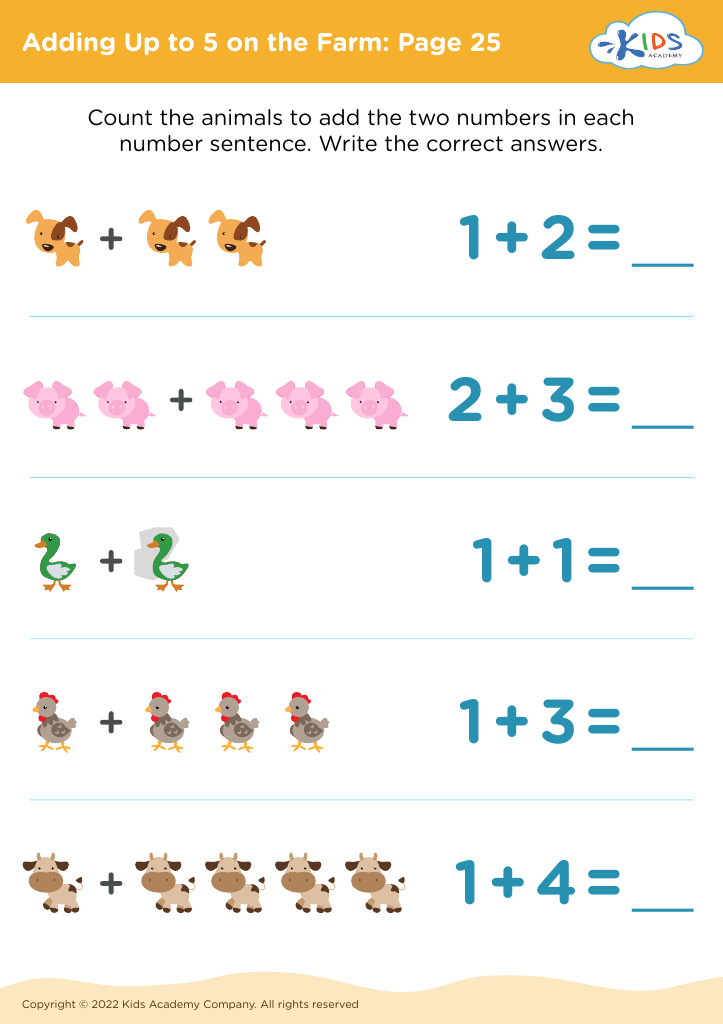
Adding Up to 5 on the Farm: Page 25
Worksheet
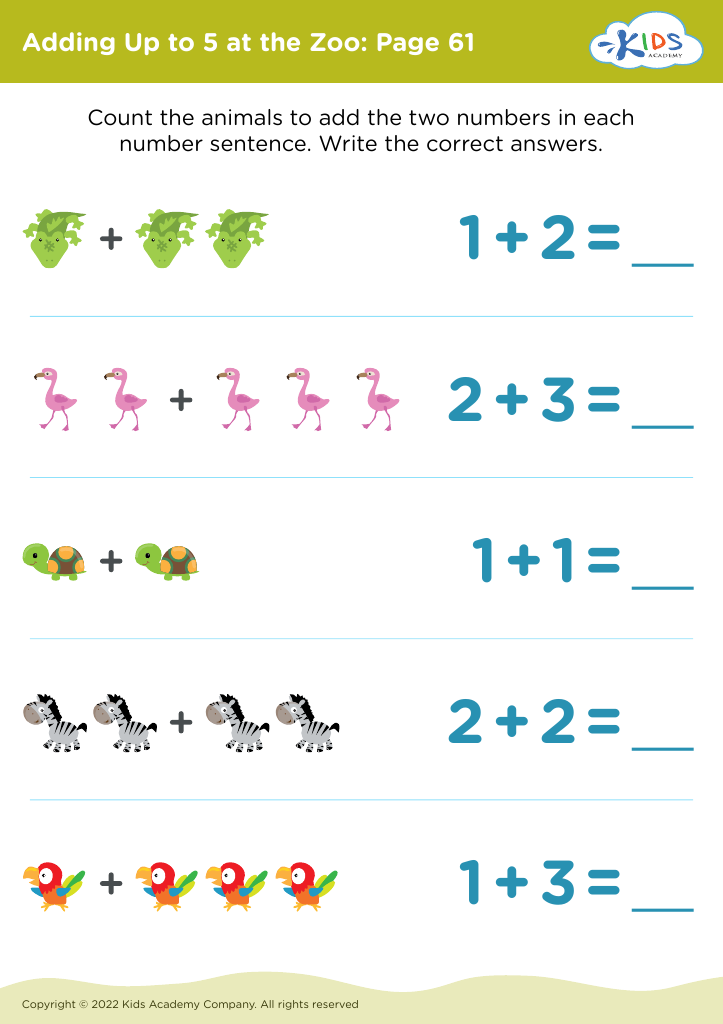
Adding Up to 5 at the Zoo: Page 61
Worksheet
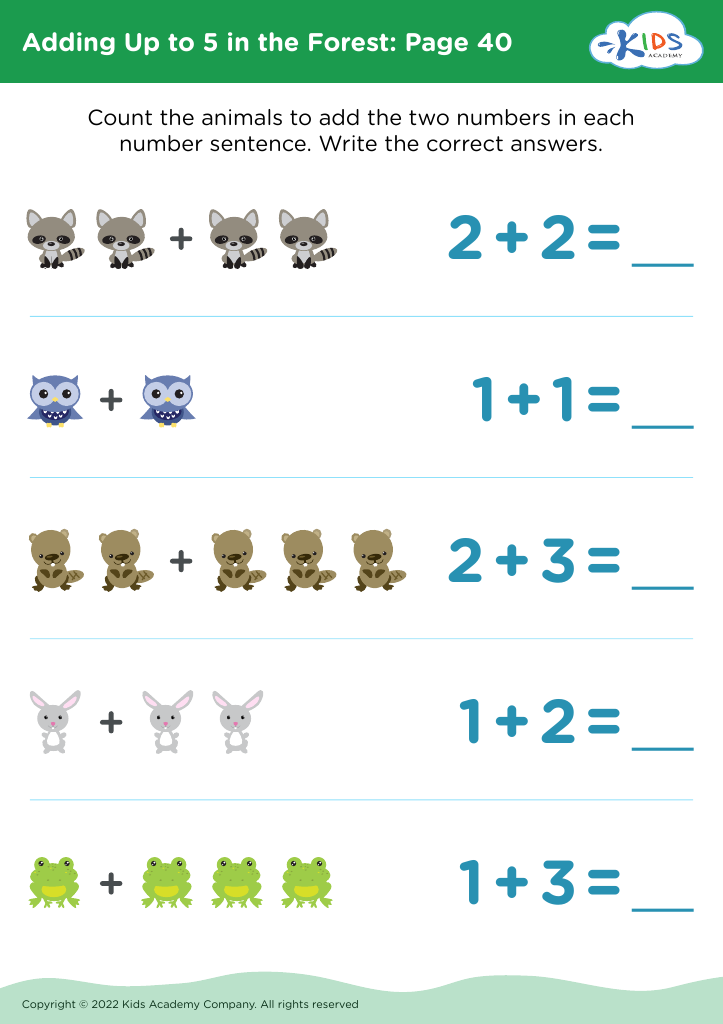
Adding Up to 5 in the Forest: Page 40
Worksheet
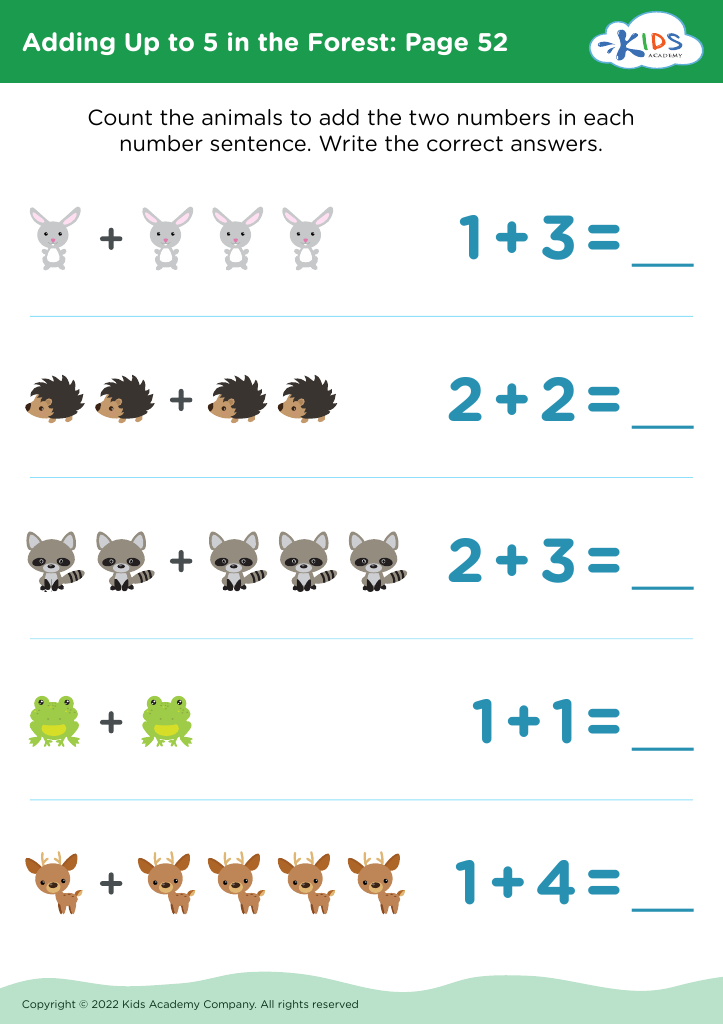
Adding Up to 5 in the Forest: Page 52
Worksheet
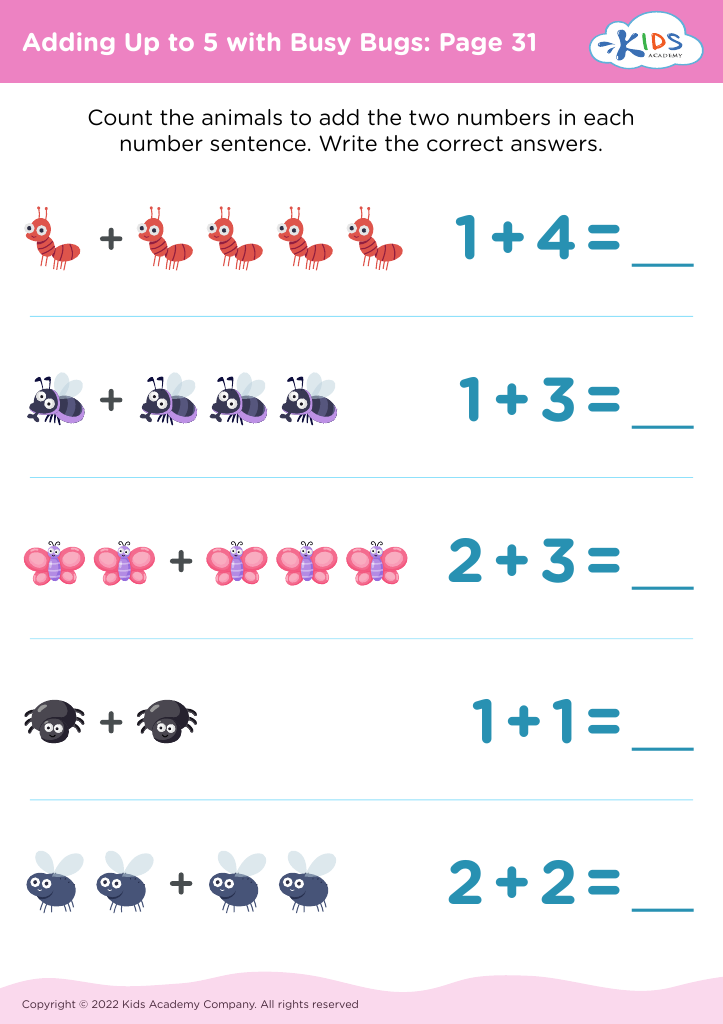
Adding Up to 5 with Busy Bugs: Page 31
Worksheet
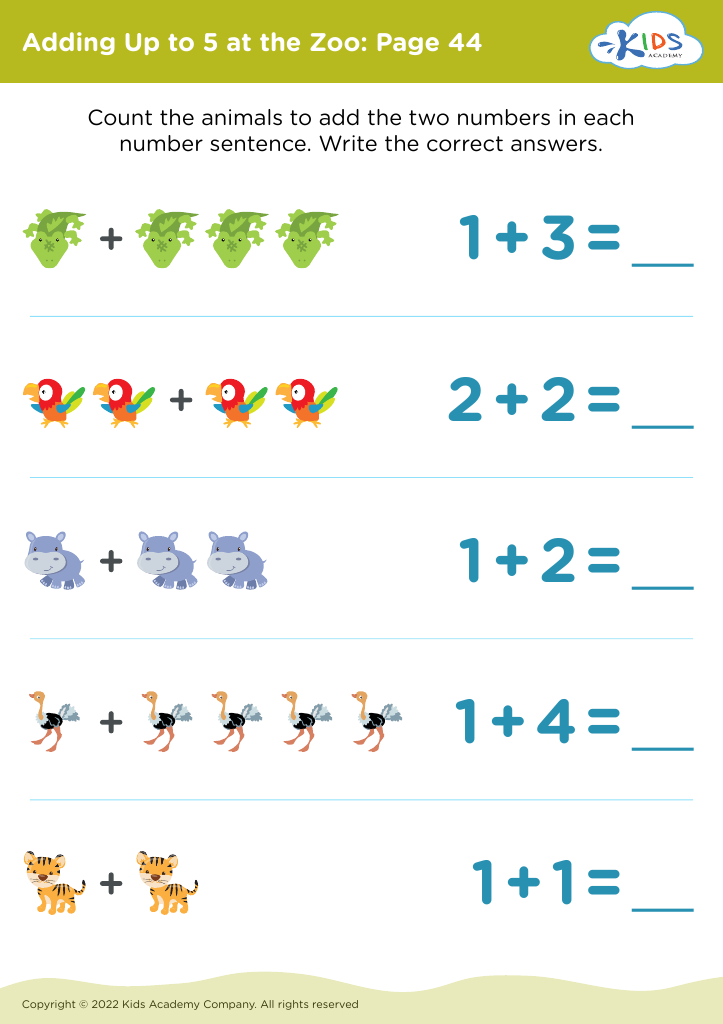
Adding Up to 5 at the Zoo: Page 44
Worksheet


Counting practice and addition skills for children aged 3-9 are critical for several reasons. First, these foundational math skills support cognitive development and early number sense, which are crucial building blocks for future mathematical understanding. Mastering counting and basic addition helps children develop problem-solving skills, logical reasoning, and critical thinking—all essential competencies in later academic pursuits.

Additionally, during the ages of 3-9, children are highly receptive to learning new concepts, and math is no exception. Engaging in counting and addition through fun activities, such as games or interactive applications, makes learning enjoyable and can foster a positive attitude toward math. This early exposure can boost their confidence and reduce math anxiety as they progress through school.

Moreover, counting and addition skills are not only important academically but also in everyday life. They enable children to perform simple tasks, such as sharing snacks, understanding time, or managing allowances. It equips them with practical skills essential for independence and individual responsibility.

In short, focusing on counting and addition practice for young children lays a strong foundation for future learning, boosts confidence, enhances problem-solving abilities, and provides practical life skills—all reasons why parents and teachers should prioritize these activities.