
Develop addition skills Addition Worksheets for Ages 3-9
4 filtered results
Difficulty Level
Grade
Age
-
From - To
Subject
Activity
Standards
Enhance your child's math proficiency with our engaging Addition Worksheets designed for ages 3-9. These expertly crafted worksheets from Kids Academy support young learners in developing essential addition skills. Tailored to progressively build confidence and understanding, each activity encourages practice through fun, interactive exercises. Whether your child is just beginning to count or ready to tackle more complex problems, our worksheets cater to a variety of skill levels. Make math enjoyable and accessible, and watch your child's numerical knowledge soar. Download now and unlock a world of learning with Kids Academy’s premium resources!
Favorites
With answer key
Interactive
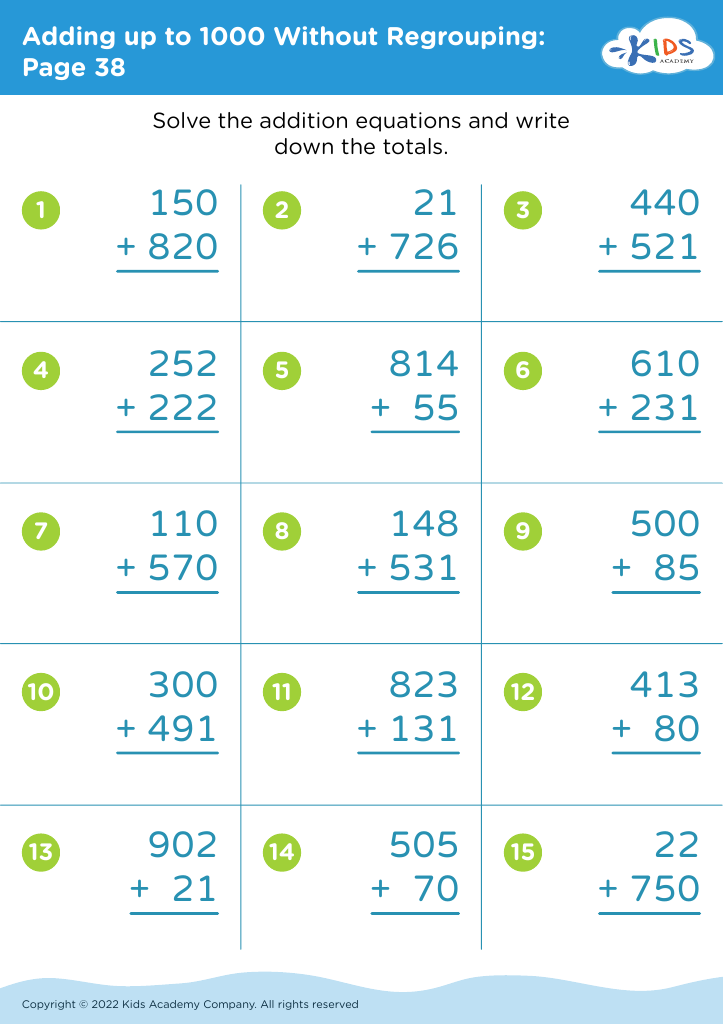
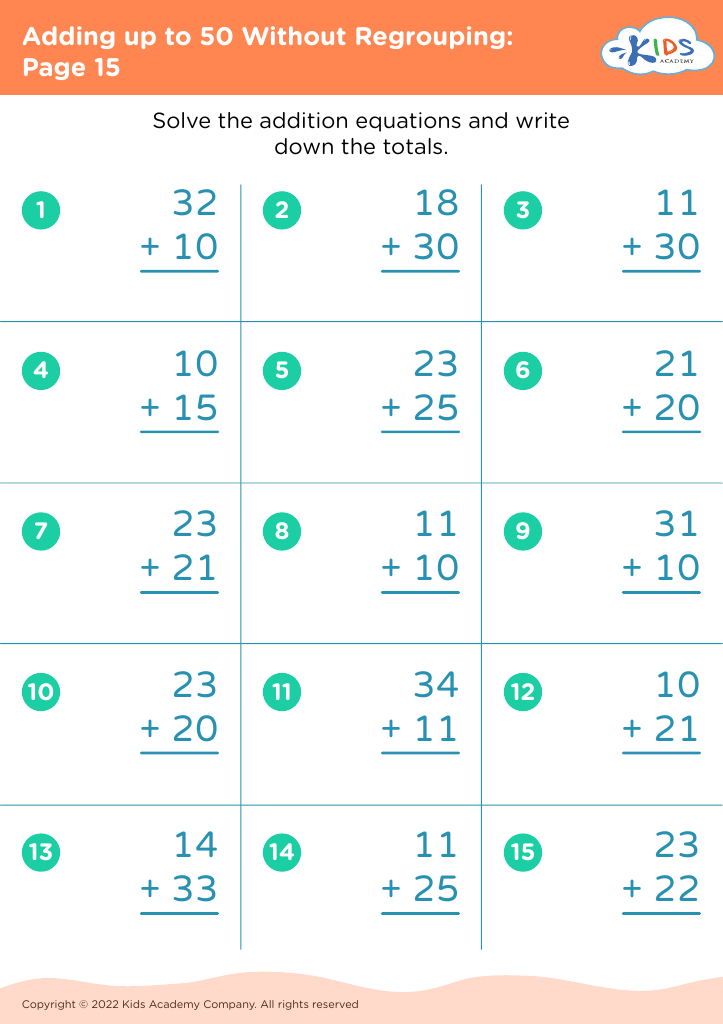
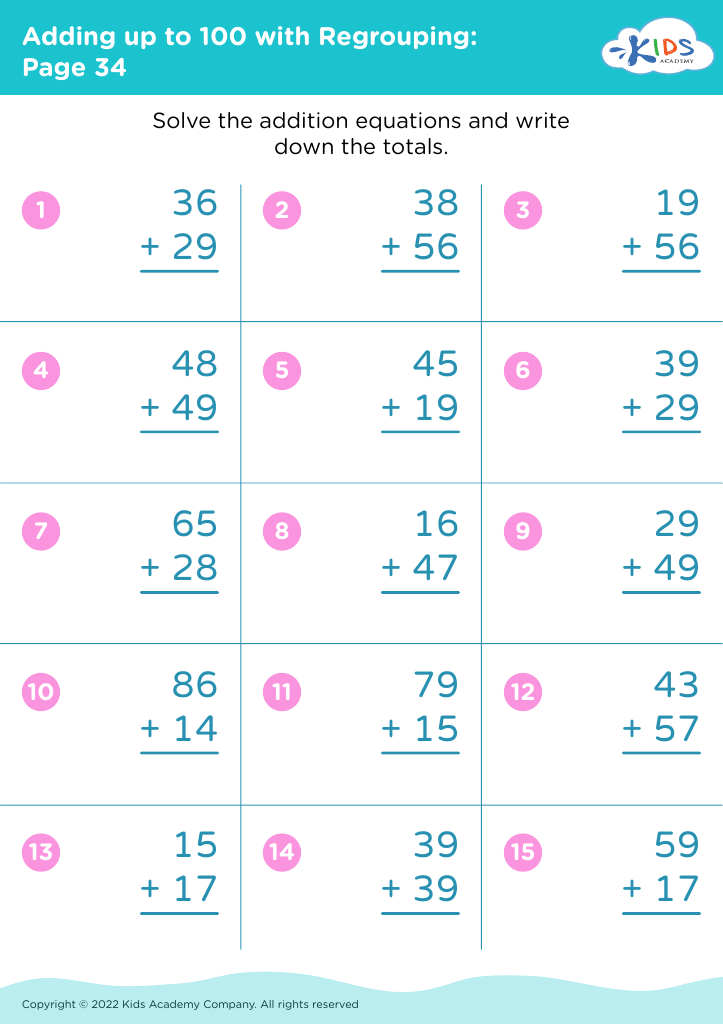
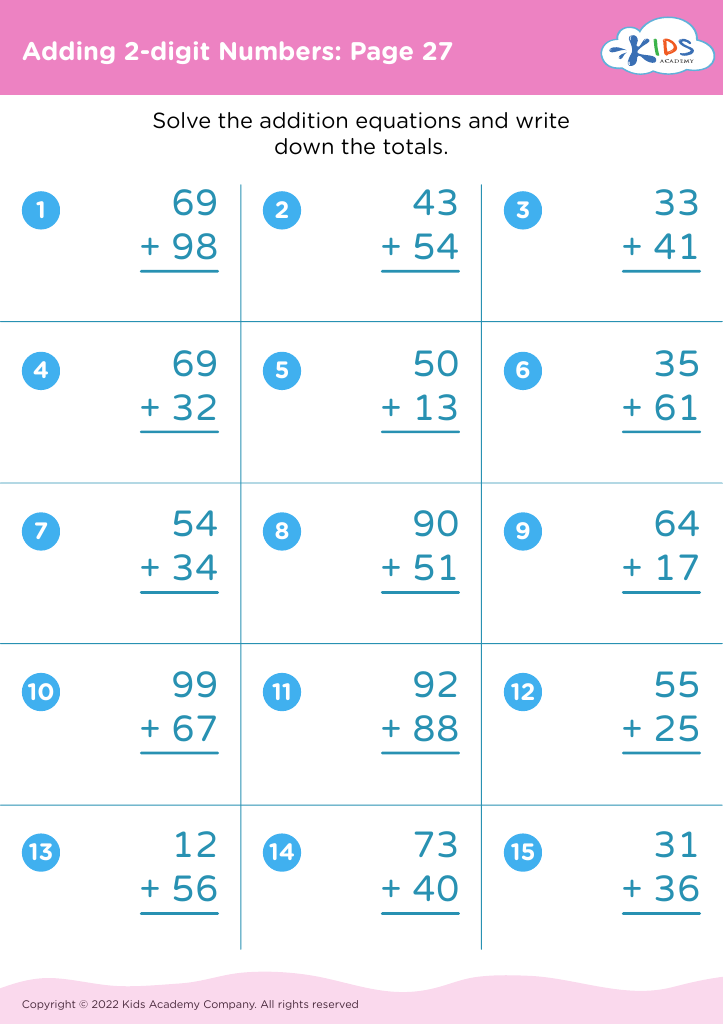
Learning Skills
Join Kids Academy for Free
Who is primarily going to use this learning content?








Developing addition skills at an early age, especially between the ages of 3-9, is crucial for parents and teachers to prioritize. This foundational math skill is essential because it serves as a building block for future mathematical learning and cognitive development. Early exposure to addition aids children in understanding basic arithmetic, number sense, and problem-solving techniques.
When children learn addition early on, they are more likely to develop confidence in their math abilities. This confidence can motivate them to tackle more complex mathematical concepts as they progress in their education. Addition is not only relevant for math classes but also plays a significant role in everyday activities like counting, shopping, and time management, making it a universally applicable skill.
Engaging children in fun and interactive addition activities, such as counting games, puzzles, and hands-on learning tools, enhances their numerical fluency and recall. Early math proficiency is also linked to better overall academic performance, since the logical and analytical skills developed through math learning apply to subjects like science and technology.
Ultimately, fostering early addition skills sets a strong foundation for a child's future academic success and practical life abilities, making it essential for parents and teachers to dedicate time and resources toward this goal.








