Develop analytical thinking Addition Worksheets for Ages 3-9
3 filtered results
-
From - To
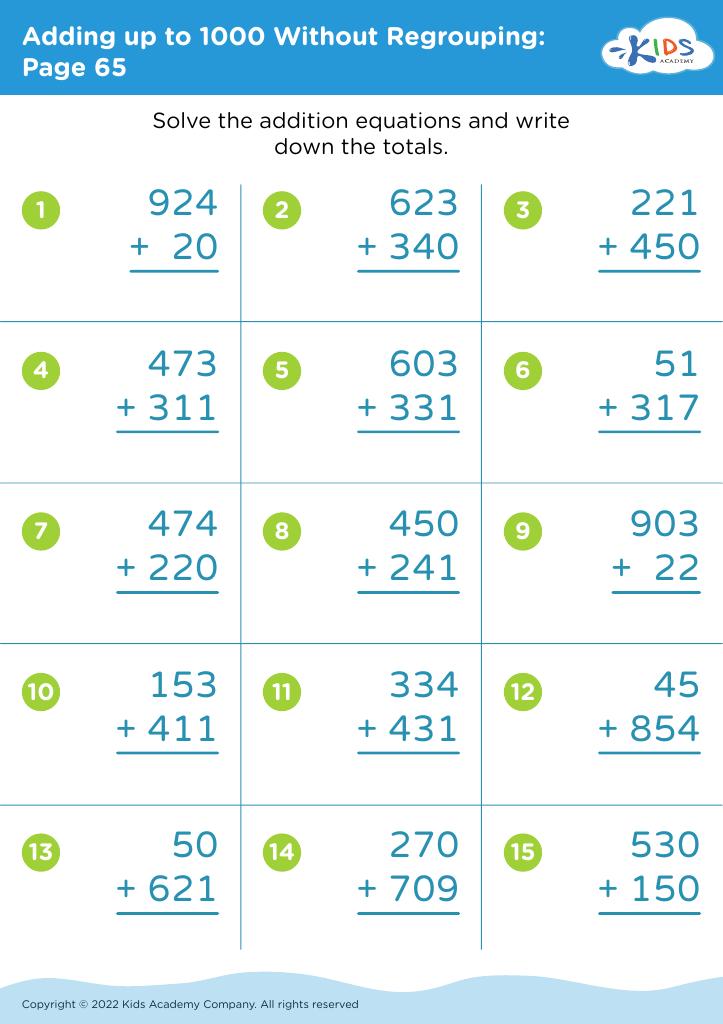
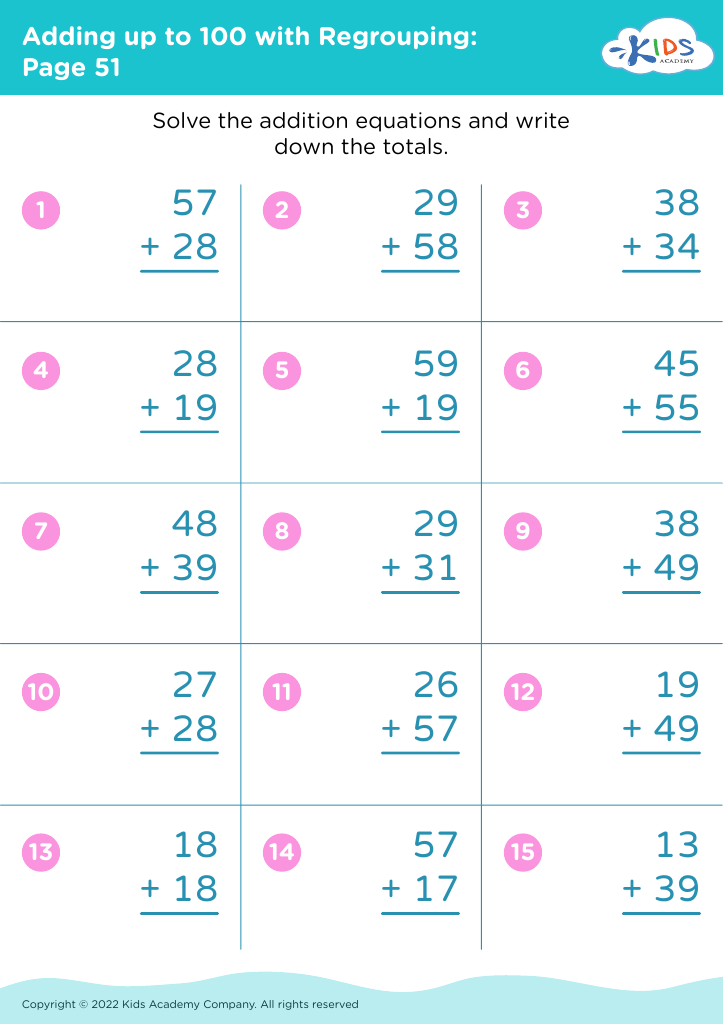
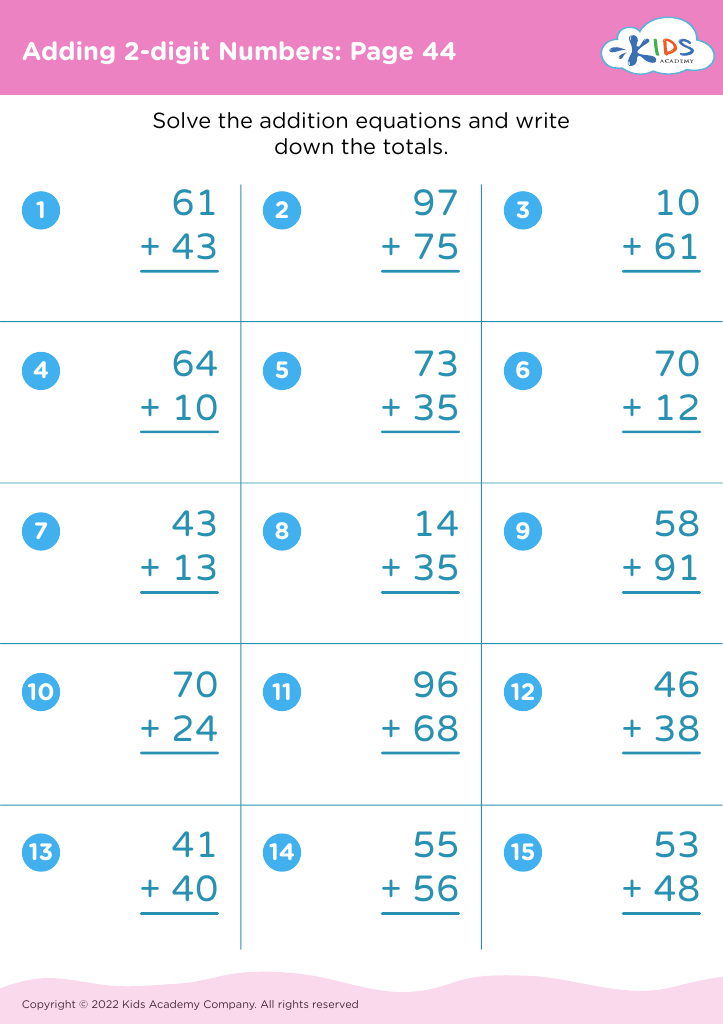
Our "Develop Analytical Thinking Addition Worksheets" are designed for children aged 3-9 to enhance their math skills while fostering critical thinking. These engaging worksheets encourage young learners to solve addition problems through various challenges that develop reasoning abilities and improve problem-solving skills. Tailored to different age levels, the materials not only focus on basic addition but also promote analytical thinking through puzzles and interactive activities. By integrating fun with education, these worksheets allow children to explore numbers creatively and confidently, preparing them for future academic success. Start your child’s journey toward becoming a logical thinker and math whiz today!








Developing analytical thinking skills in children aged 3-9 is crucial for their overall cognitive growth and academic success. Analytical thinking involves the ability to evaluate information, solve problems, and make deductions based on evidence. In the context of addition, fostering these skills helps children not only with math but also with comprehension and critical reasoning across subjects.
For parents and teachers, nurturing analytical thinking through addition allows children to grasp foundational mathematical concepts. Instead of merely memorizing addition facts, learners engage with numbers meaningfully, understanding relationships and patterns. This approach enhances their ability to approach challenges systematically, organizing their thoughts and evaluating different strategies to find solutions.
Moreover, strong analytical thinking skills promote independence and confidence in young learners. Children who can deconstruct problems are more likely to take initiative in their learning and persist through challenges. These skills lay the groundwork for later academic success, cultivating inquisitive, adaptable thinkers who are prepared for the complexities of higher education and beyond.
By integrating analytical thinking into early math learning, parents and teachers can empower children to connect ideas, nurture curiosity, and foster lifelong skills essential for personal and intellectual growth.








