Develop critical thinking Addition Worksheets for Ages 3-9
11 filtered results
-
From - To
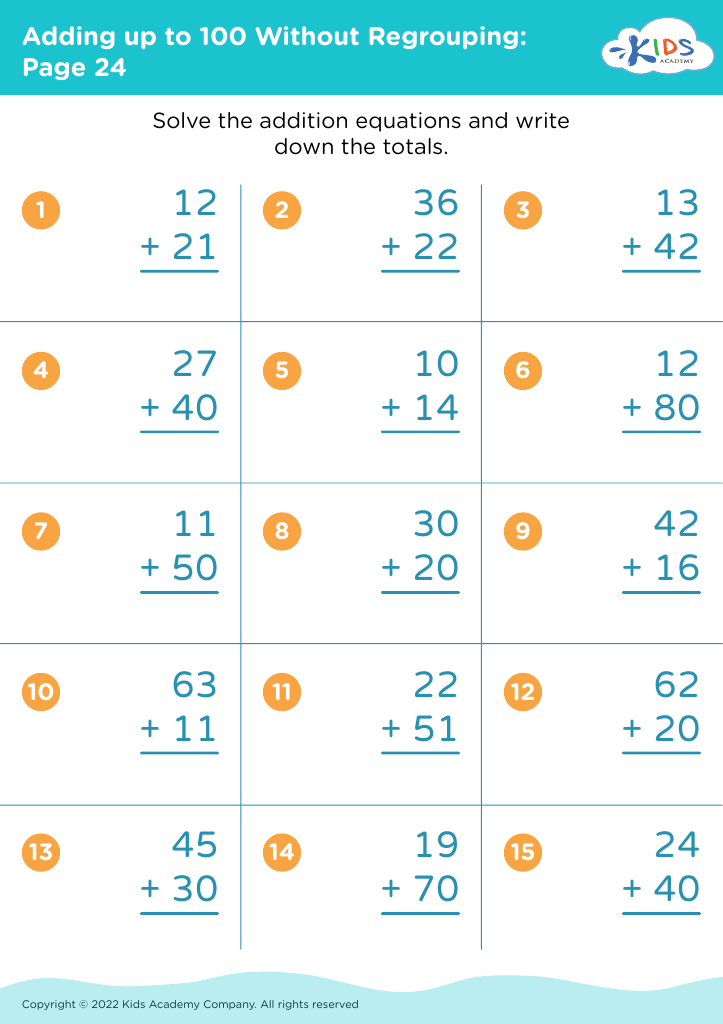
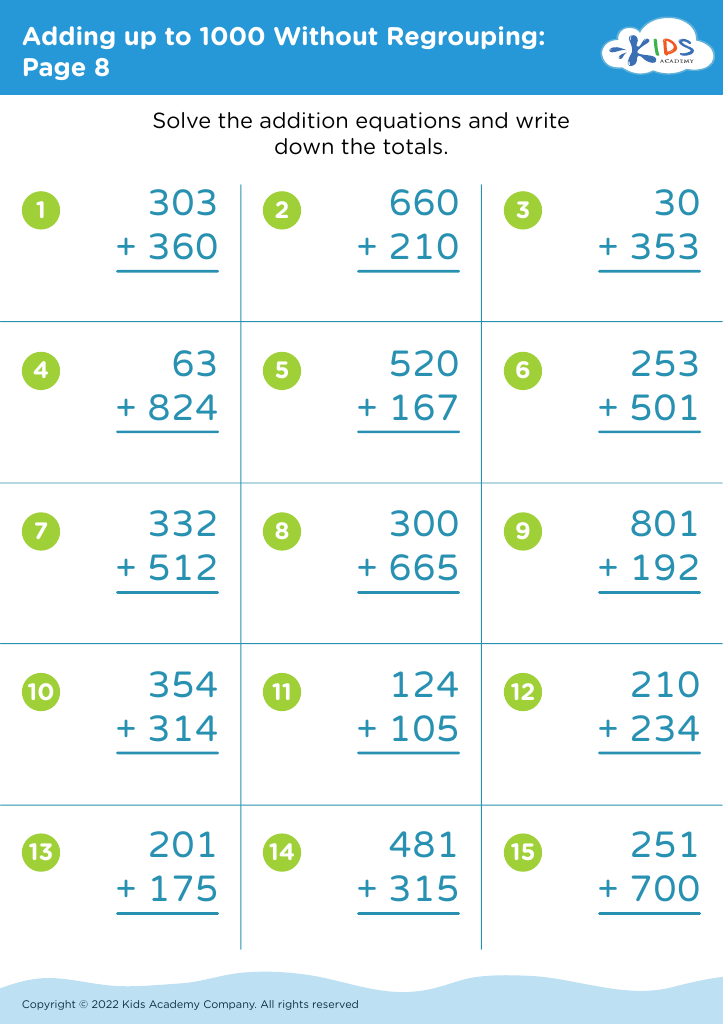
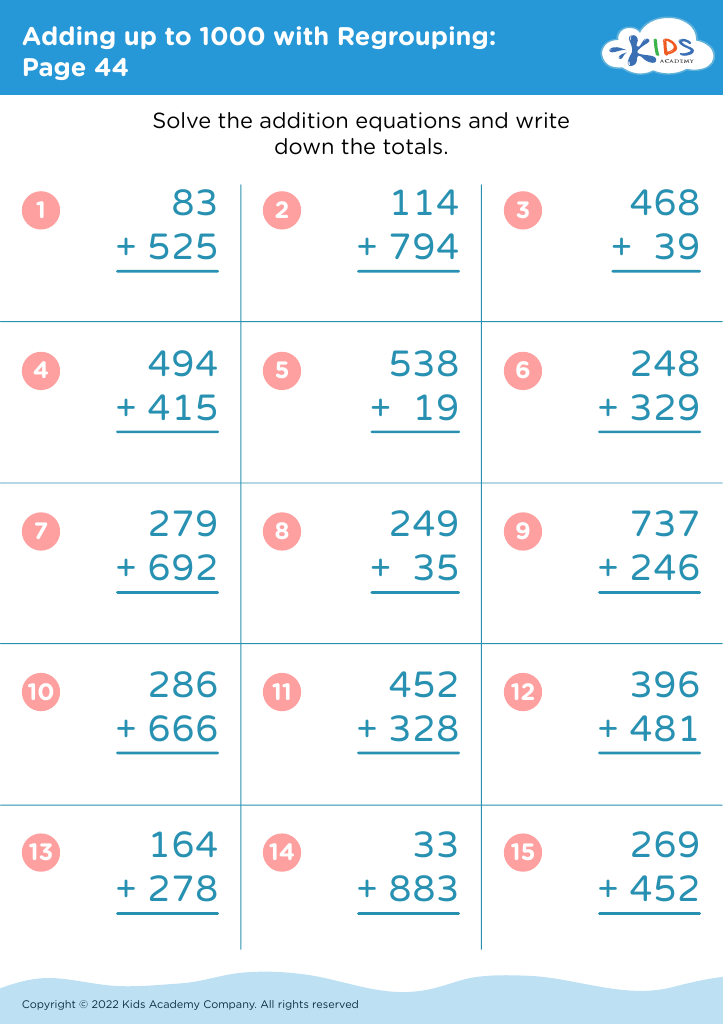
Enhance your child's mathematical skills with our engaging "Develop Critical Thinking Addition Worksheets" designed for ages 3-9. These worksheets not only focus on basic addition but also encourage critical thinking and problem-solving abilities. Each activity is crafted to challenge young minds, prompting them to think independently and creatively while mastering essential math concepts. Perfect for classroom use or home learning, our printable worksheets promote curiosity and intellectual growth in a fun, interactive way. Help your little ones build a solid foundation in mathematics while stimulating their critical thinking skills, ensuring they are well-prepared for future learning challenges. Get started today!








Developing critical thinking skills in young children, particularly ages 3 to 9, is essential for their overall cognitive growth and future success. These foundational years are crucial as children learn to navigate complex information and relationships. Critical thinking encourages them to ask questions, analyze situations, and evaluate outcomes, fostering an engaged and inquisitive mindset.
Teachers and parents should care about integrating critical thinking into early childhood education and home activities. It equips children with the ability to solve problems creatively and independently—skills that are vital in today’s fast-paced, ever-changing world. Through activities such as open-ended questioning, problem-solving games, and discussions about scenarios, children learn how to approach challenges rationally and thoughtfully.
Furthermore, critical thinking nurtures communication skills and collaboration. As children share their ideas and reasoning, they learn to listen to others, consider different perspectives, and articulate their thoughts clearly. These skills not only enhance academic performance but also contribute to emotional intelligence, enabling children to navigate social interactions effectively.
Investing in critical thinking during these formative years sets the stage for lifelong learning and adaptability, preparing young minds for a world that demands innovative and thoughtful problem solvers. Thus, educators and parents should prioritize critical thinking as a core part of early education.








