Develop problem-solving skills Addition Worksheets for Ages 3-9
7 filtered results
-
From - To
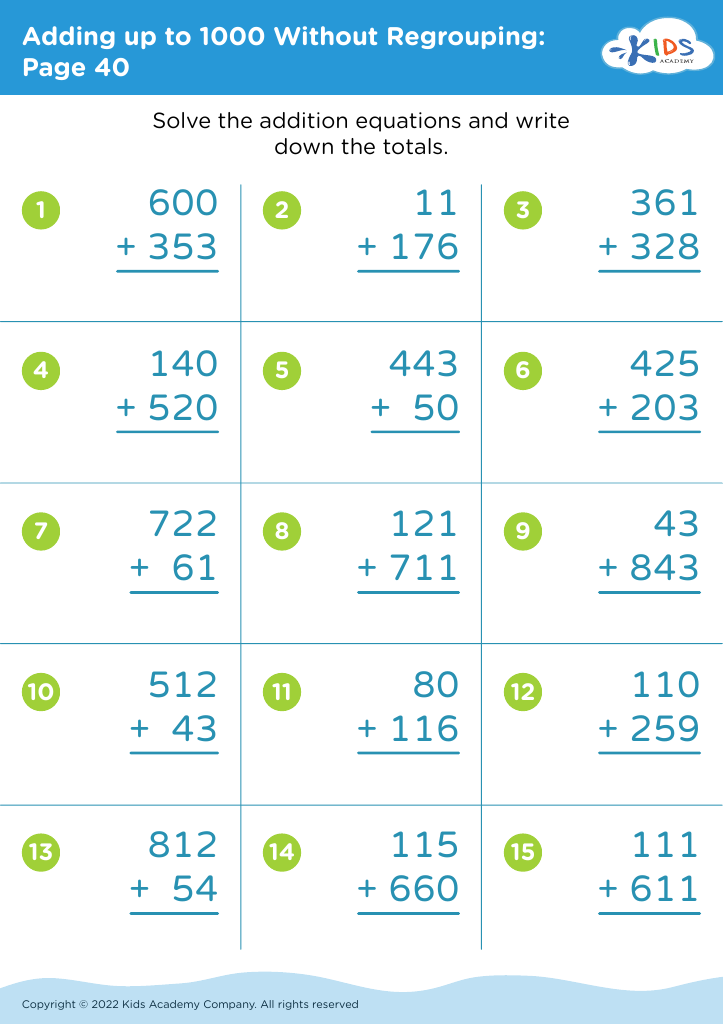
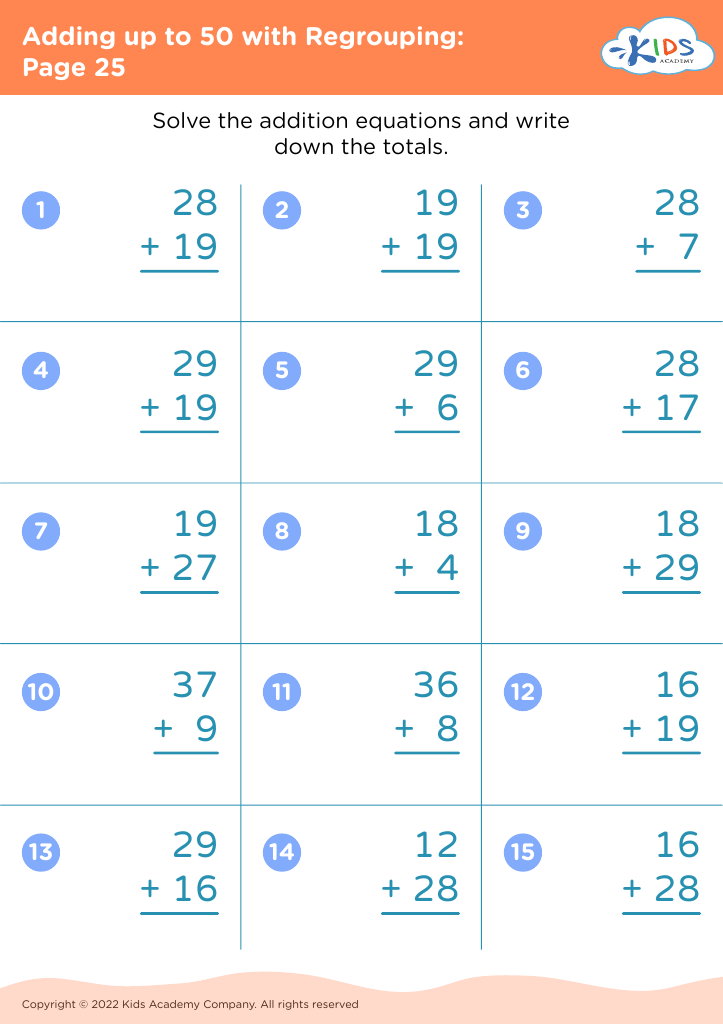
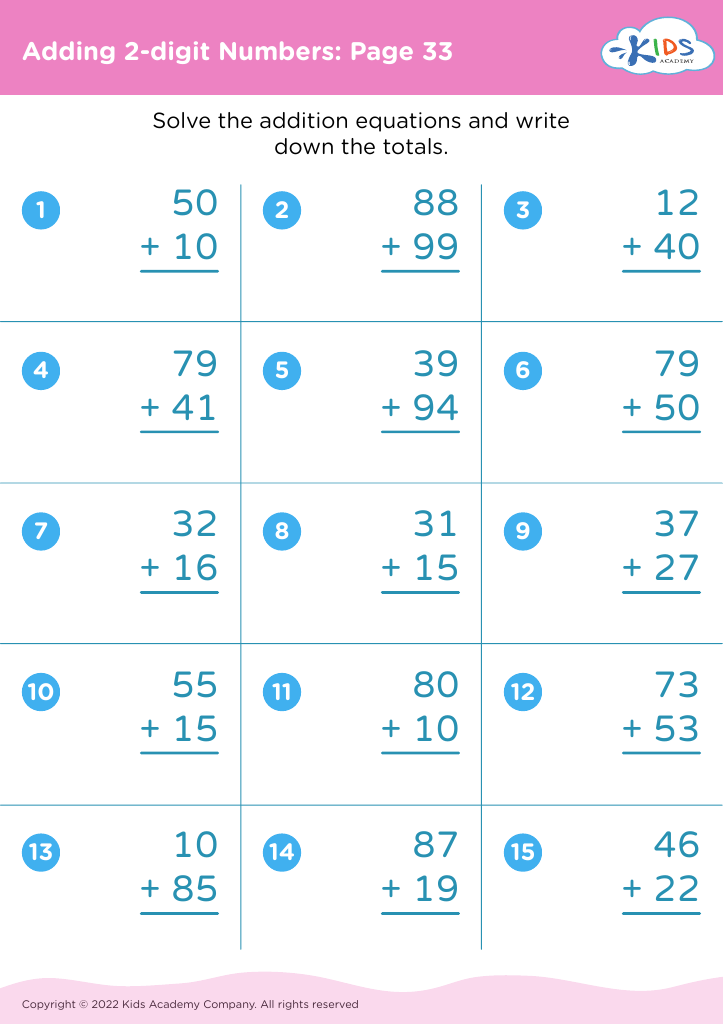
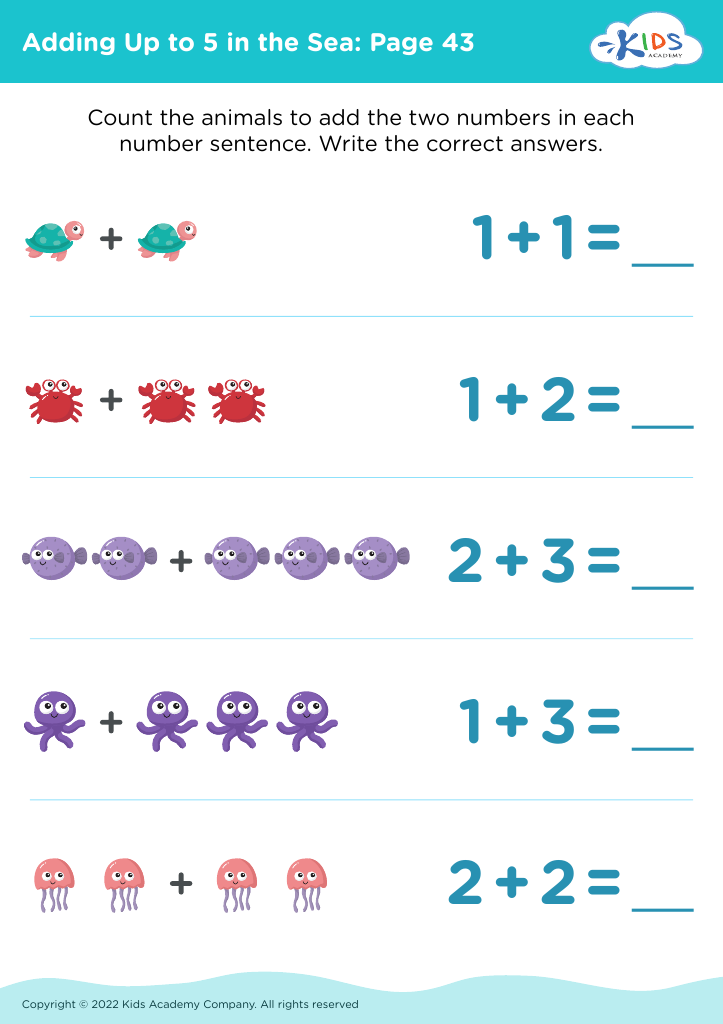
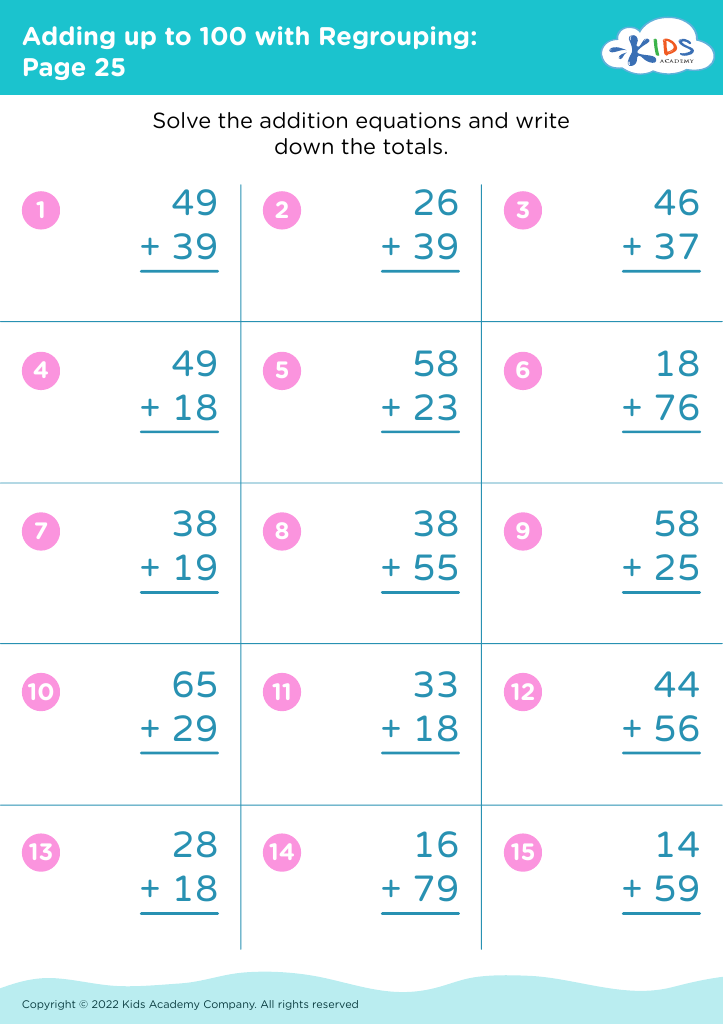
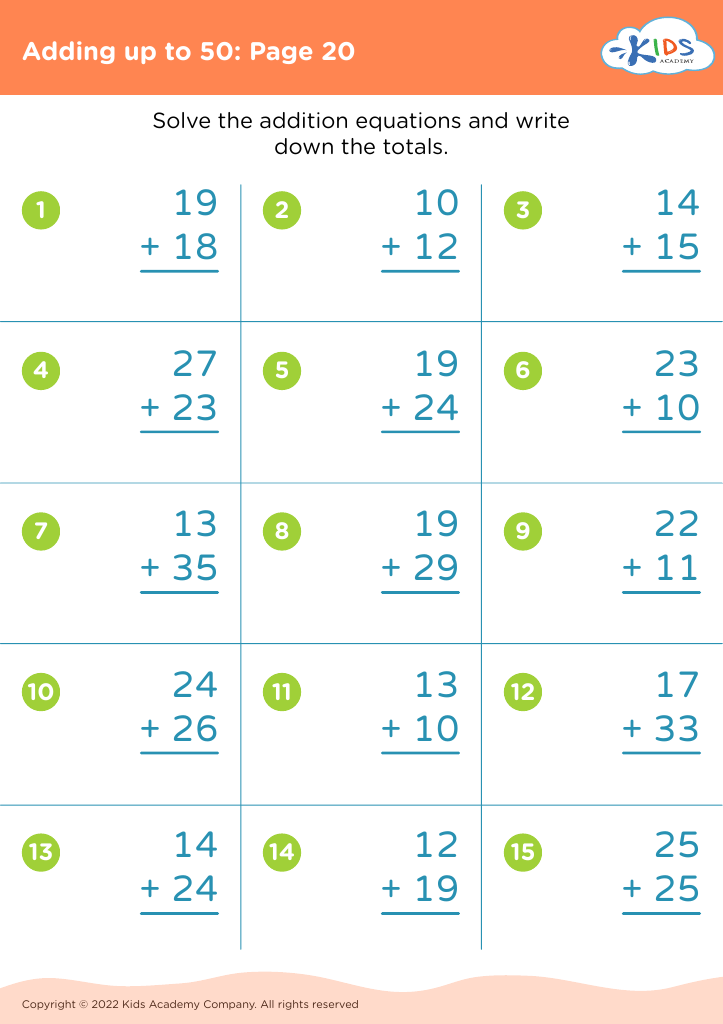
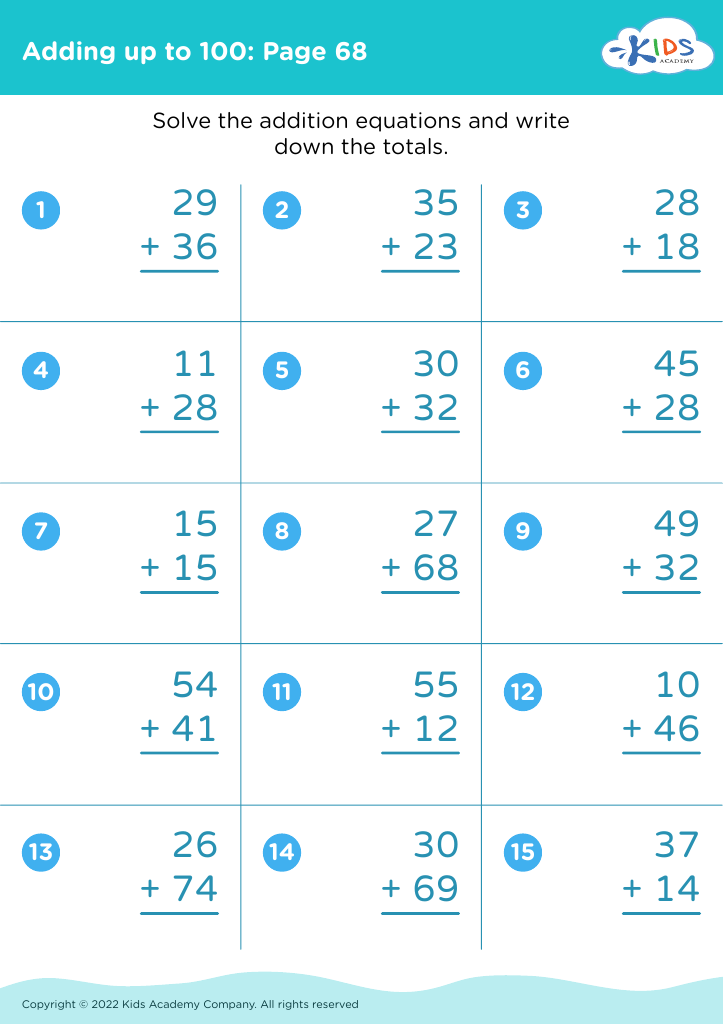
Discover our engaging Addition Worksheets designed specifically for children aged 3-9, aimed at developing essential problem-solving skills. Each worksheet combines fun and interactive tasks with targeted learning techniques to enhance mathematical thinking and reasoning. These resources are perfect for early learners, helping them grasp foundational addition concepts while building confidence and proficiency. Our worksheets also include colorful illustrations and age-appropriate challenges, making math both enjoyable and educational. Perfect for both classroom and at-home learning, these expertly crafted materials ensure a solid foundation in addition, preparing your child for future math success. Boost your child's problem-solving abilities with our innovative addition worksheets today!







.jpg)
Parents and teachers should prioritize developing problem-solving skills through addition for children aged 3-9, as it forms a critical foundation for their cognitive and academic growth. This early math proficiency builds essential skills such as logical thinking, reasoning, and pattern recognition. Introducing addition in these formative years helps children understand the concept of combining quantities, which is a fundamental math operation they will rely on throughout their education.
Moreover, problem-solving with addition enhances a child's ability to approach challenges systematically and think critically, traits that are invaluable beyond the math classroom. It promotes perseverance and analytical thinking, encouraging children to explore multiple solutions and verify their answers.
Additionally, competence in solving addition problems helps instill confidence in young learners. When children experience success in this fundamental area, they are more likely to embrace more complex mathematical concepts with a positive attitude. This readiness and enthusiasm can lead to improved academic performance across all subjects, since a confident learner is more engaged and prepared to tackle difficult tasks.
In summary, fostering addition problem-solving skills in young children is crucial as it lays down a mental framework that supports future learning, nurtures critical habits, and builds the confidence necessary for long-term educational success.








