Developing counting skills Addition Worksheets for Ages 3-9
3 filtered results
-
From - To
Enhance your child's counting skills with our engaging Addition Worksheets designed specifically for ages 3 to 9. These worksheets provide interactive and hands-on activities that make learning math fun! Each worksheet gradually increases in difficulty, allowing children to build a strong foundation in counting and addition. Perfect for preschool and early elementary, they foster essential mathematical skills through colorful illustrations and playful exercises. Whether at home or in the classroom, our resources are tailored to support young learners in reaching their academic goals. Start your child’s math journey today with our comprehensive collection to support counting proficiency and confidence!
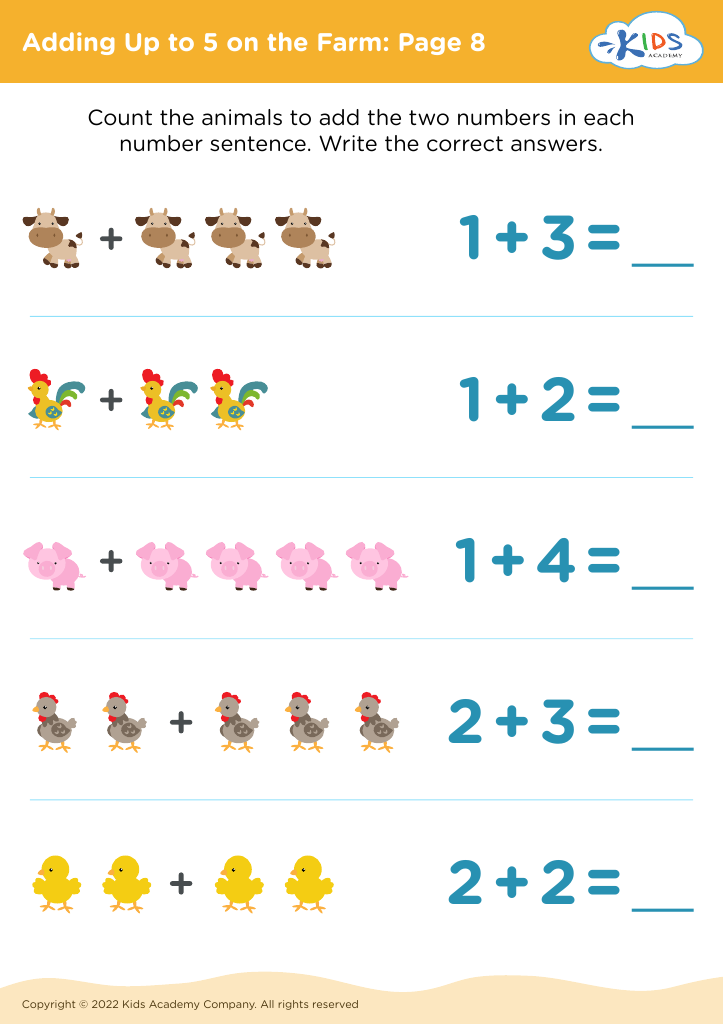
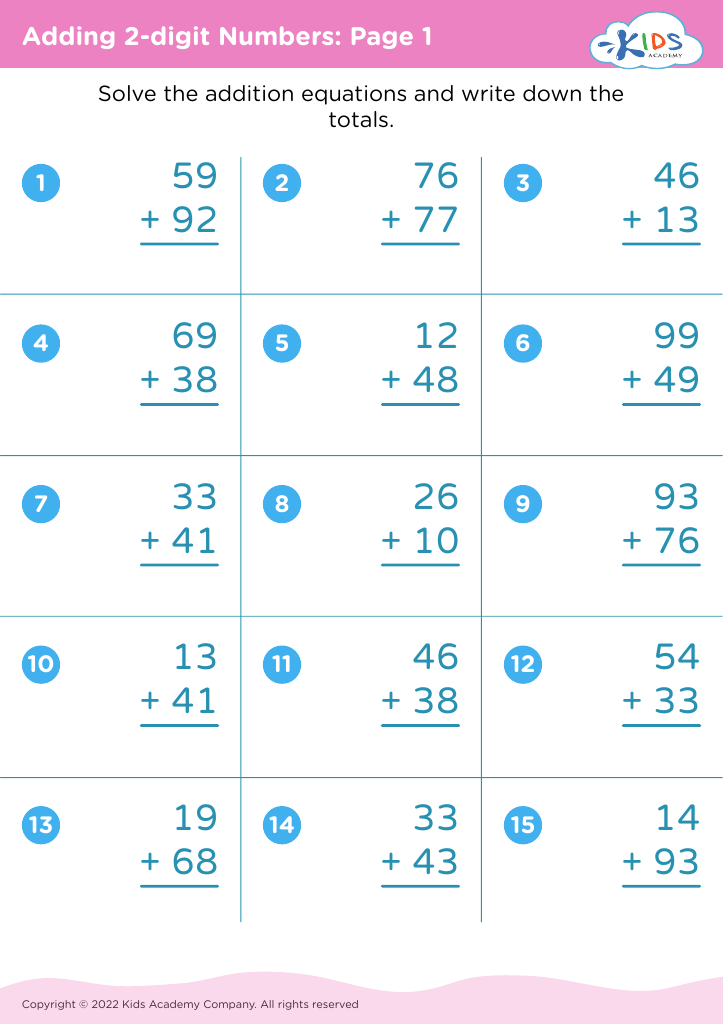
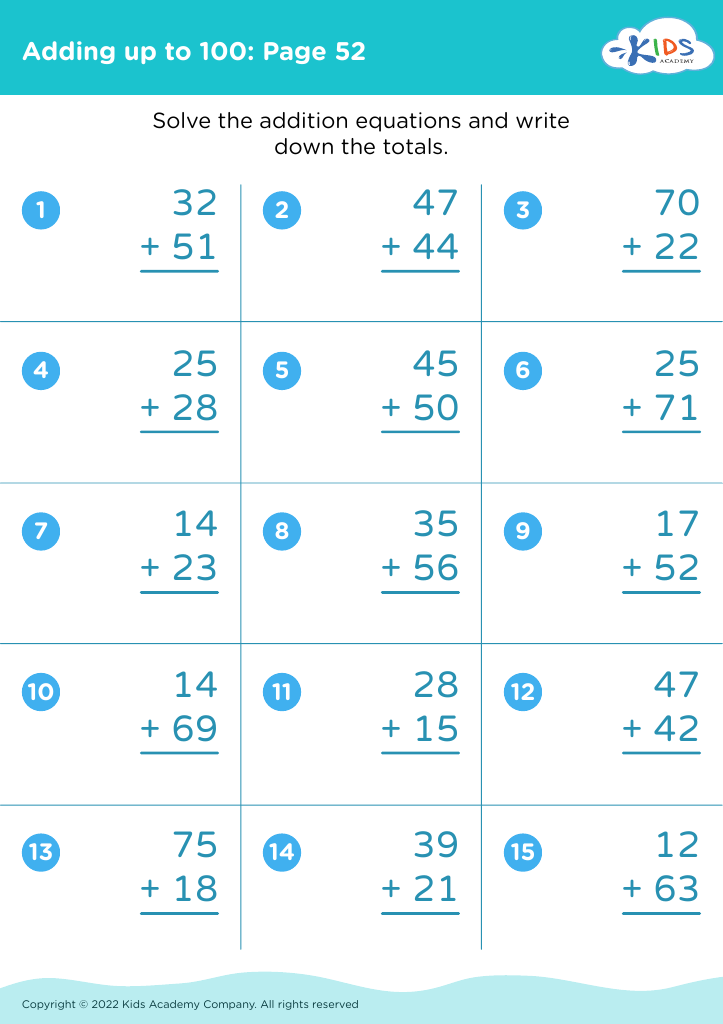








Developing counting skills and addition in young children is crucial for a variety of reasons. First, these foundational mathematical skills enhance cognitive development, helping children understand basic concepts of quantity and numerical relationships. By learning to count and add, children build their problem-solving abilities and logical thinking, which are essential for future academic success.
Moreover, counting and addition are not just abstract concepts; they are applicable in everyday life. For instance, children use these skills when sharing snacks, organizing toys, or even in games — all of which reinforces their learning in a fun and engaging way. This hands-on experience promotes a positive attitude towards math, counteracting the idea that math is daunting.
Furthermore, early numeracy skills have been shown to strongly correlate with later mathematical proficiency. By nurturing these skills between ages 3-9, parents and teachers lay the groundwork for children to tackle more complex mathematical concepts in the future. Finally, fostering a child’s ability to count and add helps build their confidence, fostering a lifelong appreciation for learning and discovery. This investment in early education ultimately contributes to well-rounded individuals prepared for both academic challenges and real-world situations.








